


Monthly Archives: May 2025

Beautiful dogs who deserve better: Amelia & McIlroy

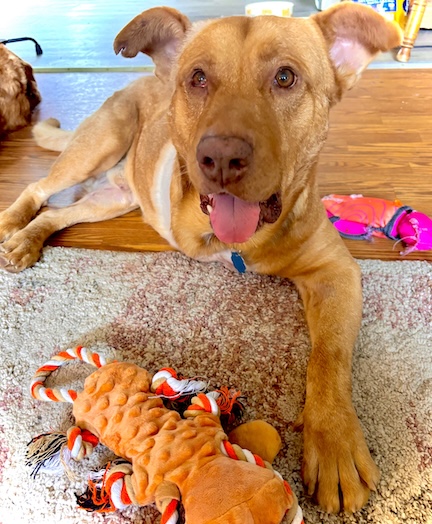
McIlroy is a shy dog waiting to be treated to the life that he deserves.

Some dogs do better than others in an animal shelter environment. The older and neglected ones, like Amelia have the toughest time. But young dogs who are timid and need socialization, like McIlroy, are a close second. Both of these special dogs have been on difficult journeys and now find themselves at the Aiken County Animal Shelter needing to find loving homes as soon as possible.

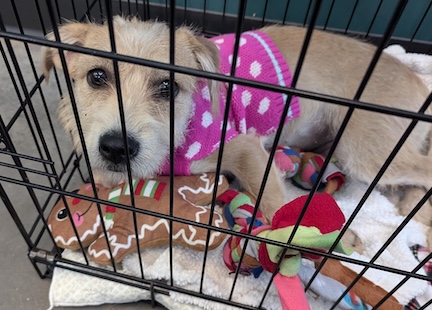
Senior sweetheart Amelia
Pretty tan and white mixed breed Amelia is 5 years old, 50 pounds and has lived a hard knock life. She was left to fend for herself. While battling the elements as a hungry stray, insects ravaged her, leaving her with a bacterial infection that is treatable with antibiotics. We’ve already started Amelia’s treatment and will provide the remainder of her medicine to her new family. Despite all of this strife, Amelia has remained the sweetest, most gentle soul. She deserves so much better.
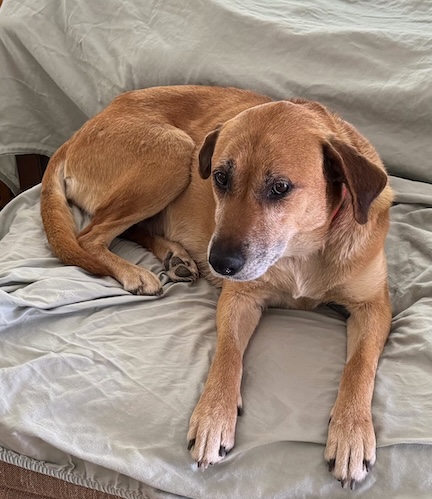
Amelia is easygoing and amazing on a leash.

Amelia is a volunteer favorite, winning every heart she meets. She’s loving, quiet, and calm. She adores people and does great with other dogs. She’s even potty trained.

“Amelia’s so easygoing and amazing on the leash,” said FOTAS Volunteer Amy Gardner. “Spending time with her just gets my soul right. She is patient, happy and wants to be where you are. Come and get this perfect girl.”

Amelia has seen her puppies get adopted to new homes but now it’s her turn to find a loving family. She would love to be with children and other dog companions. Please give this dog a new lease on life and show her there are good people in the world.

Young, magnificent McIlroy
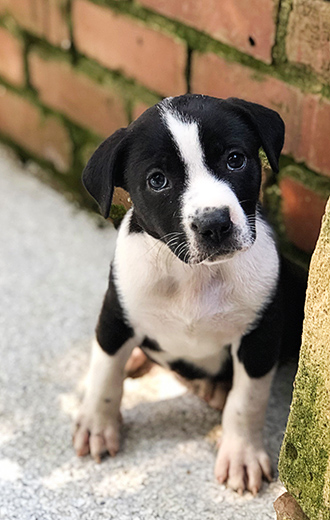
He’s a stunning dog. Mixed breed McIlroy has a gorgeous blond and white coat, Bambi eyes and a natural smile. He loves to play and walks on a leash like a dream.

McIlroy is 2 years old, 63 pounds and desperately wants to be someone’s companion. He’s not used to human affection and shies away from being petted, but he wants to be near you – about one step behind. We think he will be a lot happier and feel more secure once he is out of the shelter.

McIlroy needs to be adopted to a home that has other dogs. One or more canine mentors will help him gain confidence and learn the ropes of being a socially confident pet. This boy would do well on a farm, where he can run and play. Or at a house with a fenced-in yard and doggy door.

“McIlroy is a sweetie waiting to be treated to the life that he deserves,” said FOTAS Volunteer Jody Clark. “Such a handsome boy – definitely a grand slam winner of personality, good looks, manners and love.”

If you would like to adopt Amelia, McIlroy or another homeless pet in need from the Aiken County Animal Shelter, please send an email to info@fotasaiken.org or call 803-642-1537, option 3. Or just stop by. We are located at 333 Wire Road in Aiken, SC.

Their lives are in our hands.
By Bob Gordon, FOTAS Communications Director
Got mice? Let us find a barn cat for you!

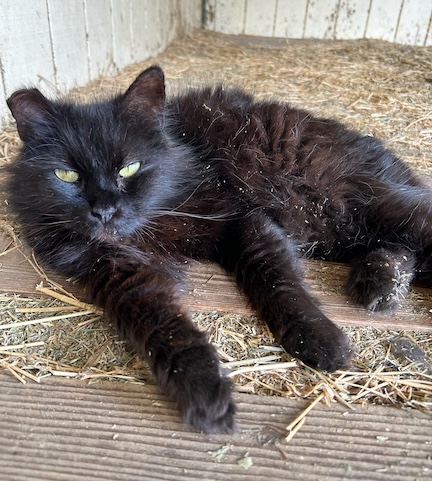
Handsome Midnight lounges in the hay room. The County Animal Shelter’s barn cats are fixed, vaccinated and free to good homes.

Most cats are sweet and cuddly. They belong inside – playing with their cat toys, sleeping on your bed or purring on your lap.

But there are exceptions.

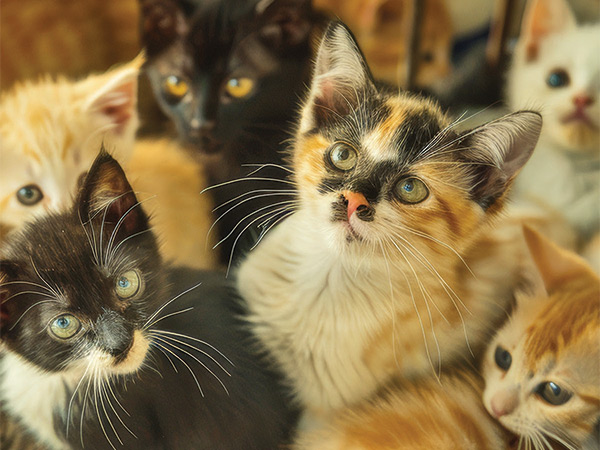
Some felines are more “spicy” or wild, and less socialized. These felines haven’t had much contact with humans and, as a result, don’t like to be held or pampered. They are extremely independent and have a bit of an attitude. However, it’s this assertiveness that makes barn cats such good hunters and ideal for getting rid of mice and other pests.

Matching adopters with barn cats
The Aiken County Animal Shelter has access to barn cats throughout the area. Our goal is to help these stray/outdoor, adult cats who are alone to find homes on farms, in barns, warehouses or other safe locations. We look for situations where they will be well cared for and appreciated. These hard working, pest reducing cats can help control the rodent population while enjoying the freedom of outdoor sheltered life with as little or as much human contact as they want.

Thanks to the TNR (Trap, Neuter & Return) program we’ve offered since 2014, many of our community cats are already fixed and in colonies. However, there are some that are single and looking for an outdoor home.

Barn cats are not lovey-dovey, but they’re good hunters. This makes them ideal for adopters looking to rid their property of rodents and other pests.

Prior to adoption, all potential barn cats at the County Shelter are:

  • Spayed/neutered (altered)
  • Vaccinated for rabies
  • Ear tipped (the universal sign for an altered feral cat)

Spicy mousers need love, too
While barn cats are feistier than their more domesticated counterparts, it is still important that they are properly cared for and loved. Before you decide to bring a barn cat home, make certain you are able to care for them by providing the following:

  • Fresh food and water, daily
  • Shelter from outdoor elements
  • A safe place to hide from predators.

Barn cats also need to be confined for three weeks before letting them roam the property. They must first learn that the farm is their home and source of food and care, or they are likely to run away.

Barn cats at the County Shelter are free to good homes. If you would like to adopt a barn cat or two (or more) from the Aiken County Animal Shelter, please send an email to info@fotasaiken.org or call (803) 642-1537, option 3.

Their lives are in our hands.

By Bob Gordon, FOTAS Communications Director

Adopting Kali was Kismet

Malia and Kali: it was meant to be

Some adoptions are just meant to happen.

The most recent example of destiny stepping in to match a dog with an adopter involves a terrified tan and white mama dog and a long-time FOTAS volunteer.

Kali arrived at the Aiken County Animal Shelter as a stray who was found feeding her puppies under a shed. The pretty mixed breed was so skittish, she had to be caught in a trap along with one of her pups. Gaunt and weak when she arrived at the shelter, Kali showed signs of being sweet but was too scared to bond with any of the staff.

When Kali graduated to the adoption floor, she was immediately noticed by volunteer Malia Koelker.
“She was trembling in the corner of her kennel” Malia said. “So, I sat with her for an hour or so and did the same thing the next day. She started feeling more confident when I walked her and was so grateful for the attention.”

From then on, Kali became attached to Malia. Whenever the shy 5-year-old, 42-pound dog saw Malia, she would perk up and beg to be petted. Other volunteers and staff members began to teasingly ask Malia what she did that made Kali fall in love with her. Even when Kali was in playgroup, she would get distracted if she spotted Malia walking other dogs or chatting with volunteers.

But Malia kept resisting the urge to adopt Kali. She’d been a FOTAS volunteer for seven years and never adopted a dog. She and her husband, Robert, like to travel and the timing never felt right. Besides, they were still mourning their 18-year-old dog, who passed away a year ago. Why do it now?

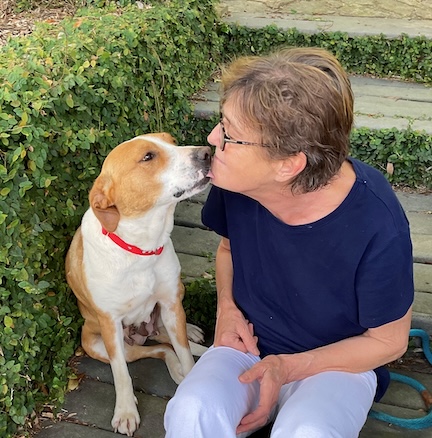
Kali feeling safe and secure in her new home.

“I’ve been tempted so many times to adopt a dog, but Kali broke my heart,” Malia said. “Whenever she saw me, she’d whine and bark. When I walked her, she’d jump up on the couch and curl right up next to me.”

As days kept going by without Kali finding a home, Malia decided to take Kali home for one night to see how she would do away from the shelter, in a quiet home. Robert was skeptical, but agreed to Kali’s visit.

“She was perfect,” Malia said. “She slept in our bed and won over our cat, Darwin. She took over one of our chairs and fit right in.”

Malia adopted Kali the next day and the timid dog who trembled and shook in her kennel is now happy and living her best life.

“She’s warming up to Robert now,” Malia said. “When we walk Kali together in the morning, she stops and waits for him if he’s lagging behind.”

Malia smiles. “I think she’s won Robert’s heart, too.”

Their lives are in our hands.

By Bob Gordon, FOTAS Communications Director
Crate training can make life easier for both you and your dog

Crating can be a tool for helping with separation anxiety.

While a crate might seem too confining for your dog, it can actually be a great source of comfort for him, especially if he is insecure.

A dog crate is a plastic or collapsible metal enclosed pen that is large enough for a dog to stand up and turn around in. It is a place for the dog to be when no one is around to supervise him. If introduced correctly it can become your dog’s sanctuary – a place where he feels safe and secure. It can be a tool for helping with separation anxiety.

Dogs are extremely social and enjoy being included in family activities. Using a crate allows your dog to be inside even when you’re not home or are sleeping. Crating along with scheduled opportunities to go outside can aid in house-training because dogs don’t like to soil their sleeping areas. During the puppy stage, this confinement keeps him safe when you cannot monitor him. Crating keeps your pup away from dangers like electrical cords and choking hazards.

Some dogs at the animal shelter get panicky in their kennels with all the noise and activity around them. But they become calmer and much happier when we put them in a crate in the front lobby. These dogs, likely trained before coming to the shelter, feel safer in a crate containing a comfy dog bed and their durable toys.

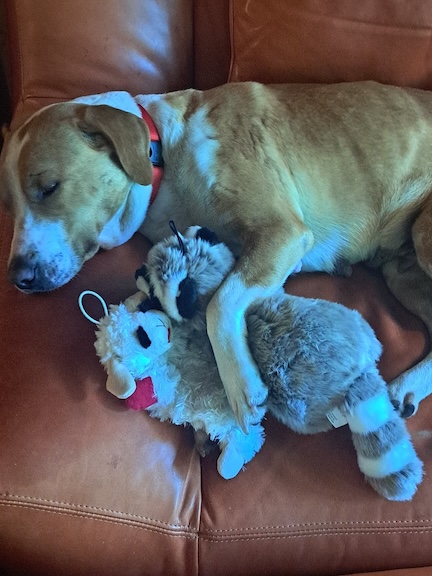
Nitro, a dog that felt more secure in a crate then his shelter kennel, was adopted and now roams free in his new house, but still sees the crate as his “den” and safe place.

One dog on the adoption floor, Nitro, was so anxious in his kennel, he would run all around, pace the floor, put his paws on the kennel door and bark in fear. But when we put him a crate in the lobby, he calmed down and became a different dog. He felt more secure in the crate, which helped him to relax and get some much-needed rest.

However, crates can be misused. No dog should spend most of his day, every day, in a crate. Crating an adult dog for more than 10 hours in a day can be considered inhumane even if he is given bathroom breaks. If your schedule requires you to be away from your dog for long days consider alternatives such as doggy daycare, a walking service or a pet sitter. 

Training experts also stress that a crate should never be used as punishment tool in training your dog.

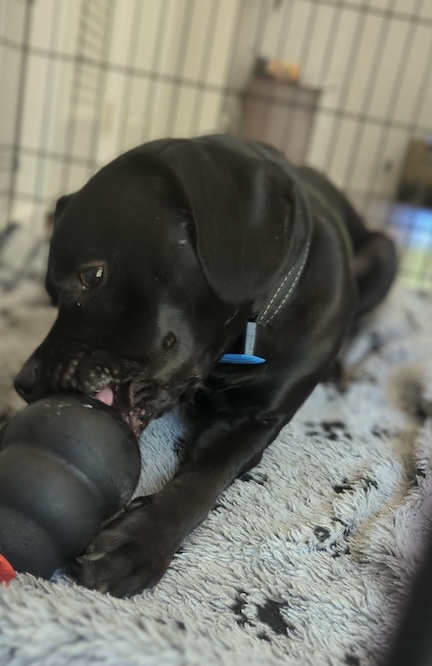
“You want your dog to associate his crate with positive behavior,” said Karen DeCamp, Aiken County Animal Shelter Dog Trainer. “It is okay to use a crate to separate your dog from a household activity for short time-outs or naps. A safe chew toy or perhaps a Kong stuffed with peanut butter, then frozen, will provide your dog mental activity while crated.”

Finally, if you do crate your dog when you’re not home, it is important that you offset his time in the crate with needed exercise. He needs to expend his pent-up energy, so be sure to take him for a long walk or play fetch with him when you get home.

Their lives are in our hands.
By Bob Gordon, FOTAS Communications Director
Archer, the sweetest boy

Archer was shot numerous times after being abandoned. His right front leg was so damaged, it had to be amputated.

On January 29, we received the most grateful and lovely dog, Archer.

He was brought in by an Animal Control Officer after being called by a citizen regarding a neighborhood dog that was severely injured and seeking comfort in his yard.

When the officer arrived at the scene, Archer was in the backyard laying down on blankets. He had several gunshot wounds in his chest and behind his ear. He also appeared to have older wounds that were infected. The citizen who called said that the dog had belonged to a neighbor that moved and abandoned the dog. Poor Archer was staying around the house in the neighborhood. The neighbor said this was not the first time Archer had been shot.

Dr. Nancy Rodriguez and the Aiken County Animal Shelter’s caring veterinary team immediately helped Archer. His front right leg was fractured, riddled with gunshot pellets and needed to be amputated. His other front leg was also full of gunshot pellets which made it weak. We were so worried that he wouldn’t be able to walk.

In Archer’s new home, he has feline and canine step siblings.

But slowly he learned to hop and made it to the adoption floor. Although Archer was still recovering from his injuries, we shared his story on social media. We wanted this loving dog that never barked or complained, never had an accident, and was always grateful for a hug and a kiss, to have a soft place to land. A home where he could be safe and loved. A family that would not abandon him again.

Archer now has a family and is getting that love he deserves! His new family recently gave us a happy pup-date:

“Archer is the cutest thing ever; he gets so excited, and I swear he smiles! He is great with the cats and dogs. He is a sweetheart. He follows us everywhere. He is potty trained and plays with his toys. We love him so much!”

If you are looking to adopt a pet, call the Aiken County Animal Shelter, (803) 642-1537, ext. 3765, or email info@fotasaiken.org and make an appointment with an adoption expert. They will give you personalized customer service and have pets ready to show when you arrive. Walk-ins are also welcome. We’re open Monday through Friday, 11 a.m. to 5 p.m. and Saturday from 11 a.m. to 4:30 p.m. and located at 333 Wire Rd., Aiken, SC.

Their lives are in our hands.
By Kathy Cagle, FOTAS Programs Coordinator