

Category Archives: Adoption

The joy of fostering

07 June 2015

The joy of fostering

By Joanna Dunn Samson, FOTAS Vice President

The Igoe’s have fostered close to 100 puppies and dogs from the Aiken County Animal Shelter. The Wolcott’s and Courtney Conger have fostered well over 350. The Wisemans average about 100 per year. The Heuberger’s, our newest foster family, have already fostered 6. Ray Eckenrode fostered 12 in his first year. Sam Cato has fostered so many she quit counting.

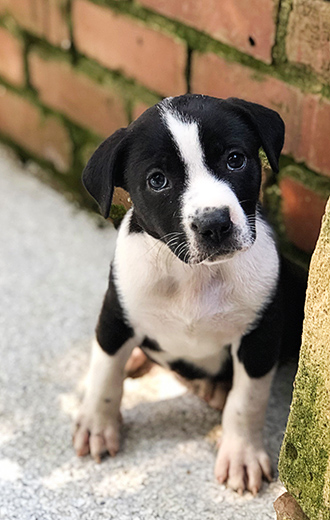
These are just a few of our network of our committed foster families. The Igoes, Wolcott’s, Conger and the Wiseman’s specialize in taking pregnant mamma dogs and birthing their puppies or very young, motherless puppies and raising them in a nourishing environment until they are weaned. Healthy puppies are highly adoptable everywhere, but especially in the north where mutt puppies are rare because everyone spays and neuters.

Cato, Eckinrode, and the Heubergers take dogs scheduled for transfer (those not adopted locally after a period of time) out of the shelter a few days before the scheduled transfer date, allowing them time to decompress from hectic shelter life and socialize in a home environment.

In almost every case, the animals transferred to another shelter are already spoken for by the time they are loaded on the truck, or they are adopted within a week of arriving at the new rescue, which makes letting the dogs go when the time comes more bearable.

“You have to take the bigger view,” says Girl Conger. “It’s about helping as many animals as possible get out of the shelter and find a forever home, not about being a sucker for every dog you take home. It’s a simple formula: math + heart – every dog we take allows a dog crowded in the intake wing to be moved to the adoption floor. We save two lives for every one we foster.”

“Plus, it’s a never-ending supply of squishy, fluffy, adorable puppy love and puppy-breath. What could be better than that?”

They all love animals, that’s a given, but they all foster for different reasons. Eckenrode traveled for business and couldn’t adopt a dog, so fostering gave him “dog time” in small chunks. Cato does it because it’s her way of giving back to the community. Tara Heuberger does it because she wants her 5-year-old son, Tegan, to learn how to care for the dogs.

Heather Wiseman says the best thing about fostering is the time the family spends together caring for and playing with the puppies. “It’s made us a stronger family, and the puppies are so much better adjusted growing up in a home instead of the shelter.”

And they all do it different ways.  Some fosters make a safe, comfortable place for their visitor outside of the house. Others fully integrate them into their lives.

“I pick them up and bring them home, then my happy pack of 5 dogs takes over,” says Cato. “They teach the newcomer good manners and housetraining. They all sleep in the bed with me. I love it.”

Here’s the thing: we need you to foster! The dogs need you! Now! This summer! Call the FOTAS Hotline at (803) 514-4313 and we’ll tell you how.

Thank you and God Bless. Their lives are in our hands.
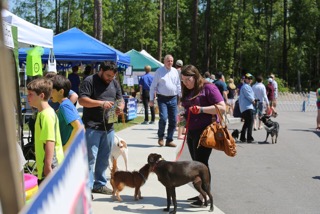
Then and now at the Community Aiken County Animal Shelter

31 May 2015

Then and now at the Community Aiken County Animal Shelter

By Joanna Dunn Samson, FOTAS Vice President

5000 square feet. Concrete floors with open trenches for waste removal. No air conditioning or air exchange system. No isolation facilities. No medical facilities. A tiny food prep area. No hot water. Peeling paint. Inadequate lighting. No separate cat facilities. No play yards. No volunteers. 200 anxious animals stuffed into a facility designed for 50.

It was a prescription for misery. Chance of survival at the old Aiken County Animal Shelter? About 10-15%.

Bobby Arthurs, the County’s Chief Animal Control Officer who started working with enforcement in 2001, remembers those days.

“It was hard at the old shelter,” says Arthurs, “especially in the spring and summer months when intake was so high and we’d have 3 or 4 animals crowded together in a single, small kennel. There were no volunteers or staff to walk or play with them. You’d look over the room and it was like the animals had just given up – they were all depressed.”

In those days, the shelter was overcrowded and the euthanasia rate was still 85-90% on average. A trip to the shelter was a near-certain death sentence for an animal. Often the only time an animal had any personal human contact was when they were removed from their cage to be euthanized.

All that changed when the new shelter opened last year.

“Now the shelter can separate adoptable animals from intake animals,” says Arthurs. “We have hot water, proper ventilation, sanitary medical facilities. We can isolate sick animals – that’s huge! Finally, shelter staff has the ability to improve the prospects for these animals.”

Sandy Larsen, the senior vet tech at the shelter who shares the distinction with Arthurs of having worked at the shelter the longest, agrees.

“It’s a happier, healthier place to be for everyone,” says Larsen, “staff, animals and volunteers – and as a result, our adoptions are up, our transfers are up, and our euthanasia rate is down. In fact, I can’t remember the last time we had to euthanize an animal from the adoption floor.”

I wish we could say, “It’s all better!” and rest on our laurels, but we can’t. The success over the past year is fragile and dependent on so many factors: the amount of intake, proper staffing, sufficient public funding, and volunteers. Some of those are already in question.

Our volunteer force is down dramatically because of folks leaving for the summer. One morning last week, only one person was available to walk 30 dogs.

April and May have seen record intake highs.

The County budget is strained because of reduced state and federal funding and the expenses of last year’s ice storm.

Although the Aiken community has demonstrated its support, both in commitments of time and money, to turn the shelter around, the job is not, perhaps will never be, done. Success requires resources.

Now, more than ever, we need volunteers at the shelter to walk dogs and help around the shelter. We need foster families to take animals slated for transfer out of the shelter to help alleviate overcrowding. We need all citizens to spay and neuter to reduce the overpopulation of homeless animals. We need donations to take care of special needs at the shelter.

We need you, the Aiken community, to tell your friends, your neighbors, and your elected officials how much the community shelter means to you.

And if you can, we need you to give these animals a home.

FOTAS: Transfer program and foster families save lives

27 May 2015

FOTAS: Transfer program and foster families save lives

By Joanna Dunn Samson, FOTAS Vice President.

It’s not even Memorial Day yet, and the intake wing of the Aiken County Animal Shelter is inundated with abnormally high numbers of owner surrenders, puppies, kittens and strays usually reserved for the summer months. Intake during April and May has been at record highs, far exceeding the number of animals leaving the shelter for forever homes. The shelter is forced to double or triple up animals in the kennels in the intake wing until space is available on the adoption floor. It is an agonizing state of affairs.

When this happens, FOTAS and shelter staff increase their efforts to network the animals on the adoption floor the longest (among other things) by organizing transfers to our no-kill sister agencies in other parts of the country. The transfer program has grown to include 20 partner rescue agencies over the past five years.

“It’s hard work,” says Jennifer. “The partner tells us how much space they have available, and we send them photographs and information about the dogs on the adoption floor, particularly the dogs that have been in the shelter the longest and need to be moved on. We don’t need to transfer out the small, cute dogs- they find homes quickly – we really advocate on behalf of the dogs that are hardest to place.”

In addition to the hard to place dogs, the transfer partners also take healthy, weaned puppies – a godsend during this time of year when the shelter is packed with them.   Says Miller, “Mutt puppies are hard to find and in great demand, particularly in the north, because everyone spays and neuters their animals.”

The FOTAS and County-approved foster homes are instrumental in the success of the transfer program. Once FOTAS and the transfer partner have negotiated which animals to send, FOTAS volunteers and county staff move the approved dogs to foster homes quickly, allowing the dogs a little transition time in a home before they are shipped out.

“Plus,” says Caroline Simonson, a FOTAS Director and volunteer, “moving the dogs quickly to foster frees up space on the adoption floor, allowing staff to release dogs from intake, which is so important when intake is so crowded.”

The need for foster families has never been greater. A potential foster fills out an application and demonstrates to the County that they have a safe, healthy place to care for the dogs. FOTAS is willing to pay for food and vet services to reduce the cost of fostering if necessary.

“You get to save two lives for every foster you take in,” says Toni Urben, a FOTAS foster, “ the dog you foster and the dog that takes its place on the adoption floor. My husband Gary and I love doing it.”

And so will you. Over the next couple of weeks, I’ll share with you some of the experiences of our fosters so you can see for yourself how satisfying and how necessary the job is.

We are desperate for more foster families, so if you’ve ever thought about fostering, now is the time. Please call the FOTAS Hotline at 803-514-4313, or email us at info@angelhartlinedesigns.com.

Their lives are in our hands.
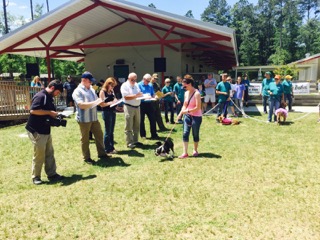
Summer Heartbreak at the County Animal Shelter

17 May 2015

Summer Heartbreak at the County Shelter

By Joanna Dunn Samson, FOTAS Vice President

Summer is tough at the Aiken County Animal Shelter. While the rest of the world settles into the sleepy tempo of summer, FOTAS volunteers and County staff shift into hyper-drive to address the inevitable onslaught of puppies, kittens and owner-surrender animals that crowd the intake wing and stress county resources to alarming levels.

This year, the seasonal surge of animals started early. The shelter experienced abnormally high intake during April, and May’s numbers promise to be equally dismal.

These homeless animals will come from the County, the City, Edgefield County, occasionally private rescue agencies already filled to capacity, but primarily, they come from private citizens.  On average, the number of citizen-surrendered animals doubles during the summer months because of (are you ready?) vacations.

Vacations! It is a sad but true fact that there are people who surrender their pets to the County Shelter when they go on vacation rather than make proper arrangements for their care, consigning their confused and trusting pets to the stress of a shelter environment and a 50% chance of being euthanized. Unthinkably heartless.

Over the past year, the County and FOTAS, with the help of the community, made great strides in saving more animals and reducing the euthanasia rate, but until rampant overpopulation is checked and the horrifying intake numbers come down (a 10-year proposition under the best of circumstances, according to most experts), our goal of never having to euthanize another adoptable animal is out of reach.

In the meantime the County, with the help of FOTAS, is responsible for the care and disposition of the 4600-5000 unwanted animals that wind up in the County shelter each year. Paid for with taxpayer dollars, the County shelter has a legal obligation to accept all comers – it cannot refuse to accept an animal because there isn’t enough room. Quite frankly, it feels like sweeping back the ocean with a broom, especially during the summer months.

How can you help?

First and foremost, spay or neuter your animals, and talk your friends and family into spaying and neutering theirs. If you or they cannot afford the cost to spay/neuter, you may be eligible for County or FOTAS financial assistance.

Help us take care of the animals – volunteer at the shelter.

Become a short-term foster for dogs selected for transfer or a long-term foster for mamma dogs and their puppies until they are weaned and rehomed.

Most of all: adopt one of the deserving animals in the Adoption Wing.  For every animal you adopt or foster, you save two lives – the pet you adopted and the pet that can be moved to the adoption floor from Intake.

Make a tax-free donation to the cause at www.fotasaiken.org.

Call us at (803) 514-4313 or email us at info@angelhartlinedesigns.com and see how you can get involved. You won’t be sorry.

Take advantage of our outrageous May special: adopt an adorable “Pibble” for only $20 or a cat for $10. The adoption fees cover spay/neuter surgery, all inoculations and micro-chipping. It’s a tiny cost for taking home a new love.

Their lives are in our hands.

BY THE NUMBERS

April 2015

Total received = 481 dogs and cats

Total adopted/transferred = 170 dogs and cats

Total euthanized = 201 dogs and cats

PETS OF THE WEEK

SAUL .. American bull dog — male — 6 mos. old — 34 lbs.  — $20

ROSEANNE … Tabby — female — 2 years — 17.7 lbs  — $10

All bully dog mixes $20 and cats $10 through May 31, 2015

The Aiken community comes together for Woofstock

12 May 2015

The Aiken community comes together for Woofstock

By Joanna Dunn Samson, FOTAS Vice President

Last Saturday FOTAS held its 4th Annual Woofstock Dog, Cat & Music Festival at the Aiken County Animal Shelter. It was all we hoped it would be and more.

The weather was perfect. Puffy white clouds drifted across a bright blue sky. The cool temperatures of the morning gave way to a comfortable 80 degrees by the afternoon. It was one of those sparkling spring days that inspires joy in the soul.

The day started early for FOTAS volunteers and Woofstock organizers. Caroline Simonson, Shana Ryberg and a group of volunteers arrived at the shelter at 7:30 to walk the adoptable dogs. Anthony Negron and 32 Aiken High School NJROTC students and 8 South Aiken Serteens began the arduous task of setting up for the exhibitors and volunteers. Donna Eisenhart and 20 Silver Bluff National Honor Society students were on hand to work with vendors and exhibitors. All 60 of these local teenagers dedicated their day to set-up, take-down, traffic control, walking dogs and helping out with anything that needed doing.

“I am touched by the commitment of all these young men and women,” says Valerie Vance-Kraus, the faculty advisor to the Serteens. “They are the best this generation has to offer.”

We agree.

This year, the number and variation of exhibitors were greater than in years past. There was everything from representatives from the Sheriff’s K9 unit with their bloodhound and bomb-sniffing dog to face-painting and balloon creations to canine agility courses. We were thrilled to be joined by our sister agency, the SPCA Albrecht Center, who not only helped sponsor the event, but exhibited as well.

(A special shout out to the ever-so-kind SPCA trainer-extraordinaire Ann Kinney, for working with Dante and Toni Urben, his foster mom, on socialization in a crowded place with lots of action. Yes, that’s Dante the handsome gray and white  “pibble” – he needs a home – desperately. Will someone please take this very special dog home so we can sleep at night?)

There were homemade baked goods and ice cream and barbeque sandwiches. There was music provided by Brad and Jayne Williams. There were local dignitaries and celebrities – County Administrator Clay Killian, County Council Chairman Ronnie Young, along with County Council members Kathy Rawls and Andrew Siders, Ellen Priest, the publisher of the Aiken Standard, and Nicole Smith, an NBC26 news anchor, to name a few. There were dog contests for the best kisser, the best costume, and the best tricks.

And of course, there was the first ever Doxie Derby run at Woofstock, organized by FOTAS volunteer Carole Stamm, which was nothing short of spectacular and hilarious and just plain laugh-out-loud fun. One participant came from as far as North Carolina and vowed to come back again next year to compete with Aiken’s finest wiener dogs.

By every measure, the fourth Woofstock Festival was a resounding success with community participation at every conceivable level – exhibitors, sponsors, elected officials, volunteers, veterinarians, trainers, media and local businesses. The festival was packed with families, couples, seniors, and kids of all ages from all over the County. Plus, 10 dogs and 7 cats left the shelter for their forever homes.

That’s what it’s all about: an entire community coming together to help homeless animals. For those of us at FOTAS, it’s a dream come true.

God bless and thank you.

Love Stories at the Aiken County Animal Shelter

12 May 2015

Love Stories at the Aiken County Animal Shelter

By Joanna Dunn Samson, FOTAS Vice President

I love a good love story. Not the stuff of steamy bodice-ripping romance novels, but stories where love triumphs over tragedy and compassion trumps cruelty. The kind of stories where opportunity and luck sprinkled with a little magic create a bond that transcends the wounds of the past and fashions a new reality based on love and trust.

Like the story of Sheneneh and James Boyd. Sheneneh is a sweet strawberry blond “pibble” (that’s a pit bull cross without the negative baggage, by the way) that was chained to a stake and abandoned by her owners – an act of incomprehensible human cruelty. Painfully thin and dehydrated, Sheneneh was scarred around the neck by the heavy chain and heartworm positive. But for the concern of a neighbor who called the County Animal Control, she would have died on the end of that stake. Sheneneh went quietly with the kindly animal control officers, grateful to be released from the chain and even more grateful for a little kindness.

At the County shelter, Sheneneh caught the eye of a young custodian, James Boyd.  Although James had fostered puppies from time to time, he did not have a dog. He was waiting for the right dog – one that loved to play fetch.

He was waiting for Sheneneh.

“James is one of those compassionate, patient souls that puts everyone at ease,” says Martha Chadwick, the shelter manager. “He is a calming influence on the animals. He and Sheneneh bonded immediately. She is happy to fetch anything James can throw.”

160 dogs at the shelter, a dozen staff and scores of volunteers, and somehow James and Sheneneh found each other. Opportunity, luck and a little magic, and viola! – another love story is written by fate.

The stars also aligned for Morgan Zakis and Palmer – a handsome red “pibble” with striking white markings on his face. Morgan owned two dogs in her past life, and she had been searching for the right dog for a long time after she relocated to Aiken. Then last week she visited the County shelter and found Palmer.

Says Morgan, “I was walking past his kennel. He looked up at me with those sweet eyes and reached out with his paw – like he was saying ‘Hey, I’m the one!’ and I just knew he was. He went home with me that day.”

Palmer bonded immediately with Morgan and her boyfriend, Andrew. From the very beginning, he was quiet and well-mannered in the house – no accidents.

“He loves to snuggle and be close to us,” says Morgan. “He gets excited when Andrew comes home from work. We are so fortunate to have him,” she says, amazed at her good luck.

Yup. Good luck, opportunity and a sprinkle of magic.

We are all about love stories at FOTAS and the Aiken County Animal Shelter. We have to be. With 4300 homeless animals to care for each year, it’s the love stories that keep us going day after day.

Create a love story of your own. This month, you can adopt a bully breed “pibble” for only $20 and a cat for $10 at the county shelter – a bargain for the opportunity to witness the healing powers of love in action.

Please don’t wait. Their lives are in our hands.

FOTAS hosts 4th Annual Woofstock Festival and 1st Doxie Derby

12 May 2015

FOTAS hosts 4th Annual Woofstock Festival and 1st Doxie Derby

By Joanna Dunn Samson, FOTAS Vice President

Imagine this: It’s Saturday morning, May 2nd, at the Woofstock Dogs, Cats and Music Festival at the Aiken County Animal Shelter. It’s 10 a.m. – almost starting time. Excitement is running high. Competitors and handlers crowd around the starting gate, jockeying for position, muscles tensed in anticipation. At last, for one brief second everyone settles. Then the bell rings and the announcer cries “They’re off!”

And so they are. 10 floppy-eared, muscle-bound short and long-bodied dachshunds erupt out of the starting gate and race to the finish line – or at least most of them do. Occasionally this one might get turned around, or that one might get distracted, or a few others might be unclear on the concept, but all in all, FOTAS’ first Aiken Doxie Derby promises to be a riot.

Here’s how it works. For a registration fee of $20 in advance or $25 on the day of the event (come early!), you can enter your “real” Doxie in the first 8 races or your “Wanna be” Doxie in a special race of their own – no prior experience is necessary. The winners of the races will qualify to compete in the Big Weiner Race Off for a chance to win real prize money ($100 for first prize, $75 for second, and $50 for third).

No Doxie’s or “wanna be” Doxies in your house willing to take a run for the roses? That’s okay. You can donate $5 to FOTAS to sponsor the Doxie Derby for a chance to win $300. Visit www.FOTASAiken.org, click on Woofstock, and donate through PayPal, or visit any of these downtown stores: Aiken Dry Goods, Downtown Dog, The Screenprint Factory, and Palmetto Package and Fine Wine. The Doxie sponsor drawing will take place at 2:30 p.m. the day of the event. You do not have to be present to win.

The dashing Doxie’s won’t be the only canines competing for fame and glory at Woofstock. The afternoon dog contests will be the perfect venue to demonstrate the versatility and smarts of your lovable mutt. You can show off your bordering-on border collie’s captivating costume, your sort-of shihs tzu’s splendid hairdo, your doubtful dobie’s delightful smooches, your half-hound’s hair-raising fetching ability, your tenuous terrier’s talent for tricks, or your precious pibble’s powerfully-radiant smile.

Not interested in competing? That’s okay too. Load up the kids, dress up the dogs and head out to Woofstock for a carefree day of music, mindless fun and a few yucks.

Plus, there will be children’s activities, raffle baskets, give-a-ways, face painting, food, and local exhibitors. Admission is free.

And here’s the thing: not only will you and your family have a grand time on a beautiful spring day (fingers crossed on the weather), you will be benefitting the County’s thousands of homeless and abandoned animals.  Virtually all of the proceeds from the Woofstock Festival will be used by FOTAS to assist the County in its dauntless task of caring for all of those animals.

Come on down this Saturday and join us for the fun. Maybe you’ll even fall for one of our adoptable animals and go home with the greatest prize of all – a new best friend to love.

Missy and the Microchip

19 April 2015

Missy and the Microchip

By Joanna Samson, FOTAS Vice President

When friends of mine adopted a young, severely abused retriever mutt named Missy from a local shelter, they knew it would take time, patience and kindness to earn her love, but they were determined and committed. Over the course of the next year, Missy grew to love and trust her humans, but only her humans and no others. Although her physical wounds had healed, Missy’s psychological wounds could only heal so far.

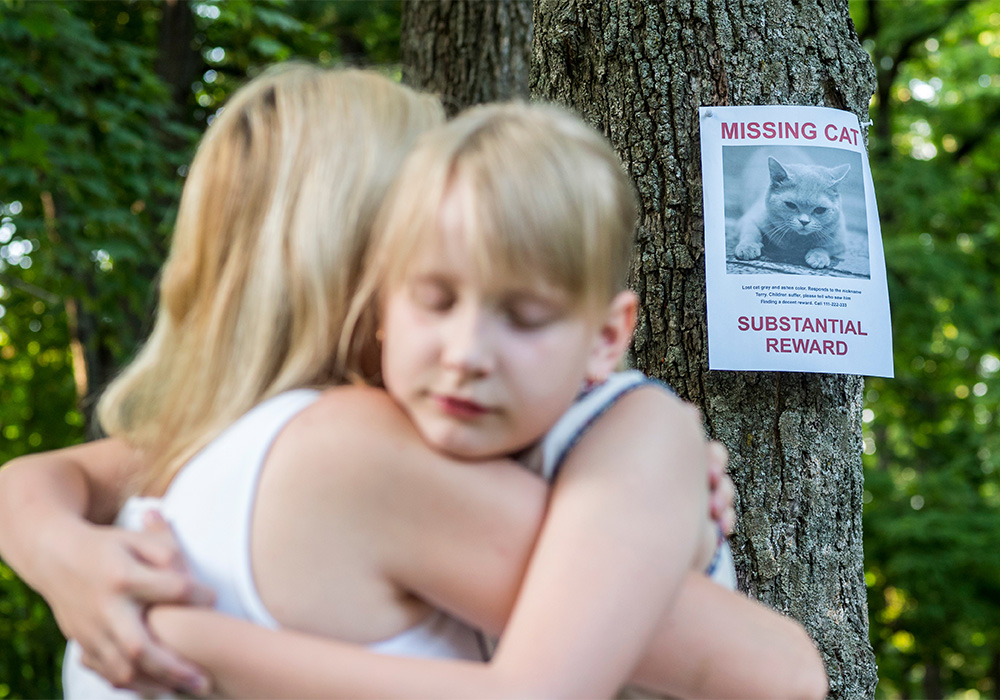
So when Missy disappeared from their campsite in rural Vermont during a thunderstorm two years later, the family was devastated. They searched everywhere. They called every shelter and every law enforcement office in southern Vermont. They posted photos in vets’ offices, local restaurants and on telephone poles. They flew back to Vermont, returned to the campsite, and repeated the process on a regular basis. Missy had, quite literally, disappeared, and after months of fruitless searching, they concluded, with broken hearts, that she was gone for good.

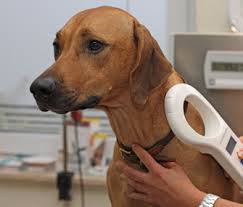
Two years later, my friends received a call from a veterinarian in Vermont. A couple of college students from a nearby campus had brought in a painfully thin, matted and terrified stray dog for medical treatment. The boys had been leaving food for her in their backyard for more than a year, but until that day, the dog had never let them close enough to catch her. The vet scanned the trembling animal, and to his relief, discovered she had a microchip embedded with her family’s contact information implanted in the loose skin between her shoulders.

Missy had been found.

The practice of microchipping was developed in response to the plight of thousands of pets lost or separated from their owners during Hurricane Katrina. The microchip is programmed with a unique identification number registered to the pet’s owner and is implanted by painless injection by a veterinarian or other animal care professional.

Aiken County’s Chief Animal Control Officer, Bobby Arthurs, is a big believer in microchipping.

“When we pick up an animal,” says Arthurs “we scan it immediately. If we find a microchip and the owner’s registration is current, we contact the owners and take the animal home right away. We can bypass the shelter completely and save everyone a lot of heartache and stress.”

The national statistics regarding the return of microchipped pets support Arthurs’ enthusiasm.  According to a 2009 article in the Journal of the American Veterinary Medical Association, twice as many microchipped dogs and twenty times as many microchipped cats are returned to their owners compared to lost animals with no microchips.

The County shelter microchips all of its adopted animals; it is part of the adoption fee (along with the cost of spay/neuter and inoculations). If your pet comes from someplace else, the County can microchip your dog or cat for only $23 (Aiken City Animal Control and the SPCA have similar programs). It’s quick and painless, and it could save your pet’s life.

Missy has been safely and happily home with her humans for a while now, still painfully shy, but otherwise recovered from her ordeal. Her remarkable tale had a happy ending because of her innate determination to survive, the kindness of strangers, the competence of the vet, and the wonders of the microchip.

Hallelujah!

Their lives are in our hands.
PETS OF THE WEEK

EDEN    Male, Bulldog/Lab mix, 1 year old, 54 lbs — $35

MISTY   Female, Domestic Short Hair, 4 years old — $15

All black dogs $35 and black cats $15 through April 30, 2015

Back in black: the semi-annual, half-price adoption special for black pets

12 April 2015

Back in black: the semi-annual, half-price adoption special for black pets

By Joanna Dunn Samson, FOTAS Vice President

Did you know that black dogs and cats take 4 times longer to be adopted from a shelter than their lighter counterparts? That’s right, 4 TIMES LONGER.

It’s a sad, but true, phenomenon in the rescue world referred to as “Black (or Cat) Dog Syndrome.” Black dogs and cats are often passed over by potential adopters for a variety of vague reasons, like indistinct facial features and “generic” body types – issues compounded by poor lighting in many shelters – and size: large black dogs are even harder to adopt out.

Black dogs and cats are victims of their genetics and irrational prejudice stemming from negative portrayals in literature and ancient folklore (think black cats and witches or the black hounds of hell). There is not a shred of evidence that black dogs are more aggressive or untrustworthy than their lighter colored brethren. Aggression is a function of abuse and poor training – not a function of color. Period.

A black pet will give you every bit as much squirming, unconditional adoring love as a lightly-colored one. Plus, there’s this: black pets won’t show dirt as much, so you won’t have to wash them as often. With the money and time you’ll save on grooming, you could, say, treat your significant other to a romantic dinner and bottle of wine. Who knew adopting a black pet could be a boon to your marriage?

Okay, maybe that’s a stretch, but how about this? Black is the color of preference for fashion icons and musicians – think Coco Chanel or Johnny Cash. It’s the color of free thinkers and poets.

Like Seamus, the cat of the week – he positively drips intelligence and attitude. He is one very cool cat.

Here’s an even more perplexing fact: a large majority of the black dogs at shelters who do not get adopted are Labrador retriever crosses, yet year after year, Labs, and in particular, black labs, top the list of the most popular breeds in the country.  They are friendly, playful and promiscuous in their love of humans.  They are goofy, good-tempered animals – an excellent choice for families with children.

So why do black lab mixed breeds endowed with the same admirable and lovable qualities have so much trouble finding forever homes?

It makes no sense.  Take a tour of the Aiken County shelter, and you will often find any number of Lab crosses with bubbly, affectionate personalities just waiting for a family to love, entertain and protect.

Well, hell-ll-ooo, Bingley! If you looked up “earnest” in the dictionary, you’d see this photo of Bingley, our dog of the week. Seriously, look at that face. He’s a perfect family dog.

FOTAS and the Aiken County Animal Shelter have designated April as Back in Black Month. Adoption fees for black dogs have been reduced to $35 and black cats to $15.  This fee covers spaying and neutering, all necessary vaccinations and microchipping.

Come on over to the Aiken County Animal Shelter and take home your next best friend.  By the end of the day, you will be snuggled up on the couch watching The Voice with a happy black bundle of pure love.

Their lives are in our hands.

BY THE NUMBERS

MARCH 2015

407 dogs and cats received

229 dogs and cats adopted/transferred

153 dogs and cats euthanized

38% euthanasia rate ( lowest for any March to date!)

PETS OF THE WEEK

BINGLEY— Male — Retriever — 4 months old — 18 lbs — $35

SEAMUS — Male — Domestic  Short Hair — — $15

SPECIAL FOR BLACK DOGS & CATS THRU 4/30/15 — Dogs $35, Cats $15

Adopting a shelter dog is always a good choice

05 April 2015

Adopting a shelter dog is always a good choice

By Joanna Dunn Samson, FOTAS Vice President

My husband David and I are proud owners of shelter dogs. We have always adopted shelter dogs as a matter of choice, pride and civic responsibility to do our part for the thousands of homeless animals that pass through the shelter system. Our shelter dogs have never disappointed us. They were all mutts: true individuals, clever and affectionate. They enriched our lives. We were lucky to have them.

Our experience is not unique, yet some folks are reticent about adopting shelter dogs. They are concerned the dogs are damaged by their past experience or that they wouldn’t be in the shelter if they were good dogs.

Nothing could be farther from the truth. In fact, most animals end up in shelters through no fault of their own.

The Gordon family household has always included dogs – big dogs, multiple dogs, older dogs, hard to place dogs such as shepherds, bully breeds, rottie crosses and, always, rescue dogs.

“It’s a tradition in our family,” says Laura Gordon. “We adopt the dogs other people overlook because of their size or their breed, last chance dogs, dogs that are euthanized in higher numbers in public, open-admission shelters. We have never had a single problem with any of them. In fact, we always say each dog is the best dog we ever had.”

As their three rescue dogs passed on after moving to Aiken 20 years ago, the Gordons began adopting from local shelters. First there was the beloved Beau, a massive, striking tri-colored Akita who, according to Laura, would have been a lap dog if anyone in the family had had a big enough lap.

Now there is Laya, a lumbering black and tan sweetheart of a Rottie-cross that Laura adopted virtually sight-unseen from the Aiken County Animal Shelter at the urgent bequest of Jennifer Miller, President of FOTAS.

“Laya was a favorite of staff,” says Laura, “but she had been at the shelter for too long and was days from being euthanized. I had just lost one of our dogs, and Jennifer called and said to me, ‘You know you’re going to get another dog, and it ought to be this one. You’ll love her.’ She was right. I did, and I do.”

After Laya came Oscar, a yellow lab cross and a canine love machine, brought home from the County shelter by daughter Allison before she left for school. “Oscar adores people,” says Laura, “he loves everyone, and everyone loves Oscar. Everyone. No exceptions.”

And finally there’s Storm, rescued by Jonathan from the County shelter as a puppy when he was 6 months old. The love of Jonathan’s life and 78 pounds of energy, goodwill and unwavering affection, Storm even won over Jerry, who had been wary of “bully” breeds.

“I have never had a single problem with any of our dogs,” says Laura, “not individually or as a pack. Sure, I spend extra time with them when they first come, figure them out, watch them with the other dogs, especially around food. I establish the rules and the pecking order right off, like the senior dog is the alpha when it comes to feeding and going through doors. All it takes is patience and a little common sense.”

So true. If you are thinking about adopting an older dog, a bully breed, a 2nd or a 3rd dog, please don’t hesitate. It can and will work out. We will help you through it, if necessary.

Their lives are in our hands.

PETS OF THE WEEK

DIESEL — American Bulldog — Male — 2 1/2 years old, 57 lbs —$35 black dogs thru April 30)

GREMLIN — Domestic Short Hair—Female — 1 year old, 6 lbs — $15  (Black cats  thru April 30)