
Category Archives: Dr. Lisa Levy

A Tale of Two Kitties: Greg and Torino

I often wish that animals could talk, so they could tell us what happened to them.

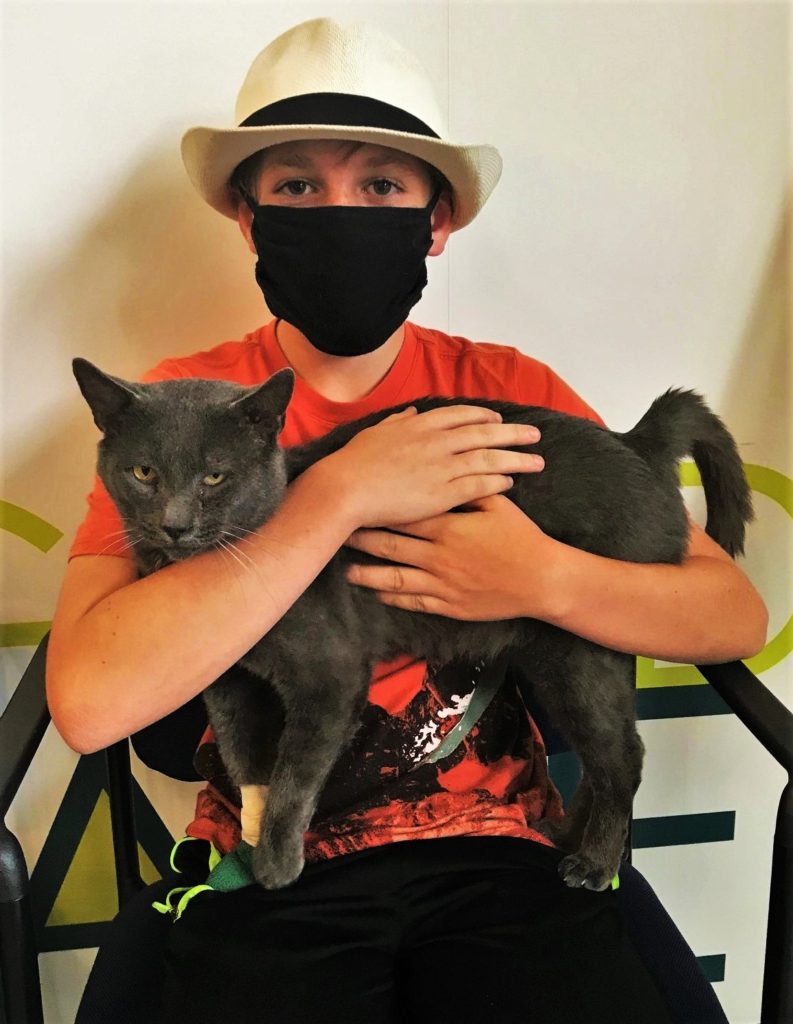
Greg is a complete mystery. He is a big, handsome gray cat but his feet were a disaster when he arrived at the shelter. Three of his feet had big, red fleshy areas on the underside. After sedating him to get a better look, I could see one pad on each foot had split open and what I was looking at was the inside of his pad on the outside! The pad had tried to close around it, so this had been going on for some time.

Surgery was extensive. Two of the pads were toe pads, so it was easier and a better prognosis to remove the toe. He lost a toe on one front foot and one rear foot. The real problem was the other front foot, as that was the large pad he walks on. The excess tissue was removed and the pad sewed closed.
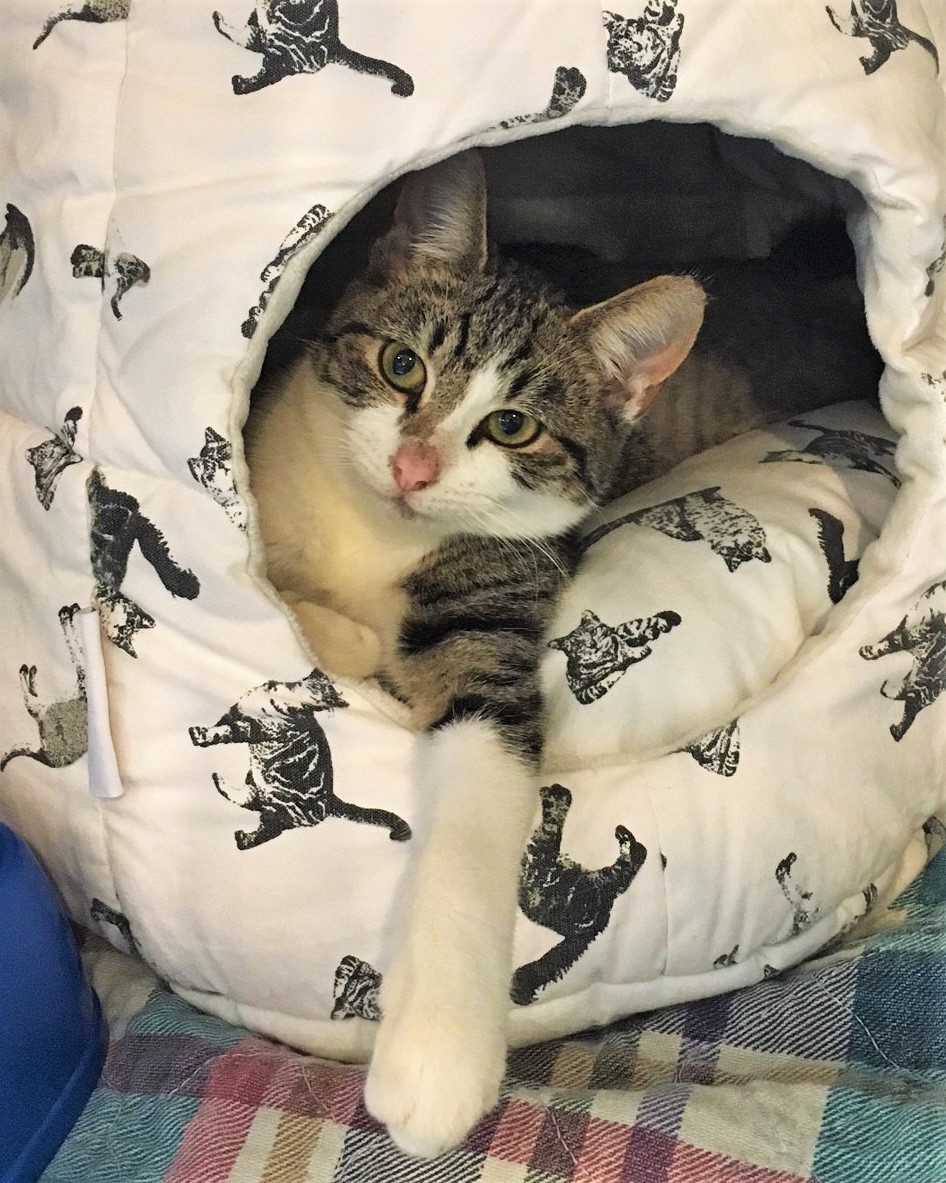
Torino quickly recovered from his surgery and was adopted shortly after becoming available at the Aiken County Animal Shelter.

Unfortunately, pads do not heal well and I was worried about his recovery. As predicted, the surgery site opened again – twice! At that point, I just had to bandage it and let it heal on its own. This required weeks of bandage changes, but Greg was the most patient cat I have every dealt with. He is super affectionate, loves to be held and the whole staff loves him.

Greg tested positive for the Feline Immunodeficiency Virus (FIV), so he needs to be an indoor-only cat. FIV positive cats can live with FIV negative cats if they get along since it is transmitted primarily by bite wounds. But since we don’t know if Greg gets along with other cats, and don’t want to take a chance of infecting another cat, we recommend he be adopted as an only cat.

Torino came into the shelter with the string from a “fuzzy dice” car ornament wrapped around his rear leg, cutting off the circulation. I had already left for the day so when Judith, my vet tech, called, I thought I would just be going in to sedate him and remove the string. But one look at his leg and I could tell the muscles of his leg were dead. Our only option was an emergency amputation. Dead muscles can quickly make an animal extremely sick.

We had no idea if Torino would be friendly and adoptable. If he was feral, he would not be a good candidate for the surgery as he would require antibiotics and follow-up care. What if we couldn’t get our hands on him the next day? I decided to give him a chance and go ahead with the surgery. The procedure went well and he recovered normally.
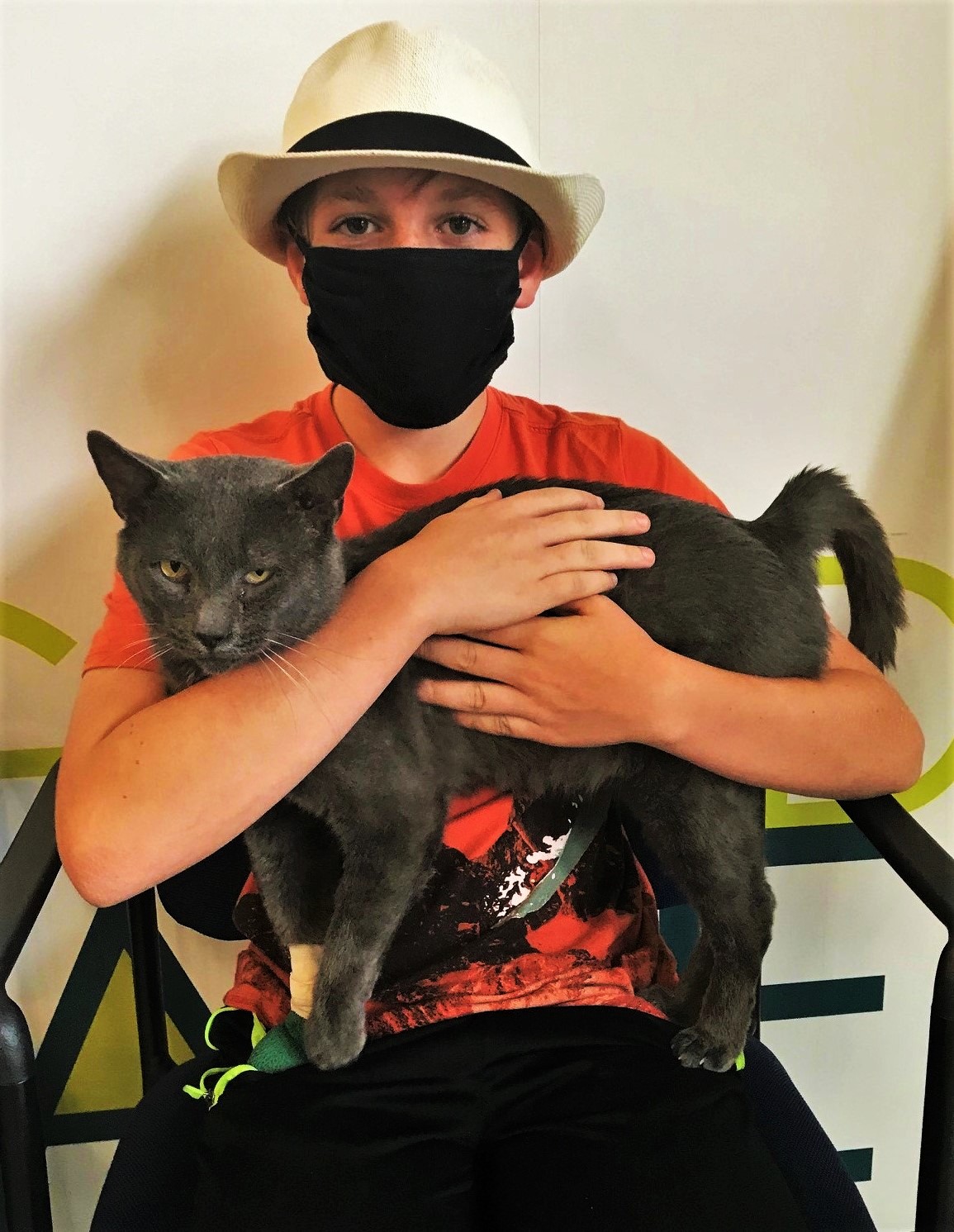
Young Xander Stefanakos spends time with Greg, a super affectionate FIV positive cat who needs a loving home.

The next day we could touch him but he cowered in the back of his kennel, preferring to be left alone. Amazingly, after three days, when Judith was cleaning his kennel, Torino rubbed his head against her hand and started purring. He became very loving and was adopted quickly after his recovery was complete.

Both of these cats defied the odds and will make great pets for their lucky adopters. Sometimes they just need to be given a chance. Torino is doing great in his new home and sweet Greg is still waiting to be adopted.

— By Dr. Lisa Levy, Aiken County Animal Shelter Veterinarian
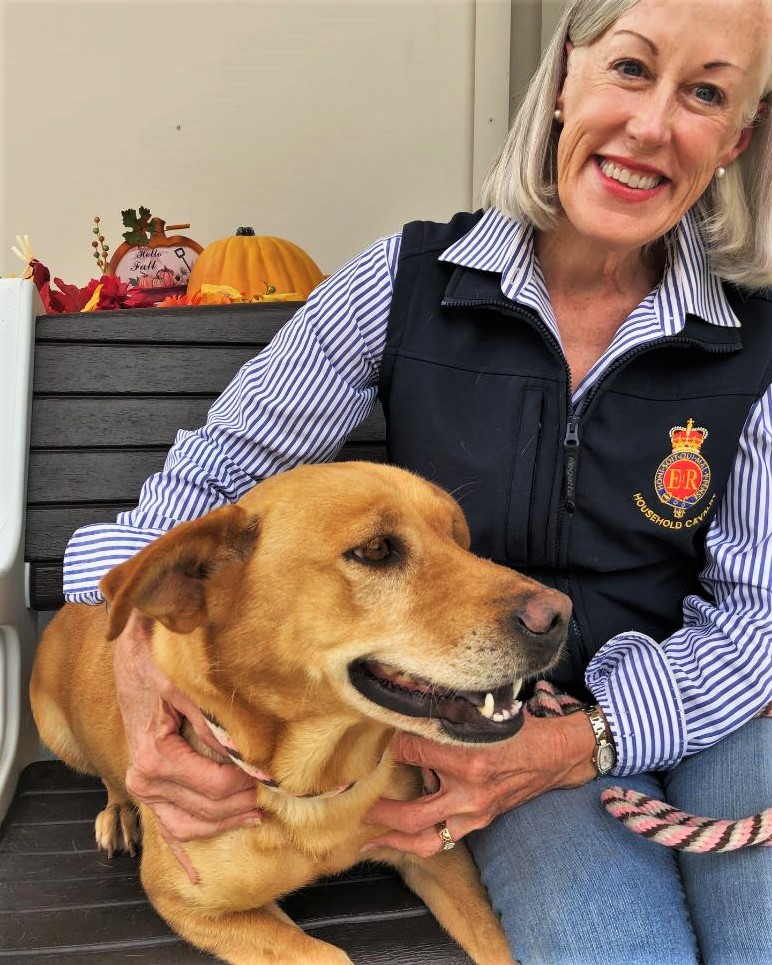
What Are the Rewards of Volunteering at the ACAS? Happiness, Peace and Great Exercise

What makes Monday the best, most rewarding day of the week? It’s the day I volunteer at the Aiken County Animal Shelter!

People often ask: Isn’t it sad? Don’t you want to adopt every animal? Aren’t you concerned about bringing diseases home to your own pets? Can walking a dog or playing with a kitten really make a difference? The answers: No, No, No and YES!

Volunteer Jeri Wesner spends some quality time with sweet Hudson after a walk.

The most important thing to know is that the Aiken County Animal Shelter is a clean, bright and happy place. For some residents, it is the first time they have known consistent shelter and regular nutritious meals. Every animal has its own safe space, a comfortable bed, at least two toys and regular walks or playtimes. Dr. Lisa Levy, the Shelter veterinarian, makes sure every animal is vaccinated and healthy before being placed on the adoption floor where volunteers first encounter them.

It is an extraordinary experience to see a previously abused and frightened animal sitting on the lap of a volunteer, learning to walk on a leash, learning to play with people and other animals and then departing for a forever home. Without the socialization – and fun! – volunteers provide, it is unlikely some of these animals would ever be adopted.

Not all volunteers work directly with animals. Some staff the front desk, answering the phone and helping adoptive families find their perfect match. Some sew much-needed blankets at home or make toys or help with cheery landscaping. Others staff events or solicit items new pet owners may need. A wide variety of skills are needed. All are efficiently and effectively used. All are genuinely appreciated.

FOTAS Volunteer Peggy Glenn and Lab mix Zeus enjoy each other’s company at the shelter.

Almost 5,000 animals pass through the Shelter each year. For some, opportunities are limited. If an animal is afraid of men or children or members of a particular ethnic group, fewer homes can consider them. This is where volunteers come in. The Shelter is in need of all kinds of volunteers, especially men and minorities. Sometimes just a few walks or playtimes with a kind volunteer can make all the difference. If you can spare a few hours in the morning, afternoon or on weekends, won’t you consider volunteering?

The pandemic is making things worse for animals in our community. Some owners are sick or can no longer afford their pets. Some volunteers are quarantining. The Shelter is one of the safest places you can volunteer. Activities are outside. Social distancing is scrupulously observed. Hand sanitizer is always available. Masks are required if entering a building.

So, what do I get out of it? Joy. Happiness. Peace. Great exercise. Tips from professional trainers I use with my own pets. Wonderful friends I would not have known otherwise. And the satisfaction of knowing that together we saved many more animals than if we had tried to adopt them ourselves! Not once have I ever felt my time was wasted. How often can any of us say that?

Their lives are in our hands.

— By Peggy Glenn, FOTAS Volunteer

A Song of Survival: The Ballad of Willie Nelson

I came into work one morning several months ago to find that Animal Control had brought in a medium-sized, black dog who could not stand up. After examination, I found that his back legs worked fine but he could not use either front leg. X-rays revealed that his right front leg had an old gunshot wound just above the elbow that had shattered the bone. The bone had healed as best it could and felt stable when touched. The left front leg was normal on x-ray but had nerve damage.

He was happy and not in any pain, so I planned to keep him a few days, hoping his owner would claim him. But if not, we would euthanize him.

Amazingly after two days, he started to walk on the gunshot leg, but still could not use the nerve-damaged leg. The staff fell in love with him and named him Willie Nelson (because he howls and “sings” when he wants attention). He continued to get stronger on the right leg, but his left leg would collapse every time he tried to put weight on it. We made the decision to amputate the left leg and he healed beautifully.

The day before he was to go up for adoption, he suddenly wouldn’t stand. We x-rayed the leg again and found it had fractured through the area where the gunshot wound was. Because it had not healed well, it couldn’t withstand the strain of bearing the extra weight of him being three-legged. My husband, Dr. Michael Wells, and I decided to repair the fracture with metal pins, which we planned to leave in place for stability. Two of our kennel crew, Brandon and Chase, fostered him while he healed.

Unfortunately, the bone was too soft from all the previous damage and the pins kept backing out. Despite several attempts to reset them, they finally came out completely.

Our next step was a cast, which Willie hated but learned to tolerate. Finally, the day came to remove the cast. Willie walked on his leg but after only a few minutes there was an audible crack. The leg had broken again!

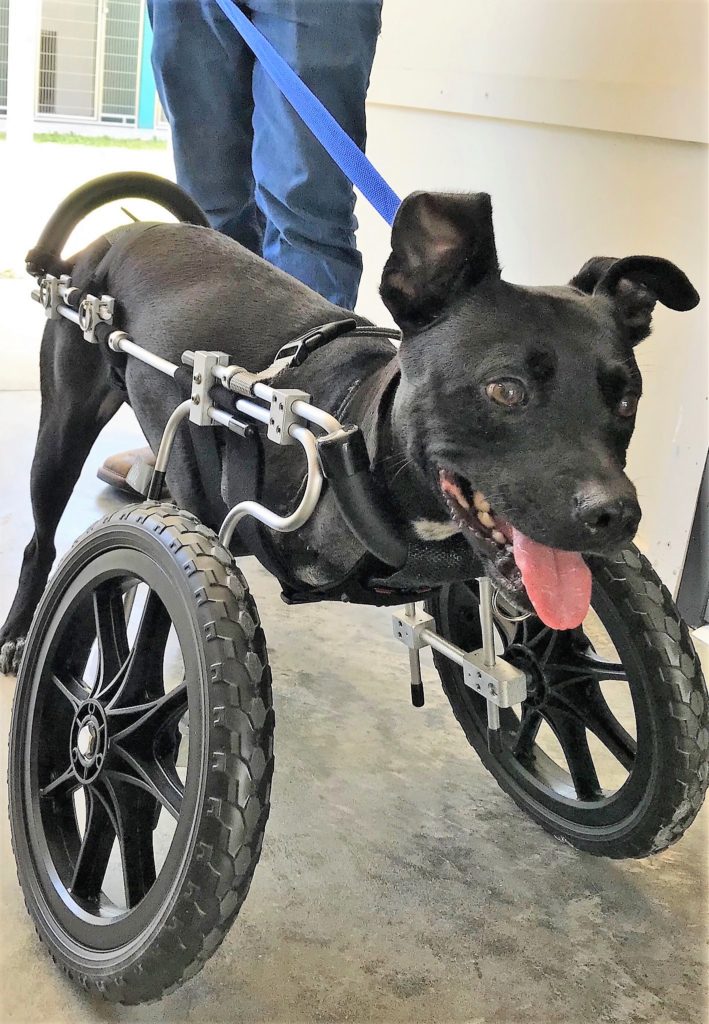
Willie Nelson’s custom-made cart allows him to run and play, despite losing his front legs.

We were heartbroken and out of options. Willie went home to spend a last night with his foster family and we planned to put him to sleep the next day.

That night was pretty depressing at our house. For four months, we had worked with Willie and it was devastating to lose him. I asked my husband, “What if we buy him a custom-made cart?” I talked to Brandon and Chase the next morning and they agreed to adopt Willie if we would purchase the cart. We worked with an awesome company called, “Eddie’s Wheels,” which gave us a shelter discount and built him a cart in just two weeks.

Meanwhile, after talking to Brandon and the people at Eddie’s Wheels, we decided to amputate his broken leg as he would never use it and we didn’t want it to be a source of pain for him.

Willie is still adjusting to his cart but doing great. He is one of the happiest dogs I have ever seen, exhibiting a positive spirit every day of his trying journey.

Their lives are in our hands.

— By Dr. Lisa Levy, Aiken County Animal Shelter Veterinarian
Animal Cruelty: If You See Something, Say Something

Animal cruelty comes in many forms and is more common than we want to believe. It can be seen in such diverse ways as physical abuse, neglect of basic care, abandonment, dog fighting, and animal hoarding. It can be as blatant and evil as intentionally hurting or torturing an animal, or as a result of ignorance and pet owners never learning the basic needs or proper care of an animal.

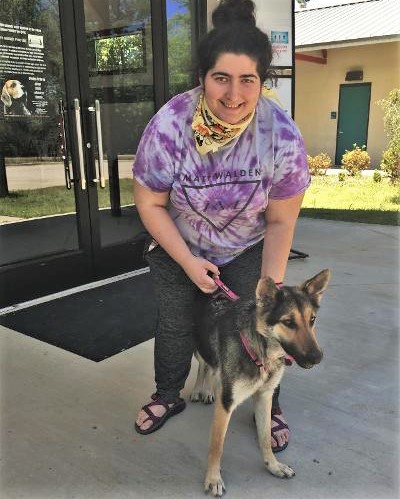
Magnolia, who was tied to a tree deep in the woods and left to die, is now healthy, safe and loved by her adopter, Rachel.

Magnolia was left in the woods to die
Recently, a beautiful German Shepherd was rescued from certain death when kids playing in the woods found her tied to a tree. The collar around her neck was embedded into her skin and she was weak from lack of food and water. The kids alerted their parents, who immediately called Aiken County Animal Enforcement. Officer Patrick Miller brought the injured Shepherd to the Aiken County Animal Shelter, where she could be cared for and treated for her deep neck wounds.

The shelter’s veterinarian, Dr. Lisa Levy, had to surgically remove dead tissue to close the deep gash in her neck. The sweet dog was named Magnolia and quickly became a staff favorite. As soon as she was healthy enough, Magnolia was moved to the adoption floor. She was adopted to a young Smyrna, GA woman who drove 185 miles to get her.

“We go on a lot of walks and Magnolia likes to just chill and cuddle when we’re home,” said Rachel Zeisel. “She’s my girl.”

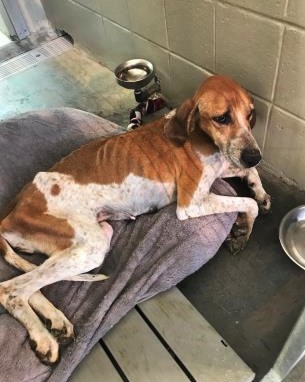
Lois arrived at the shelter so emaciated, she could not stand and walk on her own.

Lois arrived too weak to walk
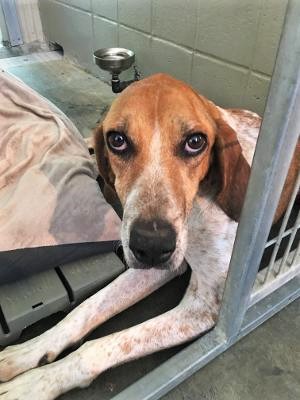
A starving, seven-year-old hound mix was rescued by Animal Enforcement Officer Mark Graham. He had to carry her into his truck because she was so weak. She had so little muscle in her hip muscles due to lack of nutrition and exercise, she could not walk on her own. Based on pressure sores on her body, this poor dog was likely chained and slept on concrete.

The staff named her Lois and started her on a diet of at least three meals per day. She now has a soft bed in her kennel and is able to stand on her own. Lois is making great progress. But the wounds from her abuse are still healing, so she’s not quite ready for adoption.

If you see animal neglect or abuse, call the authorities
If you see something, say something. Call your local animal control agency as soon as possible if you witness suspected cruelty to animals. If you live in Aiken, call (803) 502.9000, extension 3704. Or email enforcement@aikencountysc.gov.

Lois has been through hell, but she’ll soon be ready for adoption and can look forward to a new, better life with people who will love and protect her.

Document the case as well as you can with dates, times, specific details and, if possible, video footage and photographs from a cell phone. All of these things can help appropriate agencies during an investigation they do of the suspected cruelty.

Their lives are in our hands.


— By Bob Gordon, FOTAS Communications Director

A Tale of the Crooked Little Puppy

Animal Control brought in a puppy one morning and said there was something wrong with his front legs. I was in surgery so could not look at him immediately but thought to myself, “Maybe he has some hair loss, maybe a cut or, at worst, a broken leg.”

When I was ready to examine him, I wasn’t prepared for what I saw. His front legs were so deformed, I was surprised he could walk. His bones were somewhat curved, but worse were the ligaments in his joints, particularly the wrist. It looked like the top bone was pointing in one direction and the bottom one in another.

When puppy Ricky arrived at the County Animal Shelter, his legs were so twisted, Dr. Levy was surprised he could walk at all.

The puppy had rickets, which is due to a nutritional deficiency of calcium from lack of proper care. I had never seen such a bad case of front limb deformity, and most of what I had seen were in puppies younger and smaller than he was. I really wasn’t sure we could fix him.

We started him on calcium supplements and splinted both his front legs. When he walked, the splints made a “clicking” sound like someone walking in high heels. He stole everyone’s heart and we named him Ricky.

I wanted to put Ricky into foster care because his recovery might take weeks or even months, and the exercise he could get outside the shelter would benefit him. But I was hesitant as I know foster families get attached and I couldn’t be sure of a positive outcome. Foster extraordinaire Jeri Wesner stepped up and promised me she would understand if he didn’t improve but wanted to give him the best life she could until we knew his final outcome. Ricky proved to be a handful, chewing up his splints and going full throttle all the time.

Foster Jeri Wesner brings Ricky in for an appointment with ACAS Veterinarian Dr. Levy

I consulted with Dr. Bogner at Aiken Pet Fitness & Rehabilitation, and she recommended splints on for a few weeks and then leaving them off a few days at a time to strengthen Ricky’s ligaments. After a few weeks, his left front leg looked pretty straight, so we left the splint off. A week later, we removed the second splint but the right leg was still very crooked. We left if off for the weekend, and when he came back Monday, the right leg was straight and he was running normally. It was nothing short of amazing!

Ricky continued to improve and quickly found a forever home. Special thanks to Jeri and all of our fosters whose help is invaluable in the recovery of these special cases.


— By Dr. Lisa Levy, ACAS Veterinarian