
Category Archives: microchipping

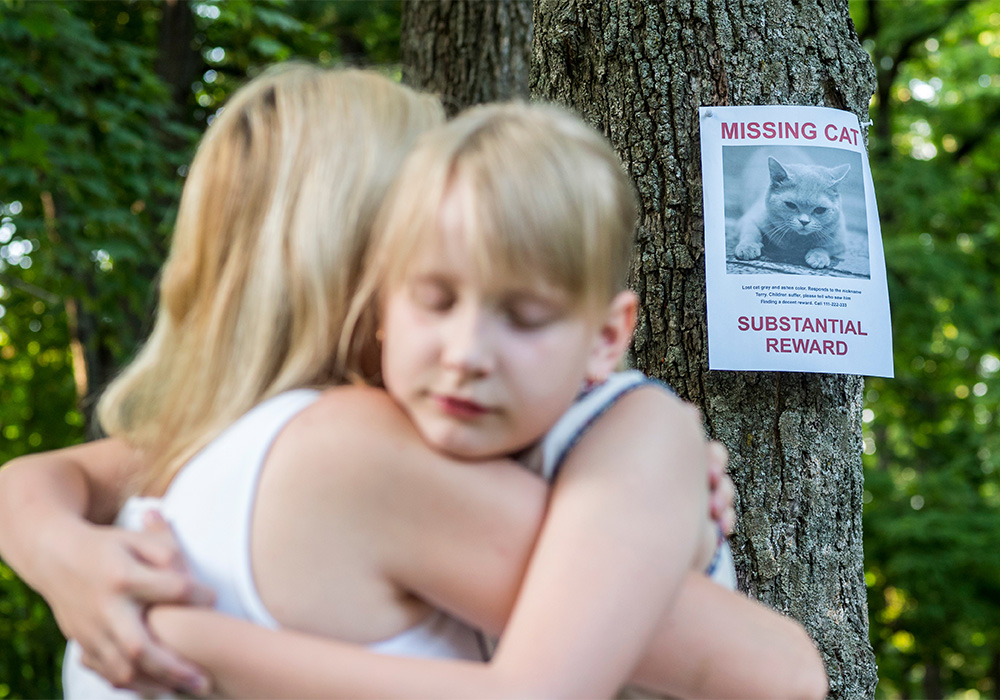
Here’s what to do if your pet goes missing…

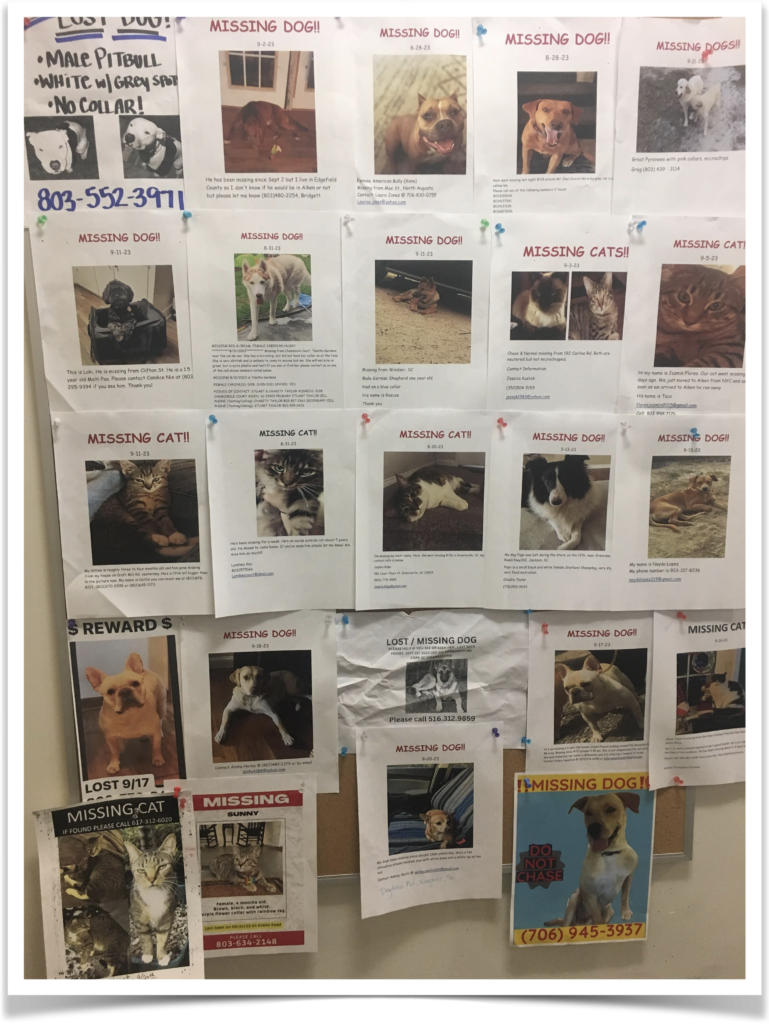
Some of the many lost pet flyers posted at the Aiken County Animal Shelter. On Oct. 14, County residents can get their pets microchipped for free to help them avoid losing their pets forever.

It is every pet owner’s fear that their dog or cat will vanish from their sight, yet it happens every day. A dog escapes through an open gate, an adventurous cat scurries out the front door, a scared dog wriggles out of his collar while being walked and runs off…there are so many ways this fear can become a reality.

If this nightmare does happen to you, don’t panic. There are steps you can take to locate your lost pet. If you act on them right away, your chances of reuniting with your lost pet are greatly improved.

  1. Contact the Aiken County Animal Shelter at (803) 642-1537. Be prepared to provide the following information:

    – Your name and telephone number
    – Where the pet went missing / was found (cross streets & city)
    – The date your pet went missing
    – Name, sex, age, size, color(s) and distinguishing marks
    – If your pet has a collar, state the color
    – Mention if your lost animal has a microchip

  2. Post your lost pet on your social media as well as the Aiken Pets Reunited Facebook page. Be sure to include the same information you provided to the shelter and a high-quality photo or two of your pet.
  3. Visit the County Animal Shelter (and other local animal shelters and rescue groups) to see if your pet is there… and keep checking. It may take a few days or even weeks before your animal is turned in.
  4. Put flyers up in front of your house and throughout your neighborhood. Many people drive around looking for the owner of an animal they’ve found. A large yard sign will help them locate you. Email or hand deliver flyers to your local shelters and rescues.
  5. Check with local workers. Be sure to alert your local postal workers, delivery drivers, bus drivers and garbage collectors. They are in the neighborhood daily and may spot your pet.

Microchip your pet for peace of mind
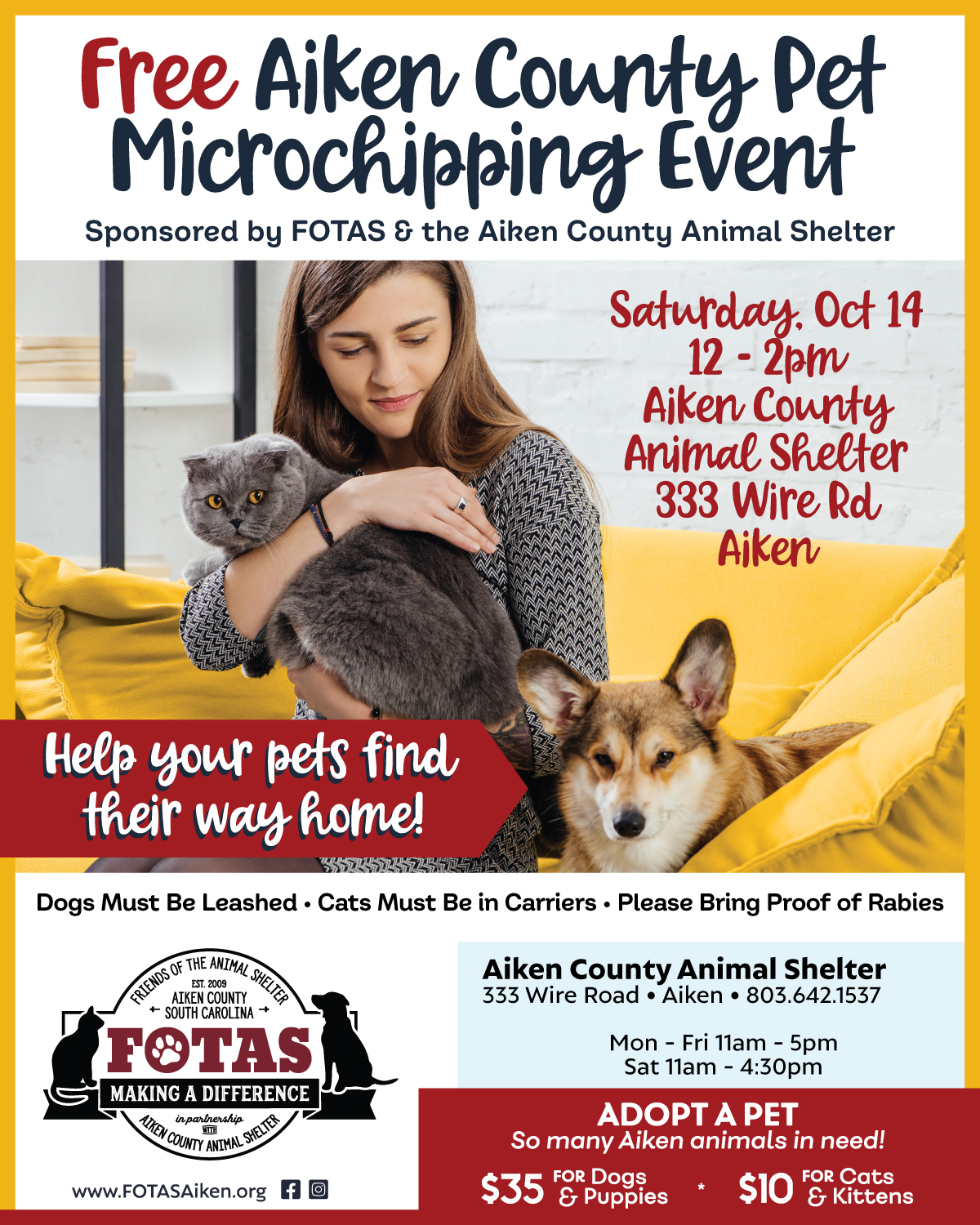
A tiny microchip could be the difference between losing your pet forever or getting them back home safe and sound. It is so essential, in fact, that FOTAS and the County Shelter are sponsoring a Free Aiken County Pet Microchipping Event on Saturday, Oct. 14, from noon to 2 p.m. If you live in Aiken County, you can bring your dog or cat to the County Animal Shelter, 333 Wire Road and get them microchipped for free (normal fee is $25 at the shelter). Dogs just need to be leashed and cats must be secure in carriers.

The chip, about the size of a grain of rice, is a permanent form of ID, registered to a recovery database that holds pet and owner information. It can be read by a scanner when the pet is found and brought to a shelter, rescue or veterinarian. The chip is inserted between the shoulder blades, and your pet won’t feel a thing. We will even register your information, give you an ID tag and take care of the paperwork. All you have to do is show up with your pet and their proof of rabies vaccination.

For more information about the Oct. 14 Free Aiken County Pet Microchipping Event, please call (803) 642-1537, option 3 or email info@FotasAiken.org.

Their lives are in our hands.

By Bob Gordon, FOTAS Communications Director
County staff & Good Samaritan team up to return pet home

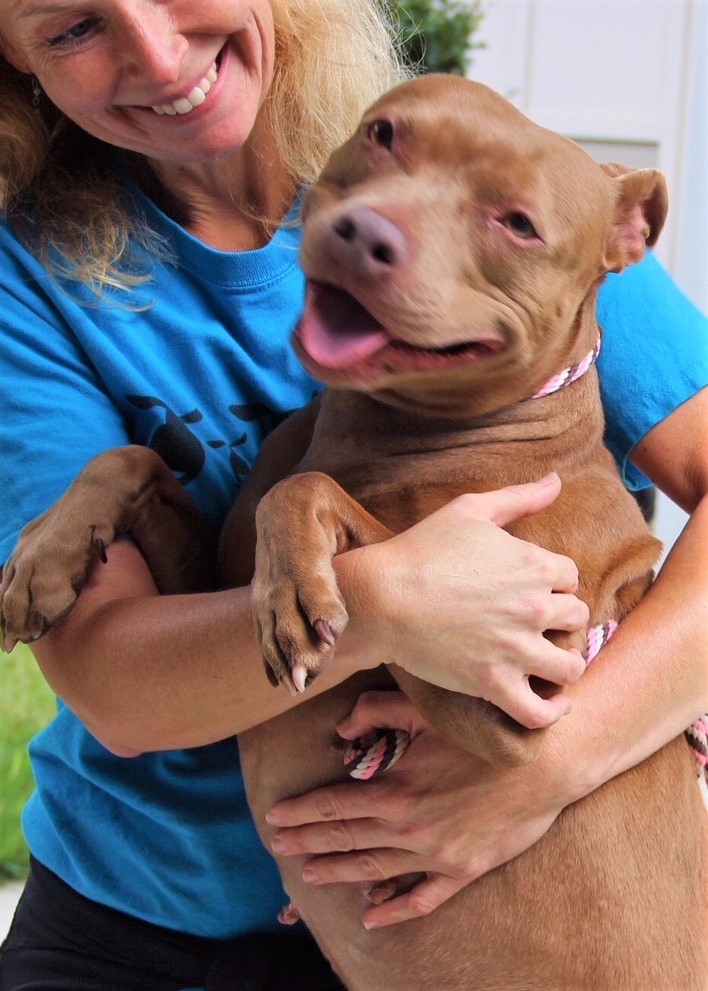
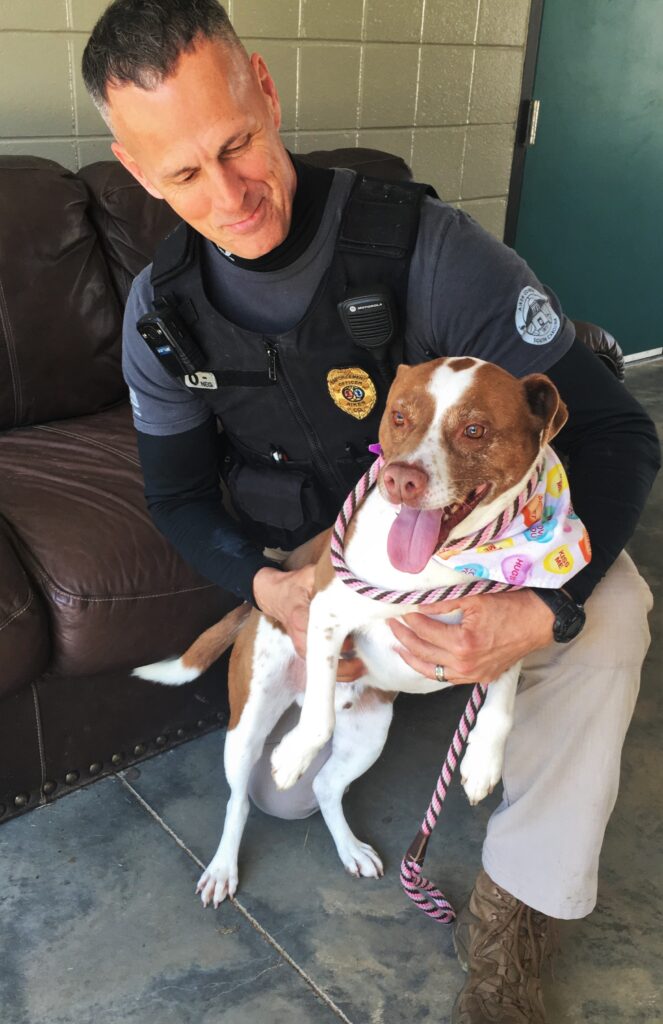
County Animal Code Enforcement Officer Dave Byerly (pictured with adoptable dog Desert) picked up a lost Husky from Good Samaritan James English’s home and delivered her back to her owner. Thanks to these two men, as well as support from other County staff, the Husky never had to go through the stress of being put into a shelter.

When James English crossed paths with a stray Siberian Husky mix while on his way to work, he wasn’t sure what to do.

“I was driving down the road I live on and suddenly this dog ran in front of me, so I slammed on the brakes,” he said. “When I opened the door to get out of my truck, she hopped right up into the front seat.”

The clean, well-groomed Husky had a collar and English thought the dog must be owned by someone in the neighborhood. So, he knocked on doors and asked people in the community if they had ever seen the dog before or knew where the dog lived. But no one recognized the pretty canine.

English was aware that Aiken County Animal Shelter was full, so he didn’t want to surrender the lost dog there except as a last resort. After days of searching for the Husky’s owner, he brought her to the shelter, where the staff scanned the dog and discovered she had a microchip. Her name was Fiona, and she lived four miles from where English found her. They contacted the owners and County Animal Code Enforcement Officer Dave Byerly arranged to pick up Fiona from English’s residence and deliver her back to her home the next morning. English said his girlfriend and her daughters appreciated being able to take care of Fiona for one more night before saying good-bye. The shelter staff, likewise, was thankful that English took good care of the lost Husky, helping to keep her out of the shelter while they tracked down her owner.

Use FOTAS & the Shelter as a resource

Most people only think of the Aiken County Animal Shelter as a place to bring lost or unwanted pets for rehoming. But it is most importantly a resource to help residents with their pet ownership and rescue efforts. Through its partnership with FOTAS, the shelter provides community outreach programs that not only benefit people and their pets, but also help to prevent dogs and cats from ever having to be surrendered and put in its kennels.

We now hold monthly pet food assistance drive-thru events. During these events, local residents in need of food for their dogs and cats can drive up to the shelter, where FOTAS volunteers place bags and cans of pet food in the trunks of their vehicles.

FOTAS also offers Fido Off-the-Chain to the community. This program provides humane runners and tethering for people who don’t have fenced-in yards. The County’s animal code enforcement officers usually deliver these tools to residents on a needed basis.

FOTAS’s Home to Home program is another resource that helps county residents keep their pets out of the shelter’s kennels. It is provided for people to use, free of charge, a marketing tool designed for pet owners who need to rehome their pet but do not want their dog or cat to endure the stress of being surrendered to the shelter.

We’ll continue to develop community outreach programs that further establish the County Shelter as a helpful resource rather than just a destination for unwanted pets.

Their lives are in our hands.

By Bob Gordon, FOTAS Communications Director

Aiken County residents can get their pets microchipped for free this Saturday

You don’t want to be permanently separated from your beloved pets when they go missing, and neither do we.

That’s why FOTAS and the Aiken County Shelter are sponsoring a Free Community Pet Microchipping Event for Aiken County residents this Saturday, Oct. 8, from noon to 2 p.m. If you live in Aiken County, you can bring your dog or cat to the County Animal Shelter, 333 Wire Road and get them microchipped for free! Dogs just need to be leashed and cats must be secure in carriers.

A microchip is a permanent form of ID, registered to a recovery database that holds pet and owner information. It is the size of a grain of rice and inserted under the skin of your dog or cat. The RFID enables it to be read by a microchip scanner when the pet is found and brought to a shelter, rescue or veterinarian. It is the only permanent identification form that can reunite you with your beloved pet. Unlike collars and identification tags, which can break or become worn and illegible, a microchip should last for the life of your pet.

Great pets are lost forever every day

We see so many wonderful lost pets that we are all but certain come from good homes yet are never claimed by their owners – and we have no way of identifying or contacting them. A stray dog or cat can be well-groomed, have a nice collar and be healthy and fixed. But if the pet does not have tags or a microchip, we can only monitor the internet for local sites that post pictures of lost pets (such as Aiken Pets Reunited on Facebook). The pet’s only hope of getting back home is if its owner comes to the shelter and identifies them.

Otherwise, after five days in the shelter, the owner’s cherished pet becomes eligible for adoption.

A tiny chip can save your pet’s life

It is every pet owner’s fear that their dog or cat will unintentionally become separated from them, but it happens all the time. A dog escapes his fenced-in yard, a cat runs out the front door, a dog pops his collar while being leash walked and gets lost…there are so many scenarios.
So if you live in Aiken County, please come to the County Animal Shelter this Saturday and get your pet microchipped for free (normal fee is $25 at the shelter). The procedure takes seconds and no anesthetic is required. The chip is injected between the shoulder blades, and your pet won’t feel a thing. We will even register your information, give you an ID tag and take care of the paperwork. All you have to do is show up with your pet and their proof of rabies vaccination.

It could be the difference between losing your pet forever or getting them back home safe and sound.

For more information about the Oct. 8 Free Community Pet Microchipping Event, please call (803) 642-1537, option 3 or email info@FotasAiken.org.

Their lives are in our hands.

By Bob Gordon, FOTAS Communications Director
Avoid Heartbreak by Microchipping Your Pets

A microchip the size of a grain of rice has the power to save your pet’s life. This radio frequency identification device (RFID) can mean the difference between losing your pet forever or quickly becoming reunited with your furry best friend.

Unlike a collar, which can break, fall off or be removed, a microchip is a reliable way to make your contact information accessible to rescues, veterinarians, animal control officers and shelters. Think of the microchip as your pet’s way of carrying his personal ID card despite having no pockets.

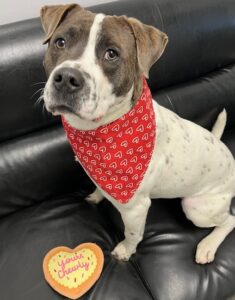
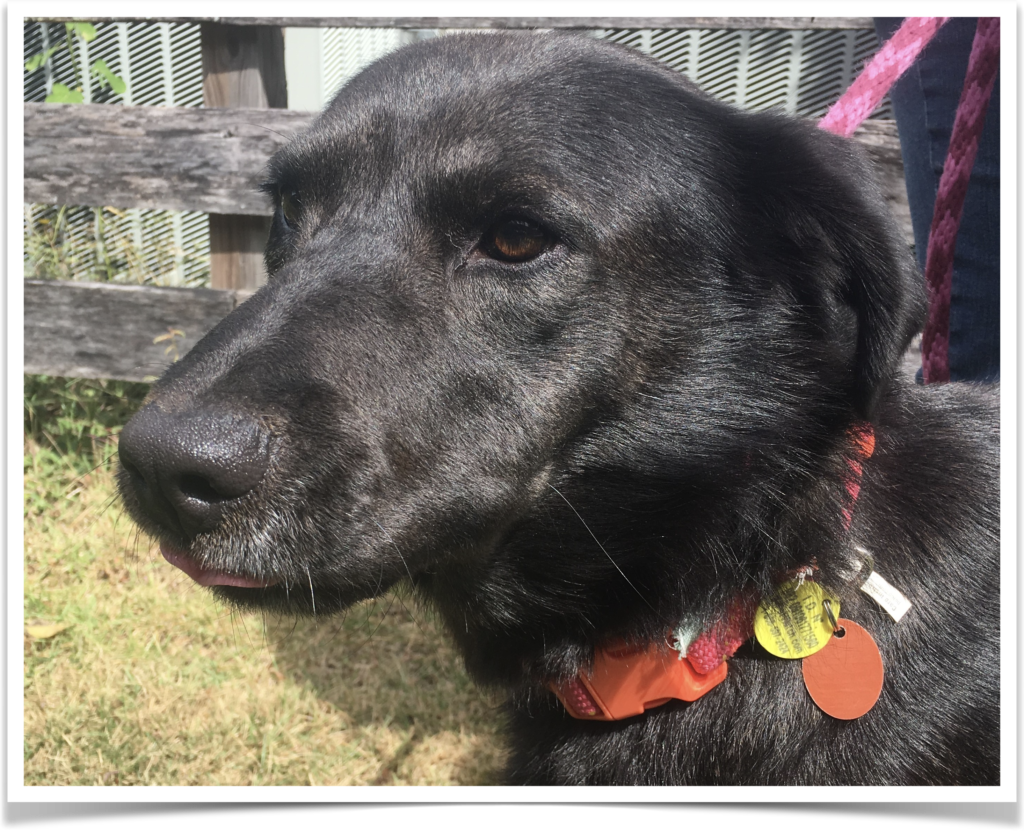
All pets on the ACAS adoption floor, like Bridget here, are microchipped and fixed.

Microchipping your pet is low-cost, quick and easy
The tiny, silicone microchip goes beneath your pet’s skin, between his shoulder blades. The pet feels little to no pain during its insertion and the procedure takes less than a minute. The microchip typically costs less than $50, and you can have it done at the Aiken County Animal Shelter (ACAS) for just $25. Along with the microchip, a tag is provided for your pet’s collar that features the microchip’s number.

Scenarios prove the value of microchipping pets
At the ACAS, every animal available for adoption is fixed, vaccinated and microchipped. When you adopt a pet, we ensure your most up-to-date contact information is registered with the microchip company.
Now, the microchip is not a tracking device. It isn’t a GPS that tells you where your pet is located. But it does allow us to track you down if your pet comes to the shelter or another rescue facility. A multi-digit number is assigned to your pet, and when we scan him, that number pops up on the scanner. Then we look up that number in an electronic registry, where your contact information can be accessed. Rather than putting your pet through the stressful experience of staying at the shelter, we can just call you to pick up your lost pet.

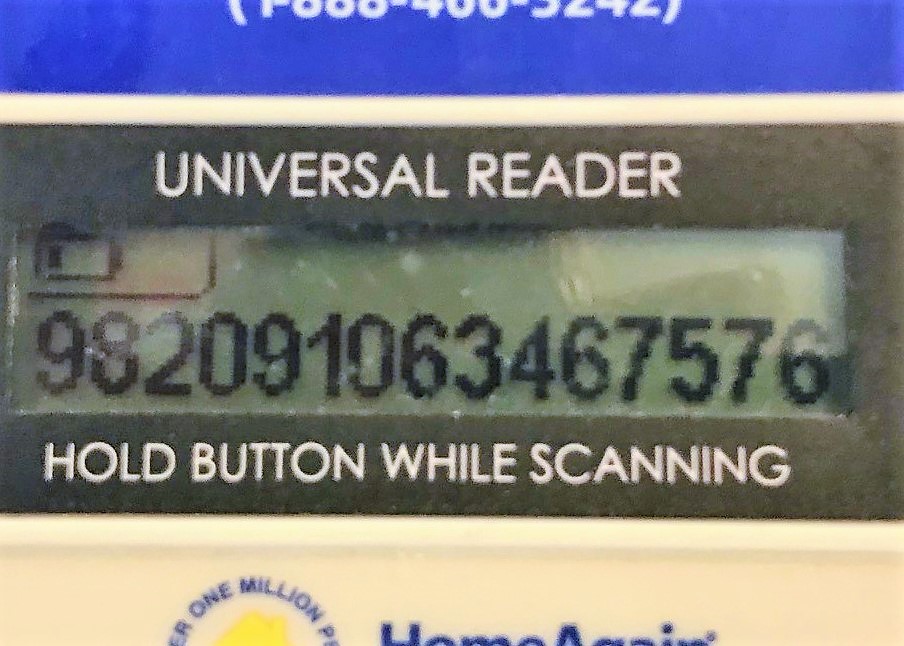
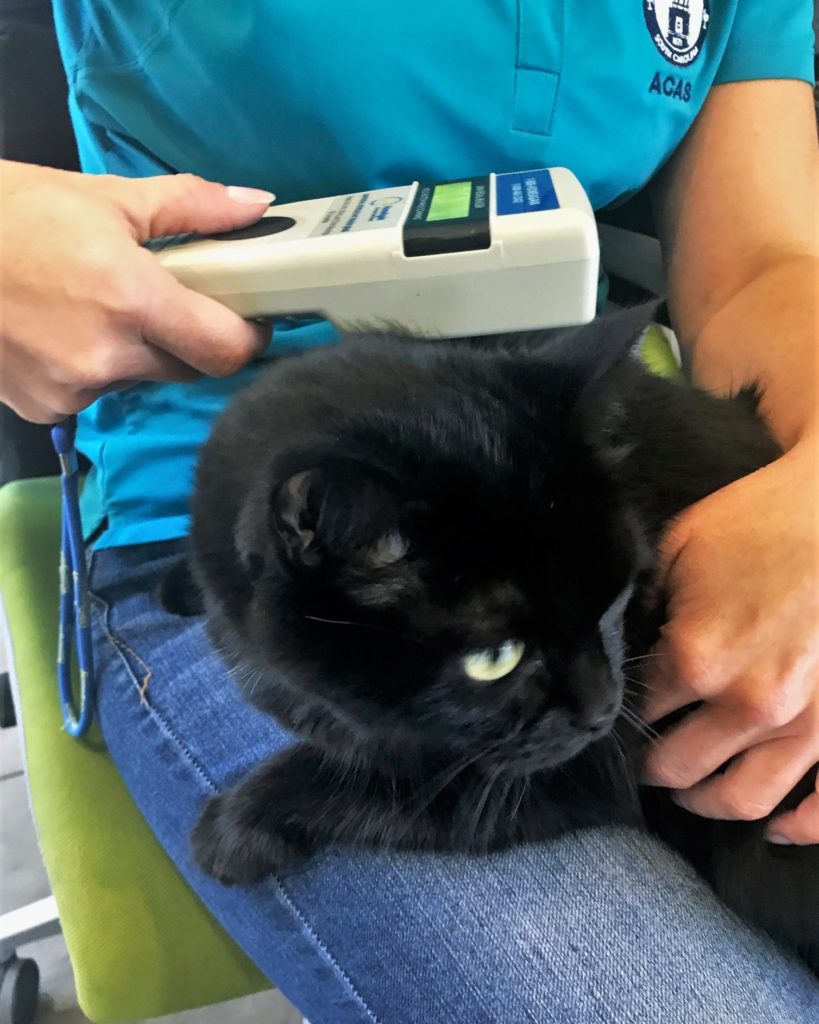
Macie, a Persian mix cat, is scanned to confirm her microchip number before being added to the ACAS adoption floor.

Recently, two young women rescued a small, tri-colored hound that was dodging traffic on a busy road in Aiken County. They brought the dog to the shelter to be scanned. We looked up the chip number and discovered it was a dog named Autumn that we had adopted out in 2019. Her owners were thrilled to get their pet home safe and sound.

It happens all the time. A lost dog or cat is found by a Good Samaritan and brought to the shelter or an animal control officer picks up a stray with no tags or other forms of ID. But one quick scan of the pet shows it be chipped when a beep is heard, and a number pops up on the scanner’s screen.

Make sure chip info is up to date
Once your pet is chipped, it is vital to update your contact information with the microchip company if you move or change your phone number. Too often the shelter receives pets who have been chipped but the information is old, so their owner cannot be found. If this happens, pets have to be held for 14 days before they can be rehomed.

Microchipping a pet assigns them a number used to identify and contact their owner.

One in three pets will become lost at some point during their life. Protect your pet by getting it chipped. Please call the ACAS at (803) 642-1537, option 7, to make an appointment to have it done for just $25 or contact your veterinarian.

Their lives are in our hands.

— By Bob Gordon, FOTAS Communications Director
Animal Control Officers: Friends, not Dog Catchers

by Kathy Jacobs, FOTAS Program Director

I often go to area schools to talk to students about responsible pet ownership and proper animal care.

When we talk about how animals come into the Aiken County Animal Shelter, I tell the students that animal control officers as well as members of our community rescue and bring in stray dogs and cats. When asked by a show of hands how many believe animal control officers are mean, most will raise their hands. These young people have watched many animated movies and television shows that portray these community helpers as “dog catchers” – the cruel characters that drag Bolt and his friends into the dreaded animal shelter. What a misconception!

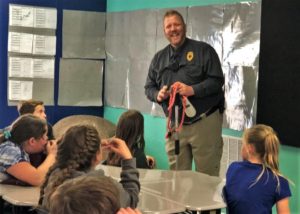
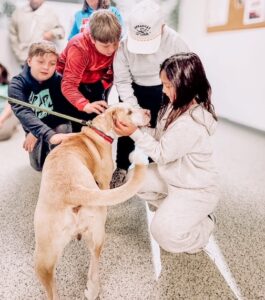
Officer Creel poses with Tall Pines STEM Academy students after talking to them about his job and giving them tips on how they can help homeless pets in their community.

Our community is very lucky to have officers that protect us and our pets from unvaccinated, sometimes aggressive animals. They look out for the neglected, abused and unloved pets in our area. They rescue dogs that have been left in the heat and cold without proper shelter, food and water. They bring in horses and pigs that have escaped their enclosures. These are the good guys.

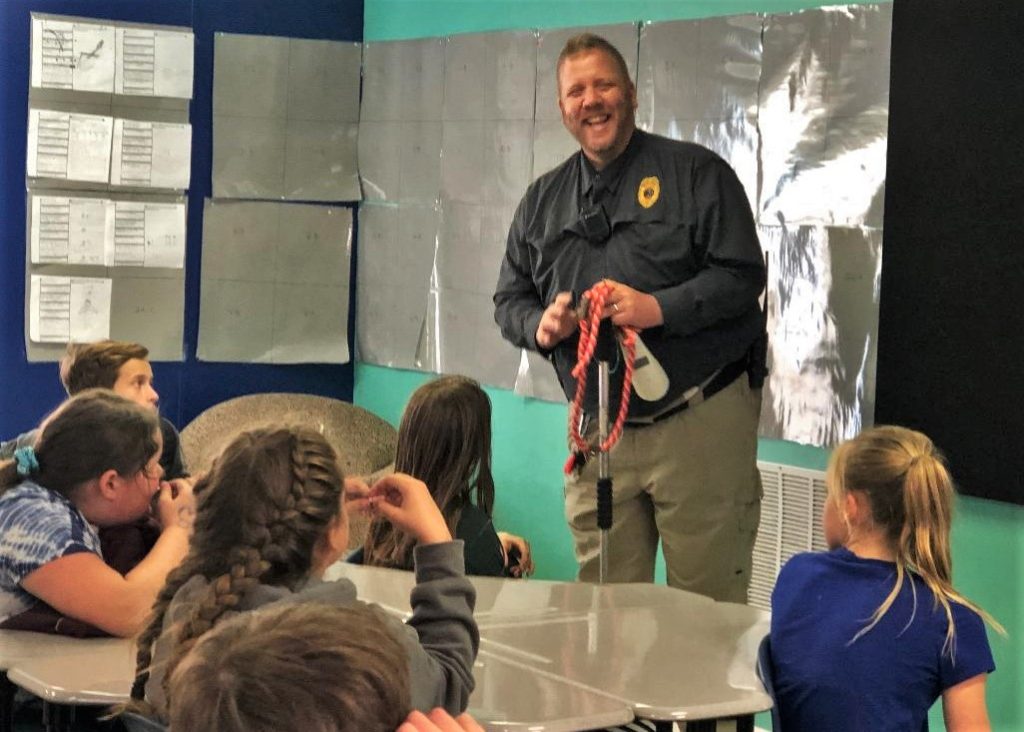
Recently, Officer Brandon Creel attended our Junior FOTAS meeting at Tall Pines STEM Academy. He brought a catch pole, a scanner that reads microchips and demonstrated to the students how he and the other officers are trying to help. He explained that when officers use catch poles, it is as much for the dog’s protection as their own. Dogs can’t say “Stop,” but they can bite out of fear. If a dog bites an officer, not only will the officer be injured but the dog will have to go into quarantine. Therefore, the catch pole safely gets the dog into a kennel where they can decompress at the shelter. The scanner, he explained, helps officers identify and return dogs and cats to their homes without having to go to the shelter.

Officer Creel enjoys a light moment with students while teaching them about his job duties.

The officers also pick up scared strays, issue tickets to those who do not vaccinate, and educate the public about how to properly care for their pets. They save so many lives!

Officer Creel told the students that there are three things they can do to help: make sure their pets are vaccinated, ensure their animals are spayed and neutered, and speak up when they see an animal in need.

Aiken County is in good hands with this group of animal control officers. At the end of the work day, you will often see them visiting the dogs in their kennels, handing out pet treats and petting cats that need socializing. It’s their way of showing these animals that they do care about them and want them to be happy. Many of the officers have even adopted animals that they have rescued from the streets.

Their lives are in our hands.

BY THE NUMBERS
From April 1 to 10, the Aiken County Animal Shelter received 115 strays and surrendered pets. That’s more than 11 a day!

PETS OF THE WEEK
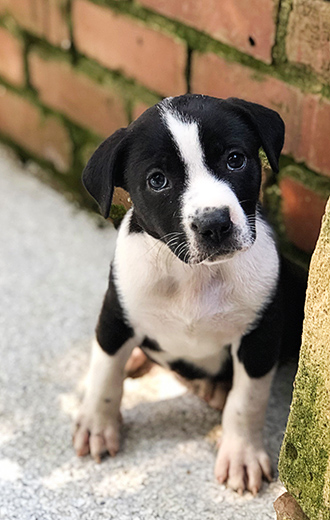
HUDSON: Terrier mix, male, 2 years old, 26 pounds – $35
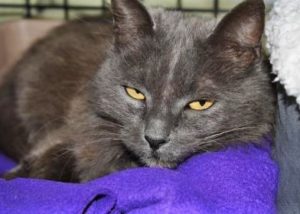
SMOKEY: Domestic Medium Haired cat, female, 9 years old, 6 pounds – $10
Reunited by a Microchip — Eight Years Later!

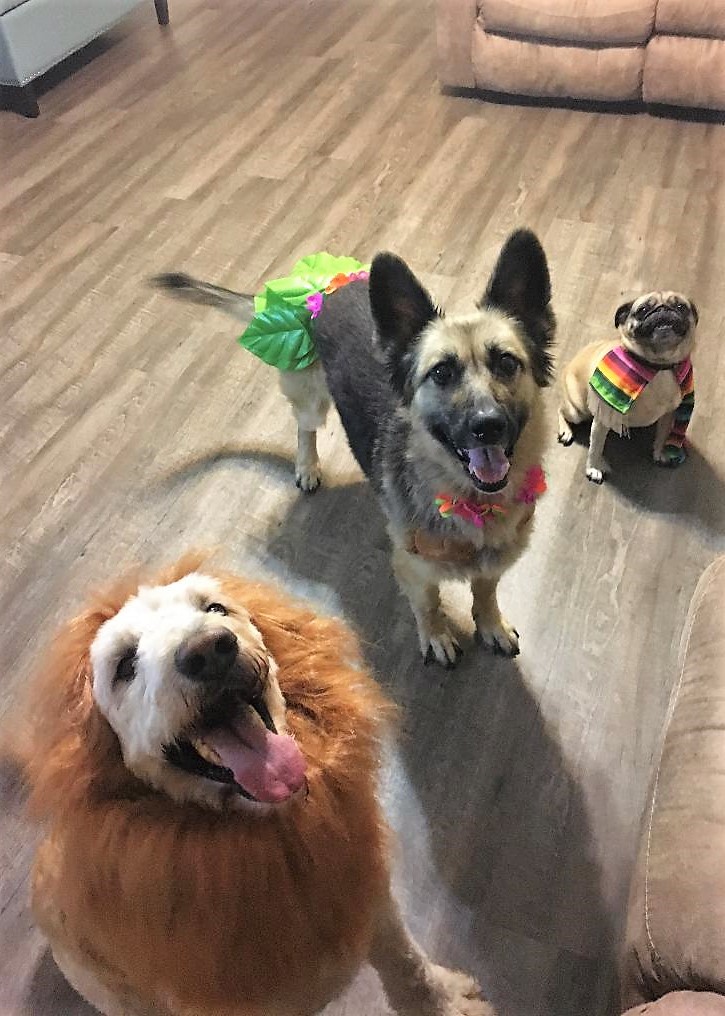
This is a story with a happy ending, one that spans eight years, six states, and a dog named Beanie.

In 2010, the Wilson* family found a hungry and scared shepherd puppy on the side of the road. They took her home, fed her, and cleaned her up. They actively searched for her owners, but no one claimed her. After some time had passed, they named her Beanie, took her to the vet, had her vaccinated and microchipped, and found her a home with a couple who lived up north.

This past October, Kate Wilson, who now lives in Delaware with her family, was contacted by the Aiken County Animal Shelter. Beanie had been picked up as a stray by animal control officers, who found the Wilson’s contact information through their original microchip registration.

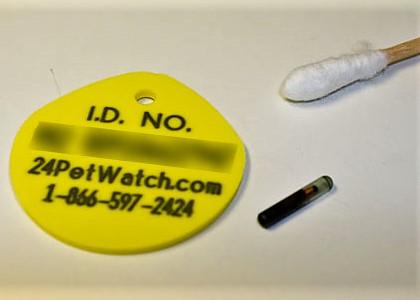
A microchip is only the size of a grain of rice but it can be the lifeline to your pet.

The Wilsons were stunned. How could this have happened? Certain that Beanie was just lost and not abandoned, they searched for the family who had adopted her, but the contact numbers from eight years before were disconnected. Then they posted Beanie’s information on “lost pet” sites all over social media, but by the end of the shelter’s mandatory “stray” hold period, no one had claimed her.

In the meantime, the Wilson family couldn’t stop thinking about Beanie. The decision to rehome her eight years before had been a hard one. At the time, they already had family pets as well as another stray puppy they were trying to place, so when they found Beanie what they thought was the perfect home, they reluctantly let her go, but they never forgot about her.

I spoke and texted with Kate often during the week Beanie was held at the shelter. Both Kate and her husband had come to see the hand of God in this unexpected reappearance of Beanie in their life, and they made the decision to bring her home—so long as she was kid-friendly and could get along with their other two dogs. We tested Beanie at the shelter with both children and other dogs and she passed with flying colors—the sweetest dog ever! We arranged for Beanie to catch a ride north with one of our transfers, and Kate met the truck on the side of the road at 3 a.m. to pick her up and take her home.

The reunion was magic. Beanie was happy to see Kate and her husband, and she bonded immediately with the children and the two dogs. She even sleeps with their little pug, who can be prickly with other dogs. “It’s like she’s always been here,” says Kate, “part of the family—like she never left.”

Beanie’s microchip helped her find a forever home and two canine BFFs.

Meant to be? Hand of God? Works for me.

There are so many lessons to be learned from this story, but here’s the most important: microchips are an inexpensive, effective way to keep your pet safe when the worst happens and they get lost—all you have to do is keep your microchip contact information current. Microchips can be inserted quickly and painlessly by your vet or a local clinic.

Beanie was lucky; her microchip got her home. Will your pet be that lucky?

Their lives are in our hands.

*Name changed at the family’s request.

— by Kathy Jacobs, FOTAS Program Director


By the Numbers

Over the last two months (Oct 1 to Dec. 5), the County Animal Shelter has taken in 927 strays and surrendered pets! Please spay/neuter your dogs and cats.


Pets of the Week

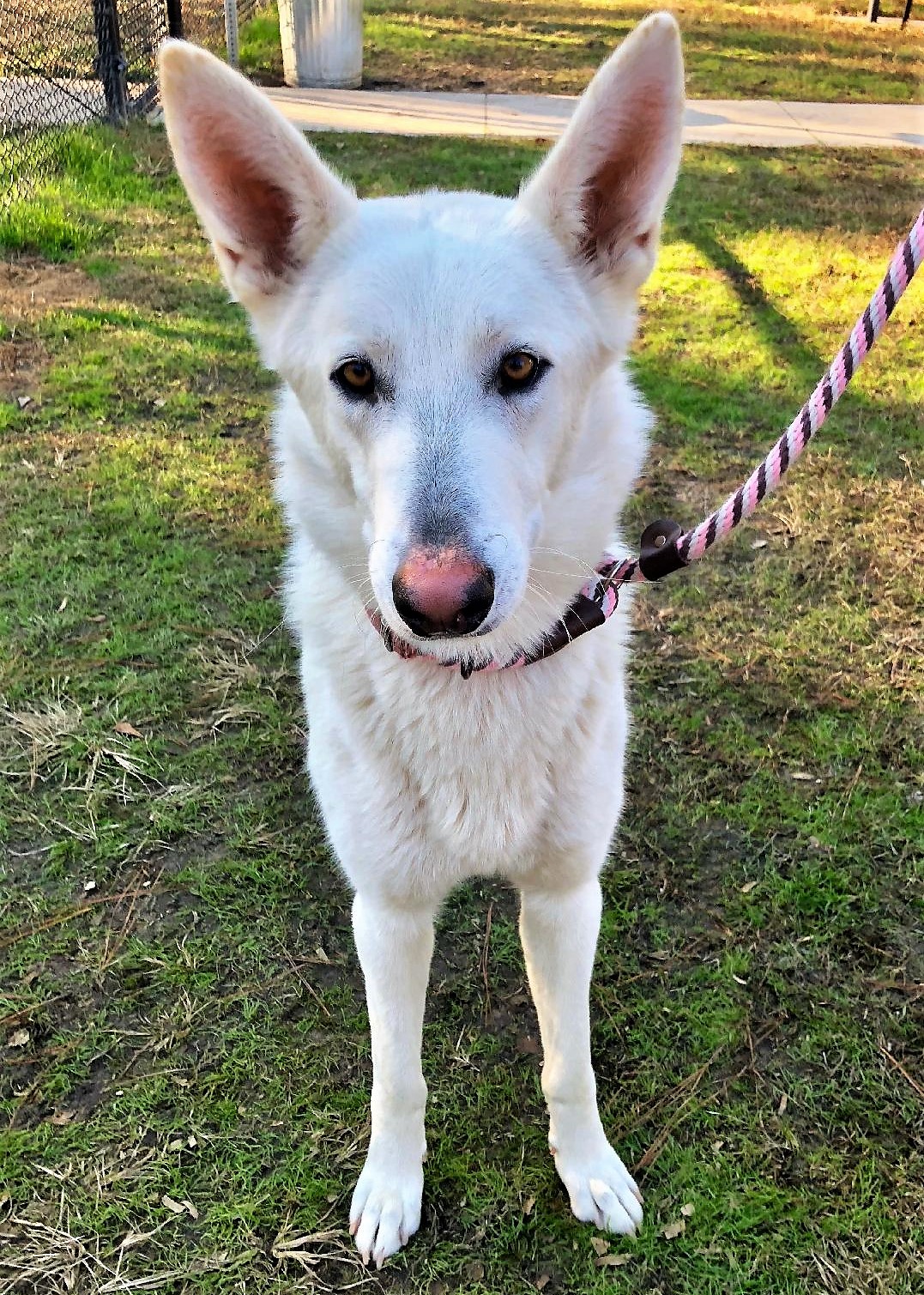
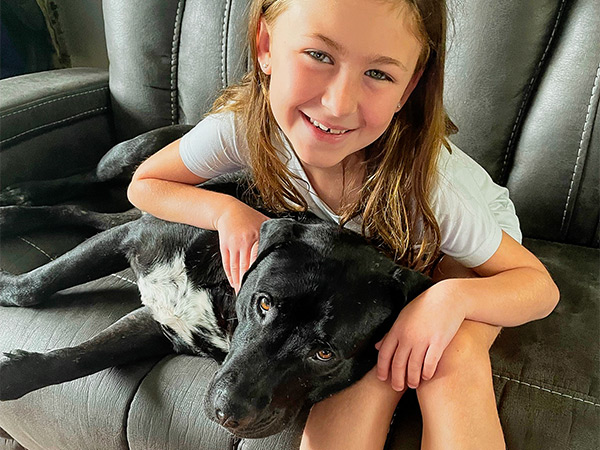
JACKS: Shepherd mix, male, 2 years old, white, 80 pounds – $35


FROST: Domestic Shorthair kitten, male, 2 months old, orange and white Tabby, 1.7 pounds – $10