



Tag Archives: Wagener

Lenny’s Brigade strikes again

25 January 2015

Lenny's Brigade strikes again

By Joanna Dunn Samson, Vice President of FOTAS

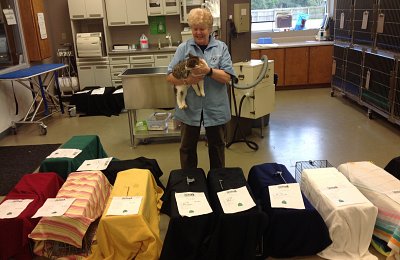
Shortly after sunrise last Saturday, 3 trucks set off from Wagener and Graniteville with a collective cargo of 19 feral cats trapped the night before from various cat colonies located in and around the two towns. The cats, trapped by volunteers of FOTAS’ Trap, Neuter and Release (TNR) program called Lenny’s Brigade, were on their way to Aiken Animal Hospital to be spayed or neutered by Drs. Cindy Brown and Mary Tricia White, two local veterinarians with big hearts and a deep commitment to animal welfare.

By 8 a.m., all 19 crates had been unloaded at the Hospital.  By 8:15, Drs. Brown and White, accompanied by Veterinary Technicians, Leanna Long and Paxy Holley, and Veterinary Assistant Megan Degan, began to sedate and prep the animals for surgery. By noon, all 19 surgeries had been completed, and the cats were resting comfortably in their crates.

“Dr. Brown and her team are amazing,” says Jennifer Miller, President of FOTAS. “They are top-notch doctors dedicated to the highest standards of professional care. When Dr. Brown offered to donate not only her time, but her clinic and supplies as well, we were speechless with gratitude.”

“Between our practice and our families, time is a valuable commodity for all of us,” says Dr. Brown, “so we made the decision as a team to take this on. We have the skills, we have the place, and we have the supplies, and we thought, ‘This is really important.’ It’s another way for us to give back to the community.”

It is important. Community, or feral, cats are domestic cats that have been either abandoned or born in the wild. Highly adaptable, cats can survive quite well on their own; however, an unmanaged, unchecked population of feral cats has the potential to upset the balance of nature in the area in which they live.

Not surprising since it is estimated that a female cat is capable of producing as many as 100 kittens during her lifetime.  If a typical colony is 25 cats, and slightly more than half are female, that’s 1300 offspring per colony without factoring in the breeding capacity of the males and the fertility of the subsequent generations of female offspring.

TNR programs like Lenny’s Brigade involve humanely trapping, sterilizing and inoculating community cats, then returning them to their original colony. Long-term studies indicate that over time, TNR is a more effective way of reducing community cat populations than just euthanizing them since new cats always move in to fill the void.

Lenny’s Brigade, the brainchild of FOTAS volunteer Dr. Kathy Bissell, DVM, pioneered TNR in Aiken County, and thanks to FOTAS organizers Colleen Timmerman, Vicky Wright, Dottie Gantt, Carol Miller and other volunteers, and Mayor Mike Miller from Wagener, FOTAS has organized and funded the spay/neuter of more community cats in the past two years than any other organization in the County – 409 feral cats to be exact.

Back at the Aiken Animal Hospital, after a couple of hours of rest, the 19 cats were loaded back on to the trucks and returned to Wagener and Graniteville, where they were collected by the FOTAS volunteers who had dropped them off in the morning. Most of the cats spent the night with the volunteers and were reunited the next morning with their colony of origin – safe, inoculated from disease and no longer capable of contributing to future generations of unwanted cats.

If you do the math, that’s at least 1300 less future homeless kittens to worry about thanks to 2-3 days of hard work by dedicated volunteers.

It’s a start.


PETS OF THE WEEK

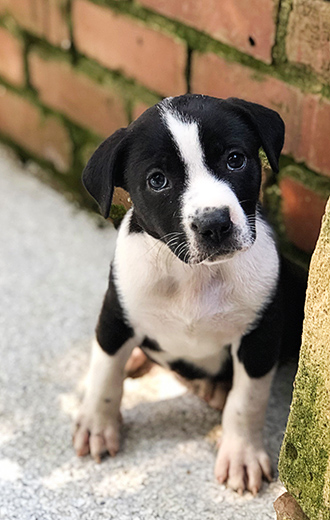
CASPER — Male, American bulldog  mix — 4 1/2 months, 23 lbs — $70

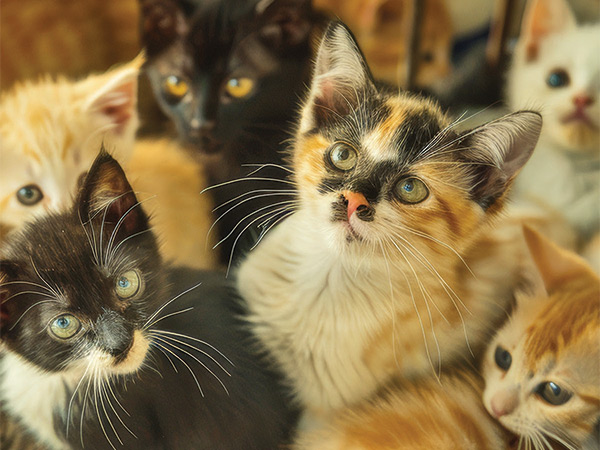
PINE — Male, Domestic Short Hair — 3 months — $35

Wagener Cares

24 August 2014

Wagener Cares

By Joanna Samson, FOTAS Board of Directors

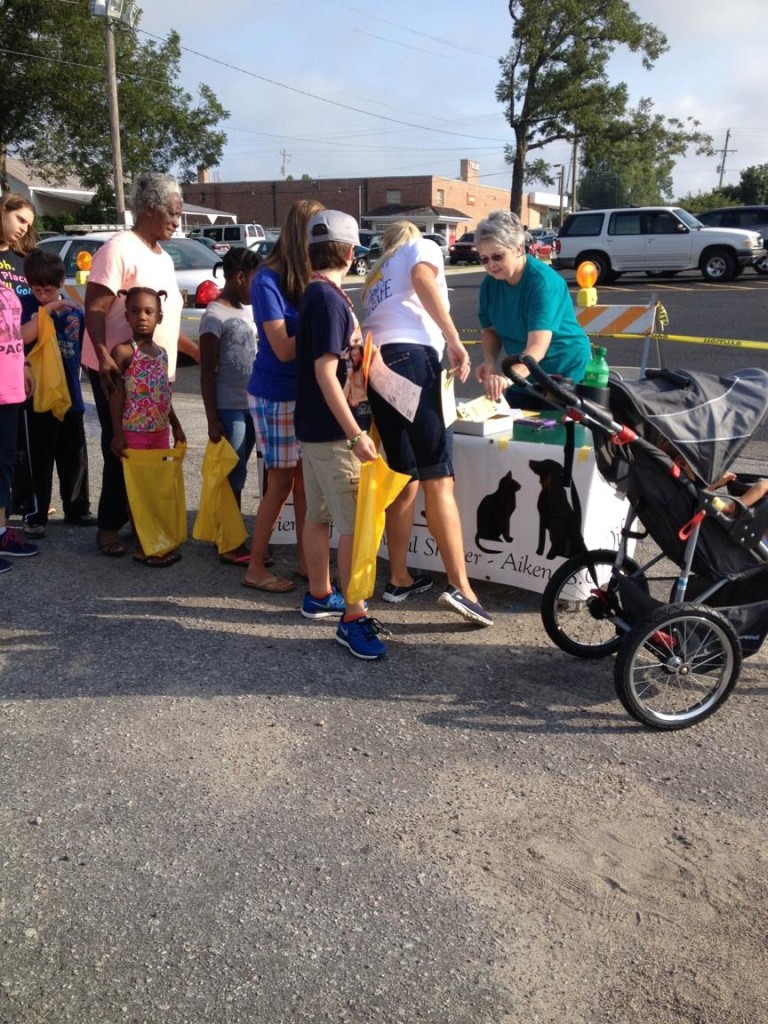
On Saturday, August 16th, CTFK (Churches Together for the Kids Ministries) hosted its annual Back2School Bash in downtown Wagener to ready area students for the upcoming school year.

It was a beautiful day.  Friends and families gathered to catch up with their neighbors and have some lunch, while children of all ages lined up for free school supplies, haircuts and health screenings.

FOTAS was on-site to provide information about its Fix-a-Pet Program, which provides low or no-cost spay/neuter surgeries for pets in the Wagener area.

“I bet we saw 600 people,” says Carol Miller, one of the FOTAS Fix-a-Pet coordinators. “We ran out of stickers, coloring sheets and animal cards after lunch.  We handed out all of our Fix-a-Pet fliers and spoke to lots of people who were interested in taking advantage of the program.”

“It was a huge success,” she continues. “20 people scheduled spay/neuter surgeries for last Tuesday. We have had so many calls, we are already scheduling the next pick-up date.”

Wagener is a town that has preserved a strong sense of community and tradition. It has not fallen prey to the nondescript modernity of chain stores and fast food restaurants.  In so many ways, Wagener is a picture of Americana, representing the small-town values upon which this country is built.

Yet over time, Wagener has become a hotspot in the County for problematic overpopulation of dogs and cats, resulting in a disproportionately high number of homeless animals euthanized in the County Shelter every year.

Over the past three years, FOTAS has worked closely with Mayor Miller’s office to address this issue by providing low or no-cost spay/neuter surgeries for pets in the Wagener area.

Once or twice a month, depending on the number of people who have signed up at the Mayor’s office, FOTAS volunteers arrange the pick up, transportation and return of the animals to and from the SPCA’s spay/neuter clinic, and FOTAS pays the costs of the surgery.

“We know how hard it is for families and working folks to find the time and resources to spay or neuter their pets,” says Colleen Timmerman, another FOTAS Fix-a-Pet coordinator, “so we try to make it as financially and logistically painless as possible.”

The hard work is paying off.  In 2013, FOTAS paid for 379 spay/neuter surgeries, the majority of which came from the Wagener area. This year should be even better as the FOTAS Fix-a-Pet Program (which also supplements the County Voucher Program for all County residents) gains traction in the community.

Every spay/neuter surgery does make a difference.

According to theoretical breeding statistics, that is, the number of kittens or puppies an un-spayed female and her offspring are capable of producing over a 7 year period, one un-spayed female cat and one un-neutered male cat can produce 420,000 kittens in 7 years.  For dogs, one un-spayed female and one un-neutered male can produce 67,000 puppies over the same period.

While it’s true these numbers are theoretical and assume maximum health and reproduction capabilities and longevity, they are nevertheless mind-blowing. The population of unfixed animals in the County is the reason for the shockingly high number of homeless animals (4800 last year, down from 6500 in the past) consigned to the County shelter each year and the correspondingly high euthanasia rates.

Pope Paul II once said, “A community needs a soul if it is to become a true home for human beings,” and that it is the people of the community that give it that soul.

Wagener is a community with soul.  As evidenced by the Back2School Bash, it is a place that cares deeply for its people and its children. The increasing success rate of the FOTAS Fix-a-Pet Program demonstrates Wagener is a place that cares deeply for its animals as well.


MAXIMUS    Male    Germand shepherd mix    9 mos   40 lbs

SCOOTER     Male   Domestic Medium Hair    8 wks    1.6 lbs.