


Category Archives: County Animal Control

Animal Control Officers: Friends, not Dog Catchers

by Kathy Jacobs, FOTAS Program Director

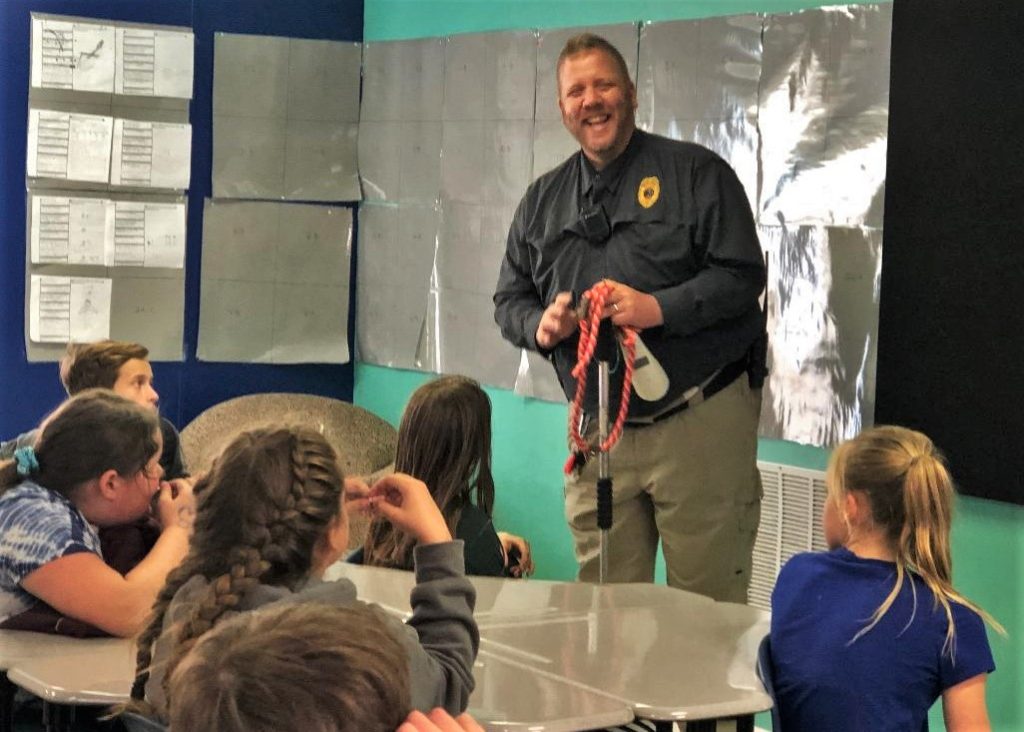
I often go to area schools to talk to students about responsible pet ownership and proper animal care.

When we talk about how animals come into the Aiken County Animal Shelter, I tell the students that animal control officers as well as members of our community rescue and bring in stray dogs and cats. When asked by a show of hands how many believe animal control officers are mean, most will raise their hands. These young people have watched many animated movies and television shows that portray these community helpers as “dog catchers” – the cruel characters that drag Bolt and his friends into the dreaded animal shelter. What a misconception!
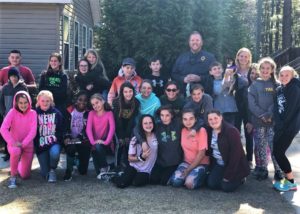
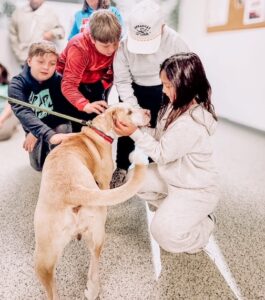
Officer Creel poses with Tall Pines STEM Academy students after talking to them about his job and giving them tips on how they can help homeless pets in their community.

Our community is very lucky to have officers that protect us and our pets from unvaccinated, sometimes aggressive animals. They look out for the neglected, abused and unloved pets in our area. They rescue dogs that have been left in the heat and cold without proper shelter, food and water. They bring in horses and pigs that have escaped their enclosures. These are the good guys.

Recently, Officer Brandon Creel attended our Junior FOTAS meeting at Tall Pines STEM Academy. He brought a catch pole, a scanner that reads microchips and demonstrated to the students how he and the other officers are trying to help. He explained that when officers use catch poles, it is as much for the dog’s protection as their own. Dogs can’t say “Stop,” but they can bite out of fear. If a dog bites an officer, not only will the officer be injured but the dog will have to go into quarantine. Therefore, the catch pole safely gets the dog into a kennel where they can decompress at the shelter. The scanner, he explained, helps officers identify and return dogs and cats to their homes without having to go to the shelter.
Officer Creel enjoys a light moment with students while teaching them about his job duties.

The officers also pick up scared strays, issue tickets to those who do not vaccinate, and educate the public about how to properly care for their pets. They save so many lives!

Officer Creel told the students that there are three things they can do to help: make sure their pets are vaccinated, ensure their animals are spayed and neutered, and speak up when they see an animal in need.

Aiken County is in good hands with this group of animal control officers. At the end of the work day, you will often see them visiting the dogs in their kennels, handing out pet treats and petting cats that need socializing. It’s their way of showing these animals that they do care about them and want them to be happy. Many of the officers have even adopted animals that they have rescued from the streets.

Their lives are in our hands.

BY THE NUMBERS
From April 1 to 10, the Aiken County Animal Shelter received 115 strays and surrendered pets. That’s more than 11 a day!

PETS OF THE WEEK
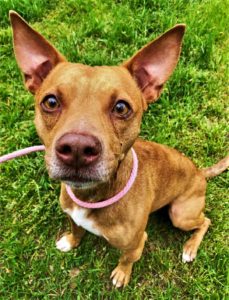
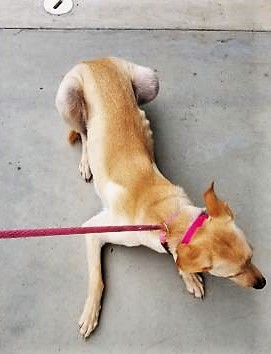
HUDSON: Terrier mix, male, 2 years old, 26 pounds – $35

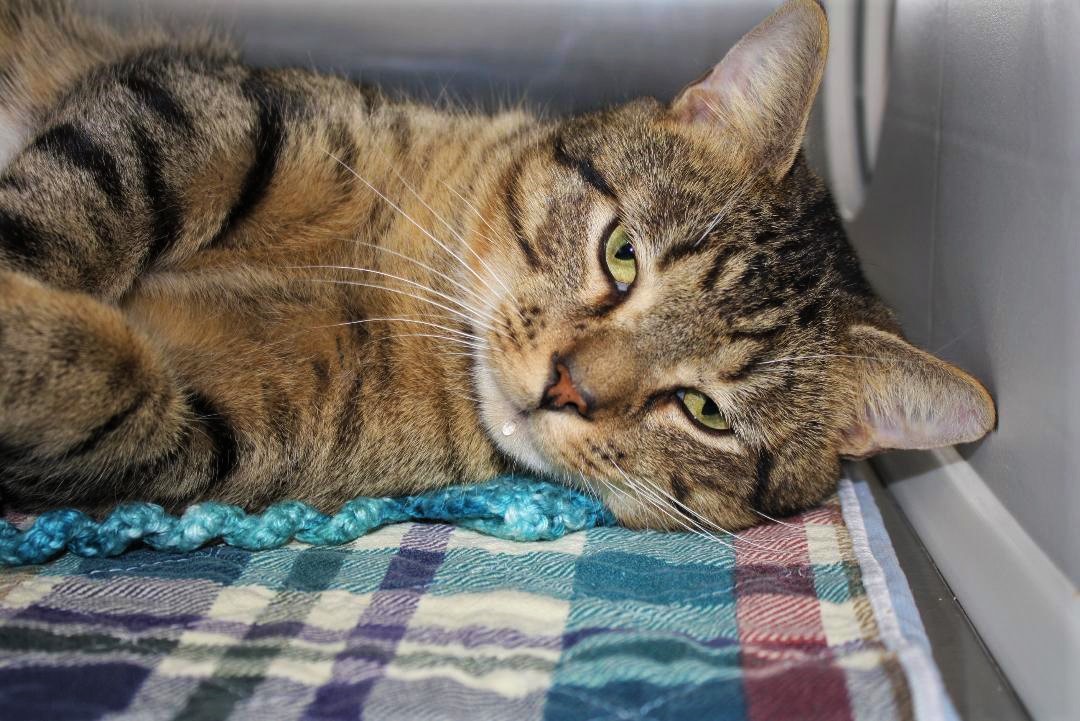
SMOKEY: Domestic Medium Haired cat, female, 9 years old, 6 pounds – $10
Save Lives and Stop Needless Suffering by Fixing your Pets

When people talk about our chronic dog and cat overpopulation problem, they usually focus on the overwhelming numbers – and rightfully so. Millions of pets lose their lives each year because people don’t spay/neuter their animals.

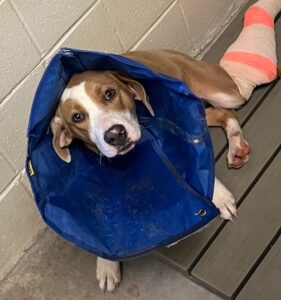
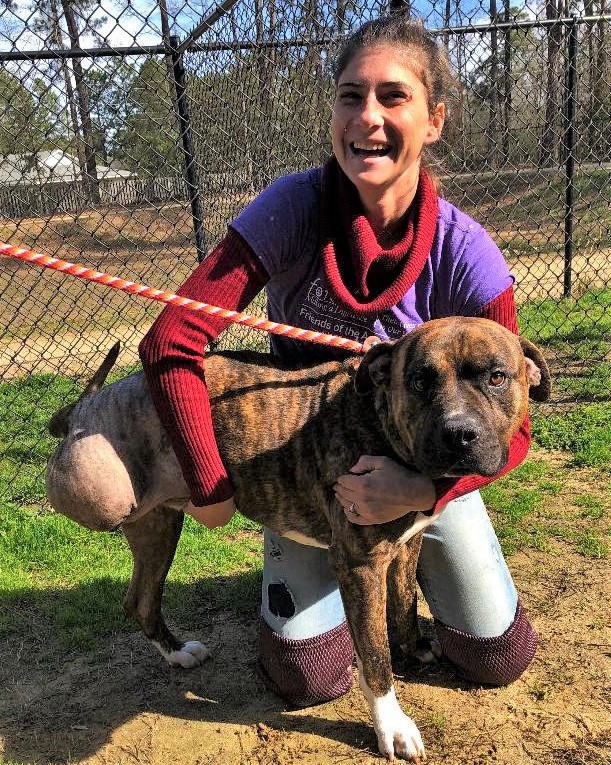
Stray dog Thaddeus arrived at the shelter with a gunshot wound so severe, his right back leg was turned to powder and had to be amputated.

Puppies and kittens will soon be pouring into the County Shelter because some citizens are not getting their pets spayed/neutered.

In fact, the Aiken County Animal Shelter (ACAS) takes in approximately 125 unwanted animals per week during the summer months. When you do the math, the total number of animals coming into the shelter is staggering and the only solution to the problem is spaying and neutering your pets.

It’s really easy and inexpensive to get your pets fixed now, thanks to the County’s spay/neuter voucher program and FOTAS’s Fix-a-Pet program. The SPCA Albrecht Center clinic and participating local veterinarians accept these vouchers, available at the County Shelter, which reduces the cost of fixing your pet to $15 or less.

Wagener, a young stray cat arrived at the shelter in severe pain because her birth canal was too small, and she couldn’t deliver her kittens. She was saved but some of her babies died inside her.

FOTAS and the County also offer a Trap, Neuter & Return (TNR) program for feral and community cats that is helping to reduce feline overpopulation in the area. Cats must be brought to the shelter in a trap, which you can borrow from the ACAS. Trapped cats can be brought to the shelter at 333 Wire Road in Aiken on Tuesday, Wednesday or Thursday mornings at 8 a.m. and picked up later the same day. Call the ACAS for more information, (803) 642-1537.

Mama dog Angeline was scared and exhausted when she was brought in with her starving puppies.

Last year, Aiken County and FOTAS paid for the spay/neuter of 1,287 pets owned by citizens in financial need and 1,099 community/feral cats.

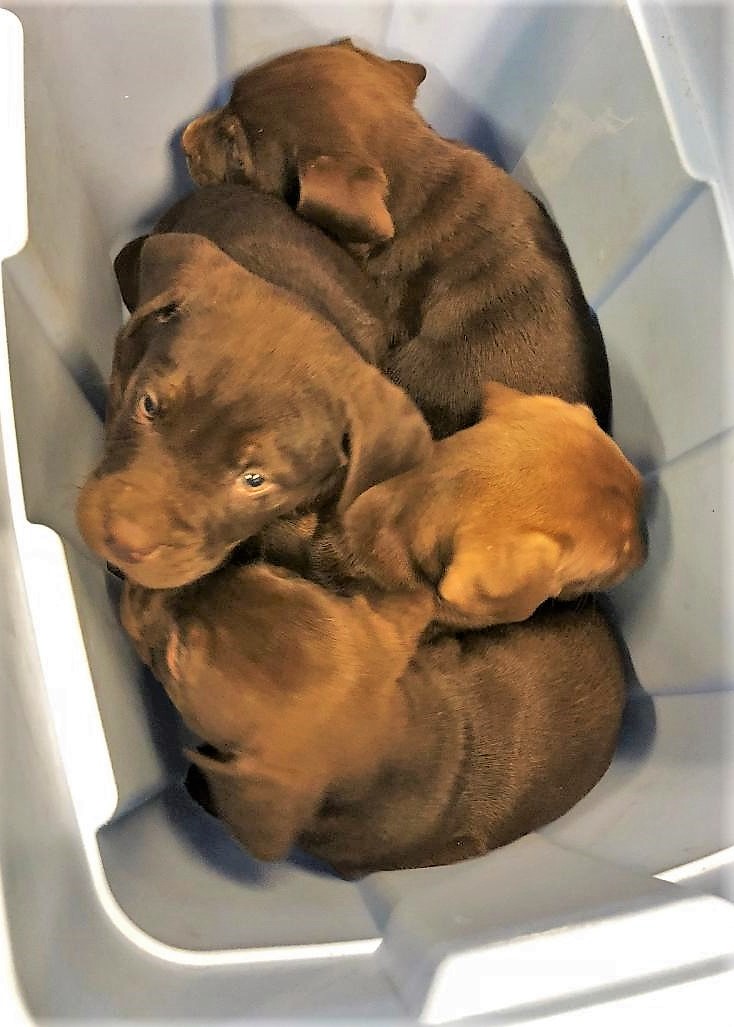
Yellow Retriever Angeline and her starving puppies were brought to the ACAS by an animal control officer. The mama dog was suffering and freezing to keep her puppies alive. Exhausted and ribs visible, Angeline was afraid of human touch but she and her pups are now recovering with the care of FOTAS foster volunteers.

February is National Spay/Neuter Awareness Month, an ideal time to encourage people to have their pets sterilized before the spring and summer months, when there is a rampant overproduction of puppies and kittens. It’s also a time to recognize one other aspect of this issue: needless suffering. These animals not only are filling our shelters but when wandering on their own, searching for mates and food, they also can face horrible and painful consequences.

Thaddeus is a stray who was shot while homeless and searching for food.

So, we’re asking you to help us do better this year. Let’s spread the word about the importance of spay/neuter to our family, friends, acquaintances and even strangers.

Also, please join us in thanking the folks who are helping to fight this animal overpopulation battle. We thank the Aiken County Council for its support of the vital Spay/neuter voucher program; Code Enforcement Director Paige Bayne for the awesome management of the County Spay/Neuter voucher program; The ACAS vet clinic for their TNR work; and our FOTAS TNR veterinarian partners, Aiken Animal Hospital, Aiken Veterinary Clinic, Silver Bluff Veterinary Clinic and Veterinary Services of Aiken.

Their lives are in our hands.

— By Bob Gordon, FOTAS Communications Director

By the Numbers
So far this month (Feb 1-15), the Aiken County Shelter has taken in 176 strays and surrendered pets.


Pets of the Week
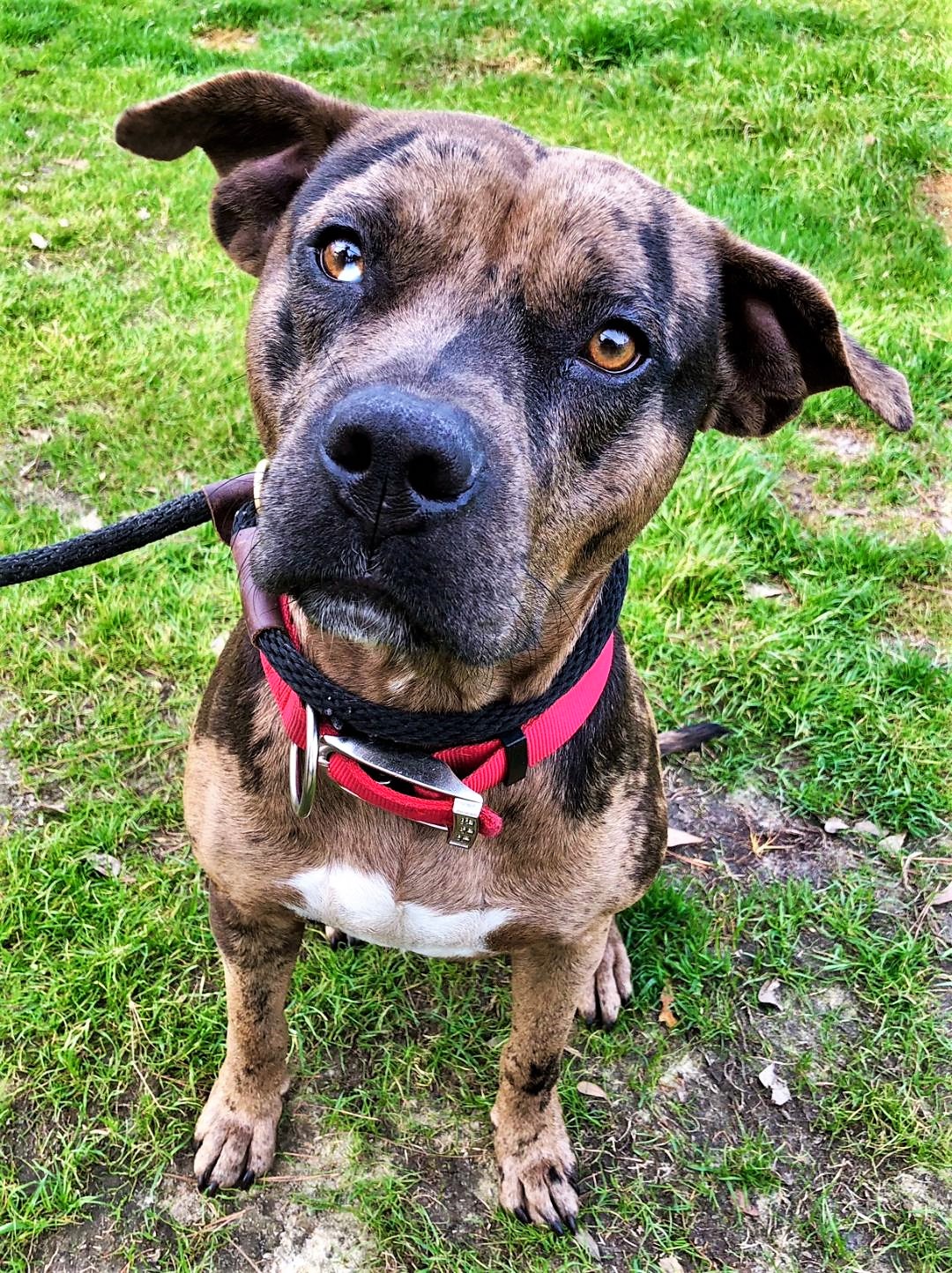
REESE
Catahoula Leopard dog mix, male, 1 year old, 57 pounds – $35

WILLY
Domestic shorthair cat, male, 3 years old, 12 pounds – $10

Neglected Puppy Coco Makes Amazing Recovery

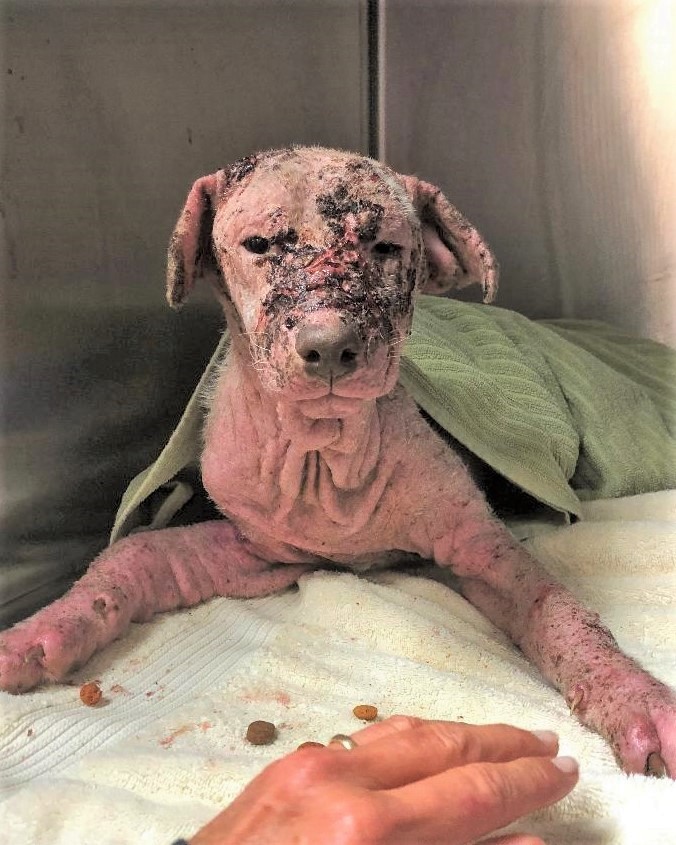
In early November, a stray puppy was brought into the Aiken County Animal Shelter by one of the animal control officers. I have seen a lot of neglected dogs enter the shelter but this one instantly brought tears to my eyes. We could all feel her pain. Her face was dripping blood, she had no fur, and she was just a baby!

COCO was hairless and in severe discomfort when she was brought in to the Shelter

This sweet little girl didn’t make a peep. She lay in the medical clinic on a blanket, eyes wide with fear, while allowing Dr. Levy and her kind-hearted assistants to clean and treat her. The puppy had a condition called Demodectic mange or “Demodex”, a very treatable and non-contagious skin condition that we see in neglected, malnourished or stressed dogs. This was just the most severe case I had ever seen.

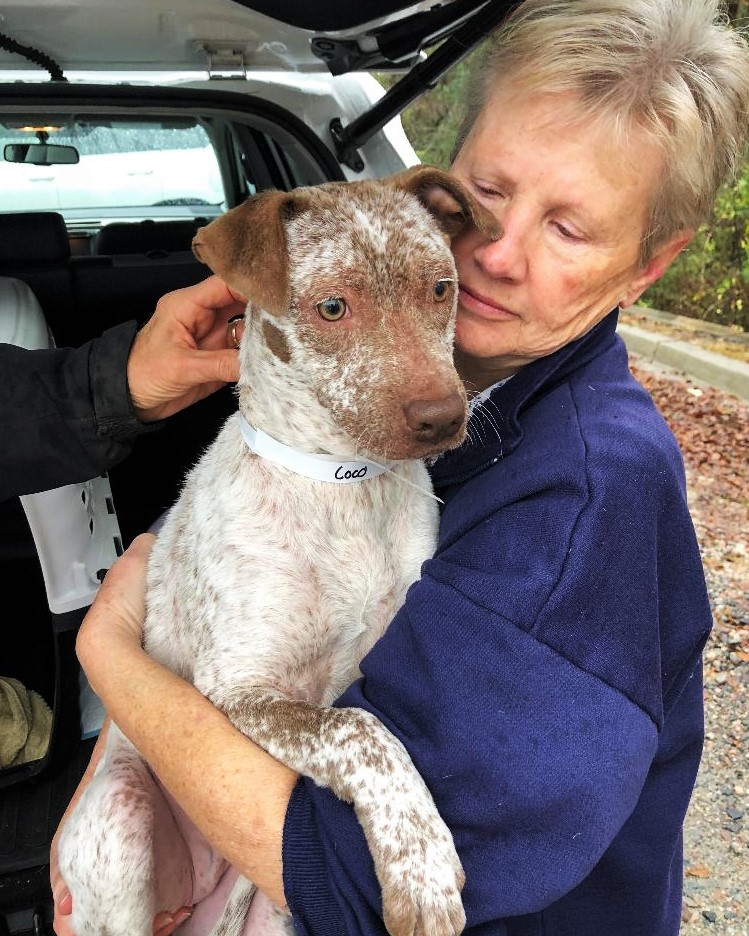
We called Paula Neuroth, one of FOTAS’ most dedicated foster moms, and told her what just came in. Paula came in the next day and picked up the frightened pup. She and her husband, Rod, named the puppy Coco. During the next four weeks she healed beautifully. Paula called and said she thought Coco was some kind of Spaniel or Hound, and when her fur came in, she had a beautiful white coat with brown spots.

Paula Neuroth holds COCO, who through excellent medical and foster care, made a full recovery and regained her beautiful coat.

“Coco is a very brave little girl who has been through a lot,” Paula said. “From the moment we brought her home she was gentle and so sweet. We just showed her a lot of love and she learned it is okay to have fun, eat without fear, and to trust people.”

We have many dogs that come to the shelter with Demodex and they need foster care. Some just have patches of fur missing while others, like Coco, temporarily lose their entire coat. The recovery time is so much less when they are in a home environment, away from the stress of the shelter.

Coco is already in her forever home and living her dream life. Paula continues to foster those that need her, but we need more foster volunteers who can help. Currently we have other dogs with very treatable medical conditions that need a safe place to recover. These dogs are so grateful, they will love you more than any other.

Please consider fostering a puppy or dog in need. It is one of the most rewarding experiences you will have.

Their lives are in our hands.

— by Kathy Jacobs, FOTAS Program Director

By the Numbers
From January 1 to 23, the County Animal Shelter took in more than 300 strays and surrendered pets.


Pets of the Week

MARKUS
Mixed breed, male, 6 years old, 73 pounds – $35

HOLLY
Domestic Shorthair Dilute Tortoiseshell cat, female, 4-1/2 years old, 6.5 pounds – $10  (at Aiken PetSmart store)

Life after Chains

Skye, Queenie, King and Polo: what do these dogs have in common? They are all pit-crosses. They were skinny and dirty, their coats scruffy. None had been spayed or neutered. The females were bred indiscriminately; how many times is anyone’s guess. Three of them tested positive for heartworms.

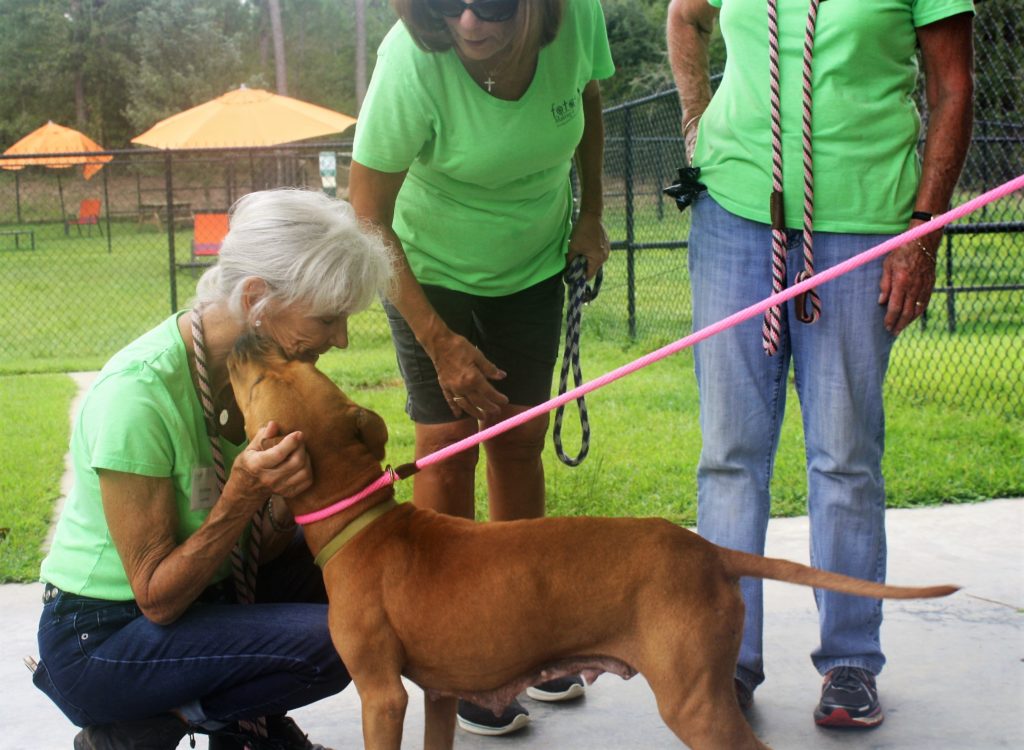
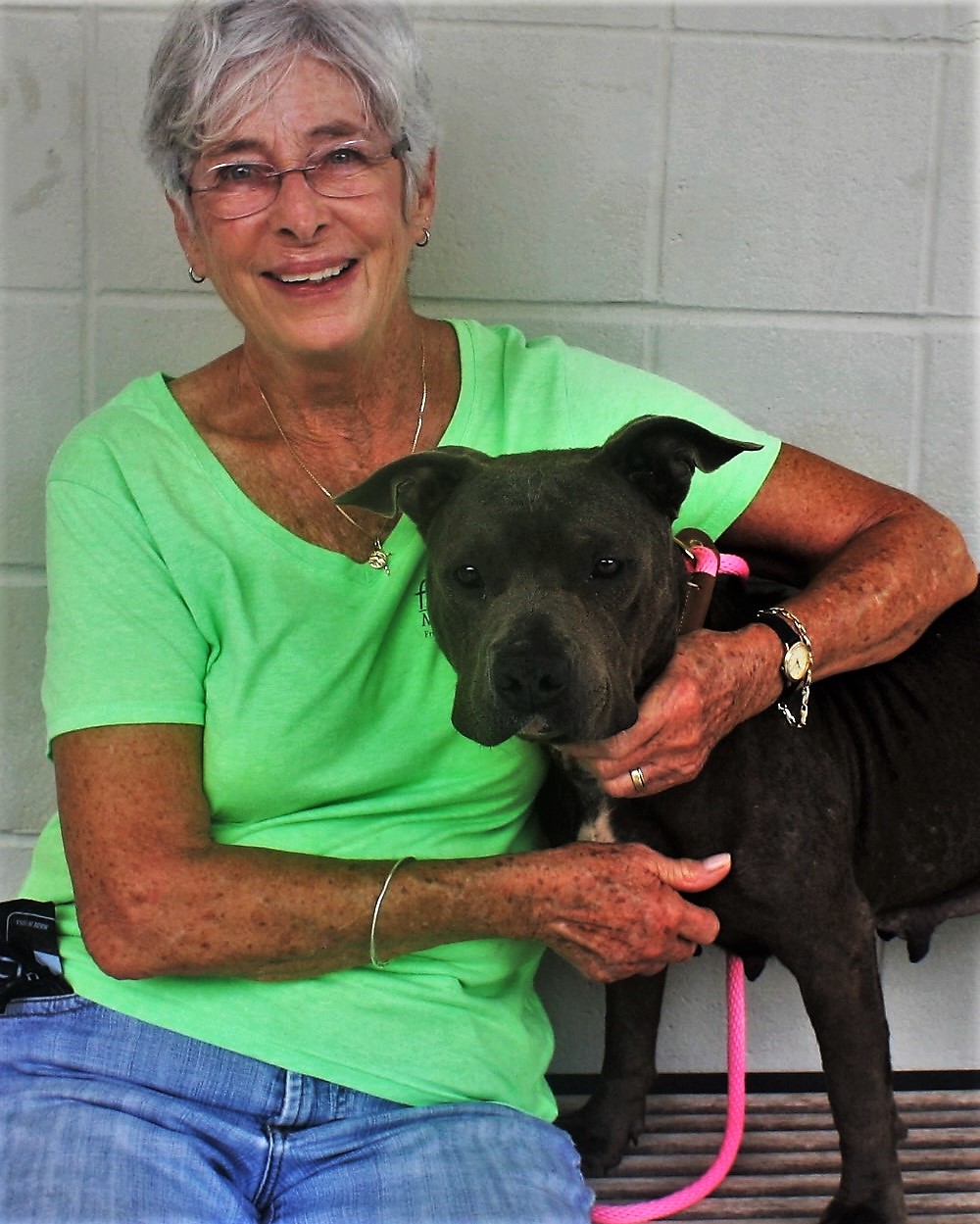
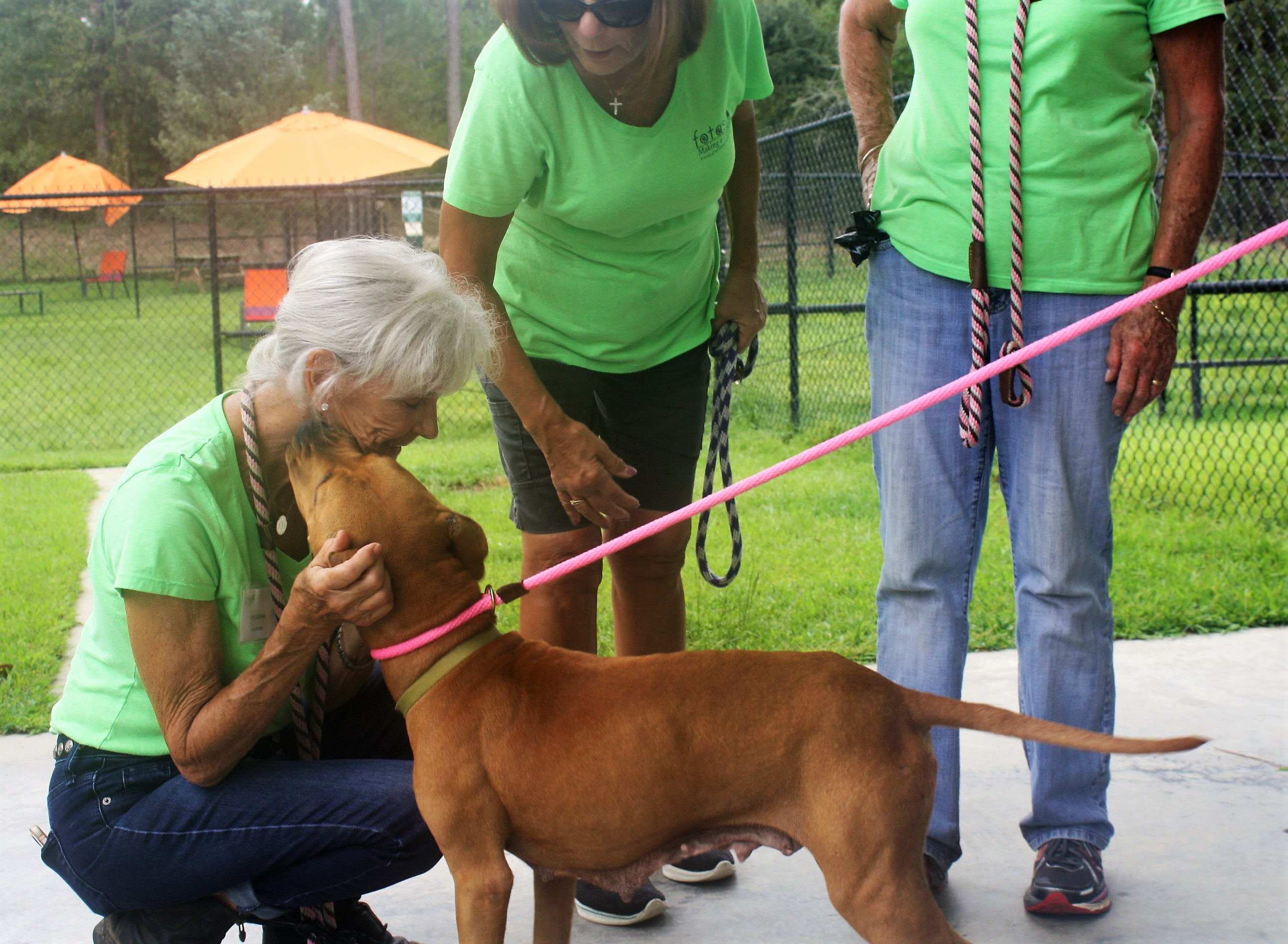
Volunteer Judy Kolb spends quality time with Queenie.

All four dogs were chained to stationary objects in a bare dirt yard, 24/7, with no relief from the elements. Their movements are clumsy and unsteady because they could only move so far on their short chains. All of the dogs were starved for human attention.

It’s a miserable existence, attached to a chain every second of every day for your entire life, pacing through your own waste. Dogs are social animals. They thrive in a pack, whether it be a pack of humans or a pack of dogs or a combination of both. A tethered dog with limited contact to people or other animals suffers from loneliness. They are often frustrated by their inability to interact with the other dogs just outside their reach. That isolation expresses itself in a dull, lifeless, dispirited dog; sometimes it results in intolerance to other dogs.

Tethered dogs are often uncoordinated or become physically impaired because, without an opportunity to run and play, their muscles never develop.

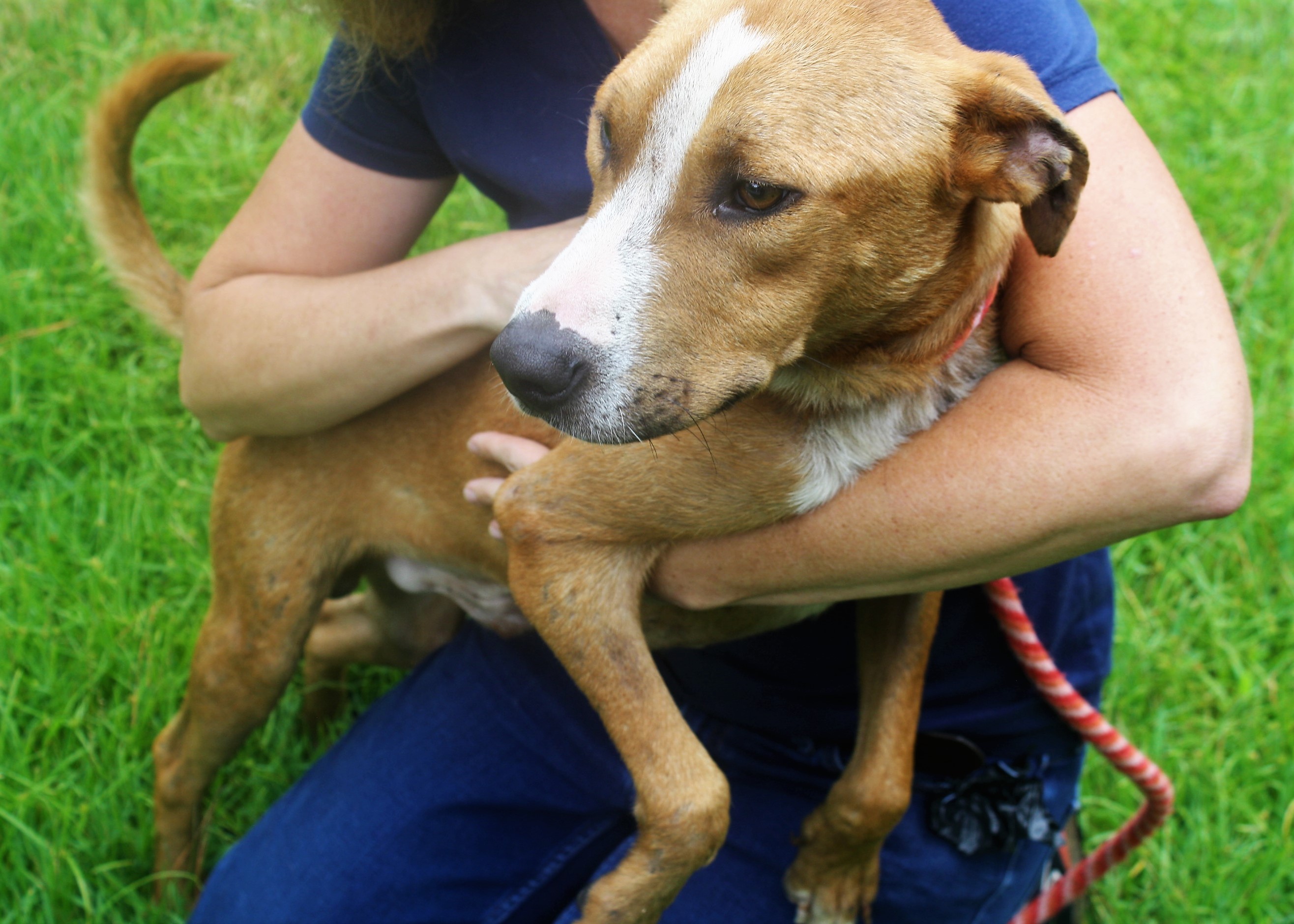
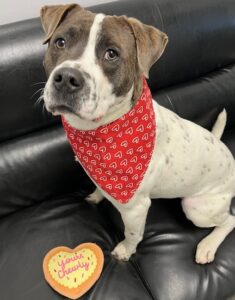
Polo, now available for adoption, was one of the neglected dogs rescued and brought to the County Shelter.

Sadly, many tethered dogs die on their chains—choked or trapped by the tangled teether and unable to reach shelter or water, if it’s even available.

Skye, Queenie, King and Polo have been rescued by Aiken County Animal Control. At the shelter, they are receiving, perhaps for the first time in their short lives, medical treatment, two meals a day, toys, treats, and a clean and protected place to sleep.

They are also getting lots of human attention. They love that. Their tails wag and their eyes shine every time staff and volunteers offer a kind word, a walk, a snuggle and a hug, a lap to lay their head on. We love that, too.

Skye gets some love from FOTAS Volunteer Karen Loughran before going on a walk with Volunteer Sharon Johnson.

Dr. Levy has released Skye, Queenie and Polo for adoption; King will be available once he gains a little weight. FOTAS will pay for heartworm treatments for those that need it. We work with them every day on their canine socialization skills. We can say without equivocation that these dogs are incredibly grateful and affectionate, capable of loving and being loved by humans.

Yes, chaining a dog to a fixed object all their life without access to shelter, clean water, medical treatment, and companionship (both human and canine) is cruel, yet most of the people who chain their dogs are not cruel. Maybe they lack resources, maybe it’s all they’ve ever known. There’s help for those folks — FOTAS provides animal control officers with humane runners and swivel/stakes to help them take their dogs off the chains.

For the others—the cruel and grossly negligent—that’s a matter for the animal control officers. It is illegal in Aiken County to tether dogs to stationary objects with chains all the time, but animal control can only save those animals if they know about it, so speak up! (County Animal Control: (803) 642-1537) Cruelty tips from the public can be kept confidential.

Help us take those dogs off the chains. Their lives are in our hands.

— By Joanna Dunn Samson, Vice President of FOTAS

County and FOTAS Work Together to Keep Dogs Off Chains

The County, FOTAS and other concerned citizens worked together for months to pass a tethering ordinance. Many animal cruelty and neglect cases include dogs permanently attached to heavy chains that limit their mobility and access to food, water and shade or escape from their own waste. But little could be done to prevent people from treating their animals this way without an enforceable regulation against such conditions.

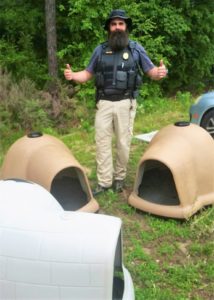
County Animal Control Supervising Officer Patrick Miller with Igloo dog houses donated by generous citizens.

Then last year, after many people – including County Animal Shelter Manager and Chief Enforcement Officer Bobby Arthurs – testified to the Aiken County Council, the ordinance was finalized and passed. Arthurs worked with County Code Enforcement Director Paige Bayne and County Attorney Jim Holly on the original draft of the ordinance.

Passed on March 21, the tethering ordinance ensures people treat their dogs more humanely by making it unlawful for a person to tether, fasten, chain, tie or restrain a dog to a house, tree, fence, or any stationary object except for a brief period necessary to complete a temporary task that requires the dog to be restrained. That period cannot exceed four hours and the animal must have free access to water, food and shelter during this time.

If a tethering system is used, it must be connected to a single stake with a swivel on top, be at least 15 feet long and allow the dog to have as close to 360 degrees circular movement as practicable.  If a runner or trolley system is used, it must be at least 20 feet long and allow the dog to move freely along the length of the trolley runner line without being entangled.

“The word is definitely getting out there and it’s already made a difference,” said County Animal Control Officer Brandon Creel. “The number of animals we see on chains has dipped significantly.”

In the past six months, FOTAS has purchased and supplied 75 humane runners and swivels/stakes to help such canines.

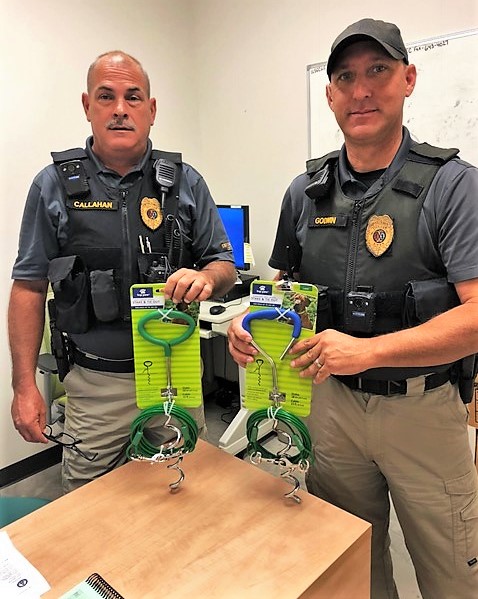
County Animal Control Officers Larry Callahan (left) and Daniel Godwin holding swivel systems that ensure dogs are tied in compliance with Aiken County’s tethering ordinance.

It should be noted that the new tethering law gives officers a big stick to punish animal cruelty and prevent cases of neglect, but not all animals tied outside are treated poorly. Certain citizens love their dogs but can’t afford to put up a fence or a runner.

“Some of these people will feed their dog before themselves, that’s how much they care about them,” said County Animal Control Officer Larry Callahan. “But it’s a different lifestyle where dogs are kept outside.”

When these families need help, the officers let FOTAS Programs Director Kathy Jacobs know, and she provides the materials they need.

“We have to look at the big picture,” Creel said. “If the owner’s heart is in the right place but they just can’t afford the runner or swivel system, we see if FOTAS can help. We try to assist people when we can. After all, helping them out also helps their dogs.”

If you can donate funds to help purchase runners or swivel systems for dogs, or can donate dog houses, new or used and in good condition, it would be most appreciated.  Please bring your donations to the County Shelter, 333 Wire Road in Aiken.

Their lives are in our hands.

 – By Bob Gordon, FOTAS Communications Director


Pets of the Week

CHARLIE
Shepherd mix, male, 6 years old, special needs dog (front left leg amputated), 72 pounds – $35


JASMINE
Siamese mix cat, female, 1 year old, 6 pounds – $10