


Category Archives: County tethering ordinance

County Animal Shelter is a resource, not just a destination

Most people only think of the Aiken County Animal Shelter as a place to bring lost or unwanted pets for rehoming. But it is much more than that. Through its partnership with FOTAS, the shelter provides community outreach programs that help people and their pets, and works to prevent dogs and cats from ever having to be surrendered and put in its kennels.
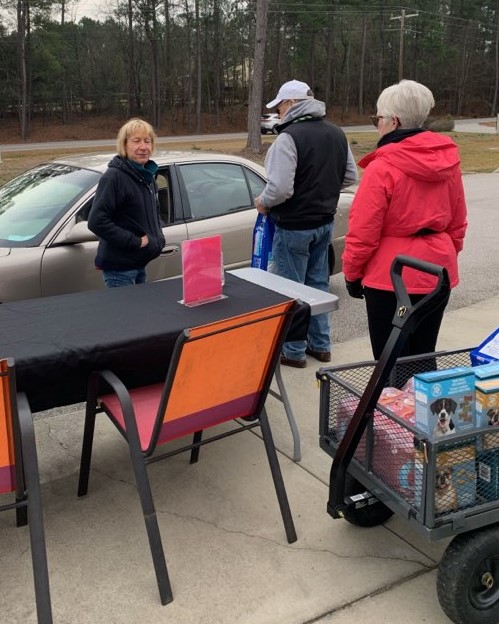
The shelter’s first drive-thru food drive event helped community members in need feed their pets

In fact, we just hosted our first pet food assistance drive-thru event last Saturday. Local residents in need of food for their dogs and cats were invited to drive up to the shelter, where FOTAS volunteers placed bags and cans of pet food in the trunks of their cars. This event helped folks in financial need feed their pets and avoid surrendering them to the shelter during tough economic times. More such events are planned for the future. Thankfully, many generous people donate pet food to the shelter specifically for folks in financial need.

Another program FOTAS and the County Shelter provide to the community is Fido Off-the-Chain, which provides humane runners and tethering for people who don’t have fenced-in yards. When County Animal Code Enforcement officers visit homes where dogs are chained or tethered with limited mobility, they often provide runners that keep the dogs contained in the yard but allow them to run and play while ensuring their tether doesn’t get wrapped around a tree, post or other object.

“We’re not just working in the community,” said County Animal Code Enforcement Officer Rod Burks. “It’s our community, too. We love the animals, so it’s important for us to provide solutions and educate people about local regulations and responsible pet ownership.” FOTAS purchases these runners, and more are needed all the time.

FOTAS’s Home to Home program is another resource that helps county residents keep their pets out of the shelter’s kennels. It is provided for people to use free of charge – a marketing tool designed for pet owners who need to rehome their pet but do not want their dog or cat to endure the stress of being surrendered to the shelter. With Home to Home, residents can promote their pets on the FOTAS website and Facebook page and communicate with prospective adopters to find new homes for their animals safely and conveniently.
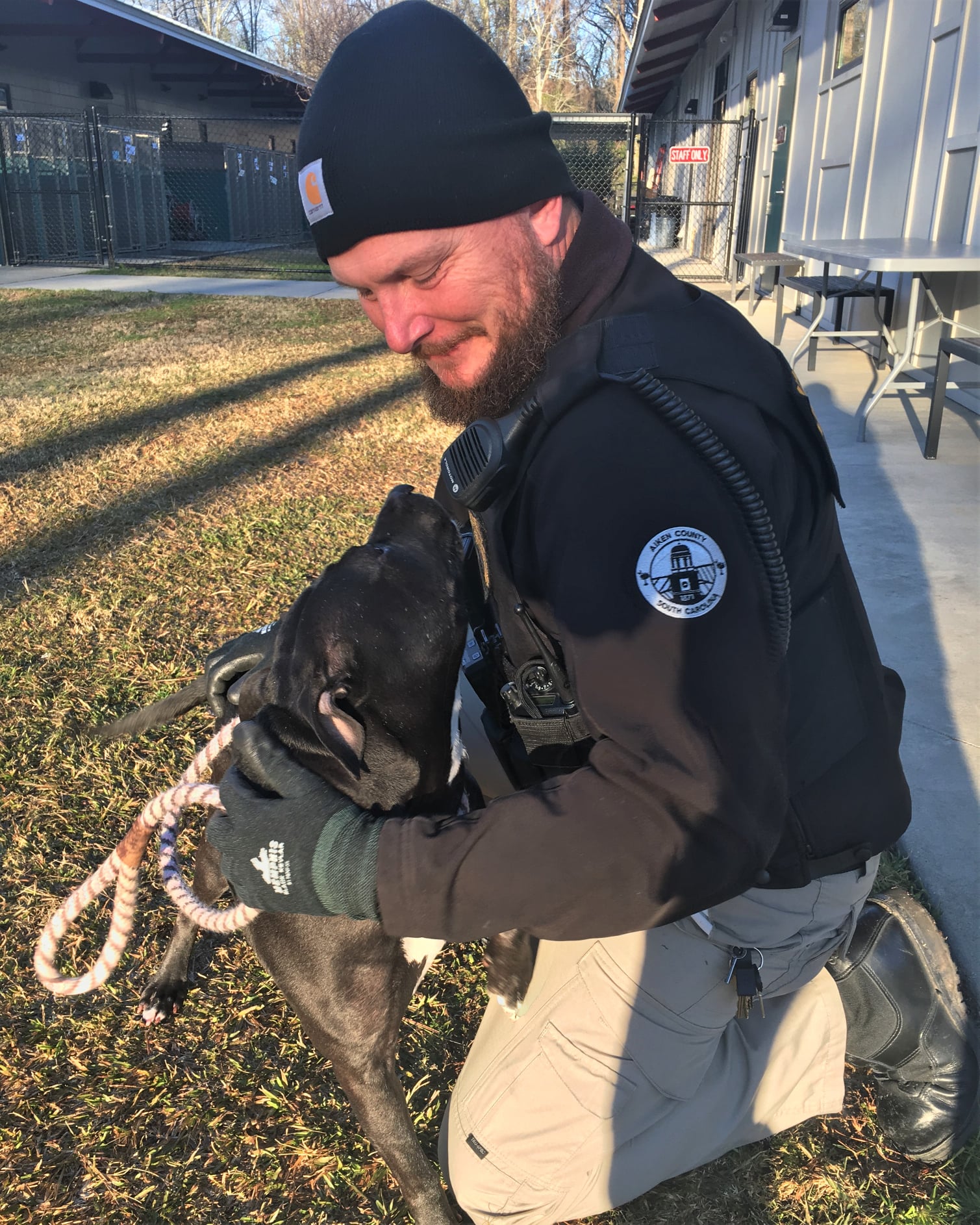
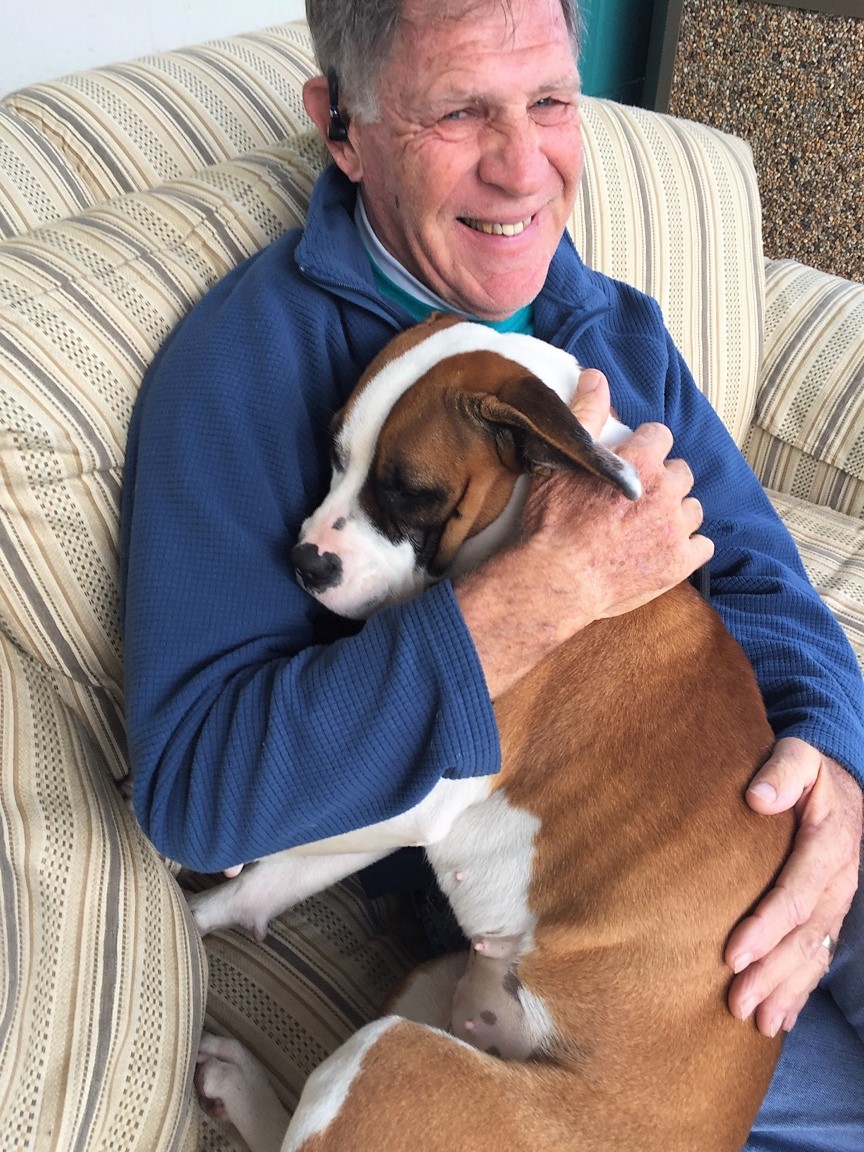
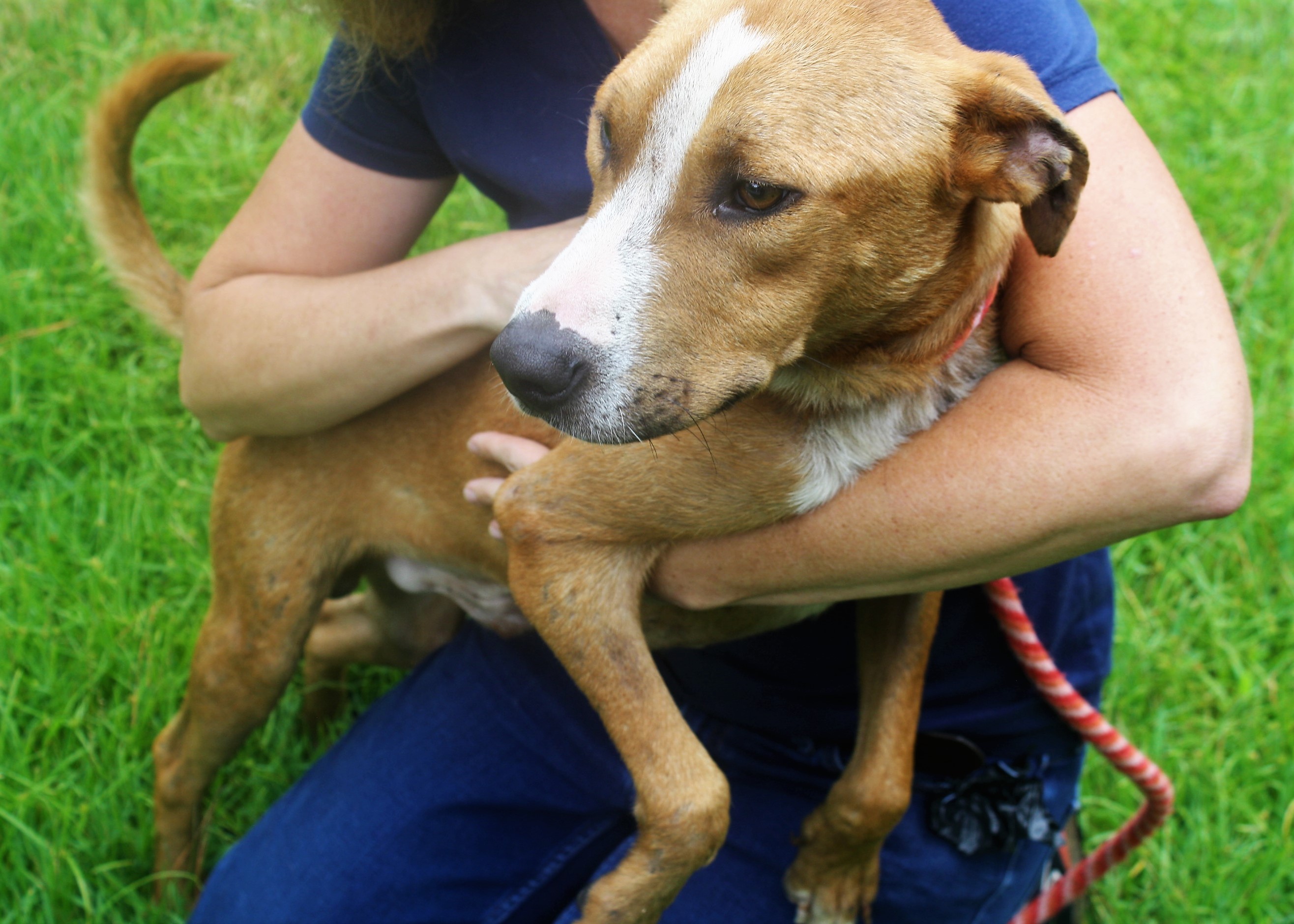
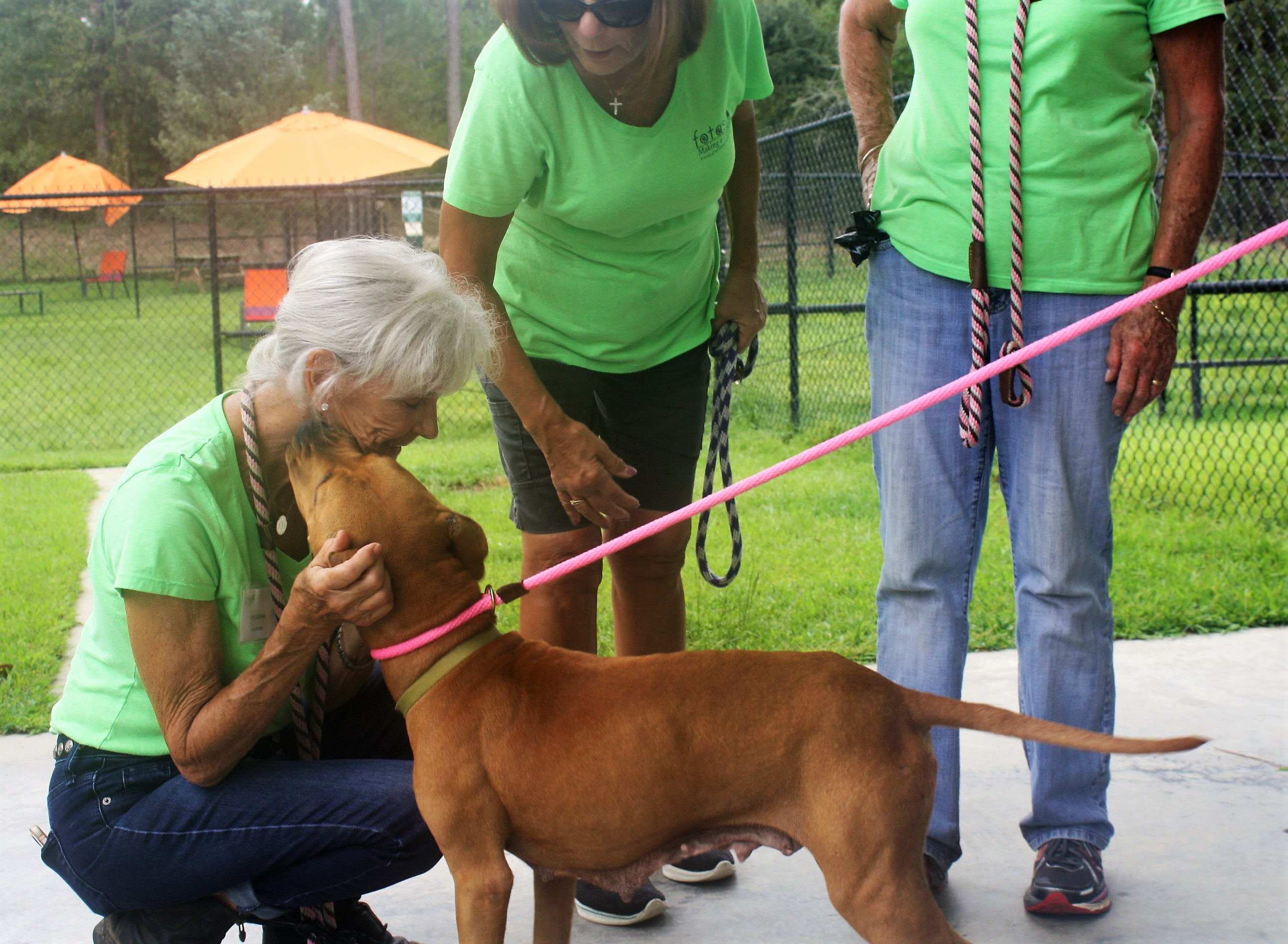
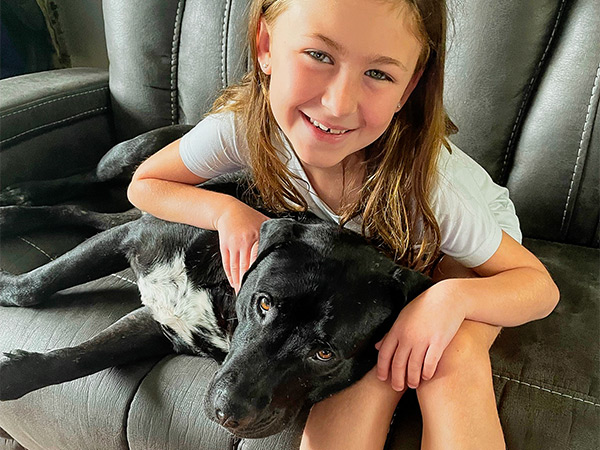
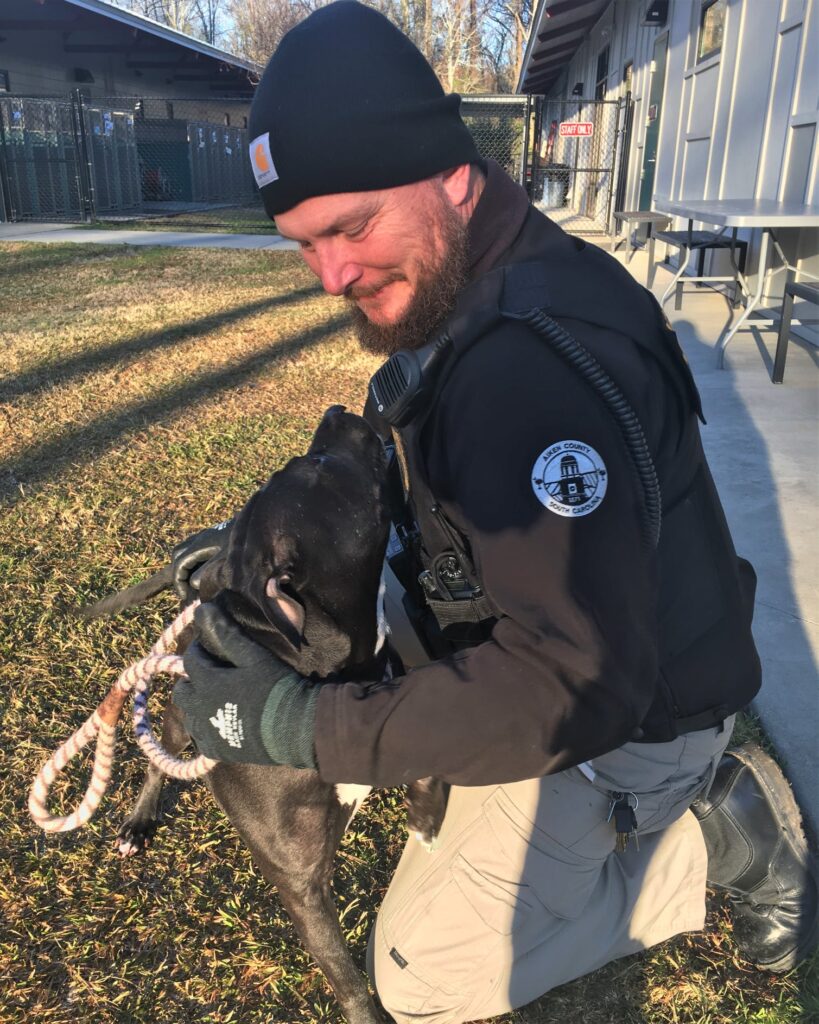
Rod Burks hugs shelter dog his crew rescued.

Programs like these, and others, help our community members and their pets in need. They also keep pets out of the shelter, where a surrendered dog or cat can sometimes endure emotional stress or even shut down. We will continue to develop community outreach programs that further establish the County Shelter as a helpful resource rather than just a destination for unwanted pets.

The shelter is currently full. We have wonderful pets who desperately need loving homes. So, please visit the Aiken County Animal Shelter, 333 Wire Road, and visit our homeless dogs and cats. To see all the pets available, go to FOTASAiken.org. Dogs are $35 and cats and kittens are only $10.

Their lives are in our hands.

— By Bob Gordon, FOTAS Communications Director
Community Outreach More Vital than Ever During Difficult Times

While catching up on paperwork early Thursday morning, Patrick Miller, Supervisor of Animal Control in Aiken County’s Code Enforcement Division, is asked what he likes most about his job.

“Helping people is the most rewarding part of what I do,” he says. “It’s just human nature to feel good from giving back to the community and helping people out. That’s the highlight of all the officers’ days.”

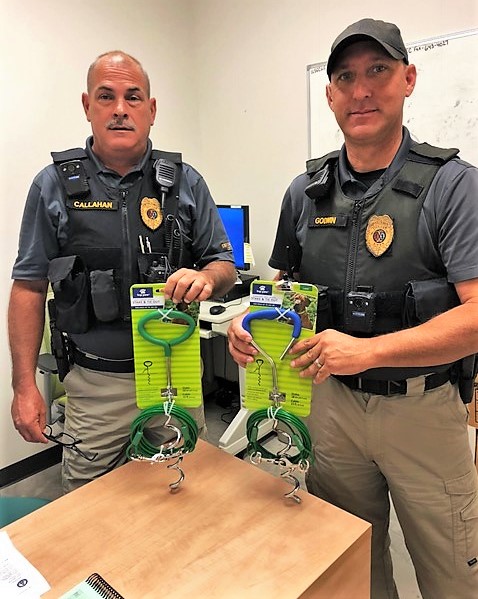
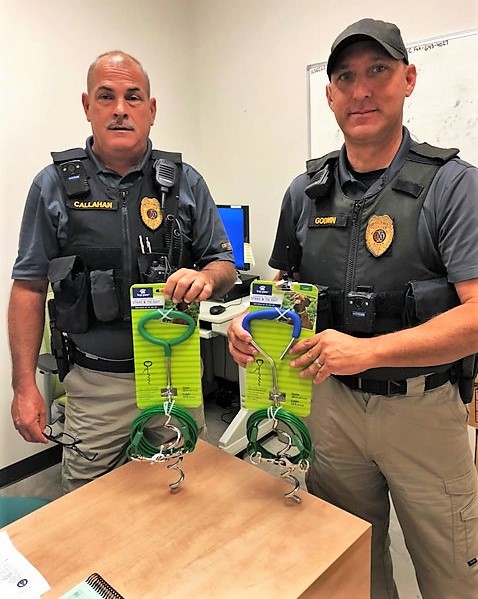
County Animal Control Officers like Larry Callahan (left) and Daniel Godwin provide swivel systems and runners that ensure dog owners are complying with the County’s tethering ordinance.

Miller, who has been an animal control officer since 2013, is usually on the road taking calls from dispatch. On an average day, he is checking on stray dogs, livestock on the loose, nuisance complaints and potential pet neglect and abuse. However, since the crippling economic effects of the coronavirus pandemic, community outreach has become an even bigger part of Miller’s day.

“COVID-19 has impacted County citizens a great deal,” he explains. “More people are out of work and our community outreach has stepped up. I have a lot of folks right now who can’t afford gas. People sometimes say, ’Can you give us a hand with some food?’”

FOTAS helps by providing pet food, legal and humane dog runners and dog houses to the officers, which they then give to citizens in need. FOTAS also directly gives assistance through its partnership with Meals on Wheels, providing food for senior citizens’ pets.

Miller and his fellow County Animal Code Enforcement officers have to balance enforcement with community outreach. They must help out folks in need while at the same time protecting the welfare of pets and other animals that are neglected and abused.

“Part of our community outreach is explaining laws and helping folks comply to them,” Miller says. “I’d say about half of the people we talk to still do not know that dogs cannot be on a chain. That’s one of the biggest issues we deal with weekly – and FOTAS helps by getting us runner cables.”

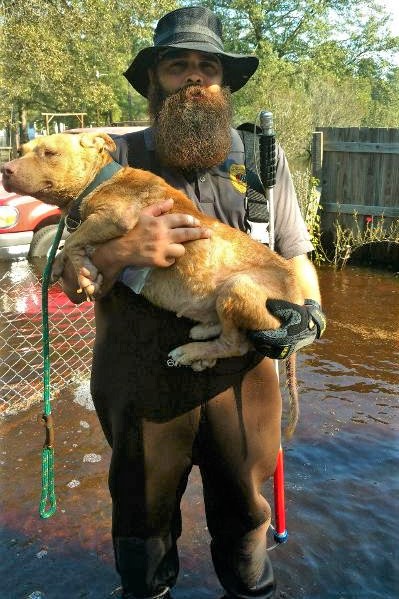
Code Enforcement Officer Patrick Miller saves a dog from drowning. A flash flood nearly took the life of the poor pup who was attached to a short, heavy chain when the water rose up to his nose.

Officer Miller is well-respected by his peers and colleagues for how diligently he looks out for animals and his kindness to people and their pets. But he has seen enough neglect and abuse to last a lifetime and will not hesitate to rescue a pet from a bad situation and charge the offender accordingly.

“At the end of the day, what makes you feel good about your job is that you helped the animal and gave it a second chance at a good life,” he said.

Their lives are in our hands.


— By Bob Gordon, FOTAS Communications Director
The Christmas Spirit of Gratitude and Charity

The Christmas season is upon us. It’s a time of festivity, bright lights, family, goodwill, and faith. It’s also a time to count our blessings. As we at FOTAS look back over the past nine years, it’s also a time to reflect upon our profound gratitude for our friends and supporters in the Aiken community.

FOTAS Volunteer John Berk with Cleo, who was adopted to a good home this year.

We’ve come a long way together. With your help, we successfully lobbied the County Council to build a new shelter and partnered with the county to raise money to fund the architectural design and construction-ready plans.

Once the new shelter opened in early 2014, we recruited and trained an army of volunteers to work at the shelter, performing the equivalent of eight to 10 full-time jobs. We funded training programs for county personnel. We developed and funded exciting new programs with the county to increase adoption rates. We created a network of transfer partners in the northeast that take animals we can’t adopt locally, along with a system of foster care for dogs and cats who have been accepted for transfer or have special needs. We also supplement adoption fees for military personnel and veterans.

LUCY gets some lovin’ from young FOTAS volunteers.

We provided fencing to create exercise yards, bought a new van to move animals locally to outside adoption events, and installed a storage shed. We pay for toys, blankets, treats, flea and tick meds, cat condos, a doggie treadmill to rehabilitate and socialize dogs, and humane runners for folks who need to take their dogs off of chains.

We funded the construction of an isolation pod to separate shelter animals with temporary infectious diseases, as well as a host of necessary medical equipment and supplies. Through this assistance, we’ve made it possible for sick and injured animals to have a second chance. A total of 450 heartworm positive dogs have been saved through our funding. We also pay for outside veterinarian services when necessary.

FOTAS PetSmart Volunteer Twylia with feline Mabel.

Our funding has made it possible to attack overpopulation of pets at the source. Last year, the county and FOTAS paid for the spay/neuter of over 1,300 citizen-owned pets and 1,120 community feral/cats.

Has all this effort made a difference? You bet it has. In 2009, the old county shelter often took in more than 6,000 animals a year; only 5% made it out alive. This year, the shelter will have taken in 4,200 animals, and 90% were saved. Hands down, FOTAS and the county save more animals than any other rescue agencies in the country.

It couldn’t have happened without a lot of hard work, dedication, and support from you, the Aiken community.

Adopted dog HILDE in her forever home December 2018.

We and Aiken’s homeless animals are blessed to have your support.

But there is still so much to do. In the last two months, a whopping 1,000 animals were surrendered to the shelter. Please consider an end-of-the-year donation to FOTAS, either by mail to FOTAS, PO Box 2207, Aiken SC 29802 or online at FOTASAiken.org.

By the way, since FOTAS was recognized by South Carolina as one of the 10 most efficient and effective charity “Angels” in the state, you can be certain that your hard-earned dollars are spent on our mission.

Thank you and God bless your family this Christmas season.

Their lives are in our hands.


— By Joanna D. Samson, FOTAS Vice-President


By the Numbers
Since October 1, the County Animal Shelter has taken in well over 1,000 strays and surrendered pets. Please spay/neuter your dogs and cats.
 
Pets of the Week
ANGIE: Retriever mix, female, 3 years old, brindle and white, 50 pounds – $35


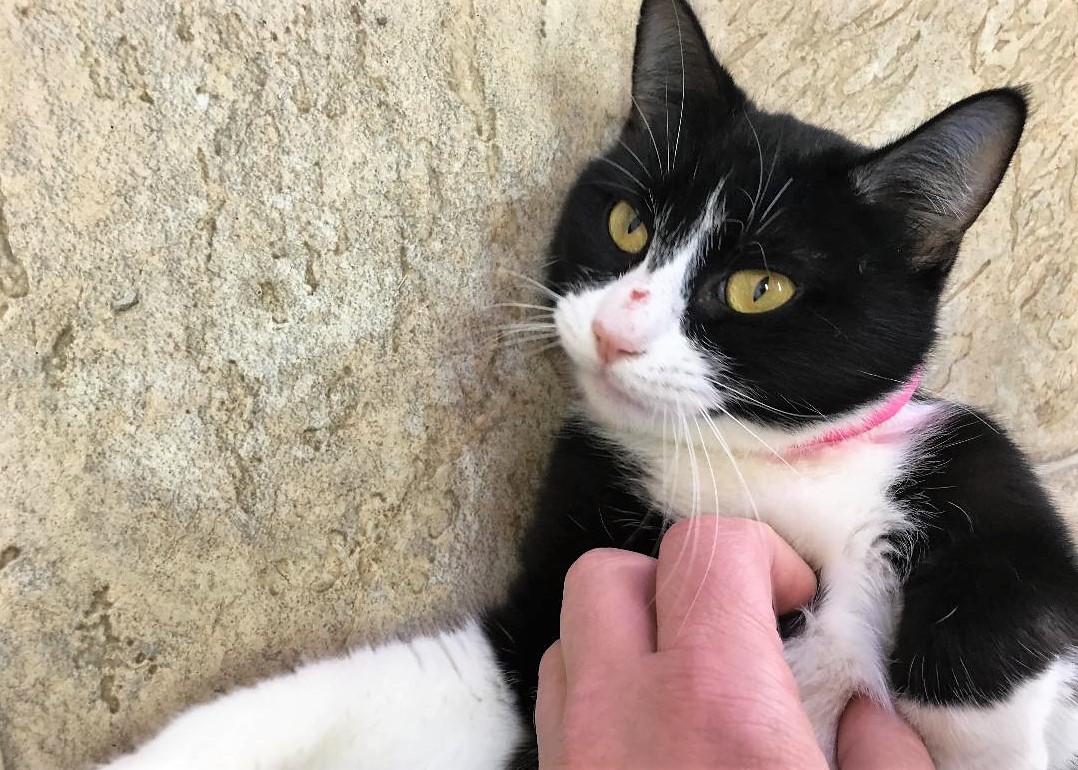
BEE BEE: Domestic Shorthair cat, female, 1-1/2 years old, black and white, 6.5 pounds – $10

Life after Chains

Skye, Queenie, King and Polo: what do these dogs have in common? They are all pit-crosses. They were skinny and dirty, their coats scruffy. None had been spayed or neutered. The females were bred indiscriminately; how many times is anyone’s guess. Three of them tested positive for heartworms.

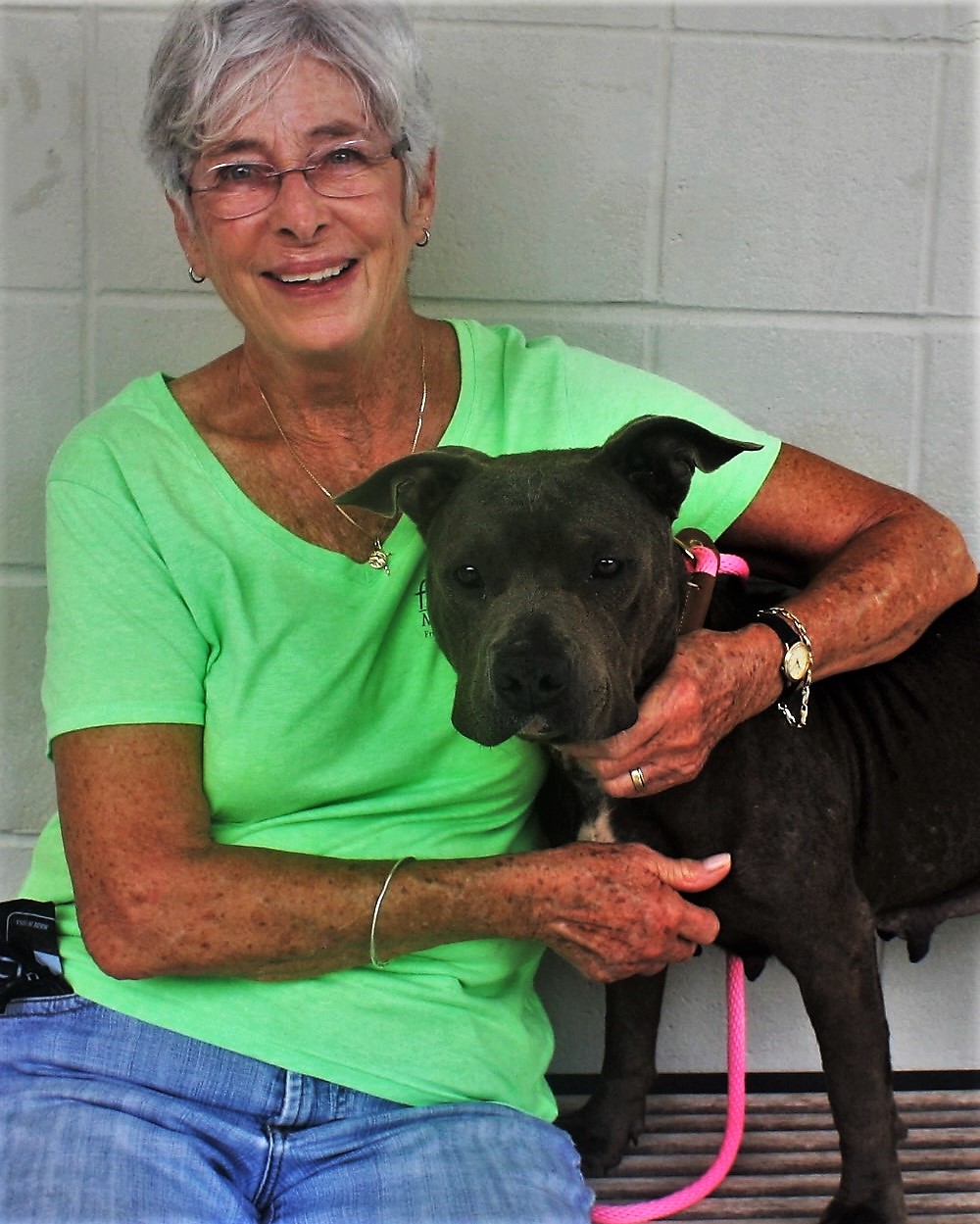
Volunteer Judy Kolb spends quality time with Queenie.

All four dogs were chained to stationary objects in a bare dirt yard, 24/7, with no relief from the elements. Their movements are clumsy and unsteady because they could only move so far on their short chains. All of the dogs were starved for human attention.

It’s a miserable existence, attached to a chain every second of every day for your entire life, pacing through your own waste. Dogs are social animals. They thrive in a pack, whether it be a pack of humans or a pack of dogs or a combination of both. A tethered dog with limited contact to people or other animals suffers from loneliness. They are often frustrated by their inability to interact with the other dogs just outside their reach. That isolation expresses itself in a dull, lifeless, dispirited dog; sometimes it results in intolerance to other dogs.

Tethered dogs are often uncoordinated or become physically impaired because, without an opportunity to run and play, their muscles never develop.

Polo, now available for adoption, was one of the neglected dogs rescued and brought to the County Shelter.

Sadly, many tethered dogs die on their chains—choked or trapped by the tangled teether and unable to reach shelter or water, if it’s even available.

Skye, Queenie, King and Polo have been rescued by Aiken County Animal Control. At the shelter, they are receiving, perhaps for the first time in their short lives, medical treatment, two meals a day, toys, treats, and a clean and protected place to sleep.

They are also getting lots of human attention. They love that. Their tails wag and their eyes shine every time staff and volunteers offer a kind word, a walk, a snuggle and a hug, a lap to lay their head on. We love that, too.

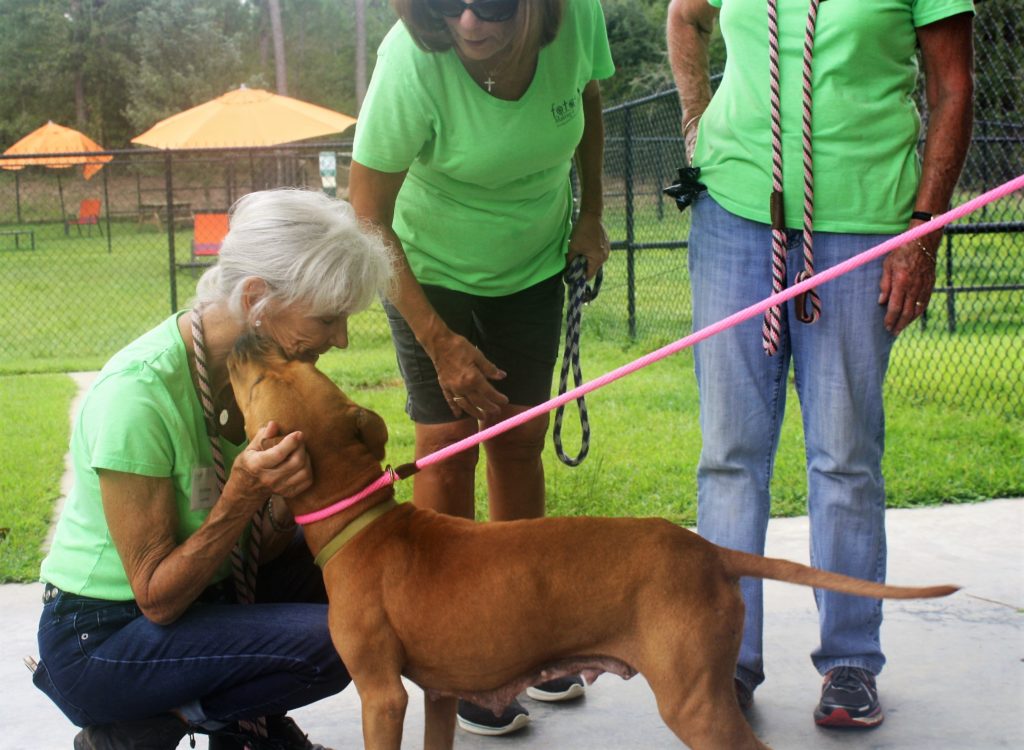
Skye gets some love from FOTAS Volunteer Karen Loughran before going on a walk with Volunteer Sharon Johnson.

Dr. Levy has released Skye, Queenie and Polo for adoption; King will be available once he gains a little weight. FOTAS will pay for heartworm treatments for those that need it. We work with them every day on their canine socialization skills. We can say without equivocation that these dogs are incredibly grateful and affectionate, capable of loving and being loved by humans.

Yes, chaining a dog to a fixed object all their life without access to shelter, clean water, medical treatment, and companionship (both human and canine) is cruel, yet most of the people who chain their dogs are not cruel. Maybe they lack resources, maybe it’s all they’ve ever known. There’s help for those folks — FOTAS provides animal control officers with humane runners and swivel/stakes to help them take their dogs off the chains.

For the others—the cruel and grossly negligent—that’s a matter for the animal control officers. It is illegal in Aiken County to tether dogs to stationary objects with chains all the time, but animal control can only save those animals if they know about it, so speak up! (County Animal Control: (803) 642-1537) Cruelty tips from the public can be kept confidential.

Help us take those dogs off the chains. Their lives are in our hands.

— By Joanna Dunn Samson, Vice President of FOTAS

County and FOTAS Work Together to Keep Dogs Off Chains

The County, FOTAS and other concerned citizens worked together for months to pass a tethering ordinance. Many animal cruelty and neglect cases include dogs permanently attached to heavy chains that limit their mobility and access to food, water and shade or escape from their own waste. But little could be done to prevent people from treating their animals this way without an enforceable regulation against such conditions.

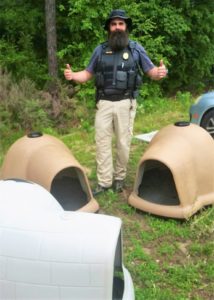
County Animal Control Supervising Officer Patrick Miller with Igloo dog houses donated by generous citizens.

Then last year, after many people – including County Animal Shelter Manager and Chief Enforcement Officer Bobby Arthurs – testified to the Aiken County Council, the ordinance was finalized and passed. Arthurs worked with County Code Enforcement Director Paige Bayne and County Attorney Jim Holly on the original draft of the ordinance.

Passed on March 21, the tethering ordinance ensures people treat their dogs more humanely by making it unlawful for a person to tether, fasten, chain, tie or restrain a dog to a house, tree, fence, or any stationary object except for a brief period necessary to complete a temporary task that requires the dog to be restrained. That period cannot exceed four hours and the animal must have free access to water, food and shelter during this time.

If a tethering system is used, it must be connected to a single stake with a swivel on top, be at least 15 feet long and allow the dog to have as close to 360 degrees circular movement as practicable.  If a runner or trolley system is used, it must be at least 20 feet long and allow the dog to move freely along the length of the trolley runner line without being entangled.

“The word is definitely getting out there and it’s already made a difference,” said County Animal Control Officer Brandon Creel. “The number of animals we see on chains has dipped significantly.”

In the past six months, FOTAS has purchased and supplied 75 humane runners and swivels/stakes to help such canines.

County Animal Control Officers Larry Callahan (left) and Daniel Godwin holding swivel systems that ensure dogs are tied in compliance with Aiken County’s tethering ordinance.

It should be noted that the new tethering law gives officers a big stick to punish animal cruelty and prevent cases of neglect, but not all animals tied outside are treated poorly. Certain citizens love their dogs but can’t afford to put up a fence or a runner.

“Some of these people will feed their dog before themselves, that’s how much they care about them,” said County Animal Control Officer Larry Callahan. “But it’s a different lifestyle where dogs are kept outside.”

When these families need help, the officers let FOTAS Programs Director Kathy Jacobs know, and she provides the materials they need.

“We have to look at the big picture,” Creel said. “If the owner’s heart is in the right place but they just can’t afford the runner or swivel system, we see if FOTAS can help. We try to assist people when we can. After all, helping them out also helps their dogs.”

If you can donate funds to help purchase runners or swivel systems for dogs, or can donate dog houses, new or used and in good condition, it would be most appreciated.  Please bring your donations to the County Shelter, 333 Wire Road in Aiken.

Their lives are in our hands.

 – By Bob Gordon, FOTAS Communications Director
 

Pets of the Week

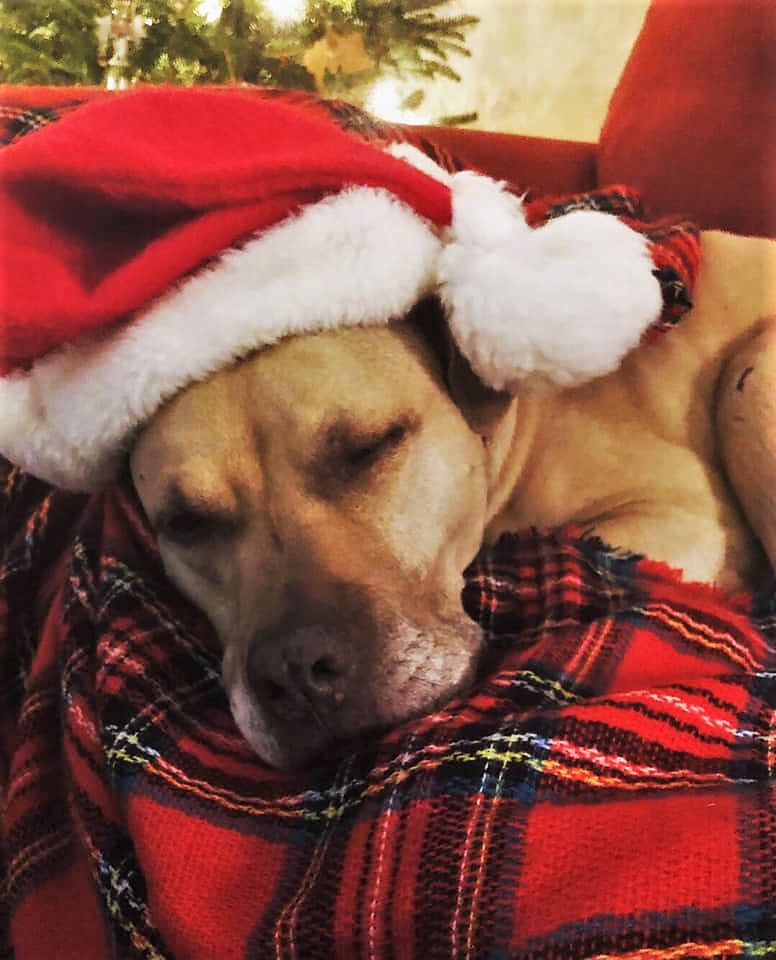
CHARLIE
Shepherd mix, male, 6 years old, special needs dog (front left leg amputated), 72 pounds – $35


JASMINE
Siamese mix cat, female, 1 year old, 6 pounds – $10