

Tag Archives: neuter

FOTAS needs your Christmas spirit

By Joanna D. Samson, FOTAS Vice-President

“Every charitable act is a stepping stone towards heaven.”
Henry Ward Beecher

It’s the time of year when the spirit of Christmas thrives. It’s a time of gratitude for our family and friends. It’s a time to rejoice our faith. It’s a time for love.

It is also a time for charitable giving, and if your mailbox is anything like mine, it’s filled with requests from worthy local charities for year-end contributions. They all do good works, but you can’t give to them all. How do you decide?

I am going to take a leap of faith here; that if you are reading this column, you care about the plight of abused, abandoned and homeless animals. If that’s true, then FOTAS, the private partner of the Aiken County Animal Shelter, is a perfect choice for your charitable urges. Here’s why.

FOTAS provides critical assistance to more animals than any other organization in the County: 5000 Shelter animals a year.

FOTAS funded 160 kennel decks at the Shelter, the Cat Adoption Building, 2 cat condos, a grooming tub, an additional hot water heater, a surgical autoclave, supplemental medicines and supplies, and fenced play yards. FOTAS funded veterinary assistant courses for Shelter staff to increase their animal care skills. FOTAS is currently funding the addition of a medical isolation pod. If the medical needs of an adoptable animal are beyond the capacity or capability of the Shelter, FOTAS pays for outside veterinarian services.

FOTAS goes the extra mile to find every animal a home.

FOTAS aggressively markets the adoptable animals through print and social media and purchased a van to transport animals to off-site adoption events. FOTAS supplements the adoption fees for active Military Personnel and veterans and pays for heartworm medicine for HWP dogs adopted from the Shelter.

FOTAS developed a network of rescue partners in other parts of the country and organizes and pays expenses for transfers of adoptable animals. FOTAS recruits foster families (and funds their provisions, if necessary) to provide interim care for animals approved for transfer and longer-term care for animals in “a family way.”

FOTAS addresses the cause of high Shelter intake: rampant overpopulation of dogs and cats.   Since 2013, FOTAS has paid for over 2000 spay/neuter surgeries of community cats and pets owned by County citizens with financial need, and is currently developing a vigorous Trap-Neuter-Return program for free-roaming community cats.

FOTAS recruits and trains the volunteers who do much of the above.

Bottom line: FOTAS saves more animals than any other organization in the County.

Since its inception in 2009, the Shelter’s live release rate has increased from a dismal 5% to a better (but still sad), 70%. That’s literally thousands of animals.

Last month, the South Carolina Secretary of State recognized FOTAS as an “Angel” charity—one that spends 80% or more on its charitable purpose. That means you get a big bang for every buck you donate to FOTAS.

The Aiken Community has been generous to FOTAS, but there is still so much to do. Please send your much-needed donations to FOTAS, PO Box 2207, Aiken SC 29802.

Their lives, all 5000 of them this year, are in our hands
Giving Thanks

Thanksgiving is a time of reflection for those of us at FOTAS—a time to take stock of our blessings; to consider the remarkable progress we and the County have made in making the world a better place for Aiken County’s homeless, abandoned and abused animals; and in particular, to celebrate the many people who have contributed to our astonishing success and made this journey so meaningful.

Thanks to our committed partner, Aiken County, for making it possible to save the lives of thousands of homeless animals in the County. The strength of its commitment and the success of our partnership is evidenced not only by the state-of-the-art public animal shelter on Wire Road, but also by its increased commitment to subsidized spay/neuter for County residents.

Thanks to Paige Bayne, the County’s Enforcement and Animal Services Director, Bobby Arthurs, the Shelter Manager and Chief Animal Control Officer, Dr. Lisa Levy, the Shelter’s veterinarian, and all the Shelter staff for their dedication to increasing the opportunities for each adoptable animal to find a forever home and their willingness to implement new programs and practices that enhance those opportunities.

Thanks to the army of volunteers who make the work of FOTAS possible – everything from manning the front desk, walking and training dogs (91 volunteers walked dogs during the last 3 months), managing canine play groups, working special events and fundraisers, fostering dogs, organizing transfers, manning off-site adoption events, working on publicity, social media and financial record and bookkeeping responsibilities, and coordinating FOTAS-Fix-a-Pet activities.

Committed volunteers like Bonnie White, who helps at the shelter four days a week. “I get back so much more than I give,” says Bonnie. “When I leave the shelter, I’m not thinking about my bills or the dishes in the sink; I’m thinking about the dogs I helped and what else I can do to make them a better adoption prospect. Or I’m thinking about the abandoned kitten who just needs lots of love.”

Bonnie pauses. “You know what?” she says with a sigh. “I can’t adopt them all, but I sure can love them all.”

I am profoundly touched by her sentiment. I know she is not alone—all of our volunteers feel the same love, empathy, and commitment to the cause that Bonnie does.

And finally, thanks to you, the Aiken Community, for your extraordinary generosity and support. You have made it possible for FOTAS to help the County provide the best possible care for shelter animals, increase adoptions and transfers, and supplement the County’s spay/neuter financial assistance program.

And here’s the best part: all of that love, effort, commitment and hard work has paid off. The live release rate at the shelter has increased from 5% (in the pre-FOTAS years prior to 2009), to 29% (in the year before the new shelter opened in 2013) to almost 70% in the past year.

That’s a very big deal.

FOTAS and the thousands of animals that have been saved over the past 7 years thank you for your continued support. God bless you and your family during this holiday season.

Their lives are in our hands.


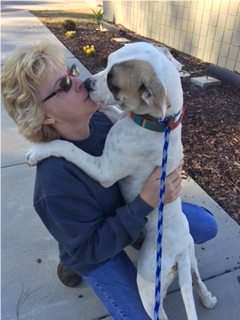
Bonnie White with an adoptable dog from the Aiken County Animal Shelter

There’s more than one way to adopt a County Shelter cat

By Bob Gordon, FOTAS Director of Communications Cats are fascinating creatures. They entertain us with their acrobatics, keep our homes free of mice with their hunting skills, and head butt us and purr to share their love and happiness. Not to mention they clean and groom themselves, don’t need to be taken for walks and come in a wide variety of patterns and colors. As Sigmund Freud once quipped, “Time spent with cats is never wasted.” But even with cats, sometimes you can have too much of a good thing – especially when people don’t get their pets fixed. Indeed, the Aiken County Animal Shelter has been overcrowded with homeless cats since spring. From May through September, about 1,240 cats have been taken in by the shelter. That is an average of 248 surrendered or stray cats per month! With so many strays and surrenders coming in and our facility at full capacity, we developed two other channels for cat adoptions. These other adoption outlets include: Barn Cat Program. Besides our domesticated cats and kittens on the adoption floor, we adopt out feral and less socialized felines as barn cats. These kitties are built more for the outdoors and serve as good mousers. Because of their wilder demeanor, the barn cats are available for free to those able to give them safe homes. However, there is still an application and screening process to adopt them. PetSmart Cats. Thanks to fantastic FOTAS volunteers and PetSmart’s outstanding staff and management, we are able to care for, exhibit and adopt out County Shelter cats from the company’s Aiken store. Having this outstanding alternative outlet for adopters has saved many feline lives. So far this year, more than 116 of our shelter cats have been adopted from the PetSmart located at 2527 Whiskey Road. Due to the unusually high number of homeless and stray cats and kittens being brought to the Shelter, FOTAS extended its $15 cat adoption special through November 30 and just yesterday held its second “Catpacity Saturday” in which all cats and kittens were adopted out for free. The Shelter and FOTAS need these additional channels and specials to place more felines and are working overtime to save as many County Shelter cats as possible. But we need your help. Please spay/neuter your pets. The only way to get the cat/kitten overpopulation in check is to stop the problem at its source. There are a number of ways to get financial help with the surgery. You can obtain a county spay/neuter voucher at the Shelter; or if your cat is outdoors and feral, check out our Trap/Neuter/Return (TNR) program. For more information about these and other programs, please go to the FOTAS website, www.fotasaiken.org. Their lives are in our hands.
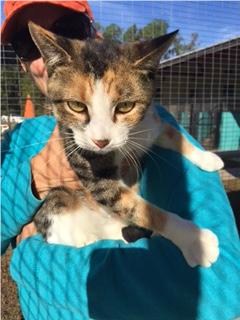
A FOTAS volunteer holds Molly, a beautiful Tabby who arrived at the shelter with kittens

The Hurricane Season

By Joanna D. Samson, Vice President of FOTAS
By the time it hit the South Carolina Coast, Hurricane Matthew had been downgraded from a Category 5 to a Category 2 storm; but the 85 mph winds, 10-14 inches of rainfall and extraordinarily high storm surges nevertheless created life-threatening conditions and caused the wide-spread destruction of property. Thousands of people were evacuated from the coast.

But how about all the animals left behind to fend for themselves?

The Charleston Animal Society sprang into action in the week ahead of the storm, evacuating the 70 animals in its facility to make room for the anticipated deluge of animals rescued by the storm (at last count, 500). Fifty-two animals were evacuated from Dorchester County, 70 from Pawley’s Island and 60 from Horry County. Many of the animals were transferred to places as far away as Pennsylvania, Maryland, and Ohio. The York County Humane Society took in 15 cats and three dogs. Here in Aiken, the SPCA Albrecht Center for Animal Welfare took in an additional 24 dogs.

The effort and resources needed to conduct rescue operations and to handle that many additional animals are enormous: hundreds of dedicated volunteers, substantial amounts of food, thousands of extra crates, and medical supplies. Many private vehicles were pressed into service to haul the animals to safety. Already overworked shelter staff work overtime to accommodate the influx of extra animals. It’s an exhausting, time-consuming and stressful time.

Thank God those types of hurricanes only come around once every, say, 20-30 years.

But what if every week at an animal shelter was fraught with the same kind of crises, requiring the same level of resources, creating the same level of anxiety, except the cause was man-made rather than an act of God? That would be a monumental tragedy of epic proportions.

That would also be just a normal week at the Aiken County Animal Shelter during the hurricane season.

For example, take the month of August: 603 animals were taken in at the Shelter, that’s an average of 27 animals every single day. September intake was also high, ranging from a low of seven to a high of 38 (IN ONE DAY!) Twenty-one animals were taken in on September 1st, 28 on September 6th), 26 on September 12th, 27 on September 16th, 20 on September 19th, and 29 on September 22nd.

Every month in the summer, intake skyrockets, volunteers and staff are overworked and critical resources run low. It’s an exhausting, time-consuming and stressful time, but it doesn’t end once the hurricane passes.

And because the County Shelter is a public facility, it cannot turn away any animal just because there is no additional room or because resources are short.

The dedication and generosity of the rescue communities and their citizens during the Hurricane Matthew crisis was nothing short of remarkable, and I am gratified by the public response. Thank God, because there’s nothing more heart-wrenching than witnessing the suffering of animals left homeless through no fault of their own.

We know. We see it week-in and week-out, day-in and day-out, every month during the entire hurricane season. Until every County pet is fixed, your County Shelter needs your help—and not just for the occasional emergency.

Please, please, volunteer, donate, adopt. Their lives are in our hands.


img_2115

Why am I here? What did I do?

By Joanna D. Samson, FOTAS Vice President

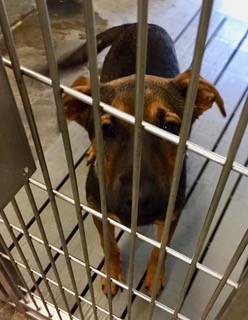
Yesterday, I had a home. I had you. Today I am in a kennel in a place where there are so many other dogs. I can see dogs in the kennels across from me, but I can hear so many more. I can smell their fear and anxiety. I am afraid, too.

Why did you leave me here?

I thought we were going for a ride in the car—one of my very favorite things to do. Then we pulled in to this place, and I thought, “Oh, oh, the vet,” but I’m a brave boy, so I figured we’d see the man in the white coat, get a shot, and we’d get back in the car and go home.

But then you left me here, and you didn’t even look at me when the nice lady took me away.

Have I been bad? Is it because I barked too much when you left me outside chained to the tree? I was lonely and wanted to be with you. I just needed a little attention, that’s all.

Is it because I knocked over the garbage can? I was hungry, and there were some good smells in the can. I couldn’t help myself.

Is it because I chewed up your boot? I was bored and it smelled like you. If you had taken me for a walk or given me a chew toy, I don’t think the arm of your chair would have been so appealing.

Is it because my fur is matted and I have these ugly itchy sores on my body from fleabites? All I just needed was a bath and a flea collar.

Is it because I had that accident on the floor? I didn’t know what I did wrong because you never took the time to teach me where to go. I was terrified when you forced my face into my own mess.

Is it because I jumped on you? I was excited to see you, and I was afraid you’d go away before I got a chance to show you how much I like you.

Is it because I’m not affectionate enough? I want to be, but I’m scared when you yell at me or hit me and I don’t know why.

I wanted to be a good family member. I want to please you, but I didn’t know how. Maybe I could have learned if you had taken me to an obedience class or to one of those free lessons at the shelter.

Please don’t leave me here. I want to come home.

*****
About 2500 animals a year are surrendered to the Aiken County Animal Shelter by their owners for problems that, in most cases, could have been resolved with a little time, attention and some outside assistance.

If you are considering surrendering your pet, call the FOTAS hotline first. We may be able to help you and your pet avoid the trauma of separation.

And wouldn’t that be better for everyone?

Their lives are in our hands.

img_1738


A heartbreaking week results in many amazing animals up for adoption

By Kathy Jacobs, FOTAS Programs Coordinator
This has been a very heartbreaking week. In just six days, the Aiken County Animal Shelter (ACAS) received 150 homeless dogs and cats. Many of these animals were brought in by Animal Control Officers, who pick up the stray, neglected, abused or abandoned animals wandering our streets. Some were brought in sick or old by their owners while still others were pets whose families had to relocate or could not afford to keep them anymore.

When we look at the numbers, sometimes we can forget about the individuals. But these animals are so full of love, they deserve to have their stories told. By no fault of their own, they have been cast out and left in the care of our shelter staff and FOTAS volunteers.

Here are just a couple of the stories from last week’s new arrivals:

Meet Poseidon, a lovely two-year-old Shepherd mix that was surrendered by his owner. He had an embedded collar that was removed and is now healing. He was also neutered when he arrived and will be ready for adoption soon. We are so happy that he is now getting the care that he needs.

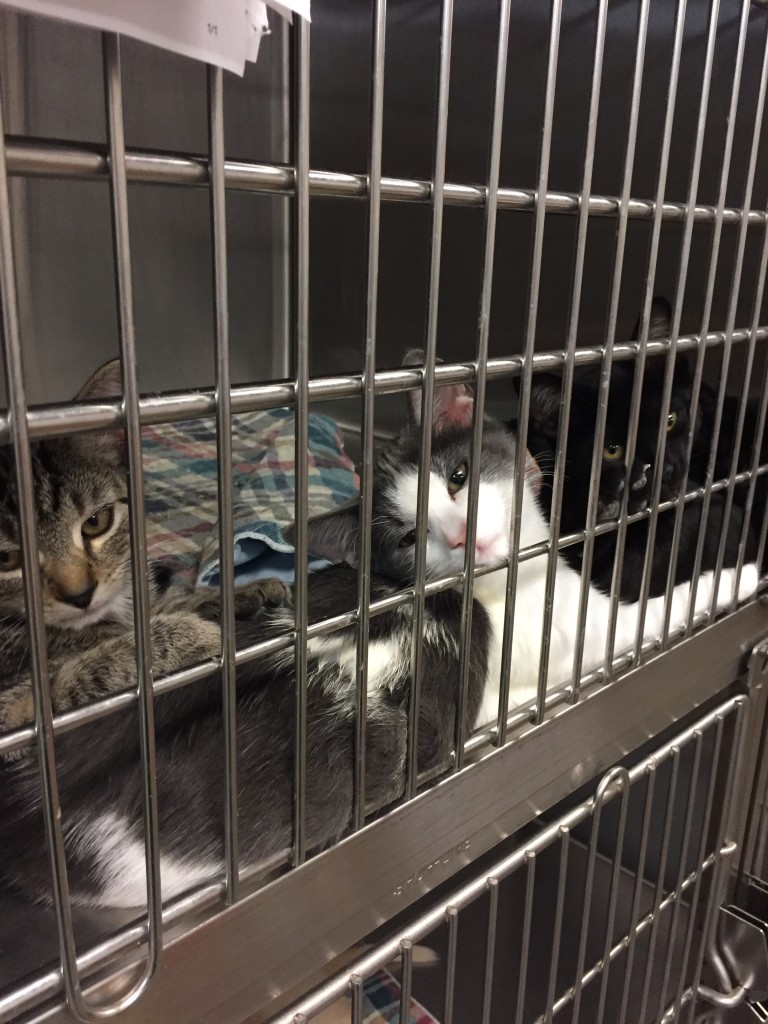
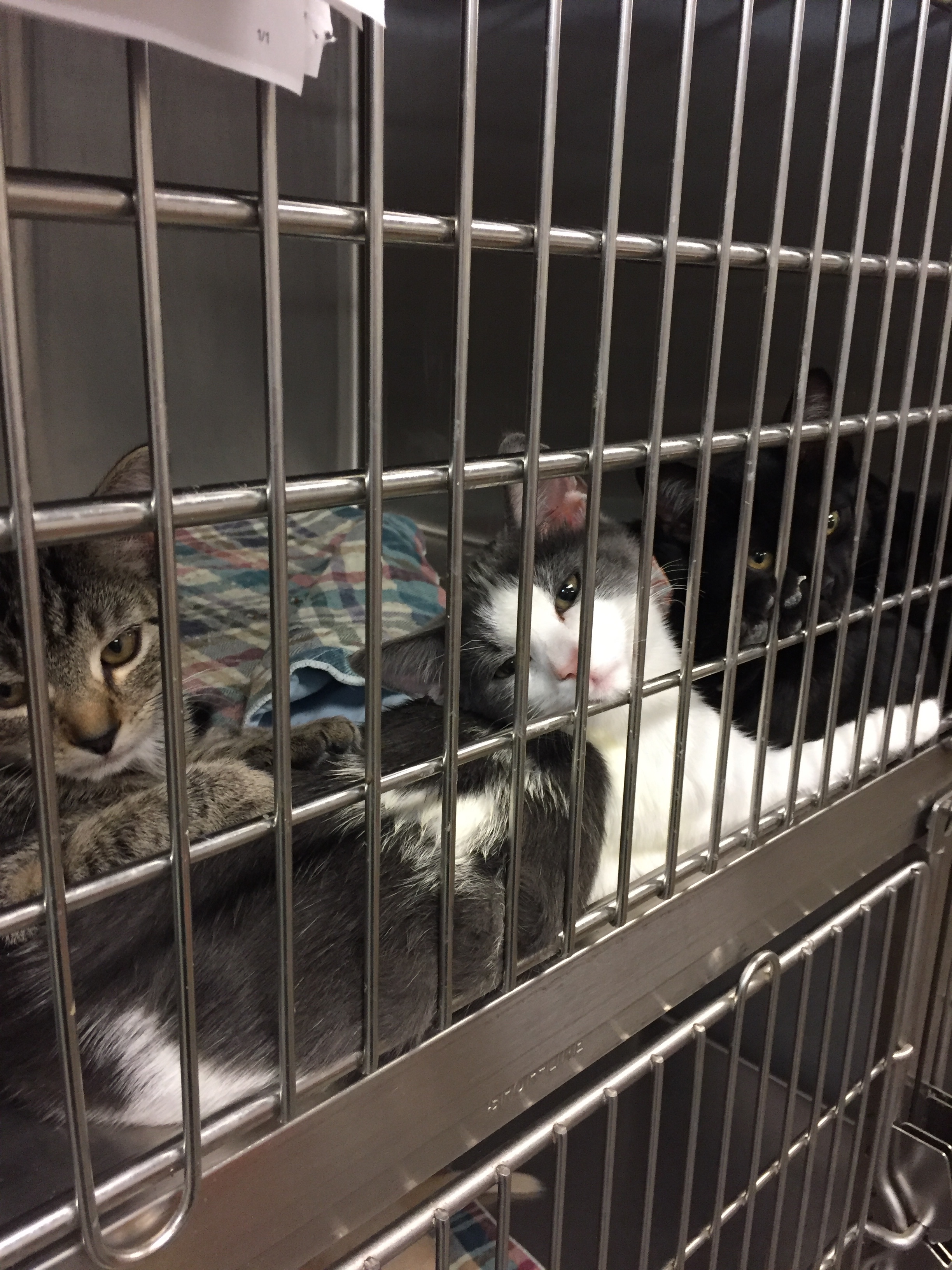
Nike and Brian are two feline brothers who were also surrendered by their owner. They are chubby, healthy little boys that were in a loving home but their owner could no longer afford to keep them. These handsome Tuxedo cats are bewildered and wondering why they are in a kennel. I hope that someone will read this and know how important it is to adopt them and keep them together.

Each of these wonderful animals knows what it means to be a pet. They once had homes but now are orphans. There are hundreds more at the shelter just like them and each animal has their own story of pain and trauma. As a community, it is our job to help them.

Despite being removed from their homes and left in a kennel surrounded by unfamiliar smells, noises and faces, these animals still wag their tails when we visit them or purr when we pet them. They appreciate any attention they are given and will make amazing pets!

As a community, we need to diminish the number of homeless animals in our area. FOTAS and Aiken County provide spay and neuter vouchers to families that cannot afford to fix their pets. Take advantage of this service! Also, please do not purchase a dog from a breeder or a kitten off of Craigslist. This only adds to the problem. We have every type of puppy, dog, kitten and cat pass through our shelter. I guarantee we can find the right friend for you.

For more information about how you can help or adopt a shelter animal, please visit the FOTAS website, www.fotasaiken.org, or call the Aiken County Animal Shelter, (803) 642-1537.

Their lives are in our hands …

fotas column Poseidon the dog with Traci Deaderick August 28

Poseidon, a Shepherd mix surrendered by his owner, is held by ACAS Adoption Coordinator Traci Deaderick.


fotas column Brian the cat august 28 2016
fotas column Nike the cat august 28

Nike and Brian came to the shelter because their owner could no longer afford to keep them.

Fix-A-Pet Program provides assistance for spay/neutering surgery

By Bob Gordon, FOTAS Director of Communications
While it is impossible to determine exactly how many orphaned dogs and cats live in the United States, the American Society for the Prevention of Cruelty to Animals (ASPCA) estimates that for cats alone the number is upwards of 70 million. That figure is staggering but the ASPCA stat that is a true jaw-dropper is this one: only 10 percent of the animals received by shelters have been spayed or neutered, while 83 percent of pet dogs and 91 percent of pet cats are spayed or neutered.
This means a vast majority of pet owners are acting responsibly by getting their pets fixed. But a small percentage of people who do not get their animals spayed or neutered are the source of our cat and dog overpopulation crisis.
FOTAS and the Aiken County Animal Shelter are well aware of this troubling trend, and that is why they are working together to make spay/neutering pets as easy as possible for local residents. Aiken County has a voucher program to assist its citizens who are in need of financial help to spay/neuter their pets and community cats. It also has a Trap/Neuter/Release (TNR) program in which feral cats are fixed and then returned to local cat colonies. 

FOTAS supplements both of these limited County initiatives with its “Fix-A-Pet” program. In fact, since launching Fix-A-Pet in 2013, FOTAS has organized and, through donations, paid for the spay/neuter surgeries of more than 1,800 community cats and pets owned by citizens in need of financial assistance.
Now you may be thinking, “How can such a small minority of irresponsible pet owners create such a huge overpopulation problem?” If we take a look at some more stats, the answer to that question becomes crystal clear.  According to the ASPCA, a fertile cat produces one to two litters of kittens a year; the average number of kittens is four to six per litter. A fertile dog produces about one litter per year and the average amount of puppies in a litter is four to six. In other words, the cute little critters can make a lot of babies in a very short time.

Cats are especially impressive breeding machines. They can become sexually mature at four months old. Since the average gestation period for a cat is about two months, a kitten could deliver a litter when she is as young as six months old. Kittens having kittens! This is why it is not uncommon for people to start caring for a small group of cats living on their property and soon witness the manageable group explode into a cat colony of 20 or more felines.
It is heartbreaking when cats and dogs are abandoned by their owners and left to fend for themselves. The animal’s world is shattered. But when the dog or cat is not fixed, the result is a cycle of heartbreak as multiple unwanted, orphan animals are born.
Please help spread the word to spay/neuter your pet. Until everyone in our community fixes their pets, the County Animal Shelter and other local shelters will continue taking in thousands of homeless animals every year.
For more information about the FOTAS Fix-a-Pet Program, please go to www.fotasaiken.org or call the Fix-A-Pet Hotline, (803) 514-4313.

Their lives are in our hands…

Successful TNR Program Boosted by Local Veterinarians

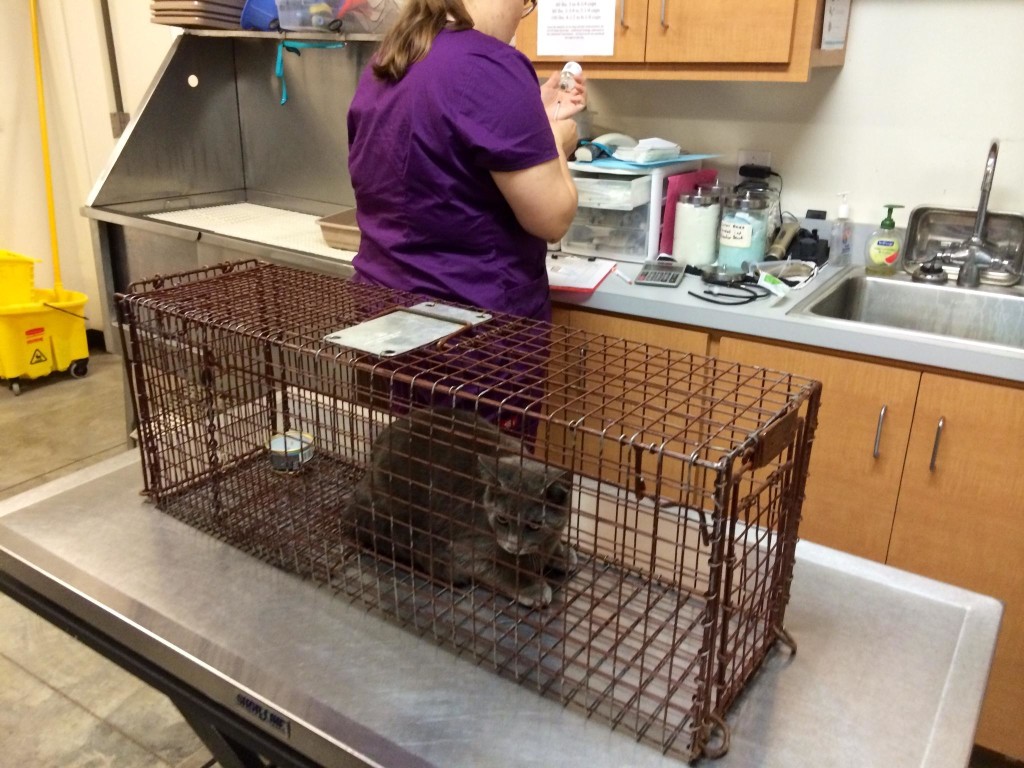
By Bob Gordon, FOTAS Director of Communications Aiken veterinarians Holly Woltz and Cindy Brown are helping FOTAS with its Trap/Neuter/Return (TNR) program and have already fixed close to 300 community and feral cats for local residents.
“I became partners with FOTAS and the County Shelter because I’ve seen the gut-wrenching consequences of cat overpopulation,” said Dr. Woltz, Chief of Staff for Veterinary Services. “The numbers are still too high with these feral cats, and the shelter has a limited budget…stretched to a tiny thread to meet many needs. Since we can spay/neuter these animals for FOTAS at a very low price, I volunteered our services. FOTAS needs every penny!”
TNR is regarded as the most humane and effective way to control feral cat population growth. Using this method, all the feral cats in a colony are trapped, neutered/spayed and then returned to their territory, where they continue to thrive on their own. Young kittens that can still be socialized, as well as friendly adults, are placed in foster care and eventually adopted out to loving homes. Dr. Brown, who practices at Aiken Animal Hospital, also began volunteering her practice’s services to FOTAS late last year, and says by all accounts TNR seems to be working.
“Any time that FOTAS volunteers or the County Shelter calls for help, we accommodate their needs whenever possible to help the stray animal situation in Aiken,” she said. “I cannot stress enough the importance of education to aid in the [cat overpopulation] problem and we will continue to help spay and /or neuter as many stray animals as we can,” she added. Since launching the TNR Program in 2013, FOTAS has paid for the surgeries of more than 870 community cats. “The TNR program is a socially responsible and compassionate approach to serving these cats and the public,” said Dr. Woltz. “As a result, cats live healthier and more peaceful lives.”
The County also provides traps and can do a limited amount of spay/neuter surgeries for feral and community cats. If you need financial assistance with spay/neutering your domesticated cat or dog, the County has vouchers you can apply for at the shelter and FOTAS can also help through the Fix-A-Pet Program. Please donate to FOTAS to support the TNR and Fix-A-Pet programs, as well as provide other assistance to the homeless animals at the County Shelter. To make a donation, you can go to our website, FOTASaiken.org, or bring your contribution to the shelter at 333 Wire Road in Aiken. And while you’re there, visit our adoptable animals. The shelter is still at full capacity and the steady stream of homeless animals being brought through our doors has not let up. If you are looking for a cat (or dog), NOW is a great time to find a furry companion at the County Shelter. Their lives are in our hands…
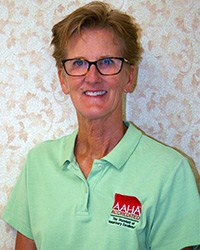
Holly Woltz DVM
Holly Woltz DVM
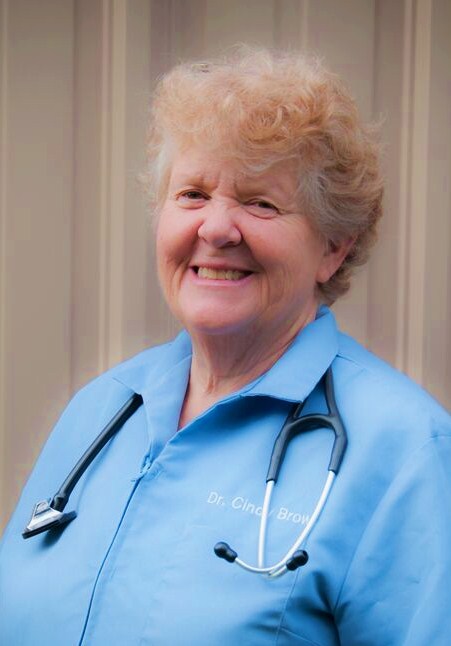
Cindy Brown DVM
Cindy Brown DVM
                 

FOTAS partnership with PetSmart boosts shelter cat adoptions

By Bob Gordon, FOTAS Communications Director

Audie Murphy, Felix, Tiffy, Avalon, Kiki, Pip and Pickles are each in their own cat carrier after being examined, vaccinated, microchipped, and given a final flea treatment. Once the pre-prepared adoption forms and other paperwork is checked over and put into folders by Aiken County Animal Shelter (ACAS) staff members, the seven cats and kittens are ready to begin their short journey from the shelter to the PetSmart store on Whiskey Road.

An ACAS adoption assistant transports the chorus of meowing felines to the Aiken PetSmart, and upon arriving is greeted by Store Manager Butch Hampton or one of his friendly employees. The PetSmart team is always happy to see new cats come in and takes pride in its role of helping adopt them to customers.

“Things are going great with the work we are doing with FOTAS and the County Shelter,” Butch said. “Everybody is fully engaged and committed to this partnership, and I think we make a good team.”

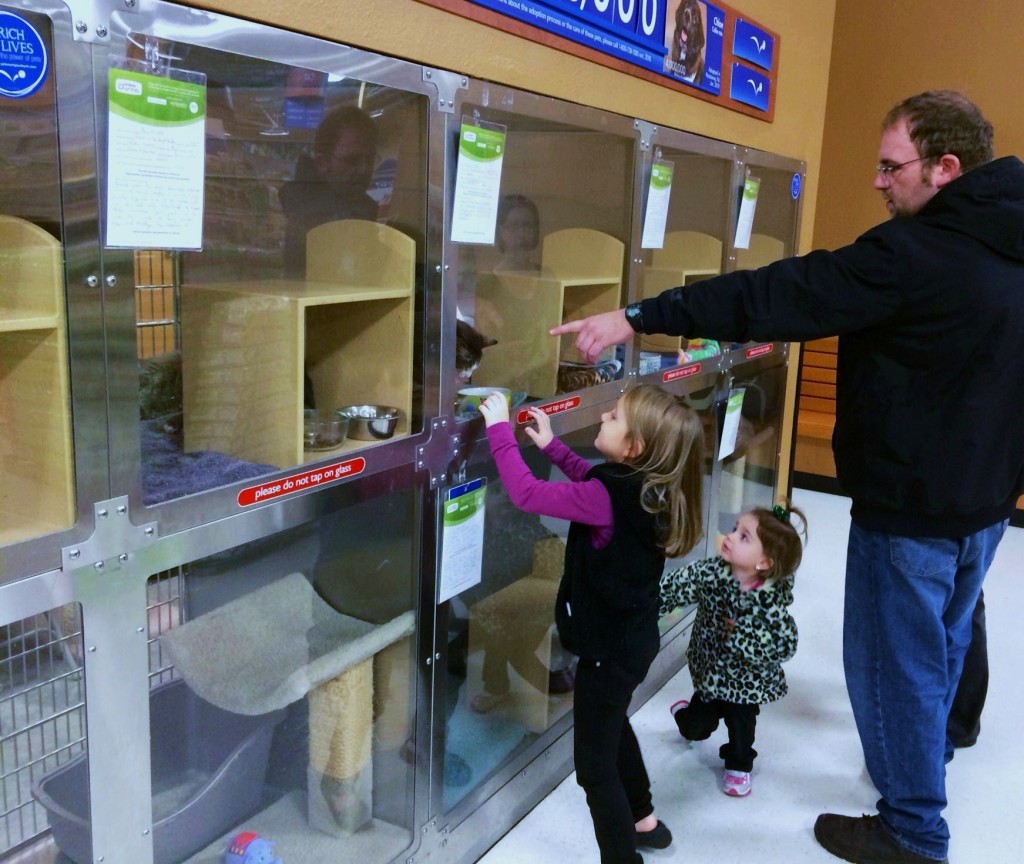
The ACAS representative makes sure all of the felines are settled into their PetSmart cat apartments located in the back-left corner of the store. Then, the PetSmart staff takes over, ensuring that any interested customers receive the information and paperwork needed to adopt the cats. The adoption fee is $35, which includes spay/neuter, vaccinations and microchip.

Before FOTAS began its direct partnership with PetSmart, the adoption fee for the store’s cats was about twice as much as it is now. Also, adoptions were managed by a rescue that required a home inspection of potential adopters. While a worthy precaution, this added stipulation could take a lot of extra time. Now, folks can adopt a cat and take it home right away.

It is a mutually beneficial relationship. The cats draw customers to PetSmart and the store serves as a second venue for the shelter to showcase its adoptable felines. But the real winners of this collaborative effort are the cats themselves. With the effective teamwork between the organizations, the shelter cats are finding homes quicker, making space for more cats to get their chance at being adopted. Since just mid-December, more than 35 shelter cats have been adopted at the PetSmart store. Since the partnership was initiated, the Shelter has replenished PetSmart with new cats every week.

Also fully committed to the goal of saving the shelter’s cats and finding them forever homes are eight volunteers that help keep the PetSmart cats clean, watered and fed. They follow a strict schedule, making sure that someone comes in to maintain the cats’ living area twice a day, every day. Some volunteers stay for hours to play with the felines, helping to socialize and prepare them for their future forever homes.


“I think having the County’s homeless cats at both the shelter and PetSmart helps the Aiken community see how many beautiful and loving cats are available,” said Volunteer Judy Albert. “They all need permanent and loving homes.”

Their lives are in our hands.

For more information about the PetSmart cat adoptions, please go to www.fotasaiken.org and be sure to check out the shelter cats available for adoption at the ACAS, 333 Wire Road in Aiken or at the Aiken PetSmart, 2927 Whiskey Road.

Love your pet? Then fix your pet!

By Joanna D. Samson, FOTAS Vice President. 

What do Lucy, Skye, Olivia, Zeus, Roberta, Harley, Andrew, Bane, Butch, Zach, Dante, Buster, Milo, Brees, Leroy, Triscit, Biscuit, Snowhite, Alberta, Rowdy, Axel, Rory, Destiny, and Tamara have in common?

Other than being canines who ended up at the Aiken County Animal Shelter through no fault of their own, they are energetic, muscular, sleek, barrel-chested, short-snouted, square-headed people-pleasers with big goofy smiles, long tongues and irresistible urges to chase balls and curl up next to their humans on a couch to watch Living Dead reruns.

In short, they are all pit bulls or pit bull crosses.

They are also all lucky, because most of these dogs have found homes and humans to adore. However, because they are pit bullish, they spent a longer time in the shelter than their cute, fluffy, floppy-eared shelter mates – a seriously perilous position in a public shelter with limited space.

And in the County shelter, like other public shelters around the country, many of their brethren are not so lucky. Pit bulls are deemed unadoptable and euthanized at much higher rates than other breeds before they even get to the adoption floor.

Yet often the very people who are attracted to pit bulls refuse to spay or neuter their pets. They say it is cruel and unnatural to take away their manhood or breeding capacity.

Really? In my book, it is unspeakably cruel and unnatural to bring pit bull puppies into the world when there are thousands upon thousands of deserving, homeless pits across the country who are likely to be killed without ever having known the love of a responsible human. Really.

The truth is, in an animal-rich environment like Aiken, it’s impossible to adopt your way out of this problem. Last year in the County alone, excluding the City, 4500 animals passed through the shelter and 50% of those were euthanized. Those are grim numbers.

The only way to meaningfully reduce the euthanasia rate is to reduce the intake rate, and the only way to reduce the intake rate is to eliminate the overpopulation of unwanted animals, and the only way to reduce overpopulation is for every citizen, and their families, and their friends to spay and neuter their animals. Period.

There are no legitimate reasons not to spay and neuter your pets. Research has proved that animals who are “fixed” live healthier, longer lives, are easier to control and make better family-members.

What’s more, you don’t need to breed your dog so your children can experience the “miracle of birth” – you can foster one of our many pregnant mamas. You and your children will get to experience the joy of birthing and caring for the puppies, FOTAS will provide food and medical supplies, and when the puppies have been weaned, you can hand them over to be sent to their new homes knowing you have done a great deed.

Spaying or neutering your pet has never been easier or more affordable. Plus you may be eligible for financial assistance through the County or City voucher program or FOTAS Fix-a-Pet.

Call us today at (803) 514-4313, and we’ll help you get it done.

Please don’t wait. Their lives are in our hands.

PETS OF THE WEEK

TIA   Female, Hound, 1 year old, 32 lbs — $70.00

EMMA   Female, Domestic short hair, adult   — $9.00