The Friends of the Animal Shelter – Aiken County (FOTAS) is a nonprofit 501(c)(3), volunteer organization created in 2009 to supplement the resources of the Aiken County Animal Shelter in the care of over 4,000 homeless and abandoned animals consigned to its care each year. FOTAS is wholly funded by private donations.
The mission of FOTAS is to support the Aiken County Animal Shelter by promoting animal welfare, responsible pet ownership, and the elimination of euthanasia of all adoptable animals.
Aiken Choice “Best of Aiken” Awards
Best Pet Rescue Organization and Best Pet Friendly Event: Woofstock Doggie Derby Day.
By Bob Gordon, FOTAS Director of Communications
Cats are fascinating creatures. They entertain us with their acrobatics, keep our homes free of mice with their hunting skills, and head butt us and purr to share their love and happiness. Not to mention they clean and groom themselves, don’t need to be taken for walks and come in a wide variety of patterns and colors. As Sigmund Freud once quipped, “Time spent with cats is never wasted.”
But even with cats, sometimes you can have too much of a good thing – especially when people don’t get their pets fixed. Indeed, the Aiken County Animal Shelter has been overcrowded with homeless cats since spring. From May through September, about 1,240 cats have been taken in by the shelter. That is an average of 248 surrendered or stray cats per month!
With so many strays and surrenders coming in and our facility at full capacity, we developed two other channels for cat adoptions.
These other adoption outlets include:
Barn Cat Program. Besides our domesticated cats and kittens on the adoption floor, we adopt out feral and less socialized felines as barn cats. These kitties are built more for the outdoors and serve as good mousers. Because of their wilder demeanor, the barn cats are available for free to those able to give them safe homes. However, there is still an application and screening process to adopt them.
PetSmart Cats. Thanks to fantastic FOTAS volunteers and PetSmart’s outstanding staff and management, we are able to care for, exhibit and adopt out County Shelter cats from the company’s Aiken store. Having this outstanding alternative outlet for adopters has saved many feline lives. So far this year, more than 116 of our shelter cats have been adopted from the PetSmart located at 2527 Whiskey Road.
Due to the unusually high number of homeless and stray cats and kittens being brought to the Shelter, FOTAS extended its $15 cat adoption special through November 30 and just yesterday held its second “Catpacity Saturday” in which all cats and kittens were adopted out for free.
The Shelter and FOTAS need these additional channels and specials to place more felines and are working overtime to save as many County Shelter cats as possible. But we need your help. Please spay/neuter your pets. The only way to get the cat/kitten overpopulation in check is to stop the problem at its source. There are a number of ways to get financial help with the surgery. You can obtain a county spay/neuter voucher at the Shelter; or if your cat is outdoors and feral, check out our Trap/Neuter/Return (TNR) program. For more information about these and other programs, please go to the FOTAS website, www.fotasaiken.org.
Their lives are in our hands.
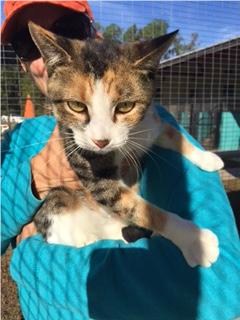
A FOTAS volunteer holds Molly, a beautiful Tabby who arrived at the shelter with kittens
This Friday, November 11, is Veterans Day, a time for us to pay our respects to those who have served in our military. For a 24-hour period, Americans stand united in honor of our veterans and the good work and sacrifices they have made for our country.
But Friends of the Animal Shelter (FOTAS) wanted to honor and help out these patriots every day. So, this year we launched our year-round adoption discount for veterans and active military personnel. Adoption fees are half-price for all U.S. military services men, women and veterans who adopt a dog or cat at the Aiken County Animal Shelter (dogs $35, cats $15).
To date in 2016, our veterans discount program has helped 36 veterans adopt 25 dogs and 11 cats.
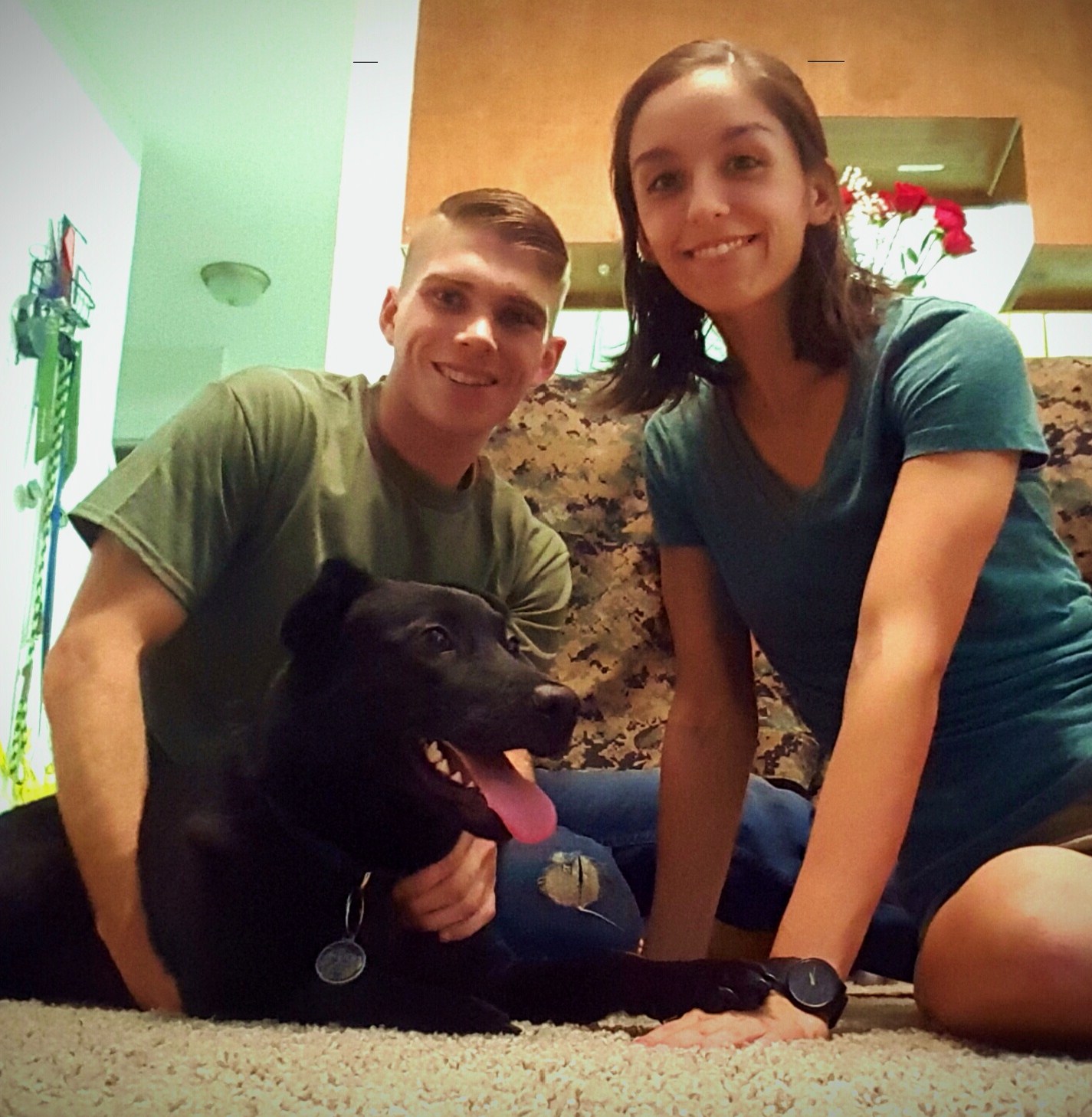
“I think it’s a great idea,” said Taylor Heimann, a marine who adopted Heidi, a black Retriever puppy, with her boyfriend, Tom Buchanan, also a marine. “It’s been a great advantage to us because we were able to put the extra money we saved toward Heidi’s crate, toys and other things she needed.” The young couple lives in Augusta and takes their new pup to Fort Gordon Veterinary Clinic for her healthcare.
In the past, FOTAS has held one-month specials for veterans and military personnel, but early this year the FOTAS board of directors agreed on a permanent veterans/military personnel discount.
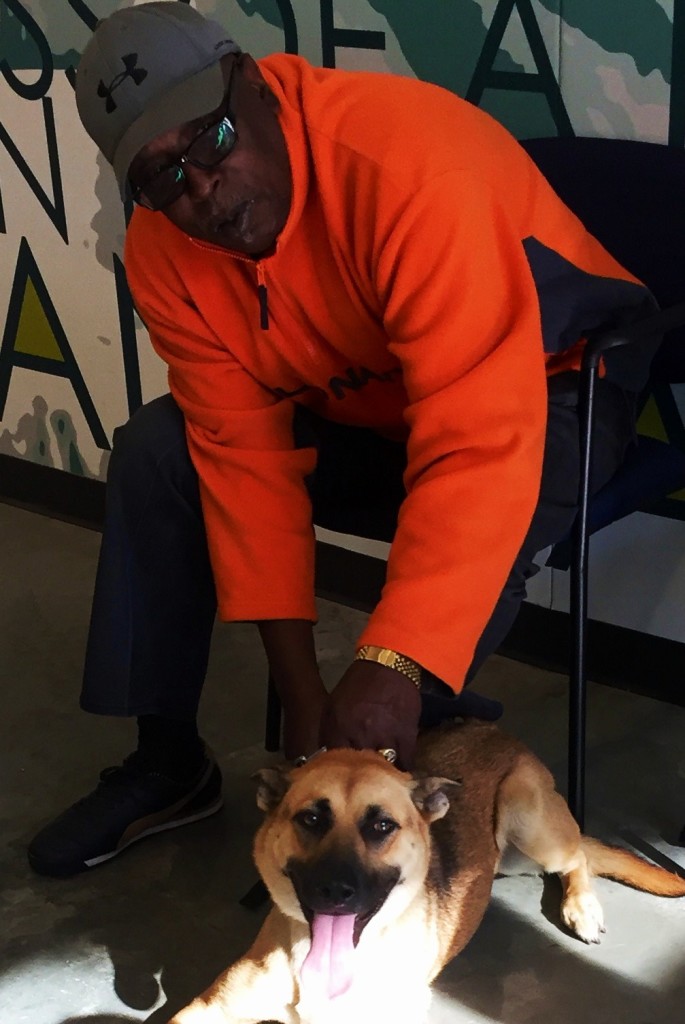
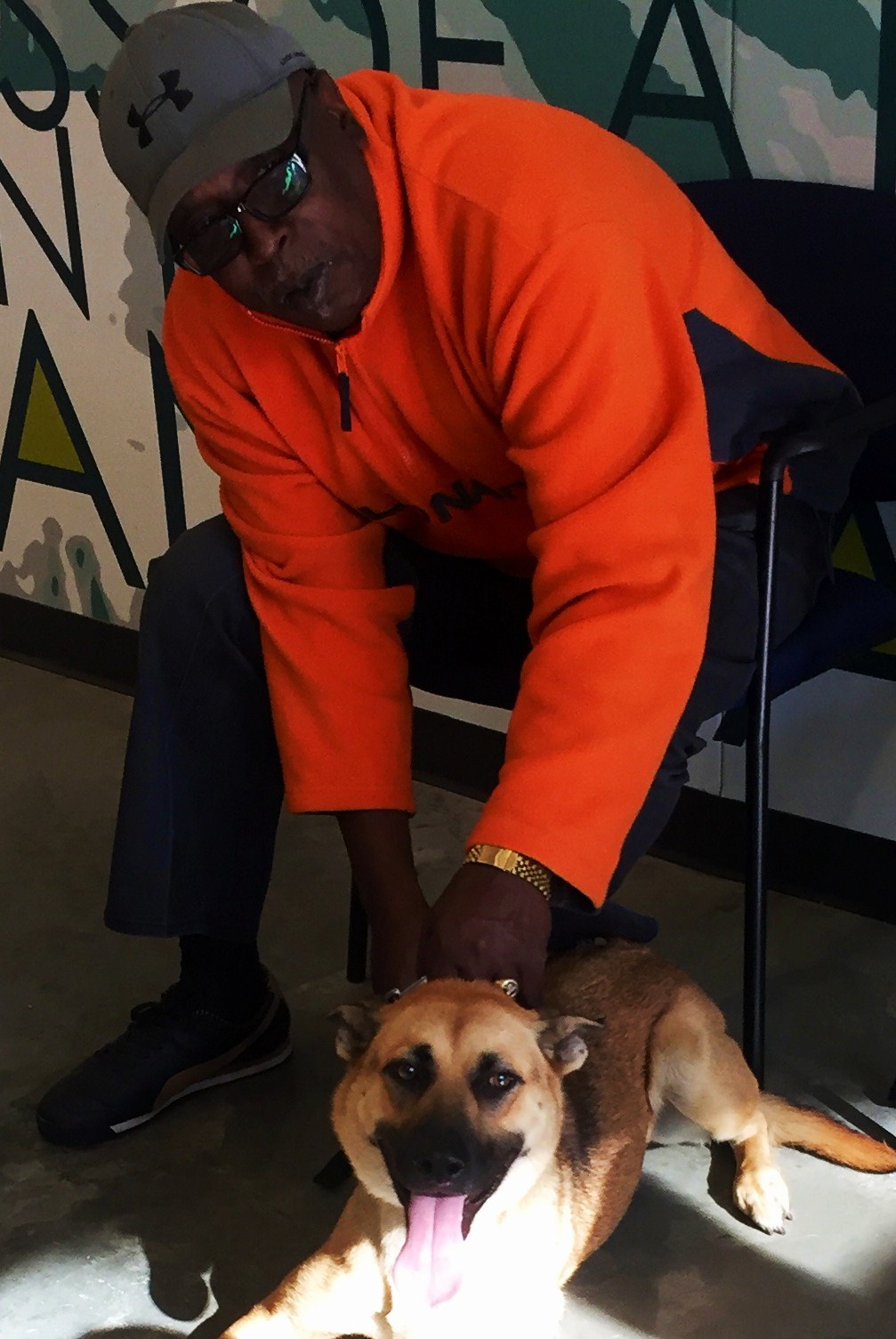
“A lot of veterans out there are hurting and have post traumatic stress and could use the help because they can’t afford the cost of getting and training a service dog,” said Eddie Hill, a veteran who served in Kuwait during the Gulf War.
FOTAS sponsored Eddie’s adoption of Jenelle, a young, German Shepherd. However, Jenelle turned out to be a little too high-energy for Eddie’s apartment, so she was given to another veteran and now Eddie is going to receive Peggles, a two-year-old Boxer mix, who came to the shelter with a leg shattered by a bullet. Even though Peggles had to have her back right leg amputated to maintain her mobility, she is still graceful and as loving and trusting as ever. Jerry Lyda, of Veterans K9 Solutions, Inc., trains many service dogs for vets and is working with Peggles so she will be a great companion for Eddie, who still suffers from Post-Traumatic Stress Disorder (PTSD). The 63-year-old vet enjoys quiet activities, like fishing or going to church on Sunday. But he can get nervous in crowds or when too much activity is going on around him.
“That’s what PTSD does to you”, Eddie said. “But with an animal, you love them, they love you. You can trust them and they can trust you.”
If you are a veteran or currently serving in the armed forces, please visit us and take advantage of the half-price adoption discount that FOTAS provides. As always, the County Shelter has some amazing dogs and cats on our adoption floor that desperately need loving homes.
Their lives are in our hands.
Marines Tom Buchanan and Taylor Heimann with their adopted dog, Heidi
You and your family have made a decision: you are ready for a new dog, and you want to adopt your new best friend from the Aiken County Animal Shelter. You visit the Shelter and walk through the adoption pods with a staff member or a FOTAS volunteer. You meet a number of prospects, but you are drawn to a handsome, two year-old black and brown shepherd mix named Bryant who stands at attention and wags his tail when you stop at his kennel. Bryant is so openly friendly, so eager to please, you are astonished to learn that he was painfully shy and scared of people when he first came to the Shelter.
Then, as you watch Bryant attempt to crawl into the lap of Darling Rios, one of the FOTAS play yard experts, like he was a fluffy little lap dog instead of the 51-pound bruiser that he is, you think, “Wow, that’s one special dog.”
There’s only one thing: Bryant is heartworm positive (HWP). What does that mean for you, and most importantly, Bryant?
The answer is: very little, because only HWP dogs who are healthy and show no clinical signs of heartworm disease are placed on the adoption floor at the Shelter.
“Dogs are infected with heartworms by mosquitoes, but it takes a long time for heartworm larvae to mature into adult, reproducing worms that can strangle the heart,” says Jennifer Miller, President of FOTAS, “so heartworm disease in a healthy, young dog is treatable with a course of antibiotics, which weakens any maturing worms, followed by monthly heartworm prevention medicine, like Heartguard, which every dog in the South should be on anyway.”
Dr. Charles Groover from the Aiken Veterinary Clinic agrees. “I have seen and treated literally thousands of dogs with heartworm disease in Mississippi and South Carolina,” says Dr. Groover. “Here in South Carolina, I almost never see a case of heartworms that cannot be treated successfully, and in most cases, the treatment is no more expensive or time-consuming than protecting a dog who has not tested positive for heartworms.”
So, go ahead. Fall in love with Bryant or any other HWP dog on the adoption floor of the Shelter, because:
Only healthy HWP dogs with no clinical signs of disease are placed on the adoption floor;
Healthy HWP dogs, with proper treatment and care, can lead the same long, healthy lives as any other dog on the adoption floor; in fact, no one who has adopted a HWP dog from the Shelter has reported that their dog became sick or died from heartworm disease;
When you adopt a dog from the County Shelter, FOTAS pays for the antibiotics and the first 6 months of Heartguard—that’s money in your pocket because you need to give your dog the monthly heartworm prevention medicine anyway; and
Treatment is easy: after the completing the course of antibiotics, one little tasty, chewy Heartguard chunk a month is all it takes to treat and protect your dog.
Come on over to the Shelter, the very handsome Bryant is waiting to crawl into your lap and love you up.
By Joanna D. Samson, Vice President of FOTAS
By the time it hit the South Carolina Coast, Hurricane Matthew had been downgraded from a Category 5 to a Category 2 storm; but the 85 mph winds, 10-14 inches of rainfall and extraordinarily high storm surges nevertheless created life-threatening conditions and caused the wide-spread destruction of property. Thousands of people were evacuated from the coast.
But how about all the animals left behind to fend for themselves?
The Charleston Animal Society sprang into action in the week ahead of the storm, evacuating the 70 animals in its facility to make room for the anticipated deluge of animals rescued by the storm (at last count, 500). Fifty-two animals were evacuated from Dorchester County, 70 from Pawley’s Island and 60 from Horry County. Many of the animals were transferred to places as far away as Pennsylvania, Maryland, and Ohio. The York County Humane Society took in 15 cats and three dogs. Here in Aiken, the SPCA Albrecht Center for Animal Welfare took in an additional 24 dogs.
The effort and resources needed to conduct rescue operations and to handle that many additional animals are enormous: hundreds of dedicated volunteers, substantial amounts of food, thousands of extra crates, and medical supplies. Many private vehicles were pressed into service to haul the animals to safety. Already overworked shelter staff work overtime to accommodate the influx of extra animals. It’s an exhausting, time-consuming and stressful time.
Thank God those types of hurricanes only come around once every, say, 20-30 years.
But what if every week at an animal shelter was fraught with the same kind of crises, requiring the same level of resources, creating the same level of anxiety, except the cause was man-made rather than an act of God? That would be a monumental tragedy of epic proportions.
That would also be just a normal week at the Aiken County Animal Shelter during the hurricane season.
For example, take the month of August: 603 animals were taken in at the Shelter, that’s an average of 27 animals every single day. September intake was also high, ranging from a low of seven to a high of 38 (IN ONE DAY!) Twenty-one animals were taken in on September 1st, 28 on September 6th), 26 on September 12th, 27 on September 16th, 20 on September 19th, and 29 on September 22nd.
Every month in the summer, intake skyrockets, volunteers and staff are overworked and critical resources run low. It’s an exhausting, time-consuming and stressful time, but it doesn’t end once the hurricane passes.
And because the County Shelter is a public facility, it cannot turn away any animal just because there is no additional room or because resources are short.
The dedication and generosity of the rescue communities and their citizens during the Hurricane Matthew crisis was nothing short of remarkable, and I am gratified by the public response. Thank God, because there’s nothing more heart-wrenching than witnessing the suffering of animals left homeless through no fault of their own.
We know. We see it week-in and week-out, day-in and day-out, every month during the entire hurricane season. Until every County pet is fixed, your County Shelter needs your help—and not just for the occasional emergency.
Please, please, volunteer, donate, adopt. Their lives are in our hands.
Yesterday, I had a home. I had you. Today I am in a kennel in a place where there are so many other dogs. I can see dogs in the kennels across from me, but I can hear so many more. I can smell their fear and anxiety. I am afraid, too.
Why did you leave me here?
I thought we were going for a ride in the car—one of my very favorite things to do. Then we pulled in to this place, and I thought, “Oh, oh, the vet,” but I’m a brave boy, so I figured we’d see the man in the white coat, get a shot, and we’d get back in the car and go home.
But then you left me here, and you didn’t even look at me when the nice lady took me away.
Have I been bad? Is it because I barked too much when you left me outside chained to the tree? I was lonely and wanted to be with you. I just needed a little attention, that’s all.
Is it because I knocked over the garbage can? I was hungry, and there were some good smells in the can. I couldn’t help myself.
Is it because I chewed up your boot? I was bored and it smelled like you. If you had taken me for a walk or given me a chew toy, I don’t think the arm of your chair would have been so appealing.
Is it because my fur is matted and I have these ugly itchy sores on my body from fleabites? All I just needed was a bath and a flea collar.
Is it because I had that accident on the floor? I didn’t know what I did wrong because you never took the time to teach me where to go. I was terrified when you forced my face into my own mess.
Is it because I jumped on you? I was excited to see you, and I was afraid you’d go away before I got a chance to show you how much I like you.
Is it because I’m not affectionate enough? I want to be, but I’m scared when you yell at me or hit me and I don’t know why.
I wanted to be a good family member. I want to please you, but I didn’t know how. Maybe I could have learned if you had taken me to an obedience class or to one of those free lessons at the shelter.
Please don’t leave me here. I want to come home.
*****
About 2500 animals a year are surrendered to the Aiken County Animal Shelter by their owners for problems that, in most cases, could have been resolved with a little time, attention and some outside assistance.
If you are considering surrendering your pet, call the FOTAS hotline first. We may be able to help you and your pet avoid the trauma of separation.
On Sunday morning, Sept. 2 the sun broke through the clouds, adding heat to an already steamy morning. I arrived at the Aiken County Animal Shelter to help walk dogs, and I was delighted to see so many volunteers at work. There were dogs on leashes, dogs in the play yards, and dogs lying in the grass, soaking up the sun while their handlers chat. A young couple laughs while they take out their fifth dog. Enduring friendships are forged when folks come together for a common purpose.
I leashed up Jed and Geovana. These two young littermates were picked up as strays, painfully thin, hungry, thirsty, hot and frightened. Little Jed had an embedded collar around his neck that had to be surgically removed by Dr. Levy, the Shelter’s veterinarian. The two are recovering nicely. Geovana is shy, a little distrustful of humans, but who can blame her? Jed, on the other hand, is all play with a devilish twinkle in his eye.
I stopped at the bench behind the paddocks. With a little coaxing, Geovana crawled into my lap for a belly rub, while Jed wrestled with a pine cone on the ground.
The Shelter is a cheerful place. There are grassy play yards, dotted with cheerful umbrellas to provide shade for animals and people. The kennels are spacious and clean, allowing the dogs to either bask in the morning sun or retreat into the cool climate-controlled interior.
Thanks to the thoughtful and creative management of Bobby Arthurs and the oversight of Paige Bayne, the Shelter is once again open for adoptions on Saturday; volunteers are permitted to walk the dogs on Sundays; new programs, like the play groups for dogs, have been implemented to promote the quality of life, and thus the adoptability, of the dogs. On-site activities draw more people to the Shelter every week. There is a heightened, almost seamless, sense of shared mission and cooperation between staff and volunteers.
Adoptions are up.
Transfers are up, thanks to the tireless and exhausting efforts of FOTAS.
Yet despite all of our proactive efforts to care for these animals and to support the spay/neuter of community cats and pets for citizens in need (no one dedicates more resources to spay/neuter than FOTAS and the County combined), intake at the Shelter remains alarmingly, shockingly high.
And it will remain that way as long as people continue to do things like drop off 3 mommas and 18 puppies in one tub (yes, that happened!) The owner couldn’t be bothered to spay his dogs, and then couldn’t be bothered to take care of those 18 little lives born because of his irresponsible carelessness.
Instead, he dumped the cost and the heartbreak of that on the rest of us.
Here are the cold, hard facts: until every citizen does the right thing and fixes their pet, some adoptable pets will be at risk for euthanasia. That stinks.
Geovana licks my hand. Jed pounces on my shoe. “You two will be just fine,” I say, giving them both a hug. “I promise.”
My husband David swears that shelter dogs are grateful, that they know they have been saved and that you saved them, and that their love and devotion are expressions of that gratitude.
Now I can’t say for sure that our Maggie dog’s love is an expression of gratitude rather than a reciprocal response to our love and care, or that the depth of our terrier mutt Jack’s devotion to us is somehow greater than, say, a pedigreed poodle’s devotion to its owner.
But I can say this: every one of our shelter dogs has brought us indescribable joy. No matter what the circumstances of their unfortunate history that brought them to the shelter, whether neglect or abuse or both, they bonded with us seamlessly and with no hesitation. As always, love transformed them, and in return, they transformed us, enriching our lives in ways that we could not have imagined on the day we brought them home.
David Stinson is a dog-lover, and for the past 10 years, he has resided with 4 large dogs in his lovely little cottage on Newberry Street. When old age and cancer took two of his dogs, David was uncertain whether he wanted to add another dog to his remaining aging brood. Maybe, he thought, the inevitable aging-out of his canine pack would free him to travel more or pursue his many hobbies in more depth.
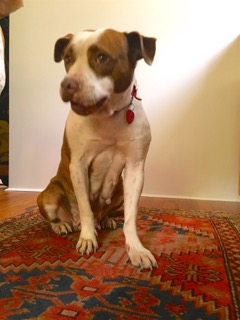
Then along came a pretty red and white Pibble named (by the Shelter staff) Snickers, who was picked up as a stray, clearly abandoned by her negligent owners. Snickers wore the tell-tale marks of neglect bordering on abuse. Her neck bore scars of a chain, suggesting she had been tethered to a stake. She showed signs of repeated breeding, and her front teeth had been filed, indicating a life as a breeding bitch for fighting dogs. And of course, she had early stage heartworm disease.
I met Snickers when she was introduced to a play group at the Shelter. Despite her background, she was an unapologetic, enthusiastic, fervent people-lover. I was smitten, and when I introduced her to David, he was smitten, too. He took her home, renamed her “Lady Edith of Newberry,” befitting of her regal nature, and the rest, as they say, is history.
“This morning,” says David, “Lady Edith is riding in the passenger seat of my car wearing her seatbelt. We stop at Popeye’s and share a sausage biscuit. She spent the first part of the day washing the faces of my old hound dogs at home. Now she is on her way to my office, where she will spend the morning with me. I have to keep her moving along; otherwise, she will linger to play with every dog and human we meet on the way.”
Now that is the happiest of endings.
Your destiny may be waiting for you right now at the Aiken County Animal Shelter. Maybe it’s an adorable puppy, a goofy dog or a regal cat. Please consider adopting your new pet at the Aiken County Animal Shelter – it’s a choice you won’t regret.
There is much to love about our Pibbles: the sleek, athletic build, the endless energy, the big square head, the affectionate nature, the big goofy smile with the impossibly long tongue that hangs out of the side of their mouth when they’re happy.
Like our golden boy, Haggis, a happy, ball-crazy, people-loving bundle of joy and affection. Or the beautiful Shaba, who showers motherly affection on everyone, particularly kids and other dogs. Or the lovely, angel-white Brandi who can’t pass up a chance to share the love with everyone she meets.
These dogs are such people pleasers, so personable and so willing, they should have flown out of the shelter as soon as they hit the adoption floor. But they haven’t.
Why is that?
“A big part of the problem,” says Jennifer Miller, the President of FOTAS, “is that folks think: pit bull! and that conjures up all sorts of negative stereotypes about the breed. The truth is, we rarely see a full-bred pit bull. What we do see are these mongrel mutts of indeterminate origins who have the genetic misfortune to have been born with square heads, goofy smiles and muscular bodies, and they are automatically branded as ‘pit bulls’ and thus potentially dangerous.”
And that’s a shame. These dogs are, plain and simple, Heinz 57 mutts who are desperate to love and be loved. As a rule, Pibbles are the most mistreated dogs on earth—tethered to stakes, deprived of medical care, abused at the hands of criminals and cruel owners—yet time and time again our Pibbles have demonstrated that they can be, and are, cherished family members.
Kathy Jacobs, the FOTAS Program Coordinator, says, “There is a general perception that a Pibble who has been abused or mistreated in the past will not make a good pet. Our experience is just the opposite. FOTAS and the shelter have had enormous success in placing these dogs in homes with children, without children, with dogs, without dogs, with cats, you name it. It’s almost like their misfortune makes them more desperate to please, not less. They are amazing animals.”
The shelter’s success rate with its Pibbles is not an accident. All dogs are held and observed in the shelter’s intake wing for anyplace from 5 to 15 days, and a dog that displays aggression it is not placed on the adoption floor. Second, because the Pibbles are the hardest to place, volunteers and staff have had lots of opportunities to observe them in all sorts of circumstances—one-on-one sessions, in their kennels, on walks, and in play yard groups. They really know these dogs, and that’s reassuring news for a potential adopter.
If you are looking for a new canine best friend, come to the shelter and meet our Pibbles. Take them for a walk, watch them in play group, and talk to the volunteers who know them. Then you will understand why these magnificent animals are often our favorites.
During the month of September, the shelter is running a half-price adoption special ($35) for its Pibble MVP’s (Most Valuable Players) and for its cats and kittens ($15).
Their lives are in our hands.
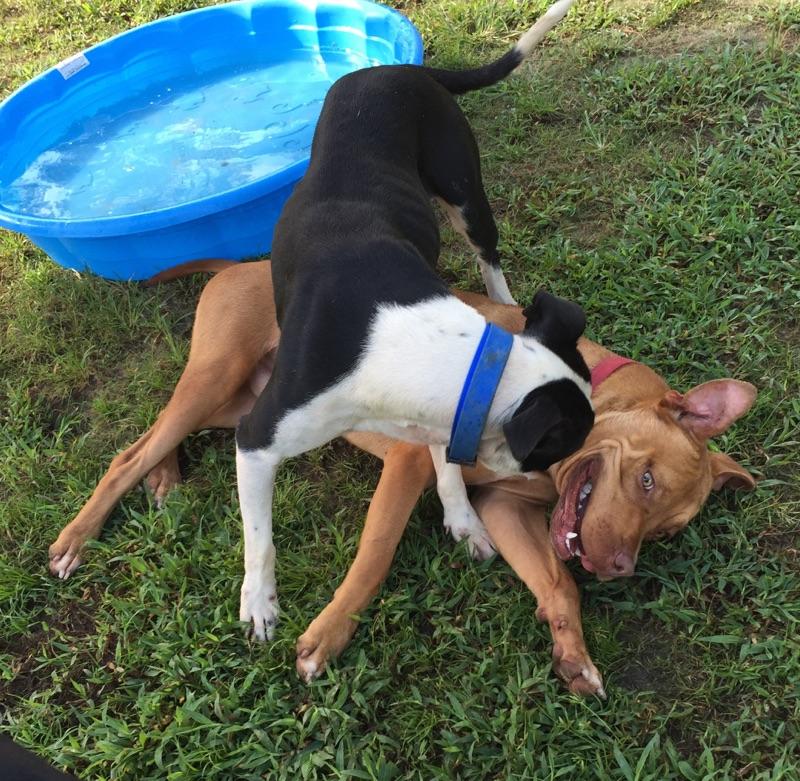
Haggis (brown Pibble) plays well with other dogs, like Sadie Mae here, at the County Shelter.
If you needed another reason to go to the Aiken County Animal Shelter and adopt a homeless pet in need, here’s a big one: having a dog or cat at your home can help you live a longer, happier life.
Research shows that living with pets helps lower blood pressure and reduces anxiety. Pets also boost our immune systems, which helps ward off disease. In 1987, the National Institutes of Health (NIH) stated that “pet ownership is a variable in public health outcomes that, like food and exercise, cannot be ignored.”
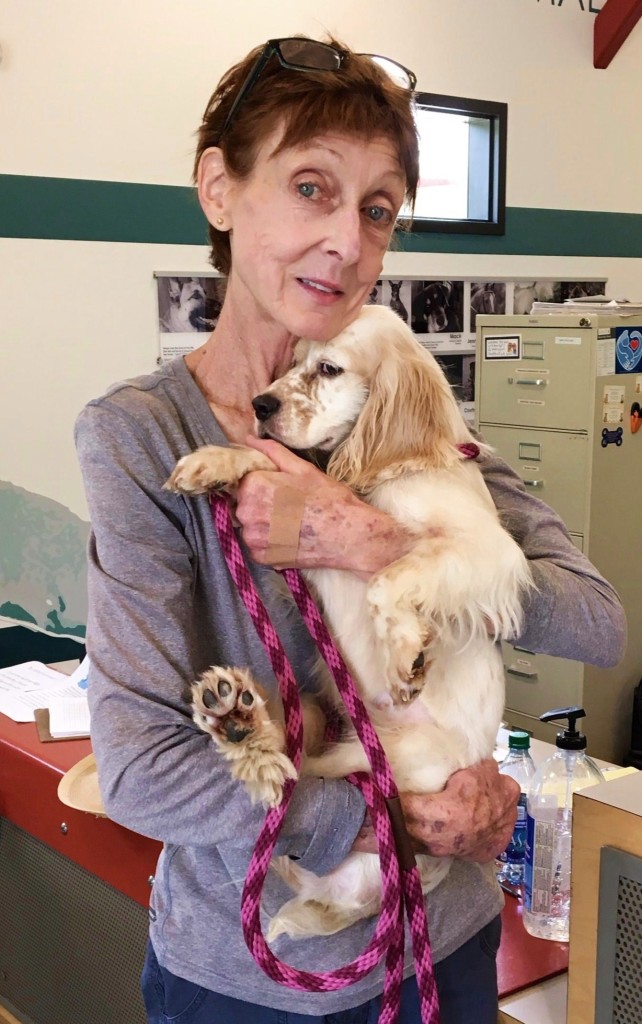
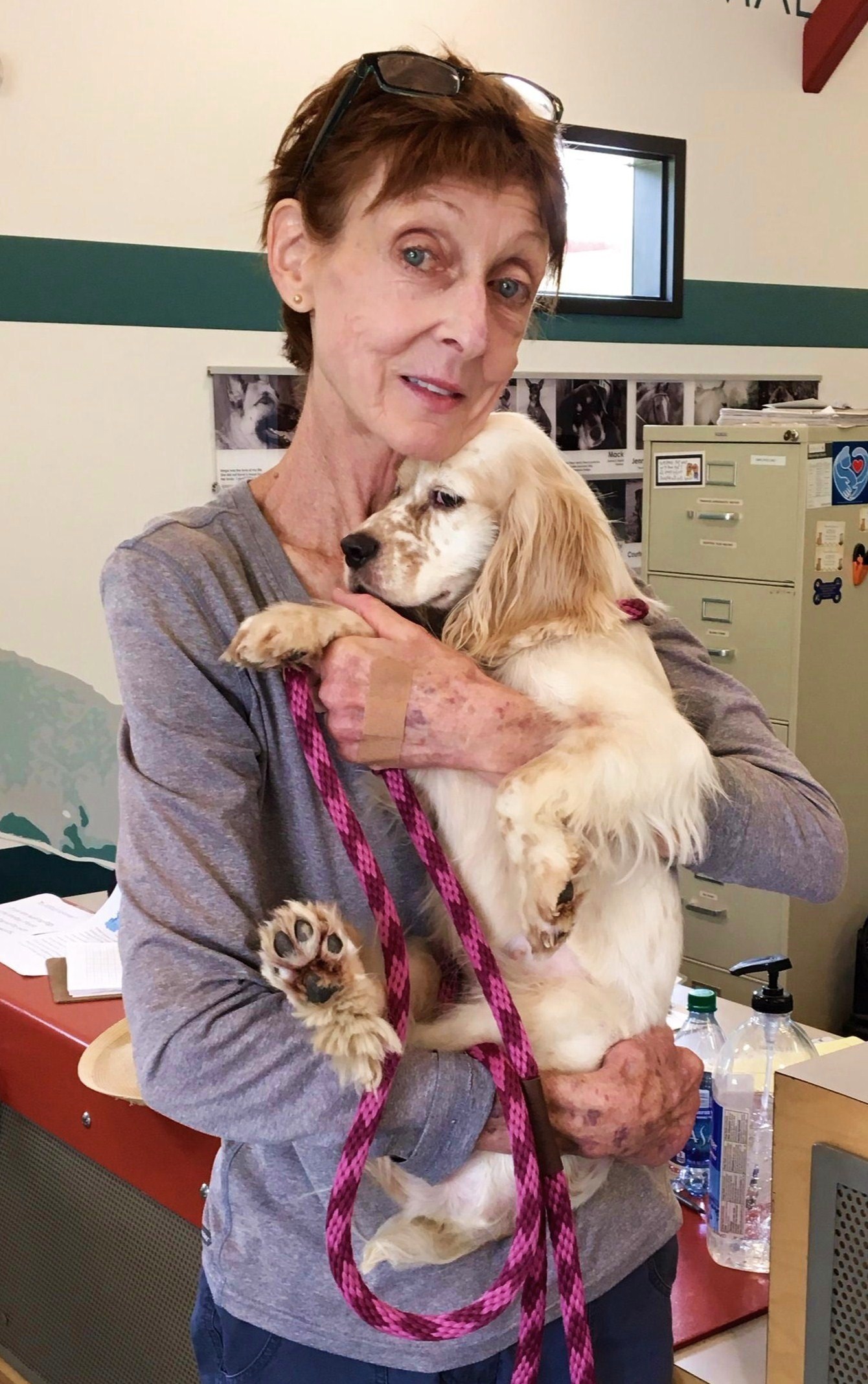
“Life is hard and having a pet softens the edges of it,” said Sue Ellen Benson, a Windsor resident and FOTAS volunteer, who recently adopted a sweet, seven-year-old Cocker Spaniel named Bonnie. “Pets make life easier because when you are focusing your attention on them, whatever problems you might be dealing with fade into the background.”
In the last three decades, the advantages pets can provide have become even clearer. Dogs, which have long been used to aid the blind, are now used to help people who have mobility and balance impairments. Also, since dogs can be so sensitive to human emotional needs, they are often used as “therapy pets” to help individuals suffering from PTSD and other anxiety-related conditions. These canines can provide a constant calming effect and the emotional support needed by people coping with such issues. FOTAS has helped select such dogs for veterans returning from overseas as well as for children coping with severe autism.
Cats also provide health benefits to their owners. Owning any pet is good for your heart but cats in particular lower your stress level. Petting a cat has a positive, calming effect as does hearing them purr. In fact, a University of Minnesota study found that over a 10-year period, cat owners were 30 percent less likely to die of a heart attack or stroke than non-cat owners
“We totally believe in the health benefits of pets,” said Kristin Chandler, who adopted two kittens, Olive and Tolliver, from the County Shelter this summer. She and her partner, Faith, are FOTAS Volunteers and also have three dogs living with them in their North Augusta home. “From exercise to stress relief, we wouldn’t know what to do without our animals,” Kristin added. “They know a lot more and pick up on more things than we give them credit for.”
If you are looking for a pet to make your life better, now is a great time to adopt from the shelter. The shelter is full and needs people to give these wonderful animals forever homes. There is a wide selection of dogs, cats, puppies and kittens to choose from and some of the animals are on special this month. FOTAS and the shelter are participating in Best Friends Animal Society’s national adoption promotion, “Welcome Home Your New MVP”, so cats and kittens can be adopted for just $15 and all Bully mix dogs are available for half price ($35). To see the animals available for adoption, please visit the shelter. You can also go to fotasaiken.org to see photos and short profiles of adoptable dogs and cats online.
Their lives are in our hands…
FOTAS Volunteer Sue Ellen Benson says adopting Bonnie from the shelter changed her life for the better.
Kristin Chandler says she wouldn’t know what to do without her adopted animals, including Tolliver, a cuddle-loving kitten.
By Kathy Jacobs, FOTAS Programs Coordinator
This has been a very heartbreaking week. In just six days, the Aiken County Animal Shelter (ACAS) received 150 homeless dogs and cats. Many of these animals were brought in by Animal Control Officers, who pick up the stray, neglected, abused or abandoned animals wandering our streets. Some were brought in sick or old by their owners while still others were pets whose families had to relocate or could not afford to keep them anymore.
When we look at the numbers, sometimes we can forget about the individuals. But these animals are so full of love, they deserve to have their stories told. By no fault of their own, they have been cast out and left in the care of our shelter staff and FOTAS volunteers.
Here are just a couple of the stories from last week’s new arrivals:
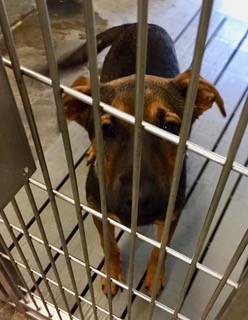
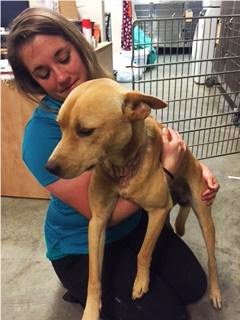
Meet Poseidon, a lovely two-year-old Shepherd mix that was surrendered by his owner. He had an embedded collar that was removed and is now healing. He was also neutered when he arrived and will be ready for adoption soon. We are so happy that he is now getting the care that he needs.
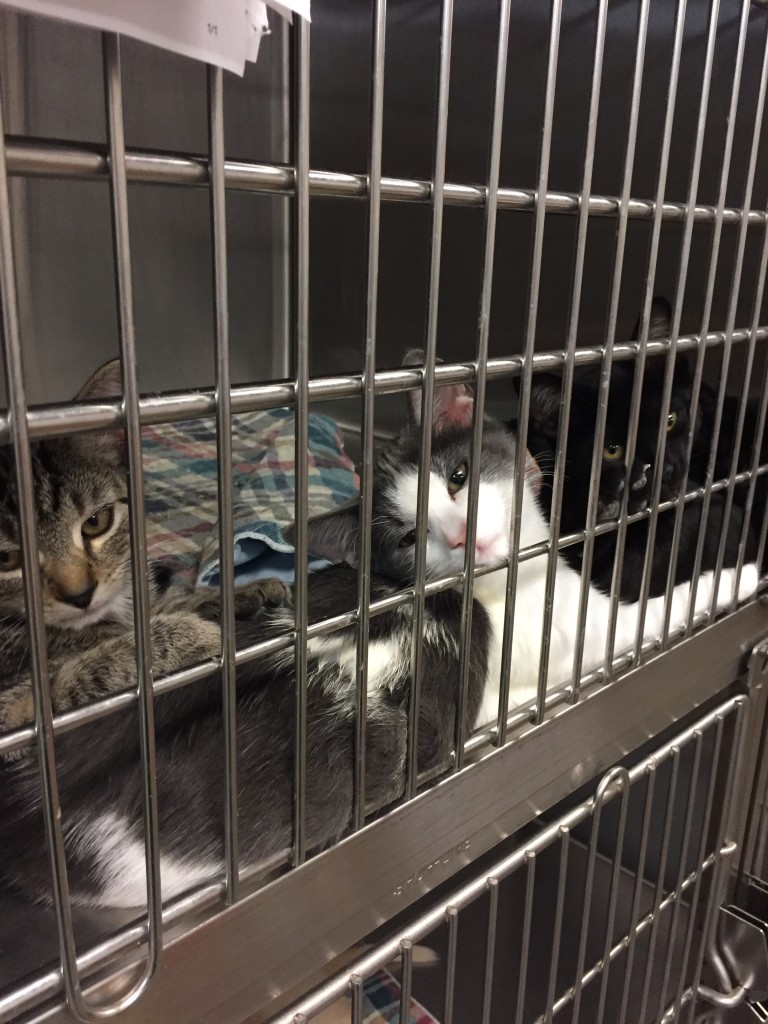
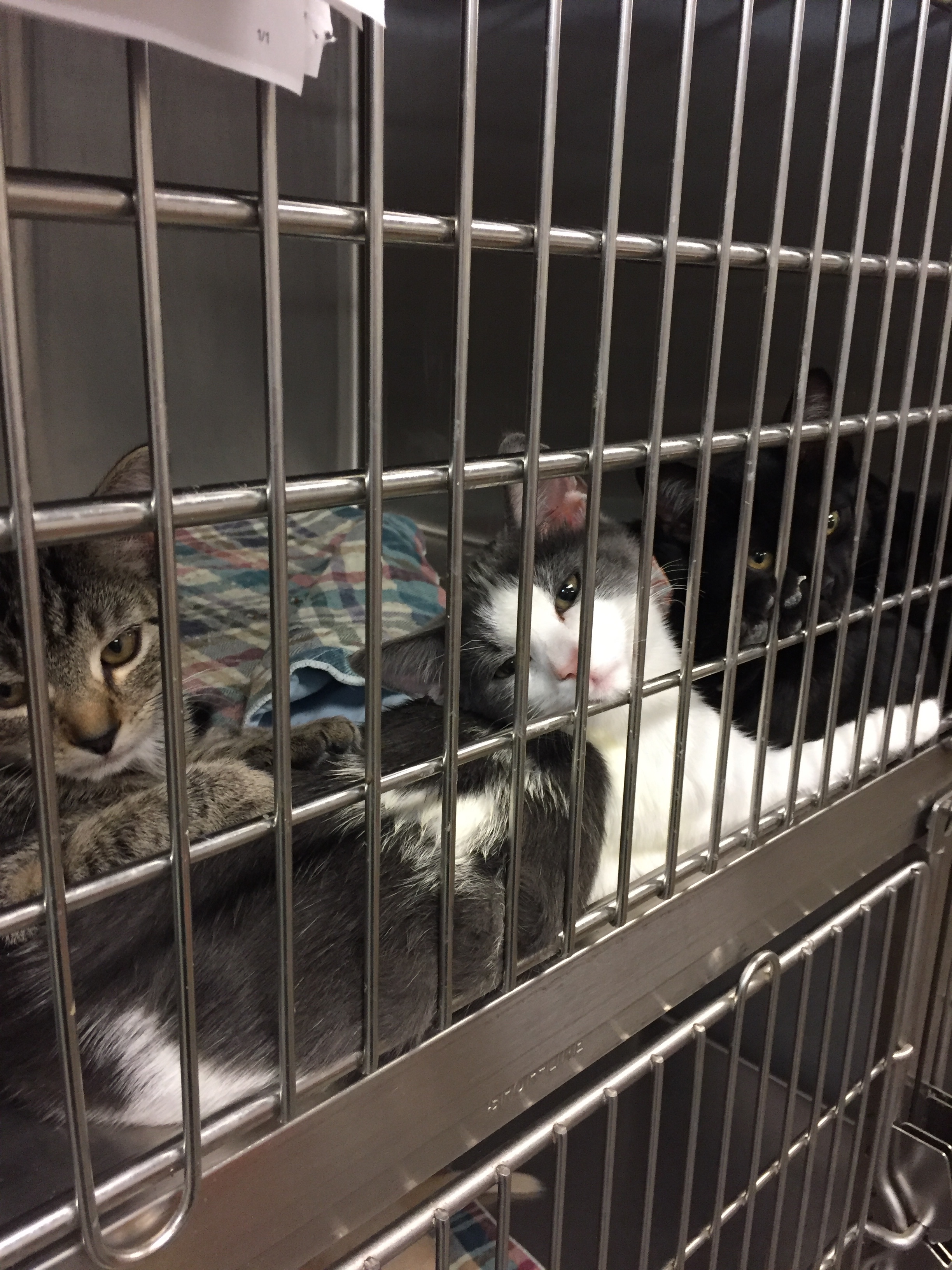
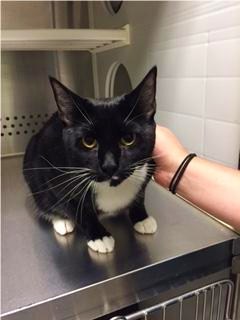
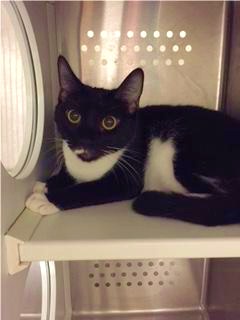
Nike and Brian are two feline brothers who were also surrendered by their owner. They are chubby, healthy little boys that were in a loving home but their owner could no longer afford to keep them. These handsome Tuxedo cats are bewildered and wondering why they are in a kennel. I hope that someone will read this and know how important it is to adopt them and keep them together.
Each of these wonderful animals knows what it means to be a pet. They once had homes but now are orphans. There are hundreds more at the shelter just like them and each animal has their own story of pain and trauma. As a community, it is our job to help them.
Despite being removed from their homes and left in a kennel surrounded by unfamiliar smells, noises and faces, these animals still wag their tails when we visit them or purr when we pet them. They appreciate any attention they are given and will make amazing pets!
As a community, we need to diminish the number of homeless animals in our area. FOTAS and Aiken County provide spay and neuter vouchers to families that cannot afford to fix their pets. Take advantage of this service! Also, please do not purchase a dog from a breeder or a kitten off of Craigslist. This only adds to the problem. We have every type of puppy, dog, kitten and cat pass through our shelter. I guarantee we can find the right friend for you.
For more information about how you can help or adopt a shelter animal, please visit the FOTAS website, www.fotasaiken.org, or call the Aiken County Animal Shelter, (803) 642-1537.
Their lives are in our hands …
Poseidon, a Shepherd mix surrendered by his owner, is held by ACAS Adoption Coordinator Traci Deaderick.
Nike and Brian came to the shelter because their owner could no longer afford to keep them.