



Category Archives: Heartworms

A Cinderella Story: The adoption of Xena, The Warrior Princess

By Joanna D. Samson, FOTAS Vice President

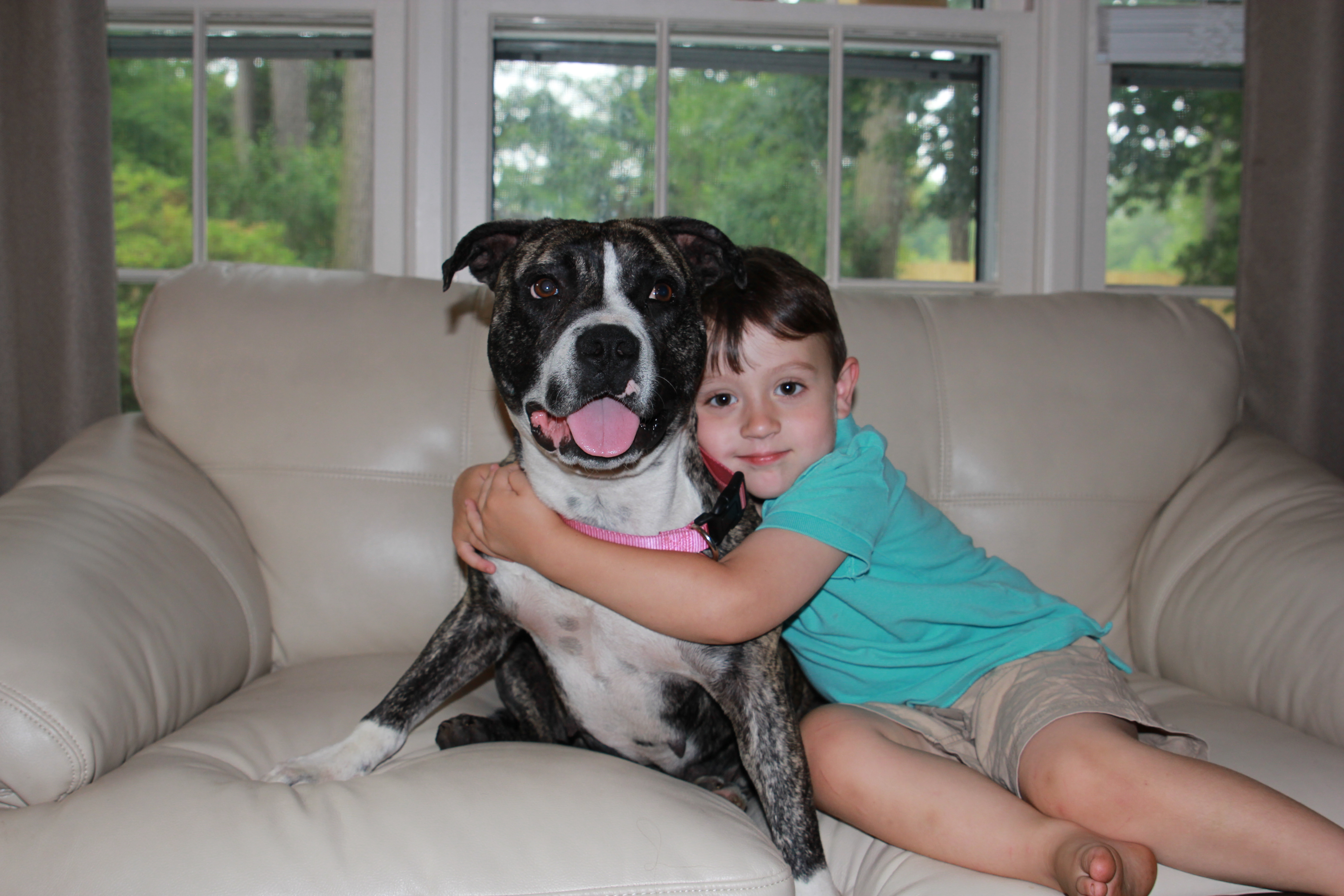
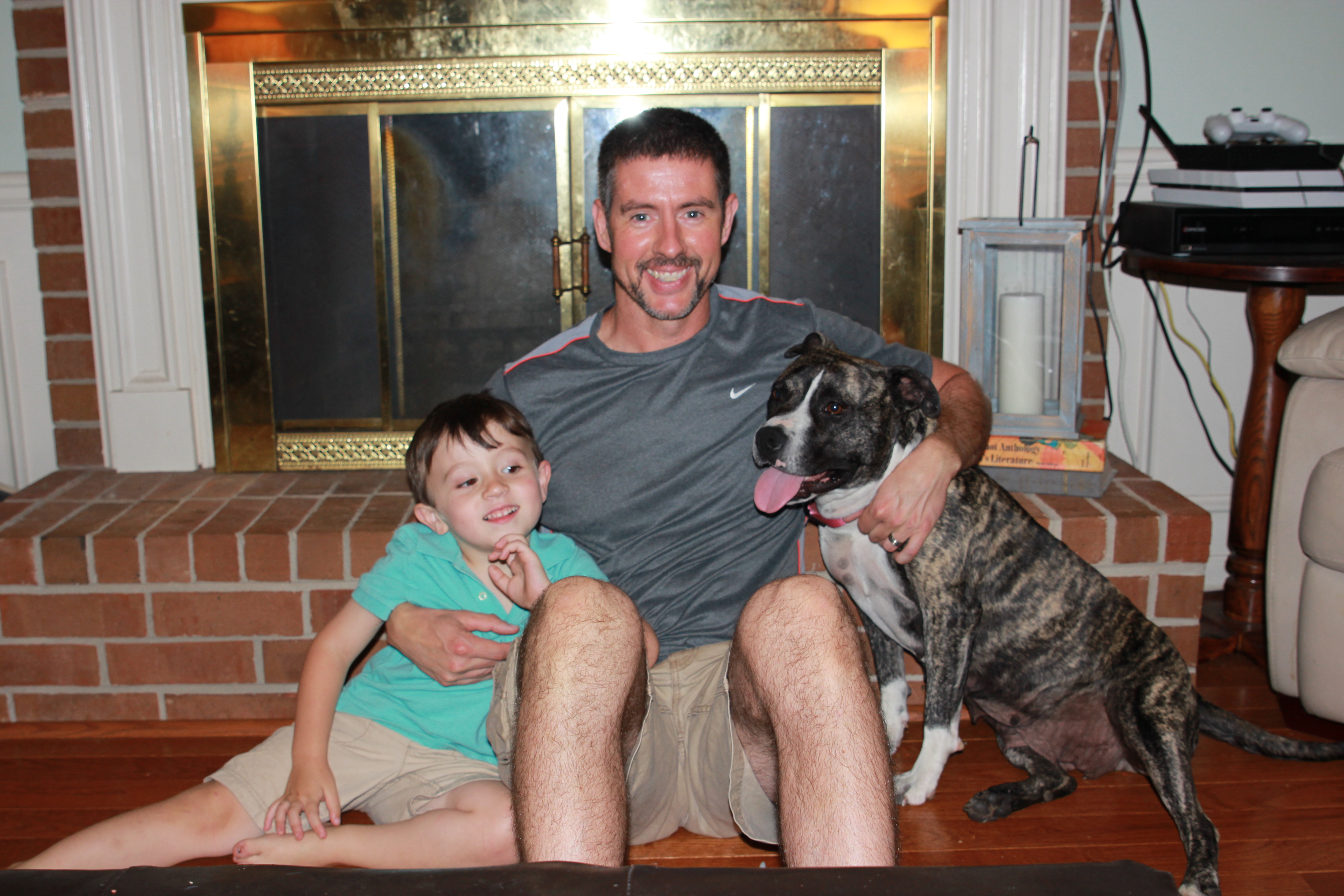
Blossom wasn’t the prettiest dog in the County Shelter, not by a long shot. Her muted gray brindle coat was dull and ratty; her skin was rough; and her teats were saggy from indiscriminate breeding. Overall, Blossom had the haggard look of a dog that had been neglected, abandoned and forgotten. By early May, Blossom held the unfortunate distinction of being the Shelter’s longest-term resident. What’s worse, not a single person had taken a second look at her in her kennel.

Flash forward to late June: Blossom (who is now referred to as Xena, the Warrior Princess) participated in her first canine obedience class, and by all accounts, Xena is now a rock star.

 

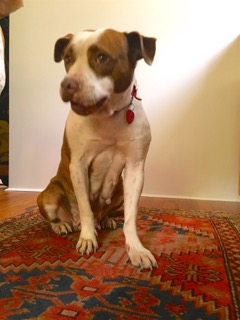
FullSizeRender 2
Xena sits at attention with Janice.

I sat down with Xena and her favorite human and new owner, Janice Freeland (who as it happens, is one of FOTAS’ favorite humans and long-time volunteers as well*) to chat about Blossom’s breathtaking transformation from ugly duckling to canine superstar.

ME: Xena! Look at you! You look, well, just plain gorgeous—all sleek and shiny, and so trim! What’s your secret?

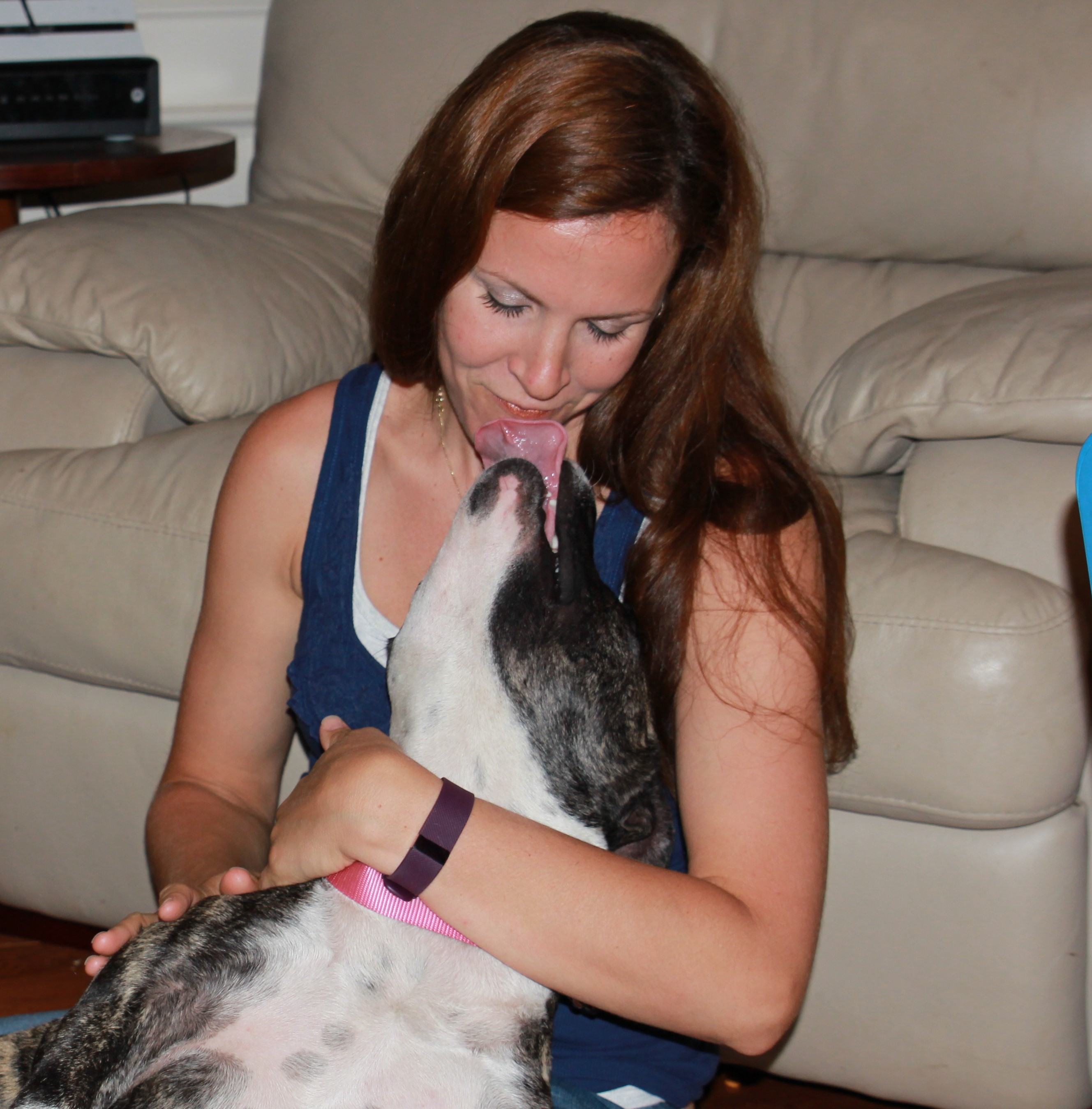
Xena wags her tail and breaks into a radiant pibble smile, all mouth and a tongue a mile long, and gives Janice a great big slobbery kiss.

XENA: It’s all because of Janice! She loves me and feeds me good food, and I have a soft place to sleep and two dog pals, and treats! Oh my gosh! So many treats!
FullSizeRender
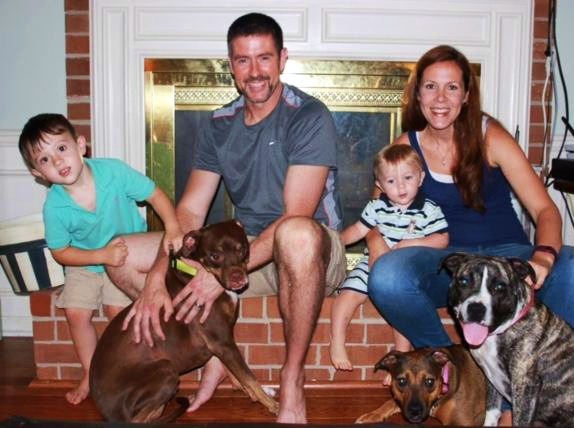
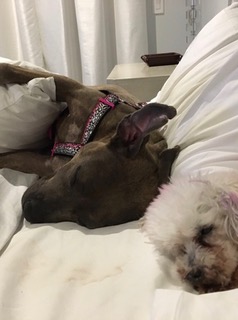
Xena with one of her dog pals

Xena gives me a big slobbery kiss, too. I wipe my face and continue.

ME: Janice, how did you find Blossom, I mean, Xena?

JANICE: Total fluke, right? I was taking photos for FOTAS at the annual Woofstock Dog & Cat Festival in May, and I happened to mention I had lost a dog and that my other dog was very lonely. The next thing I knew, a volunteer brings around this kind of happy, saggy, ratty looking dog, and she tells me—this is Blossom, the sweetest, greatest dog, and she’s been at the Shelter way too long, and she really needs a home. I thought, Why not? I mean, after all, us gals need to stick together, don’t we Xena?

Wag, wag. Thump, thump. Pant, pant.

JANICE: AT first, my husband and I were anxious about adopting a Pit-cross, but Xena is, hands down, the best dog we’ve ever had. She may’ve looked kind of ragged, but she makes up for it in spades with a whopping personality. She loves people, particularly children and other dogs. She’s just so willing, eager and smart. We are lucky to have found her.

Xena rolls on her back and wiggles in ecstasy.

ME: What would you say to folks looking for a companion at the County Shelter?

JANICE: Don’t just walk by the dogs with the square heads and long tongues, the dogs who look beat up and used, the dogs who many not present well in the kennel. All they need is a little love, security and care to blossom into a blessing. Give them a chance, and they will give you a lifetime of love and devotion.

Their lives are in our hands.

*Janice Freeland organizes Polo under the Stars for the benefit of FOTAS, which will be held in October.


Pets of the Week

RIGBY PET OF THE WEEK JULY 9
RIGBY: Hound mix, male, 3 months old, tan and black,         24 pounds – $35.00


RALPH: Domestic Shorthair Cat, male, 2 years old, black/gray Tabby, 6.5 pounds - $15
RALPH: Domestic Shorthair Cat, male, 2 years old, black/gray Tabby, 6.5 pounds – $10.00


By the Numbers
July Adoption Special: Dogs/Puppies $35, Cats/Kittens $10

Treated heartworm positive dogs live full and happy lives


by Bob Gordon, FOTAS Director of Communications

“Hugo is rambunctious and playful, but he really stood out at the shelter because while all the dogs were barking around him, he just walked past them very quietly, like he was the coolest dog in the room,” said Connie Williams, who, along with her husband, Daniel, adopted the 2-year-old, Mastiff/Retriever mix in January. “When we saw him, it was instant love.”
The Williamses brought the handsome, brindle-coated canine home and he quickly became comfortable with his new surroundings. He loves to ride in the car and keep Connie company when she goes on errands; enjoys his walks in their Aiken neighborhood; and likes to end his day by lounging on the couch while the family watches television. He doesn’t even mind the treatment he is undergoing to get rid of his heartworms.
You see, Hugo did not receive proper care before arriving at the shelter as a stray. In addition to be being shot (an x-ray showed birdshot embedded throughout his pelvic area), he was underfed and was not given monthly heartworm preventative. Unsurprisingly, he tested positive for heartworms.
Heartworms are a mosquito-borne infection. But they can be prevented through the regular and appropriate use of preventive medications, which are prescribed by your veterinarian. These medications are available as a once-a-month chewable. If your dog or cat is not on a heartworm preventative, please make an appointment with your veterinarian and get them on one as soon as possible.
While heartworm disease is still a serious condition, it now can be cured with proper treatment. It’s not cheap, however (treatment costs range from $200 to $2,500). So, Daniel and Connie were pleased and relieved to discover that FOTAS pays for the treatment of heartworm positive dogs on the County Animal Shelter’s adoption floor.
Hugo is just one of 20 heartworm infected dogs who have been adopted from the shelter so far in 2017. Like Hugo, these adopted dogs are being treated through FOTAS donations and living full lives.
The FOTAS heartworm treatment program is a big advance in animal advocacy as well as veterinary medicine. While approximately 16-20% of the dogs that are brought to the County Shelter are heartworm positive, the people who donate to FOTAS give these wonderful animals a second chance at a wonderful life.
Daniel and Connie said the heartworm treatment has not been difficult and Hugo is scheduled to be tested in six months to confirm he is heartworm-free.
“I just love this dog,” Connie said. “He’s so lovable. Hugo and I go for a three-mile walk every day and afterwards sometimes he naps next to me and puts his front paw around my shoulder like he’s holding me.”
For more information on heartworm treatment, please go to fotasaiken.org. You can also donate to the FOTAS “Have a Heart, Save a Heart” Fund to help treat heartworm positive dogs at the shelter.
Their lives are in our hands.


Hugo is happy
Hugo is happy
Connie Williams and Hugo, her adopted Mastiff/Retriever

Falling in love with a heartworm positive dog

By Joanna D. Samson, FOTAS Vice President

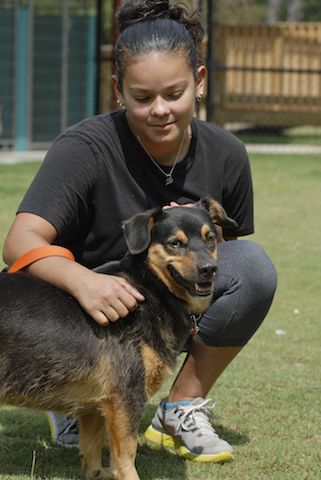
You and your family have made a decision: you are ready for a new dog, and you want to adopt your new best friend from the Aiken County Animal Shelter. You visit the Shelter and walk through the adoption pods with a staff member or a FOTAS volunteer. You meet a number of prospects, but you are drawn to a handsome, two year-old black and brown shepherd mix named Bryant who stands at attention and wags his tail when you stop at his kennel. Bryant is so openly friendly, so eager to please, you are astonished to learn that he was painfully shy and scared of people when he first came to the Shelter.

Then, as you watch Bryant attempt to crawl into the lap of Darling Rios, one of the FOTAS play yard experts, like he was a fluffy little lap dog instead of the 51-pound bruiser that he is, you think, “Wow, that’s one special dog.”

There’s only one thing: Bryant is heartworm positive (HWP). What does that mean for you, and most importantly, Bryant?

The answer is: very little, because only HWP dogs who are healthy and show no clinical signs of heartworm disease are placed on the adoption floor at the Shelter.

“Dogs are infected with heartworms by mosquitoes, but it takes a long time for heartworm larvae to mature into adult, reproducing worms that can strangle the heart,” says Jennifer Miller, President of FOTAS, “so heartworm disease in a healthy, young dog is treatable with a course of antibiotics, which weakens any maturing worms, followed by monthly heartworm prevention medicine, like Heartguard, which every dog in the South should be on anyway.”

Dr. Charles Groover from the Aiken Veterinary Clinic agrees. “I have seen and treated literally thousands of dogs with heartworm disease in Mississippi and South Carolina,” says Dr. Groover. “Here in South Carolina, I almost never see a case of heartworms that cannot be treated successfully, and in most cases, the treatment is no more expensive or time-consuming than protecting a dog who has not tested positive for heartworms.”

So, go ahead. Fall in love with Bryant or any other HWP dog on the adoption floor of the Shelter, because:

Only healthy HWP dogs with no clinical signs of disease are placed on the adoption floor;

Healthy HWP dogs, with proper treatment and care, can lead the same long, healthy lives as any other dog on the adoption floor; in fact, no one who has adopted a HWP dog from the Shelter has reported that their dog became sick or died from heartworm disease;

When you adopt a dog from the County Shelter, FOTAS pays for the antibiotics and the first 6 months of Heartguard—that’s money in your pocket because you need to give your dog the monthly heartworm prevention medicine anyway; and

Treatment is easy: after the completing the course of antibiotics, one little tasty, chewy Heartguard chunk a month is all it takes to treat and protect your dog.

Come on over to the Shelter, the very handsome Bryant is waiting to crawl into your lap and love you up.

Their lives are in our hands.


Darling and Bryant
Darling and Bryant

The Magic of Shelter Pets

By Joanna D. Samson, Vice President, FOTAS

My husband David swears that shelter dogs are grateful, that they know they have been saved and that you saved them, and that their love and devotion are expressions of that gratitude.

Now I can’t say for sure that our Maggie dog’s love is an expression of gratitude rather than a reciprocal response to our love and care, or that the depth of our terrier mutt Jack’s devotion to us is somehow greater than, say, a pedigreed poodle’s devotion to its owner.

But I can say this: every one of our shelter dogs has brought us indescribable joy. No matter what the circumstances of their unfortunate history that brought them to the shelter, whether neglect or abuse or both, they bonded with us seamlessly and with no hesitation. As always, love transformed them, and in return, they transformed us, enriching our lives in ways that we could not have imagined on the day we brought them home.

David Stinson is a dog-lover, and for the past 10 years, he has resided with 4 large dogs in his lovely little cottage on Newberry Street. When old age and cancer took two of his dogs, David was uncertain whether he wanted to add another dog to his remaining aging brood. Maybe, he thought, the inevitable aging-out of his canine pack would free him to travel more or pursue his many hobbies in more depth.

Then along came a pretty red and white Pibble named (by the Shelter staff) Snickers, who was picked up as a stray, clearly abandoned by her negligent owners. Snickers wore the tell-tale marks of neglect bordering on abuse. Her neck bore scars of a chain, suggesting she had been tethered to a stake. She showed signs of repeated breeding, and her front teeth had been filed, indicating a life as a breeding bitch for fighting dogs. And of course, she had early stage heartworm disease.

I met Snickers when she was introduced to a play group at the Shelter. Despite her background, she was an unapologetic, enthusiastic, fervent people-lover. I was smitten, and when I introduced her to David, he was smitten, too. He took her home, renamed her “Lady Edith of Newberry,” befitting of her regal nature, and the rest, as they say, is history.

“This morning,” says David, “Lady Edith is riding in the passenger seat of my car wearing her seatbelt. We stop at Popeye’s and share a sausage biscuit. She spent the first part of the day washing the faces of my old hound dogs at home. Now she is on her way to my office, where she will spend the morning with me. I have to keep her moving along; otherwise, she will linger to play with every dog and human we meet on the way.”
Now that is the happiest of endings.

Your destiny may be waiting for you right now at the Aiken County Animal Shelter. Maybe it’s an adorable puppy, a goofy dog or a regal cat. Please consider adopting your new pet at the Aiken County Animal Shelter – it’s a choice you won’t regret.

Their lives are in our hands.

Lacy Edith of Newberry poses in her new home.


Lost, mud-covered pup leads family to love Bully mix breeds

By Bob Gordon, FOTAS Director of Communications

Five years ago, Lauren Kilbreth was heading home after a job interview when she passed some little kids running from a mud-covered puppy. Lauren wasn’t in the best part of town, it was cold and pouring rain, and she was dressed in one of her best business suits – but she felt compelled to turn the car around and head back to investigate.

“He looked lost and I was worried he might get hit by a passing vehicle, so I decided I would get out of my car and call him to me, and if he ignored me or became aggressive, I’d just continue on my way,” Lauren says.

But when she clapped her hands once, knelt down and called out to the pup, he came running into her arms. Lauren took him home, gave him a bath and she and her husband, Ryan, became smitten with the brown Pit Bull mix pup with a white chest. Not only was he a loyal love bug to the couple but he also got along well with their two older Greyhounds, Grace and Baxter, and Stella, their Westie. The Kilbreths named their new, furry family member, Rock.

Rock grew to weigh 60 pounds and became the alpha dog. When Lauren and Ryan had their first baby, Easton James, Rock showed extraordinary interest, always watching over the child and needing to look over Lauren’s shoulder when she changed the baby’s diaper. Rock nurtured their second baby, Deacon Reid, the same way.

Friends who visited the Kilbreths were initially a bit wary of Rock. They weren’t sure how they felt about Bully mix dogs because of the negative way they are portrayed in the media. But most came to love Rock. Some even got Bully mix dogs of their own.

All was great at the Kilbreth home until last year, when their two oldest dogs, Grace and Stella, were diagnosed with cancer and rapidly succumbed to the disease. Baxter handled their deaths well but Rock became depressed and withdrawn. Lauren, now a volunteer at the Aiken County Animal Shelter (ACAS), decided it was time to find a new playmate for Rock. She took him to the Shelter to meet her favorite prospects and he picked a lovely, one-year-old Bully mix named Evie May, who quickly made Rock a happy dog again. Then, just three months ago, the Kilbreths adopted another young Bully mix beauty from the shelter. At 75 pounds, Ava Rae became the biggest dog in the Kilbreth home and has fit in beautifully with the other canine family members. She is heartworm positive but the slow-kill treatment for her condition, paid for by FOTAS, is nearly complete.

The ACAS currently has a number of Bully mix canines available, including seven dogs and four puppies. Carson, Cy, Conor, Chip, Delta, Connor and Tavis are the adults and the two-month-old pups are Claressa, Jeremy, Klay and Shadrack.

“Take a chance on these dogs,” Lauren says. “They are extremely loyal and have a lot of love to give. Never judge a book by its cover. Go to the shelter and see for yourself how sweet they can be.”

Their lives are in our hands…

KilbrethFamily1

KilbrethFamily4

KilbrethFamily3

The Shelter, FOTAS and the case of the scrawny yellow dog

By Joanna D. Samson, FOTAS Vice President.

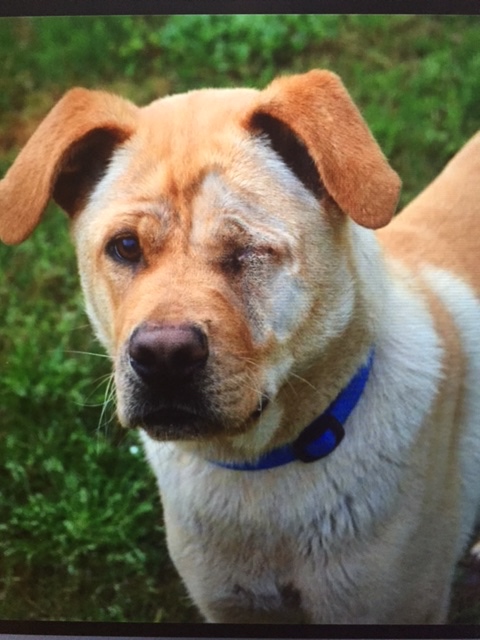
When the Aiken County Animal Control officer picked up the scrawny yellow dog roving the County roads, they were taken aback by his condition. His left eye was damaged. His coat was dull and matted. He had lost patches of hair all over his body, revealing irritated, scabby skin underneath. He was hungry and dehydrated. He had no collar and no microchip.

At the Shelter, Dr. Levy examined the frightened stray, and hard as it is to imagine, his condition was worse than it appeared. His left eye had collapsed. He was infected with Demodectic mange. He was heartworm positive. Under normal circumstances, the combination of these three costly and chronic medical problems, coupled with his overall bad health, might have led Dr. Levy to conclude that it was more humane to end his suffering – after all, the Shelter must care for close to 5000 animals a year, and it is difficult enough to find the resources to care for the healthy ones.

But the plight of the scrawny yellow dog tugged at Dr. Levy and the staff’s heartstrings. Although shy at first, he was affectionate, desperate to please, and even more desperate to be loved. Everyone– Dr. Levy, the Shelter staff, and FOTAS—agreed this dog needed to be saved. So when no one claimed him after the mandatory 5-day hold, we named him Seamus (pronounced Shaa-mus) and set about to save his life.

First, Dr. Levy surgically removed Seamus’ collapsed left eye. He came through surgery like a champ.

Second, the Shelter began treating Seamus’ Demodectic mange, which is the non-contagious form of mange that can be cured with daily medication for 60-90 days.

Finally, although Seamus tested positive for heartworms, because of his age (Dr. Levy estimates he still young, probably about a year old), it is unlikely that the heartworm microfilaria (the heartworm larvae spread through the bite of a mosquito) has had an opportunity to develop into advanced heartworm disease.

Accordingly, Dr. Levy concluded that Seamus’ heartworms could be treated through the “slow kill” method, which involves administering an initial course of antibiotics, followed by monthly ivermectrin (HeartGuard), which is the same oral medicine every southern dog should take to prevent heartworms.

The Shelter and FOTAS have provided the resources to restore Seamus to good health, but his ultimate recovery depends upon you, the community.

Seamus desperately needs to recover in a home environment, because the inevitable stress of life in a crowded, public shelter will exacerbate his mange and compromise his immune system. Ideally, a forever home would be best. Short of that, if someone could foster him until he finds a forever home–that will work, too. The Shelter will provide his mange medicine and regular checkups, and FOTAS will pay for his heartworm treatment for 6 months.

Please, help us find the sweet, shy, 1-year-old, 45-pound Seamus a place to live, a home, and people to love him and care for him – all the things he deserves, but never had.

His life is in our hands.

Heartworm Positive Dogs Can Be Great, Longtime Companions

By Bob Gordon, FOTAS Communications Director

Most everyone knows heartworms are a threat to dogs, especially in the warm climate of the South. But what many people might not realize is that heartworm disease is seldom a death sentence. In fact, dogs with this condition can live happy, high quality lives as long as they are given appropriate care.

Of course, it is much easier (and cheaper) to stop this mosquito-borne illness in its tracks by giving your dog a preventative medication. But if a canine is unlucky enough to get heartworms because he is a stray or his prior owner didn’t provide a preventative, there are effective treatments available.

These heartworm positive (HW+) dogs are not contagious and only in the most severe cases do they show any symptoms. So, as long as their condition is managed properly and not critical, they can make wonderful, long-term companions.

Annie, a Hound mix, is a prime example of this phenomenon. Though she tested positive for heartworms upon arrival at the Aiken County Animal Shelter (ACAS), the young dog was quickly put on two weeks of doxycycline pills, a drug that weakens the heartworm, followed by a strict regimen of heartworm preventative. The preventative allows the worms to die off at a slow rate and prevent the dog from getting any new heartworms. FOTAS pays for the initial medication and six months of the preventative for all HW+ dogs adopted at the ACAS.

Matt Cummins, who adopted Annie and lives in Graniteville with his wife and young daughter, said Annie has as much energy as any other two-year-old dog and is the most loving pet he’s ever had.

Shuli is another HW+ Shelter dog that is doing well at her new home. Adopted by Keelin Redmond of Aiken in October, the 4-year-old, blonde Terrier mix was also put on the “slow kill” treatment of doxycycline, followed by a heartworm preventative. Keelin, a local veterinarian, said she fell in love with Shuli before she found out about her condition. However, she is thrilled to have her.

“If I had let it [the heartworm infection] put me off adopting Shuli, I would have missed out on one of the best things to ever happen to me,” she said.

Other HW+ dogs recently adopted from the Shelter include Bailey, a black Lab mix, and Mason, a Bassett mix. Both are doing great in their new homes.

To encourage the adoption of HW+ dogs, FOTAS and the ACAS are featuring a Valentine’s Day special in which the adoption fee for HW+ dogs is just $14. This special will continue through Feb. 15.

“Adopting one of these dogs is a commitment of giving medication regularly and we recommend people follow up with their veterinarians for continued monitoring,” said Dr. Levy, the County Shelter’s veterinarian. Dr. Levy herself has two rescue dogs that were HW+ when she adopted them. One is now 13 years old and the other 10 – and both are doing great.

To learn more about FOTAS, The Valentine’s HW+ Dog Adoption Special and heartworm prevention/treatment, please go to www.fotasaiken.org.

Their lives are in our hands…

Adopting a Healthy Heartworm Positive Dog: A Talk With the Doctor


By Joanna Dunn Samson

You’ve decided it’s time to adopt a dog. You pack up the kids and head over to the new Aiken County Animal Shelter to check out some prospects.

A volunteer introduces you to Duke, a 35-pound, black and tan border collie/shepherd cross. Duke is frisky, alert and well-behaved. He loves attention. He loves his bath. He walks quietly on a leash.

Duke’s perfect, you think, but there’s one thing that worries you.

Duke is heartworm positive (HWP).

You need not worry. Duke is a healthy dog with Stage 1 heartworm infection, which can be treated with proper care. As a result, pursuant to a new County/FOTAS initiative, Duke is eligible for adoption and FOTAS will pay for the first six months of treatment when he is adopted.

I asked Dr. Charlie Timmerman, a well-respected veterinarian in Aiken County for over 30 years and a FOTAS Board member, about heartworms and the new County/FOTAS initiative.

CT: Heartworms, which are prevalent in South Carolina, are parasites that live in the heart and lungs. Left untreated, the worms can increase in numbers and fill the heart chambers, interfering with the heart’s ability to pump blood to the body and ultimately causing congestive heart failure.

JDS: How is the disease transmitted?

CT: By mosquitos that have fed on an infected dog; the mosquito then transmits the microfilaria, or the larva, to the next dog it bites.

JDS: Does a dog bitten by an infected mosquito get sick right away?

CT: No, it takes the microfilaria 6-7 months to become an adult and move into the heart. The time for a dog to develop heartworm disease varies with every dog, and not every dog will develop heartworm disease!!! That’s why early diagnosis and treatment is so important.

JDS: How can you tell if a dog is infected?

CT: Through a blood test that checks for the presence of adult worms. If it’s positive, then you do a second test to determine if there is microfilaria in the blood stream. Some dogs only have adult worms and no microfilaria.

A dog that tests positive for infection, who is otherwise healthy and shows no clinical signs of disease, could be in the very early stages of infection. They are as healthy as any of the other adoptable dogs at the County shelter.

JDS: How do you treat early-stage heartworm infection?

CT: We endorse the “slow-kill” method of treatment, which is more affordable and easier for the dog than the “fast-kill” method.

First we administer antibiotics, which weakens the adult worms and makes them easier to kill. Then the dogs are put on Heartguard, a monthly preventative, which keeps them from getting more heartworms and “slowly kills” the worms and any microfilaria.

JDS: If someone adopts a healthy HWP dog from the County, does FOTAS help pay for the treatment?

CT: Yes.  FOTAS issues a voucher for the doxycycline and six months of Heartguard, which is accepted by six participating veterinarians in the County.

It’s a great deal, because every dog in South Carolina should be on monthly heartworm prevention anyway, so it’s one less expense for the owner.

This is all good news. Like Duke, there are many loving, healthy dogs at the County Shelter that just happen to test positive for heartworms.

Thru August 9th, if you adopt a HWP dog, the adoption fee is reduced to $35 and you get the first 6 months of Heartguard free.

That’s a win-win for everyone.

So come on, why don’t you take Duke home today?

Here are the Shelter’s  received, saved and euthanasia stats for the month of June 2014.

DOGS                   CATS                        TOTAL

Received                                                      300                        268                          568

Re-Homed (adopted/transferred)                   65                          80 (best ever)        215

Euthanized                                                     43                        292                          435


DUKE — Male, shepherd/collie mix — 1.5 years old —  $35


Rosa – Female, calico — 4 yrs old — 7.5 lbs — $17