

Category Archives: TNR Program

Christmas Gratitude

The last week of the year is a time of reflection for FOTAS—a time to take stock of our blessings; to consider the remarkable progress we and the Aiken County Animal Shelter have made in making the world a better place for the County’s homeless, abandoned, and abused animals.

Since 2009, our life-saving programs have expanded to include not only helping with the care and re-homing of every adoptable shelter animal, but to initiatives to help folks keep their animals at home (like augmenting the County’s Spay/Neuter financial assistance for citizens-in-need, sponsoring pet food drive up’s and pet food donations to community food banks, including our partnership with ACTS and Senior Service-Meals on Wheels, sponsoring free pet microchip events, and providing humane runners for dogs who have been tied to a chain all their lives). In addition, we also have implemented programs to help folks avoid surrendering animals to the shelter in the first place, like our successful online Home-to-Home initiative and the TNR (Trap-Neuter-Return) for community cats.

This time of year is also a time for FOTAS to celebrate those who have contributed to our successes.

Thanks to Aiken County for making it possible to save the lives of thousands of homeless animals in the County. The strength of its commitment is evidenced by the thoughtful care and maintenance of the public animal shelter on Wire Road that opened in 2014. Our partnership grows stronger with each passing year.

Thanks to Paige Bayne, the County’s Enforcement and Animal Services Director; Bobby Arthurs, the Shelter Manager; Dr. Nancy Rodriquez, the Shelter’s veterinarian; and all the Shelter staff for their commitment to increase the opportunities for each adoptable animal to find a forever home.

Thanks to the army of volunteers who make the work of FOTAS possible – everything from manning the front desk; walking and socializing dogs; managing canine play groups; working special events and fundraisers; fostering dogs; organizing transfers; manning off-site adoption events; working on publicity, social media, and financial record and bookkeeping responsibilities; and coordinating FOTAS-Fix-a-Pet activities.

And finally, thanks to you, the Aiken Community, for your extraordinary generosity and support. You have made it possible for FOTAS to help the County provide the best possible care and outcome for its shelter animals.

All that effort has paid off: for the past four years, the shelter has been able to save every adoptable animal. That’s a big deal.

But right now, the shelter is in crisis. Intake numbers have exploded nationally, and the County Shelter is no exception. Blame fast-paced population growth in the county; inflation; COVID, FLU, RVS outbreaks; chronic shortages in spay/neuter services—you name it—but overcrowding is a serious problem. At a time when we should be celebrating the season, the shelter is shockingly full for this time of year. Animals are doubled up in the kennels, the temperatures are bitterly cold, and staff and volunteer resources are stretched to the max. At this rate, the shelter’s ability to save every adoptable animal in 2023 is in jeopardy.

God bless you and your family during this holiday season, and may God bestow his blessings on the county’s homeless animals during this difficult time.

Their lives are in our hands.

By Joanna D. Samson, FOTAS Vice President
FOTAS and 11 Years of Progress at the Aiken County Animal Shelter

On July 29, 2009, the South Carolina Secretary of State officially approved FOTAS as a charitable nonprofit organization dedicated to the care of the homeless, abandoned, and abused animals consigned to the County Shelter, kicking off the beginning of an extraordinary public/private partnership with the county and a new, comprehensive approach to caring for homeless animals. It was a massive undertaking. At the time, more than 6,000 animals a year passed through the doors of the county’s tiny, antiquated shelter. Only 5% made it out alive.

FOTAS helps fund the TNR program, which has been so effective in curbing community cat overpopulation in the Aiken County

All of that has changed in the past 11 years. With the opening of the new shelter in 2014, the FOTAS/county partnership solidified and blossomed. FOTAS volunteers are an integral part of the shelter’s operations (it is estimated that FOTAS volunteers provide the equivalent of ten full-time positions). FOTAS donations supplement the shelter’s budget and programs and provide supplies such as leashes, toys, flea and tick prevention, and medicine for heartworm positive dogs. FOTAS has created a network of transfer partners in other parts of the country (where kennels are empty because everyone fixes their pets) where we send dogs (and pay the incurred transport costs) who could not find homes locally. The transfer program saves thousands of animals every year.

We also attack the problem of overpopulation of homeless pets. FOTAS supplements the county’s spay/neuter financial assistance program for county residents who need it, as well as funds to support the TNR (Trap Neuter Return) program to address the problems of community cats. We hire a mobile spay/neuter van to go to hot-spot areas around the county (the FIDO Fix-a-Pet program) to provide free spay/neuter surgeries for citizens who need financial assistance.

Tiffy is adopted following mouth surgery. This poor kitten was rescued after being thrown from a moving car.

Our Home-to-Home program allows folks who can no longer care for their pets to use the power of our social media to find loving homes without subjecting their beloved pets to the trauma of surrender to the shelter (it’s been a huge success during the COVID crisis!) FOTAS works with Animal Control to provide dog houses and humane runners for dogs who are tethered to chains, as well as dog food and other supplies to help folks in a bind.

Biz and Eddie Mann adopted Snowflake (now named Keaton) from the ACAS in July.

FOTAS also helps with the improvement of the physical facilities at the shelter. In addition to funding the medical wellness and isolation pod for animals with curable infectious ailments, plans are currently underway for a building that will house two, much needed adoption rooms and a training area.

In 2017, FOTAS was one of ten (out of 14,000) charitable organizations to be awarded the Angel Award by the Secretary of State, which recognizes the most efficient and effective nonprofits in the state. Plus, for the second year in a row, FOTAS and our signature event, Woofstock, received the Aiken Standard Choice Best of Aiken Award.

We have managed to do all of this with only one paid staff member and an army of volunteers. Has it worked? You bet it has. For the past two years, FOTAS and the county achieved their goal of not having to euthanize any adoptable pet.

None of this would have been possible without you, the generous Aiken community, who have donated your time and money and welcomed shelter animals into your hearts and homes.

Thank you and God Bless. Stay safe.


–By Joanna D. Samson, FOTAS Vice President
The Christmas Season of Kindness and Hope

The good doctor was on his way to work in Augusta when he spotted two large bully dogs on the Aiken-Augusta Highway. Concerned about their safety on the busy, four-lane road, he pulled over and coaxed the dogs—who were healthy, well-behaved, and in good shape—into his car. Figuring they had to be someone’s pets, the doctor turned around and headed for the Aiken County Animal Shelter.

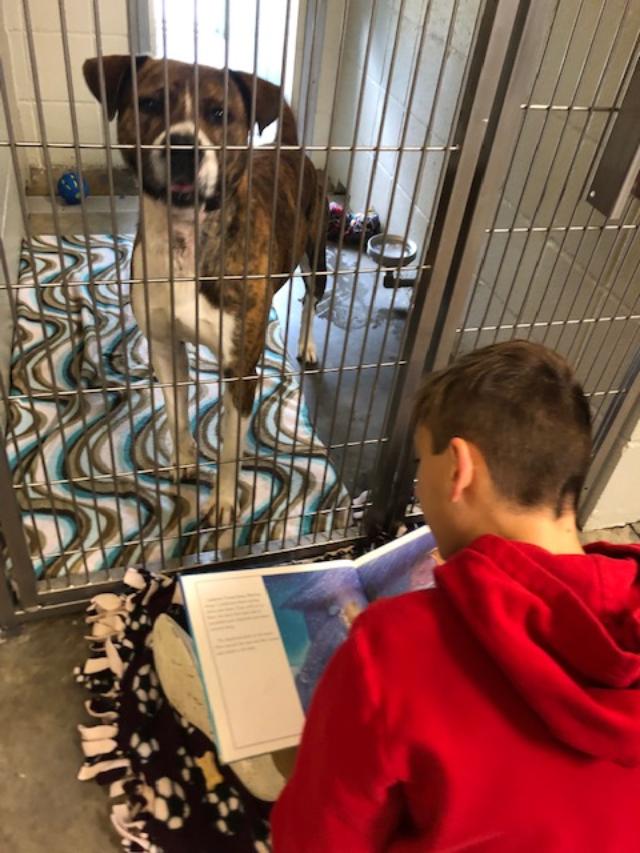
A young volunteer reads to a shelter dog to help socialize him and keep him company.

Bobby Arthurs, the shelter manager, was on site when the doctor arrived with the dogs. He agreed with his assessment that the dogs were well-cared for, so he scanned them for a microchip. Turns out, they were microchipped, and in short order, Bobby had identified the owner and a contact number. The owner, who was at work, was both alarmed his beloved dogs had escaped their yard and relieved they were safe.

Wait—the story gets better. The good doctor offered to drive the dogs to their owner even though he was late to work. First, he called the hospital; then he loaded the dogs into his car (again) and drove back to Aiken to reunite the dogs with the owner.

We often fill these pages with stories of hard luck and sadness—distressed, baffled dogs surrendered to the shelter by their owners or dumped on some county road—and we are often pleading for help to relieve overcrowding at the shelter or to save a particularly special dog. But today I want to celebrate the many acts of kindness and sacrifice, both large and small, that make it possible for FOTAS and the shelter to save thousands of dogs every year.

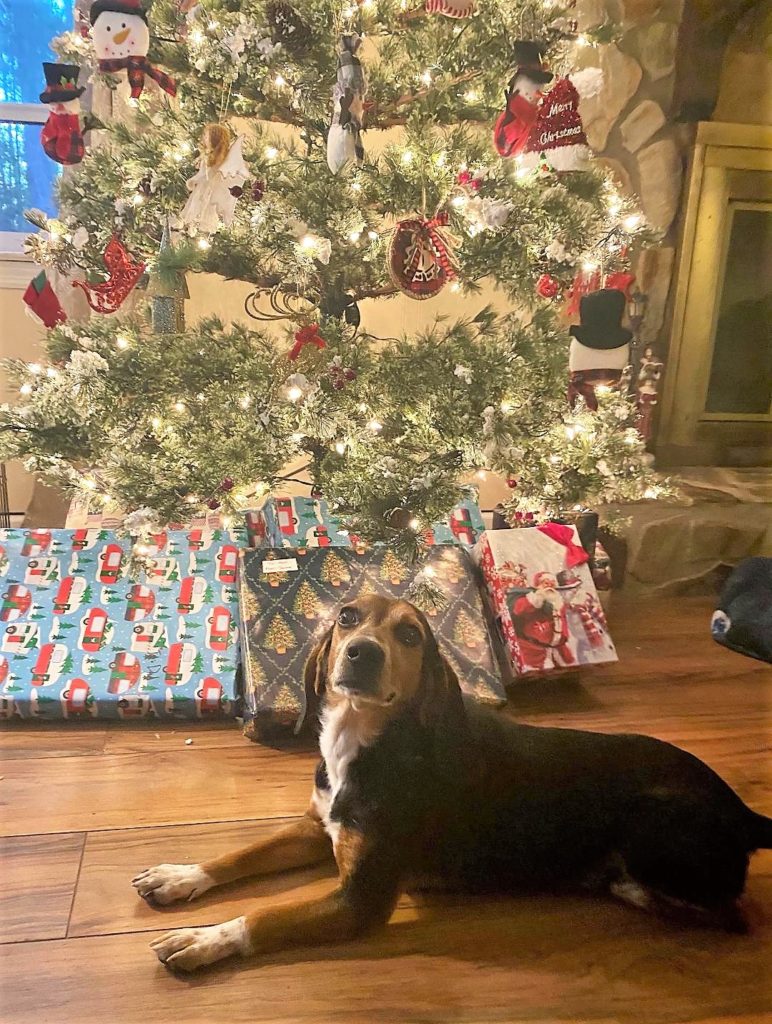
Dasher was fostered by the Simons family during the Christmas holiday, and shortly after he was adopted to a good home.

Whether it’s a volunteer making calls for one little lost dog, or Bobby Arthurs organizing a pre-dawn pickup to feature adoptable animals on the local news at 6 a.m., or the shelter adoption coordinator giving up a day off during the busy holiday season, or FOTAS volunteers taking dogs to a special event on a hot summer day, or someone who fosters a hard–to-place dog who has been on the adoption floor for a long time, or school children who pool their allowances to buy much-needed supplies for the shelter, or kind citizens who bring in community cats for TNR or adopt senior dogs or foster medical-needs dogs or the folks who bring in wishlist donations on their own time. . . the amount of effort expended to save these animals breathtaking.

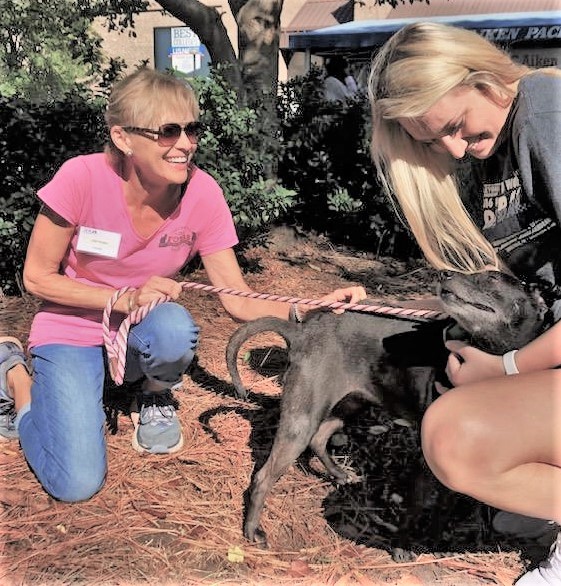
FOTAS volunteers bring shelter dogs to USC Aiken Pet-a-Pup event.

What is Christmas but the season of good will and hope?

Here’s to hoping for the day that all pets are fixed, no dogs are tethered to logging chains, no animals are dumped by the side of the road, no boxes of abandoned puppies and kitties are dropped off at the shelter, and every pet is a cared-for, cherished family member.

Thank you and God bless you and your family this Christmas season.

By the way, if the Christmas spirit moves you to adopt your next pet, now’s the time!

Their lives are in our hands.

— By Joanna D. Samson, FOTAS Vice-President

BY THE NUMBERS

The Aiken County Animal Shelter has greatly reduced and waived adoption fees through Jan. 1. The shelter is full, so now is the perfect time to adopt a dog or cat.

PETS OF THE WEEK

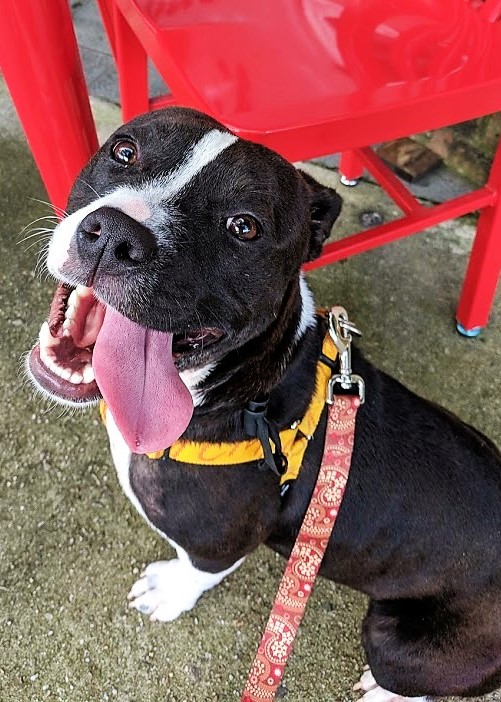
TANNER: Retriever mix, male, 1-1/2 years old, 73 pounds – $35

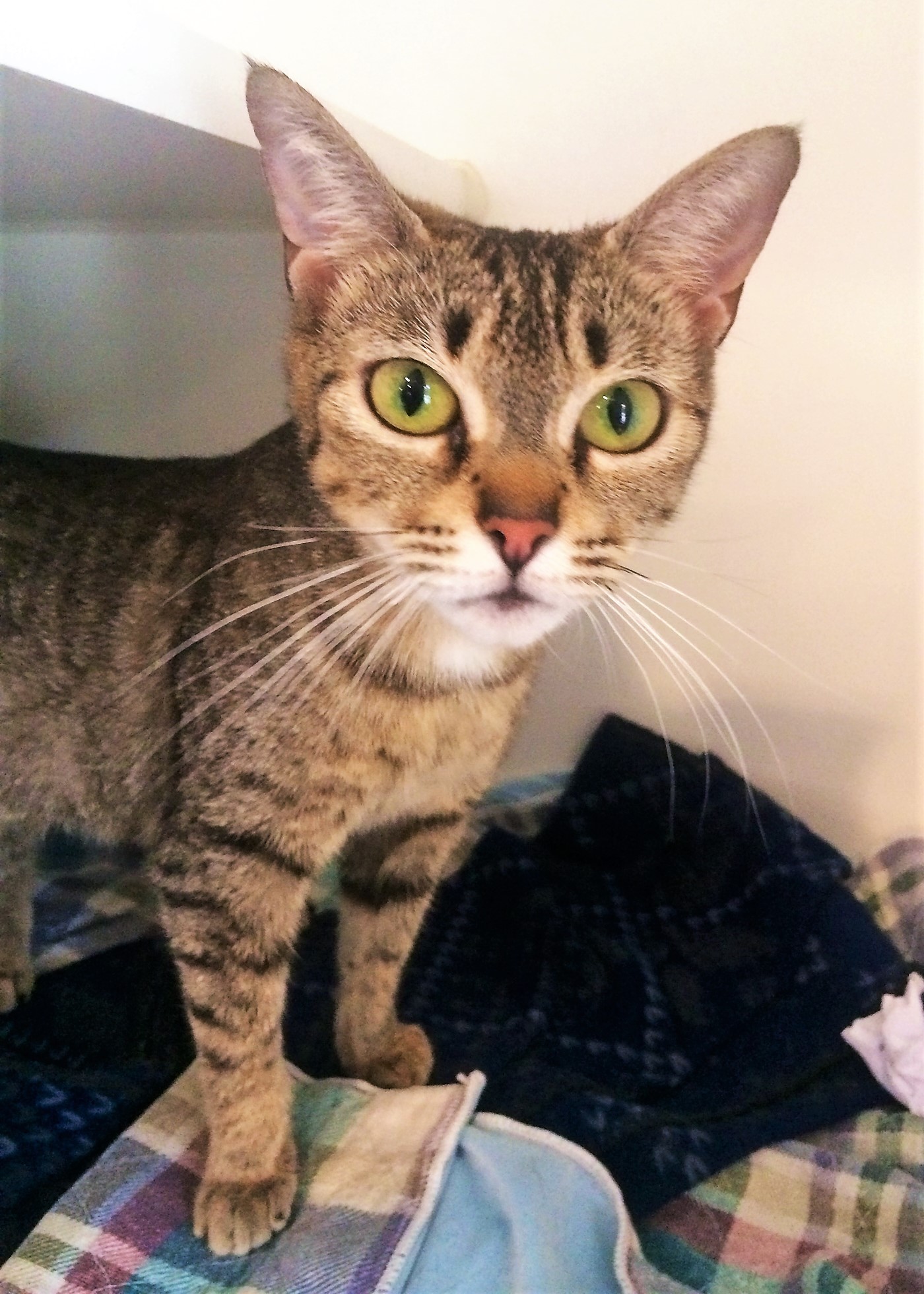
BIRDIE: Domestic Shorthair cat, female, 2 years old, 14 pounds – $10

Here’s What to Do if You Find a Litter of Kittens

By Bob Gordon, FOTAS Communications Director

Spring is here and with the warmer weather comes lots of newborn kittens.

“We’re already seeing a number of pregnant cats arrive at the shelter and kitten season should be hitting any time now,” said Aiken County Animal Shelter Adoption Coordinator Hillary Clark-Kulis. “Once it does, we likely won’t see the flow of kittens slow down until at least November.”

But what do you do if you discover a litter of kittens or a single kitten seemingly abandoned by their mother? How do you best help their chances of survival?

A flyer to remind people that mama cats “know best”.

Well, like all babies, kittens do best when they’re with their mother. Moms instinctively know how to help their offspring grow up to be strong and healthy. Mother’s milk is also vital in providing the kittens powerful nutrients for their immune system.

If the kittens are underage (under 2 pounds or younger than eight weeks old), see if mom is around. If she is gone, wait two to four hours to see if she comes back. She could just be out getting food for her and her kittens.

If mom is there, leave the kittens where they are until they are two pounds or eight weeks old. To help the mom, you can provide shelter and put out food nearby (but not right next to the kittens because you don’t want to attract other cats or potential predators).

If mom is gone and has not returned, you should foster the kittens or find someone who is willing to foster, until they are at least two pounds. This is done through bottle-feeding the kittens until they are ready to eat on their own.

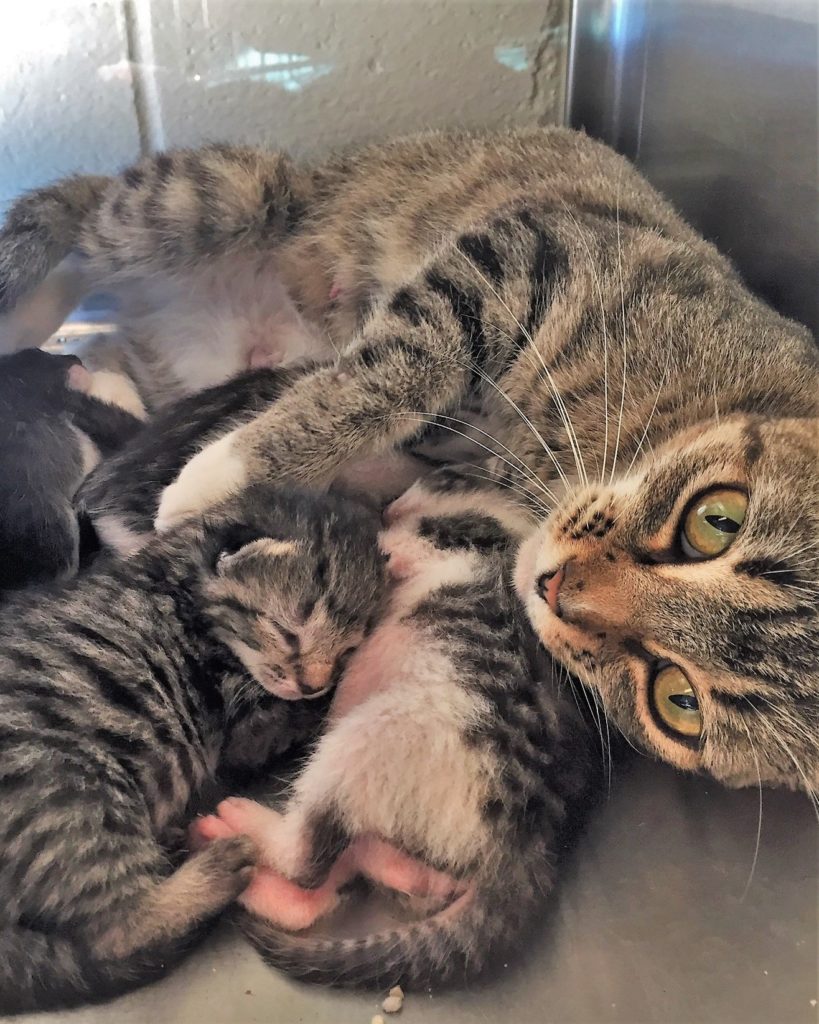
The mother cat gives her kittens their best chance for survival.

“If you feel the kittens are in danger and in need of rescue, you should be prepared to take care of them for a minimum of two weeks for the around-the-clock care they need,” Clark-Kulis said. “Don’t hesitate to contact the shelter for resources and supplies you might need. We can also answer any questions you may have and provide counsel.”

If the kittens you find are weaned or you’re unsure of their age or care needs, you can bring them to the shelter for assessment and we can help you decide on a plan for adoption or direct you to other options, such as our TNR (Trap, Neuter, Return) or spay/neuter voucher program.

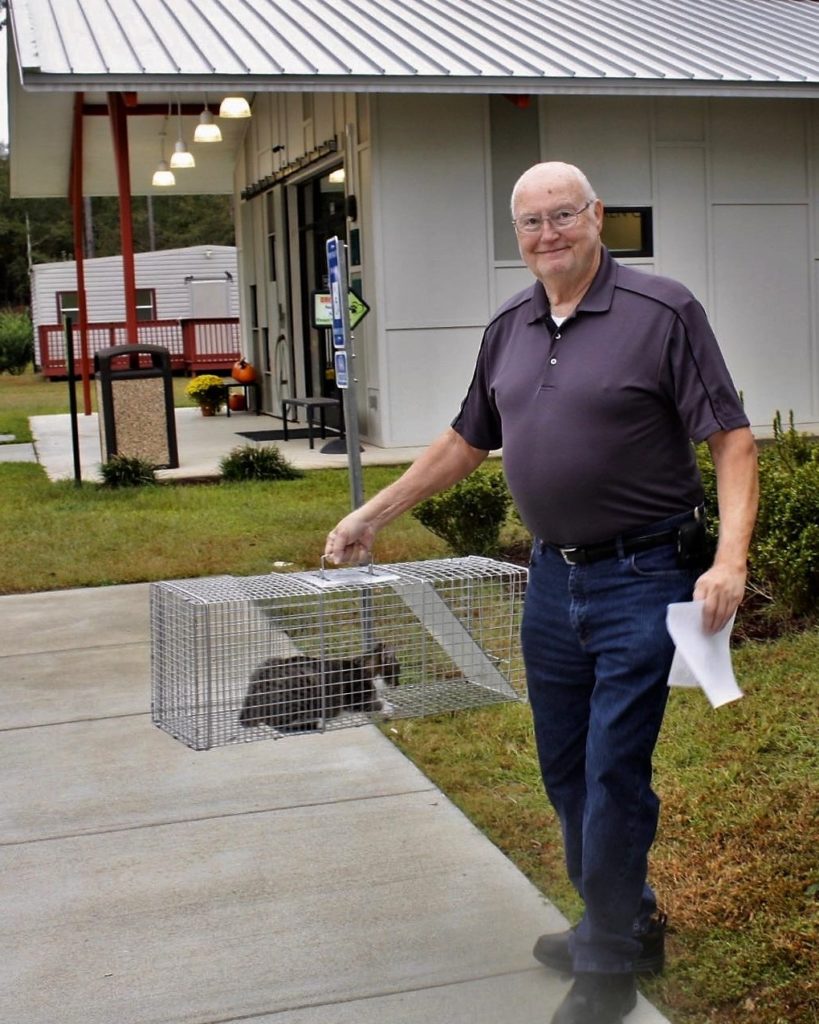
The kittens must be at least four pounds and be in a humane cat trap (you can sign one out from the shelter) if you bring them to the Aiken County Animal Shelter for our Community Cats free TNR program. After they are sterilized, you just return them to their outdoor home. This effectively works to reduce the cat population and prevents more cats from entering the area.

The annual flood of orphaned kittens is almost upon us. But you can help save lives by volunteering to foster orphaned, infant felines, supporting and taking advantage of our TNR program and spreading the word about how to best help kittens survive.

The Aiken County Animal Shelter is located at 333 Wire Road in Aiken. If you can help, please stop by or call the Shelter at (803) 642-1537 and speak to a staff member or volunteer for more information and assistance.

Their lives are in our hands.

Save Lives and Stop Needless Suffering by Fixing your Pets

When people talk about our chronic dog and cat overpopulation problem, they usually focus on the overwhelming numbers – and rightfully so. Millions of pets lose their lives each year because people don’t spay/neuter their animals.

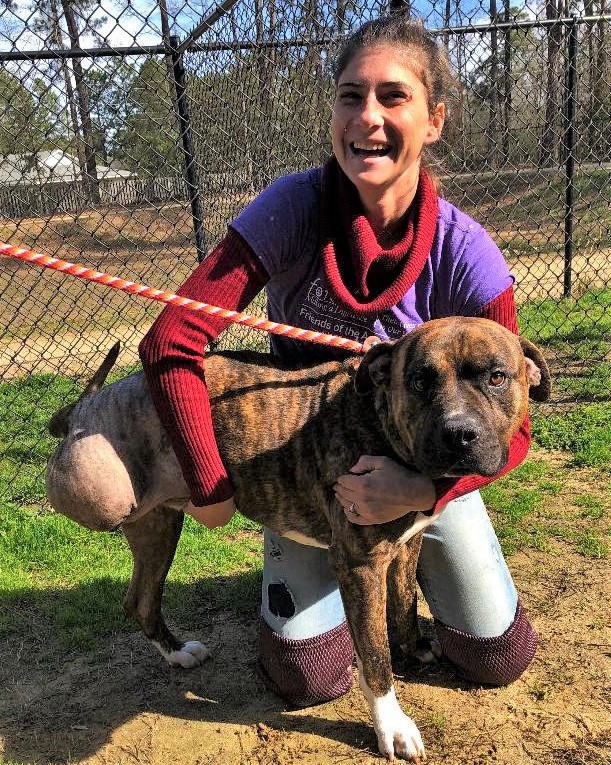
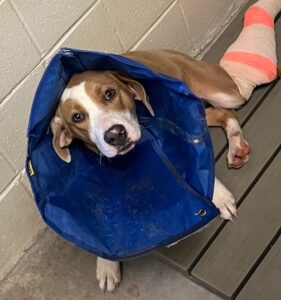
Stray dog Thaddeus arrived at the shelter with a gunshot wound so severe, his right back leg was turned to powder and had to be amputated.

Puppies and kittens will soon be pouring into the County Shelter because some citizens are not getting their pets spayed/neutered.

In fact, the Aiken County Animal Shelter (ACAS) takes in approximately 125 unwanted animals per week during the summer months. When you do the math, the total number of animals coming into the shelter is staggering and the only solution to the problem is spaying and neutering your pets.

It’s really easy and inexpensive to get your pets fixed now, thanks to the County’s spay/neuter voucher program and FOTAS’s Fix-a-Pet program. The SPCA Albrecht Center clinic and participating local veterinarians accept these vouchers, available at the County Shelter, which reduces the cost of fixing your pet to $15 or less.

Wagener, a young stray cat arrived at the shelter in severe pain because her birth canal was too small, and she couldn’t deliver her kittens. She was saved but some of her babies died inside her.

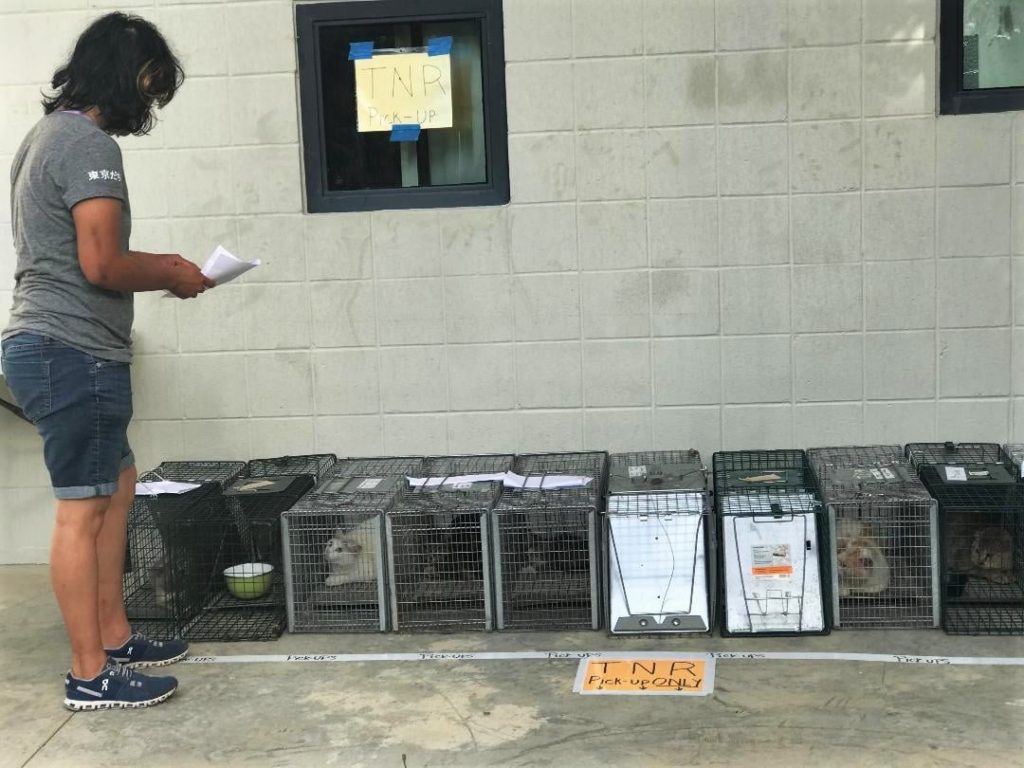
FOTAS and the County also offer a Trap, Neuter & Return (TNR) program for feral and community cats that is helping to reduce feline overpopulation in the area. Cats must be brought to the shelter in a trap, which you can borrow from the ACAS. Trapped cats can be brought to the shelter at 333 Wire Road in Aiken on Tuesday, Wednesday or Thursday mornings at 8 a.m. and picked up later the same day. Call the ACAS for more information, (803) 642-1537.

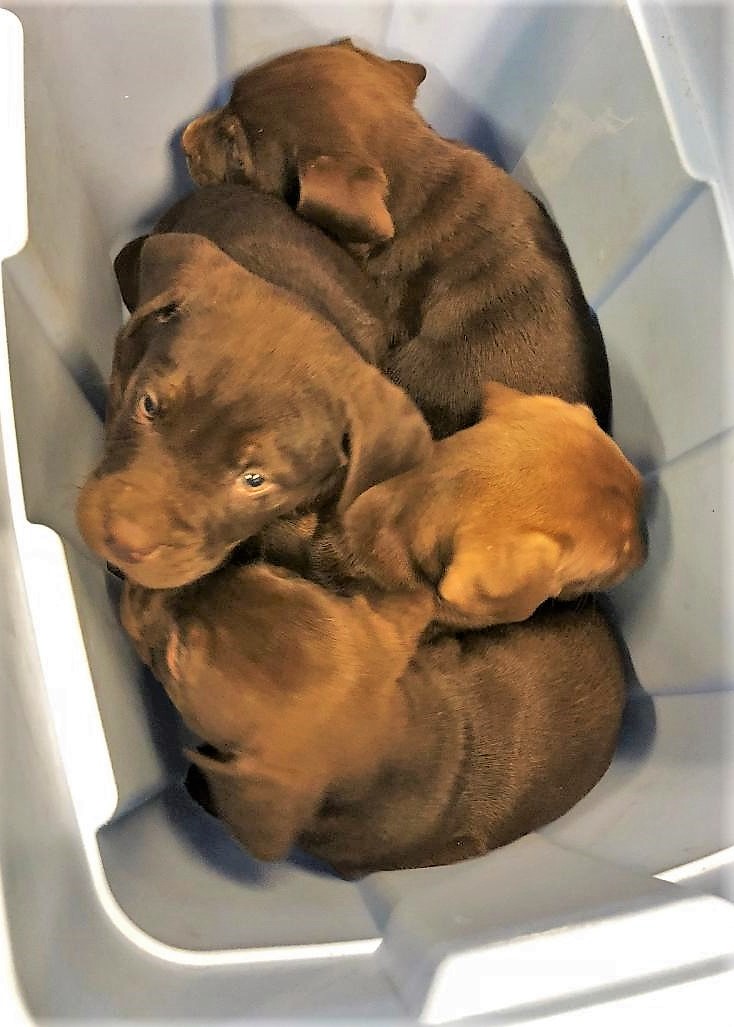
Mama dog Angeline was scared and exhausted when she was brought in with her starving puppies.

Last year, Aiken County and FOTAS paid for the spay/neuter of 1,287 pets owned by citizens in financial need and 1,099 community/feral cats.

Yellow Retriever Angeline and her starving puppies were brought to the ACAS by an animal control officer. The mama dog was suffering and freezing to keep her puppies alive. Exhausted and ribs visible, Angeline was afraid of human touch but she and her pups are now recovering with the care of FOTAS foster volunteers.

February is National Spay/Neuter Awareness Month, an ideal time to encourage people to have their pets sterilized before the spring and summer months, when there is a rampant overproduction of puppies and kittens. It’s also a time to recognize one other aspect of this issue: needless suffering. These animals not only are filling our shelters but when wandering on their own, searching for mates and food, they also can face horrible and painful consequences.

Thaddeus is a stray who was shot while homeless and searching for food.

So, we’re asking you to help us do better this year. Let’s spread the word about the importance of spay/neuter to our family, friends, acquaintances and even strangers.

Also, please join us in thanking the folks who are helping to fight this animal overpopulation battle. We thank the Aiken County Council for its support of the vital Spay/neuter voucher program; Code Enforcement Director Paige Bayne for the awesome management of the County Spay/Neuter voucher program; The ACAS vet clinic for their TNR work; and our FOTAS TNR veterinarian partners, Aiken Animal Hospital, Aiken Veterinary Clinic, Silver Bluff Veterinary Clinic and Veterinary Services of Aiken.

Their lives are in our hands.

— By Bob Gordon, FOTAS Communications Director

By the Numbers
So far this month (Feb 1-15), the Aiken County Shelter has taken in 176 strays and surrendered pets.


Pets of the Week
REESE
Catahoula Leopard dog mix, male, 1 year old, 57 pounds – $35

WILLY
Domestic shorthair cat, male, 3 years old, 12 pounds – $10

The Christmas Spirit of Gratitude and Charity

The Christmas season is upon us. It’s a time of festivity, bright lights, family, goodwill, and faith. It’s also a time to count our blessings. As we at FOTAS look back over the past nine years, it’s also a time to reflect upon our profound gratitude for our friends and supporters in the Aiken community.

FOTAS Volunteer John Berk with Cleo, who was adopted to a good home this year.

We’ve come a long way together. With your help, we successfully lobbied the County Council to build a new shelter and partnered with the county to raise money to fund the architectural design and construction-ready plans.

Once the new shelter opened in early 2014, we recruited and trained an army of volunteers to work at the shelter, performing the equivalent of eight to 10 full-time jobs. We funded training programs for county personnel. We developed and funded exciting new programs with the county to increase adoption rates. We created a network of transfer partners in the northeast that take animals we can’t adopt locally, along with a system of foster care for dogs and cats who have been accepted for transfer or have special needs. We also supplement adoption fees for military personnel and veterans.

LUCY gets some lovin’ from young FOTAS volunteers.

We provided fencing to create exercise yards, bought a new van to move animals locally to outside adoption events, and installed a storage shed. We pay for toys, blankets, treats, flea and tick meds, cat condos, a doggie treadmill to rehabilitate and socialize dogs, and humane runners for folks who need to take their dogs off of chains.

We funded the construction of an isolation pod to separate shelter animals with temporary infectious diseases, as well as a host of necessary medical equipment and supplies. Through this assistance, we’ve made it possible for sick and injured animals to have a second chance. A total of 450 heartworm positive dogs have been saved through our funding. We also pay for outside veterinarian services when necessary.

FOTAS PetSmart Volunteer Twylia with feline Mabel.

Our funding has made it possible to attack overpopulation of pets at the source. Last year, the county and FOTAS paid for the spay/neuter of over 1,300 citizen-owned pets and 1,120 community feral/cats.

Has all this effort made a difference? You bet it has. In 2009, the old county shelter often took in more than 6,000 animals a year; only 5% made it out alive. This year, the shelter will have taken in 4,200 animals, and 90% were saved. Hands down, FOTAS and the county save more animals than any other rescue agencies in the country.

It couldn’t have happened without a lot of hard work, dedication, and support from you, the Aiken community.

Adopted dog HILDE in her forever home December 2018.

We and Aiken’s homeless animals are blessed to have your support.

But there is still so much to do. In the last two months, a whopping 1,000 animals were surrendered to the shelter. Please consider an end-of-the-year donation to FOTAS, either by mail to FOTAS, PO Box 2207, Aiken SC 29802 or online at FOTASAiken.org.

By the way, since FOTAS was recognized by South Carolina as one of the 10 most efficient and effective charity “Angels” in the state, you can be certain that your hard-earned dollars are spent on our mission.

Thank you and God bless your family this Christmas season.

Their lives are in our hands.


— By Joanna D. Samson, FOTAS Vice-President


By the Numbers
Since October 1, the County Animal Shelter has taken in well over 1,000 strays and surrendered pets. Please spay/neuter your dogs and cats.
 
Pets of the Week
ANGIE: Retriever mix, female, 3 years old, brindle and white, 50 pounds – $35


BEE BEE: Domestic Shorthair cat, female, 1-1/2 years old, black and white, 6.5 pounds – $10

The County Shelter’s Community Cat Program Works!

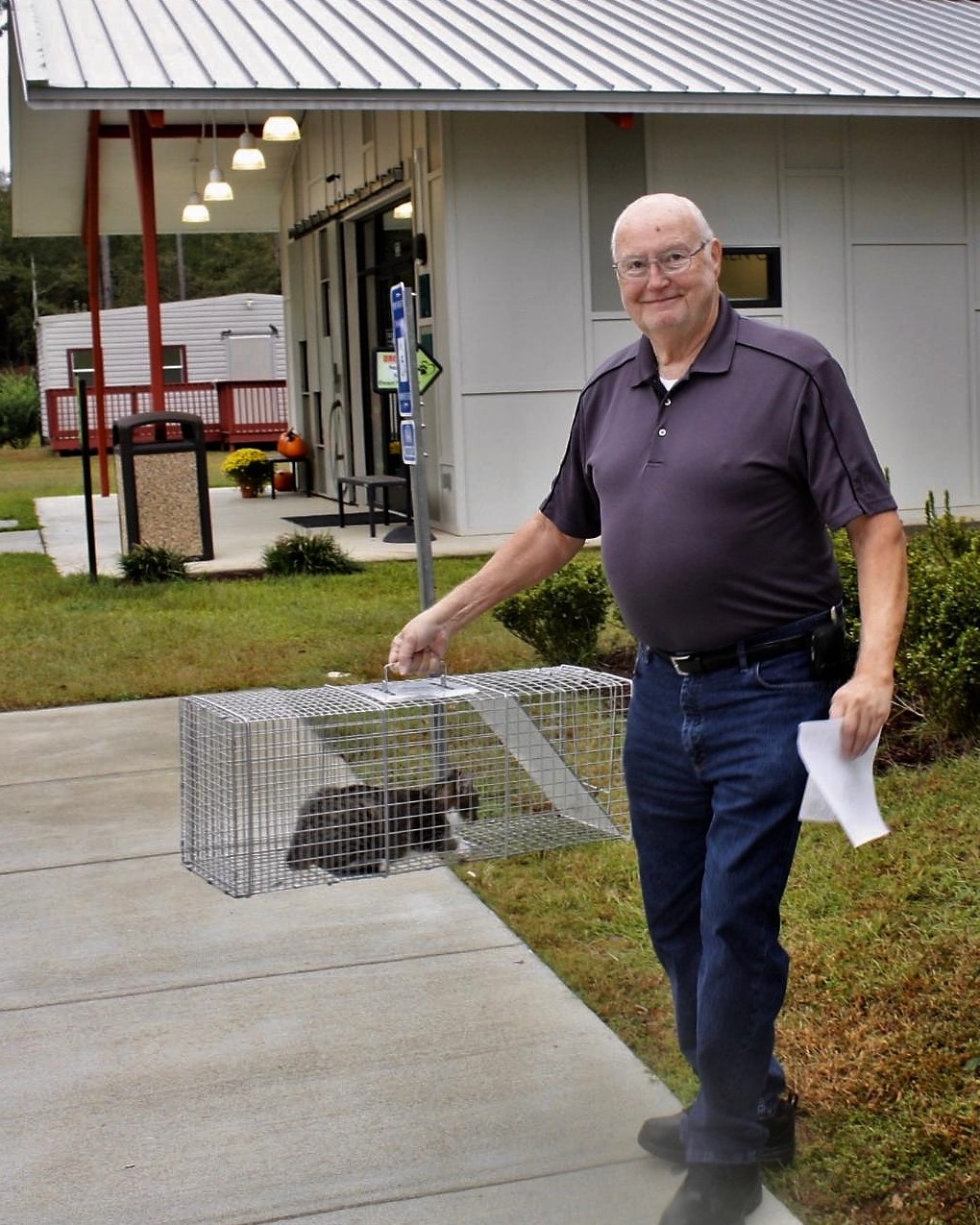
In 2016, Aiken County passed a resolution to implement a return-to-field program at the Aiken County Animal Shelter. Community cat diversion programs (or TNR — trap/neuter/return-to-field) like the county’s program have been hugely successful all over the country. TNR programs are a humane way to reduce overpopulation of homeless cats in the community and public animal shelters like the county shelter. Here’s how it works: citizens trap a feral cat living in their neighborhood (FOTAS provides the traps, if necessary) and bring the cat to the shelter or to a veterinarian designated by the shelter. The cat is neutered and vaccinated at no cost to the citizen, who later returns the cat to the
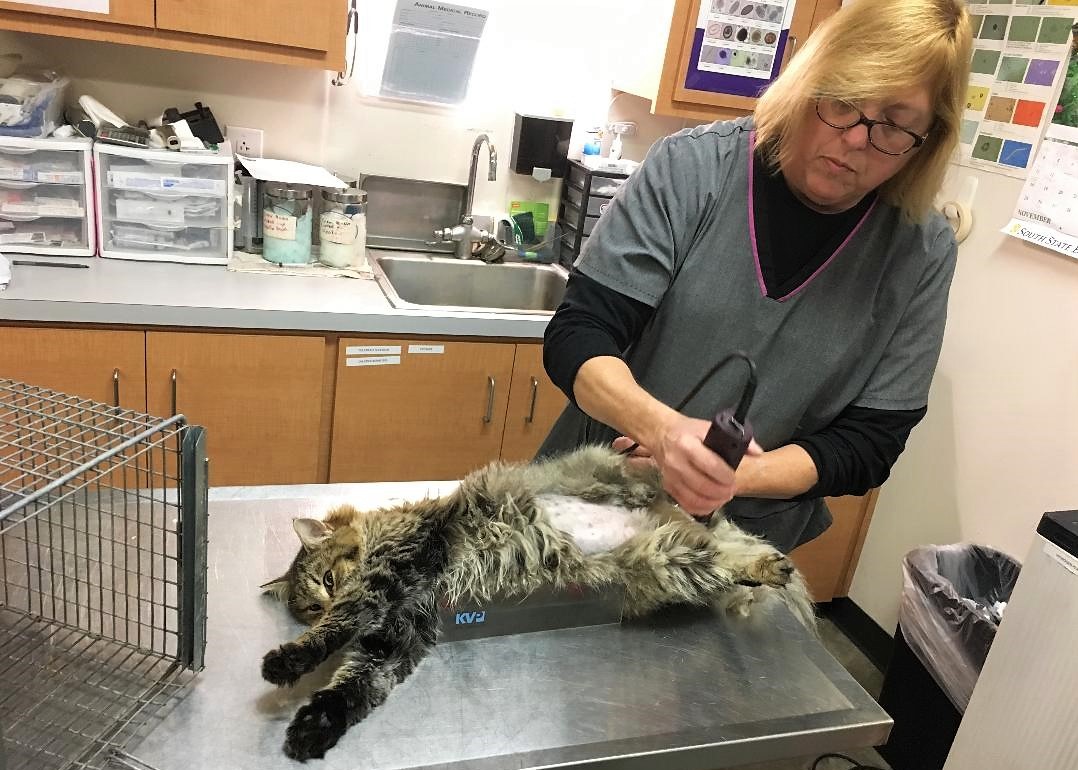
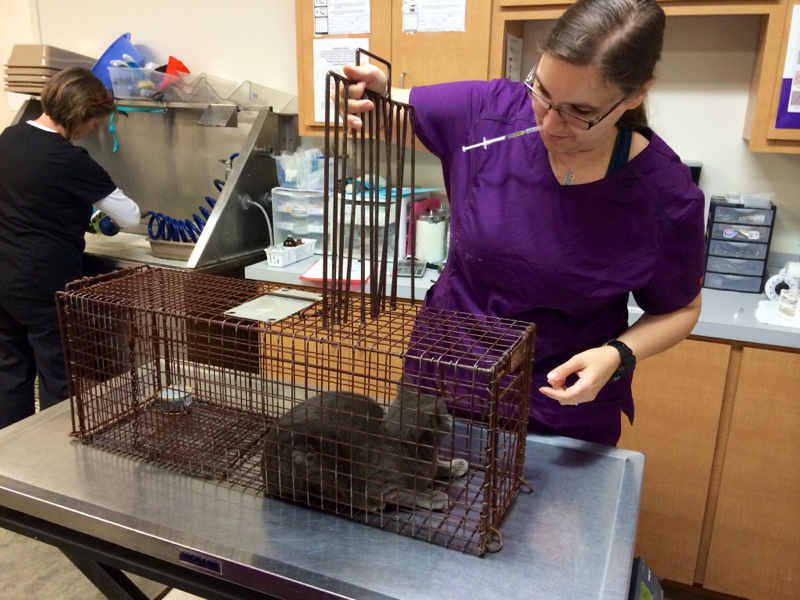
Vet Assistant Lyn Irilli prepares a TNR cat for surgery.
neighborhood. Thus, with help from the local community, the overpopulation of feral cats is reduced. It’s a win-win situation. Why does it work? Because cat colonies that have been sterilized and cannot reproduce do not grow, and since outdoor cats do not live more than two to three years, the cat colonies eventually disappear. The majority of cats received at the county shelter are outdoor cats, so the TNR program reduces the shelter’s intake of cats and reduces the feline euthanasia rate.
Raymond Hastings takes care of a community cat that has just been spayed at the County Shelter.
In 2016, the year in which the county’s TNR program was approved, the shelter had to euthanize 75% of the cats. One year later, in 2017, the shelter’s euthanasia rate for cats had dropped by two-thirds to 21%. And so far in the first nine months of this year, only 6% of the cats at the shelter had to be euthanized. The county’s TNR program is working! Thousands of cats have been saved in fewer than three years; FOTAS works with the shelter to provide free TNR services to Aiken County residents. In addition, FOTAS has purchased scores of traps to lend to citizens who wish to trap and neuter their community cats and return them to their original colonies. There are so many people who have contributed to the success of the TNR program: • The Aiken County Council and Administration for their continued support for the County’s TNR program. • The shelter staff, Dr. Lisa Levy, and Dr. Mike Wells who work so diligently in-house to alter, vaccinate and ear-tip the thousands of community cats received at the shelter (over 1,100 cats in 2017 alone were saved instead of euthanized). • Our veterinarian partners—Veterinary Services, Aiken Animal Hospital, Aiken Veterinary Clinic, Silver Bluff Animal Hospital—who discount their services to support the TNR program. • Aiken County Animal Control officers who respond to citizen requests for assistance with the feral cats in their neighborhood. • FOTAS volunteers Paula Neuroth and Carl Miller who coordinate and assist in facilitating the TNR program. • Our donors who make it possible for FOTAS to supplement the county’s program and provide additional funding for community TNR cats surgeries. • And of course, our community who cares enough to support this humane and highly effective program. There is still so much to do. The shelter is currently receiving hundreds of homeless kittens. But working together, we can wipe out the county’s feral cat overpopulation and unnecessary euthanasia of cats. For more information, please call the shelter 803-642 1537. Their lives are in our hands.

— By Jennifer Miller, President of FOTAS


By the Numbers From Nov. 1 to Nov. 28, the County Shelter received 344 strays and surrendered pets.


Pets of the Week

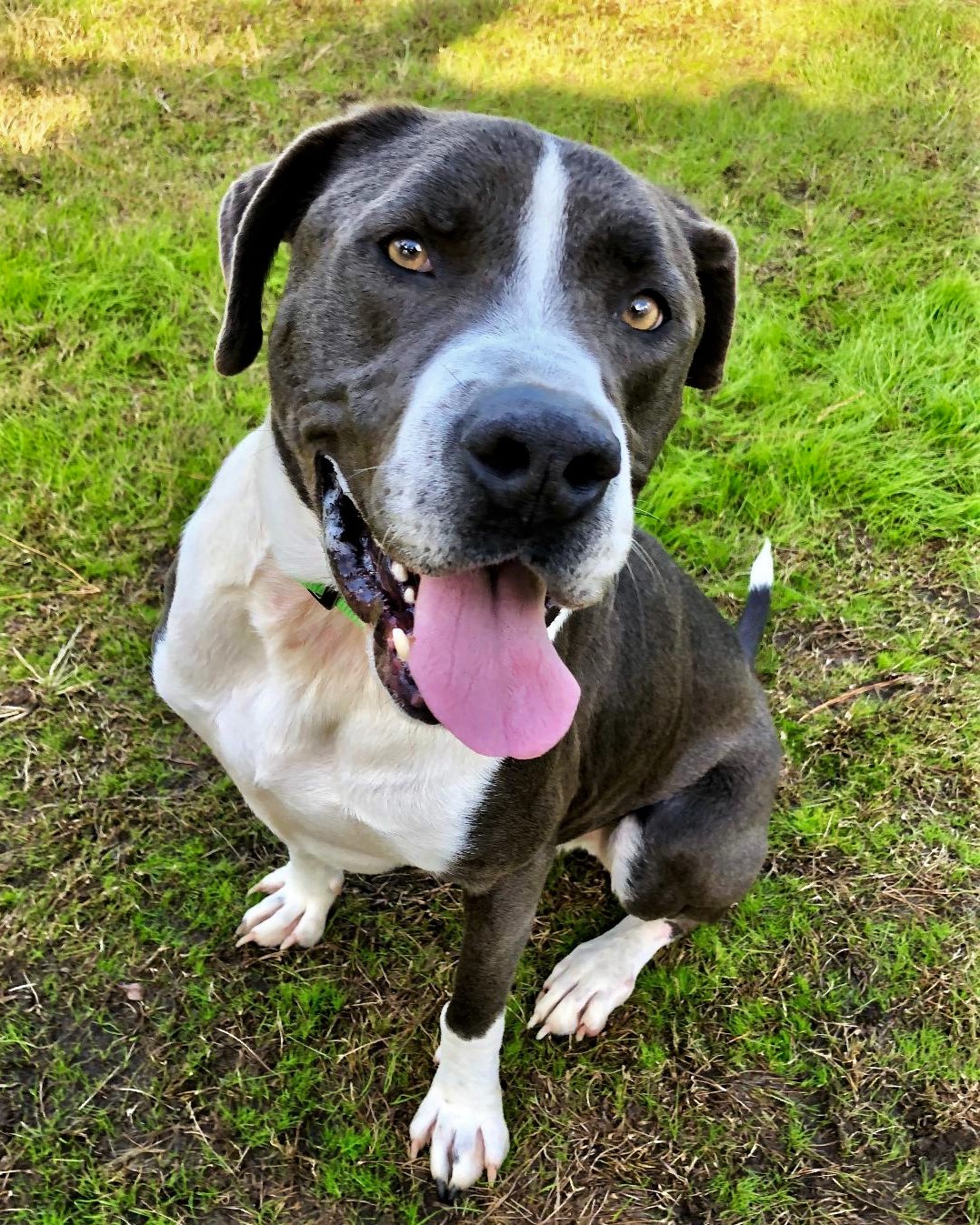
PLUTO Retriever mix, male, 3 years old, gray & white, 77 pounds – $35


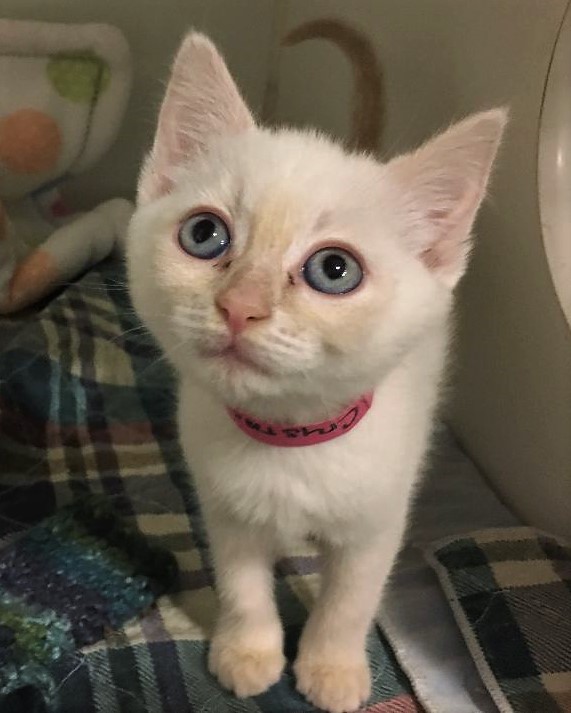
CRYSTAL Domestic Shorthair Siamese mix, female, 2 months old, white, 2 pounds – $10

Giving Thanks at the Aiken County Animal Shelter

Thanksgiving is a time of reflection for those of us at FOTAS — a time to take stock of our blessings; to consider the remarkable progress we and the County have made in making the world a better place for Aiken County’s homeless, abandoned and abused animals; and in particular, to celebrate the many people who have contributed to our success and made this journey so meaningful.

Thanks to our committed partner, Aiken County, for making it possible to save the lives of thousands of homeless animals in the County.

Volunteer Joanne Goble with recently adopted Retriever mix GLENDA

Thanks to Paige Bayne, the County’s Enforcement and Animal Services Director, Bobby Arthurs, the Shelter Manager and Chief Animal Control Officer, Dr. Lisa Levy, the Shelter’s veterinarian, and all the Shelter staff for their dedication to increasing the opportunities for each adoptable animal to find a forever home.

Thanks to the army of volunteers who make the work of FOTAS possible—everything from manning the front desk, walking and training dogs, managing canine play groups, working special events and fundraisers, fostering dogs, organizing transfers, manning off-site adoption events, working on publicity and social media, to financial records and bookkeeping.

Finally, thanks to you, the Aiken Community, for your extraordinary generosity and support. You have made it possible for FOTAS to help the County provide the best possible care for shelter animals and to find them forever homes. As a result of all our collective efforts, FOTAS was one of ten recipients out of thirty-three thousand charities in South Carolina recognized by the secretary of state as an “angel” charity for its effective and efficient service in the community.

That’s a very big deal.

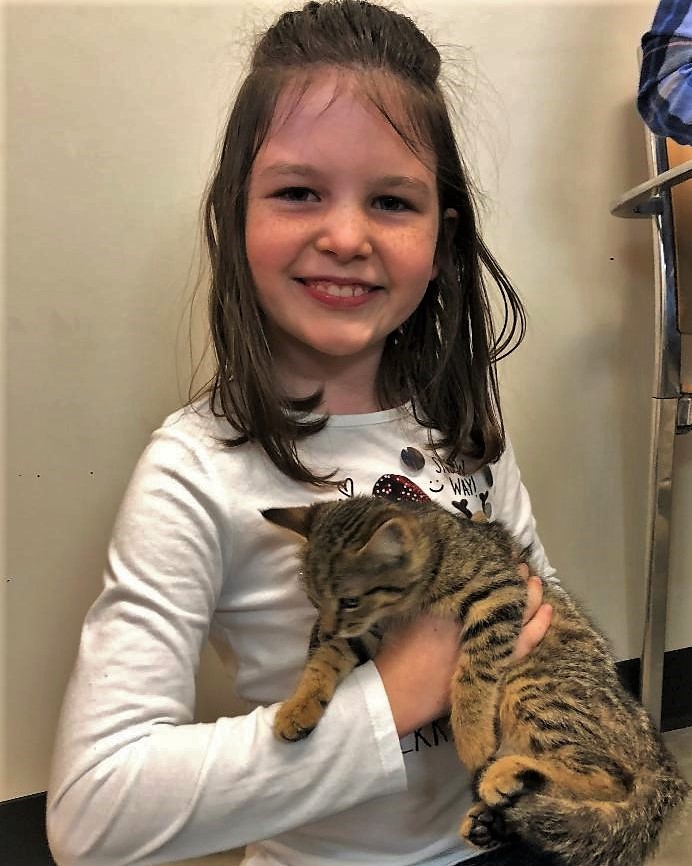
Abby Grant, who won the Adopt a Shelter Pet Coloring Contest in the Aiken Standard, plays with a kitten at the shelter.

But there’s still so much to do. Intake at the shelter has exploded— in the last six weeks over 700 animals were surrendered to the shelter. The strain on the system, our resources, volunteers, and staff is huge, and eventually the system will not be able to keep up. It just can’t.

The answer to reducing these extraordinary intake numbers is to reduce the homeless population by fixing every pet. Adopting a pet into the family requires commitment and responsibility for shelter, food, and medical care for the pet’s entire life.

Sure, sometimes awful things happen to good people and they are forced to do the unthinkable and give up a beloved pet, but surrendering an animal to a public shelter must be the very last resort. We are pleading with folks to network with their friends and family, use social media, do everything they can to rehome their pet into a safe and healthy situation. No matter how good FOTAS and the county shelter are, a pet surrendered to the shelter is at risk because there are just so many animals that can be absorbed into an already pet-saturated community at any given time.

Please join us in our fight to reduce the homeless population of pets through spay/neuter and educating the public about pet responsibility. Thank you, and God bless you and your family during this holiday season.

Their lives are in our hands.

— By Joanna D. Samson, FOTAS Vice President


By the Numbers
In the last six weeks, more than 700 animals have been received by the Shelter as strays or surrendered pets.


Pets of the Week

LINNETTE
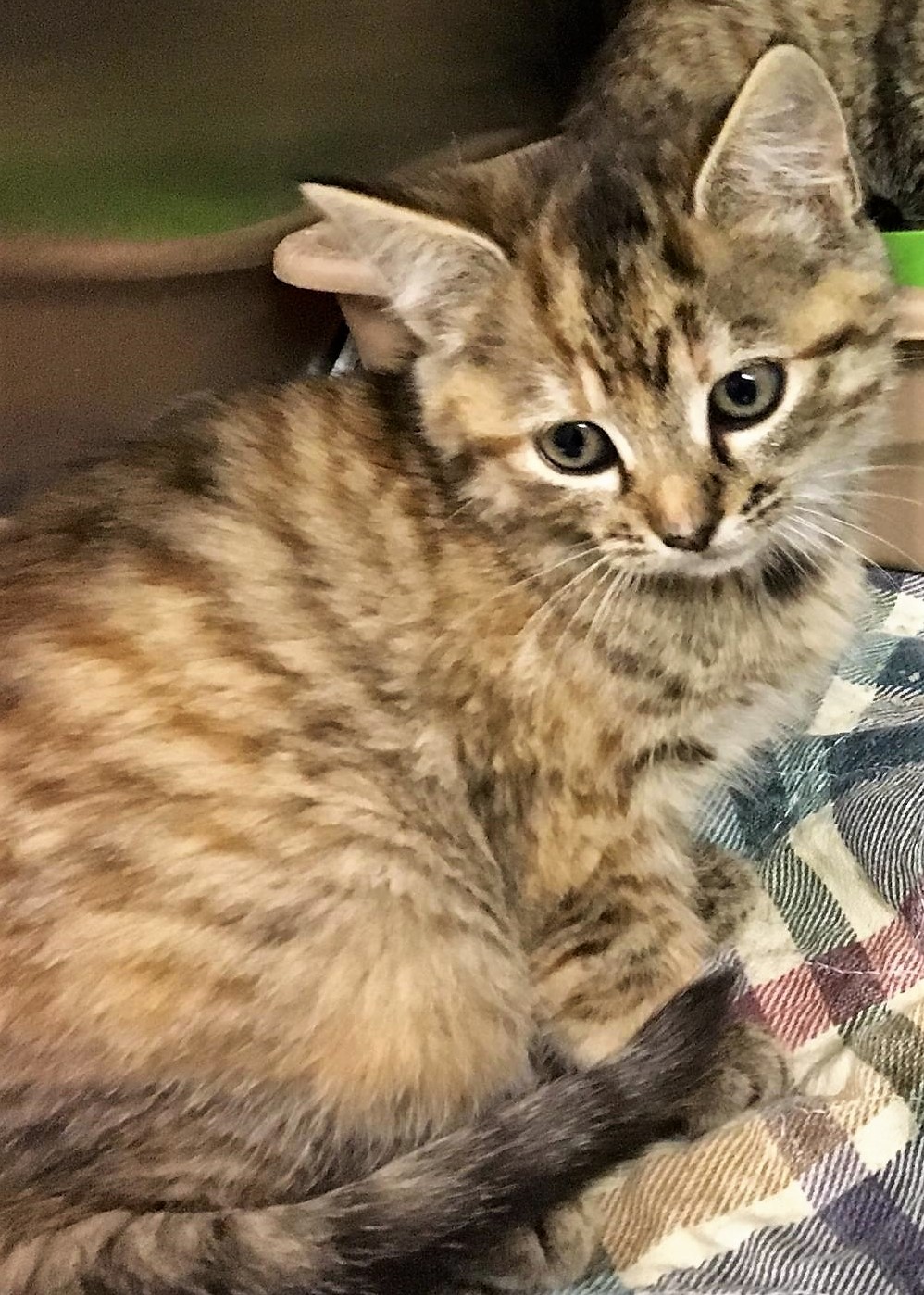
Domestic Shorthair, female, brown Tabby, 2 months old, 1.8 pounds – $10


PUMPKIN
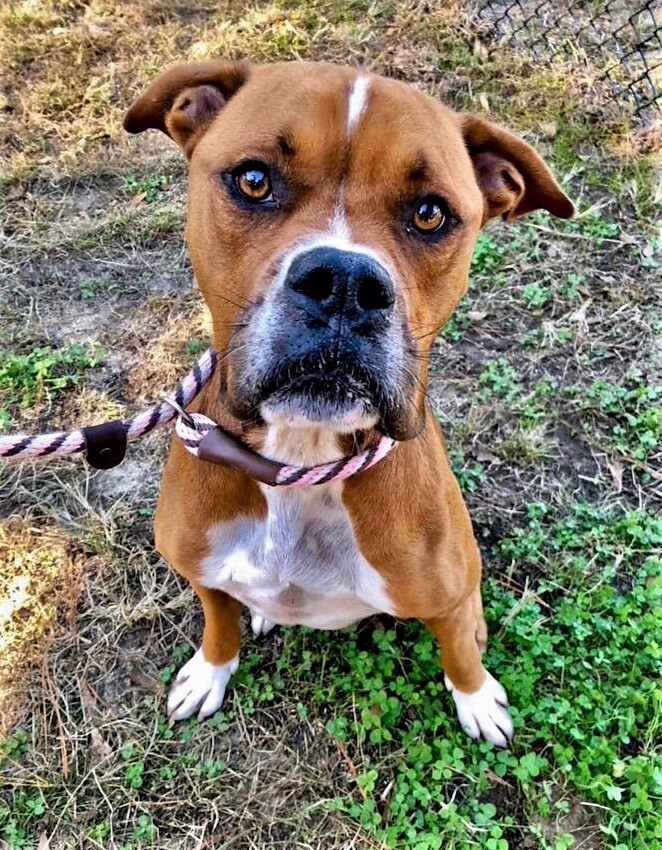
Boxer mix, male, brown & white, 2 years old, 63 pounds – $35

Junior FOTAS Students Prove our Future Looks Good

Junior FOTAS students took photos with adorable, adoptable Rosetta to post on social media.

Last year, a new after school program called Junior FOTAS was started by students at Tall Pines STEM Academy. Two teachers assist the students, including their language arts teacher, Mrs. Busby, who is passionate about helping shelter pets and a FOTAS volunteer, and their math teacher, Mrs. Mastromonico, who’s adopted pets from the shelter and is a strong animal advocate. Her son even raised over $400 for FOTAS’s Have a Heart Save a Heart program, a fund that provides heartworm treatment for shelter dogs.
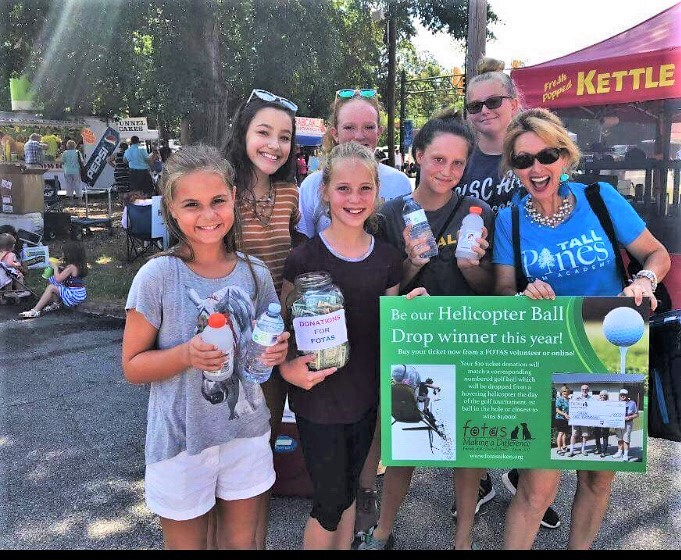
Every other week, the group meets after school along with myself and FOTAS Volunteer Marnie Munger. During each meeting, we introduce the students to a new shelter pet and teach them the importance of spaying and neutering and about the Trap, Neuter Release (TNR) program, heartworm prevention and other key FOTAS and ACAS initiatives.

The students surprised all of us! They made videos about FOTAS programs such as Doggie Days Out, Fix-a-Pet and Community Outreach. They held a car wash that raised money for heartworm treatment and marched in the Aiken Memorial Day Parade in t-shirts that they designed, singing a cheer about spaying and neutering.
And at last year’s Annual Woofstock Doggy Derby Day, members of the group sold snow cones to raise money for shelter pets. These kids are incredible!

Junior FOTAS members raised money for the shelter animals at Aiken’s Makin’.

This year, during the first meeting I was blown away when more than 40 students joined the group! These young people are enthusiastic and ready to get to work. Members of the group took the initiative to sell raffle tickets for a FOTAS fundraiser at Aiken’s Makin’. They sold $100 in tickets and took in over $400 in monetary donations to help the shelter pets.

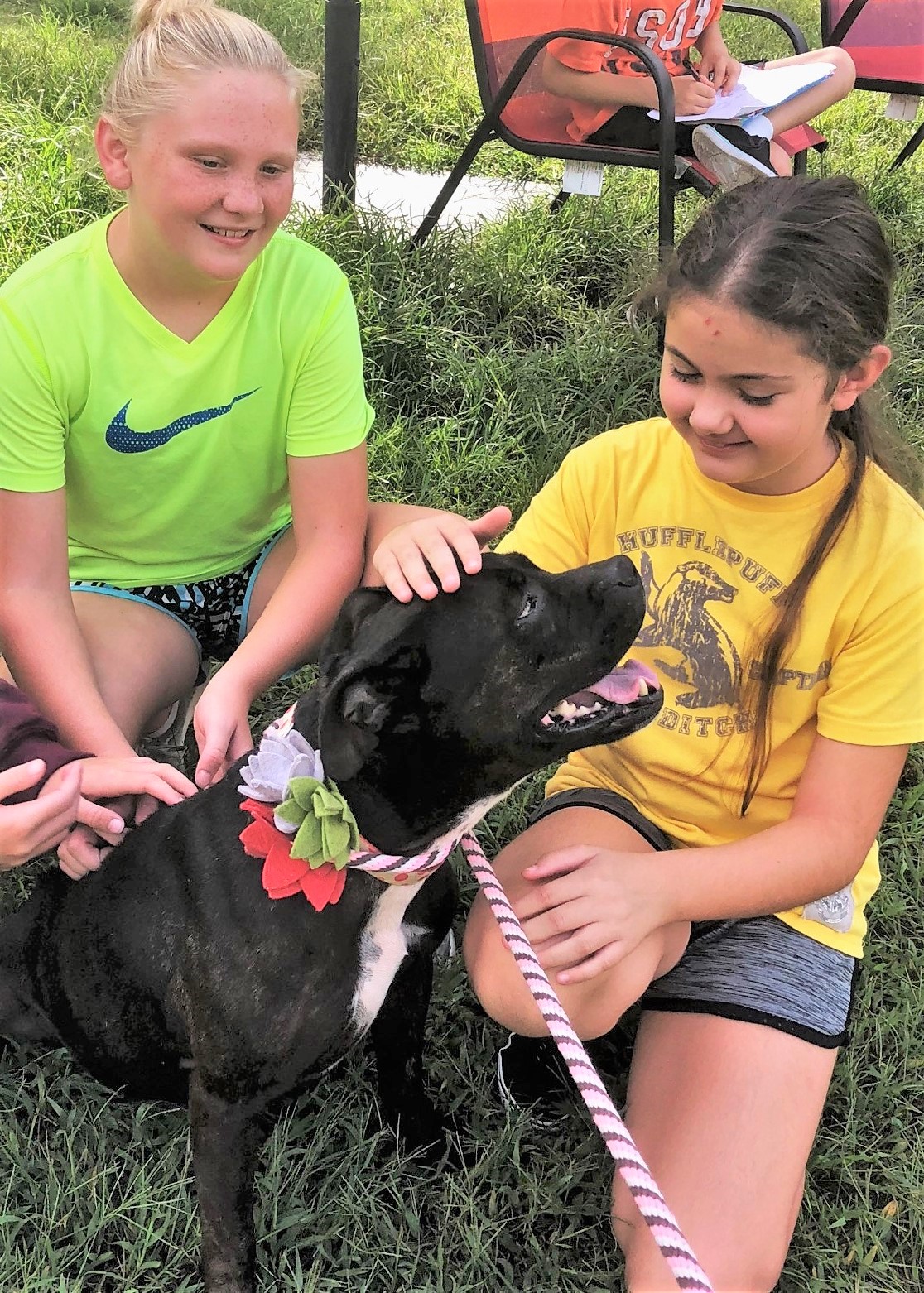
Most recently, Junior FOTAS visited the animals at 333 Wire Road and enjoyed a tour by Shelter Manager Bobby Arthurs. Bobby showed them the entire facility and taught them the history of the ACAS. The students were really interested in the process of how animals arrive at the shelter and how they are adopted. They all took turns hugging and loving the shelter’s longest canine resident, Rosetta, and brainstormed on how they can help dogs like her find homes faster. One idea was to make flyers, while another was to take pictures and selfies with her and share them on social media. Who wouldn’t want to adopt a dog that is so awesome with kids, right?

To see their eyes when they hugged a homeless dog was beautiful and Rosetta was in heaven! What a perfect world it would be if everyone was so eager to love!

Despite Junior FOTAS’s promotion of Rosetta on social media, she has yet to be adopted.

FOTAS is thrilled to see young people take an interest in helping the shelter animals. We have all heard that “children are our future,” and if these students are this driven at their young ages of 11-14, our future is looking pretty bright!

Please keep an eye on these upcoming leaders in animal advocacy and contact us at (803) 514-4313 or info@angelhartlinedesigns.com if you’d like to start a Junior FOTAS group at your learning institution.

Their lives are in our hands.


— By Kathy Jacobs, FOTAS Program Director


Pets of the Week

ADELI
Domestic Medium-hair, female, 2 years old, 7.6 pounds – $10

LILITH
Mixed breed, female, 2 years old, 35 pounds – $35

Free TNR Program Saved Community Cats and Made Life Better

It started when a good neighbor needed to move. He left his feral cat colony, so my husband began feeding them. But years later, we found ourselves with more than 30 cats in two colonies. We knew we had to do something soon! Last fall, a viral infection or inbreeding caused uncountable and horrible kitten deaths. We reached out to FOTAS for help and they informed us of the County’s Trap-Neuter-Return (TNR) program.  It’s a free program supplemented by FOTAS that benefits homeless felines and the community. You can trap feral or community cats, get them fixed and their ear tipped (the universal sign of a sterilized cat), and then return them to their outdoor home. We borrowed four humane traps from FOTAS and friends, then got a purchase order number to start the TNR program with the veterinarians on FOTAS’s list.
The TNR program allows community cats to remain outside but keeps their population down.
The TNR program allows community cats to remain outside but reduces their population via spay/neutering.
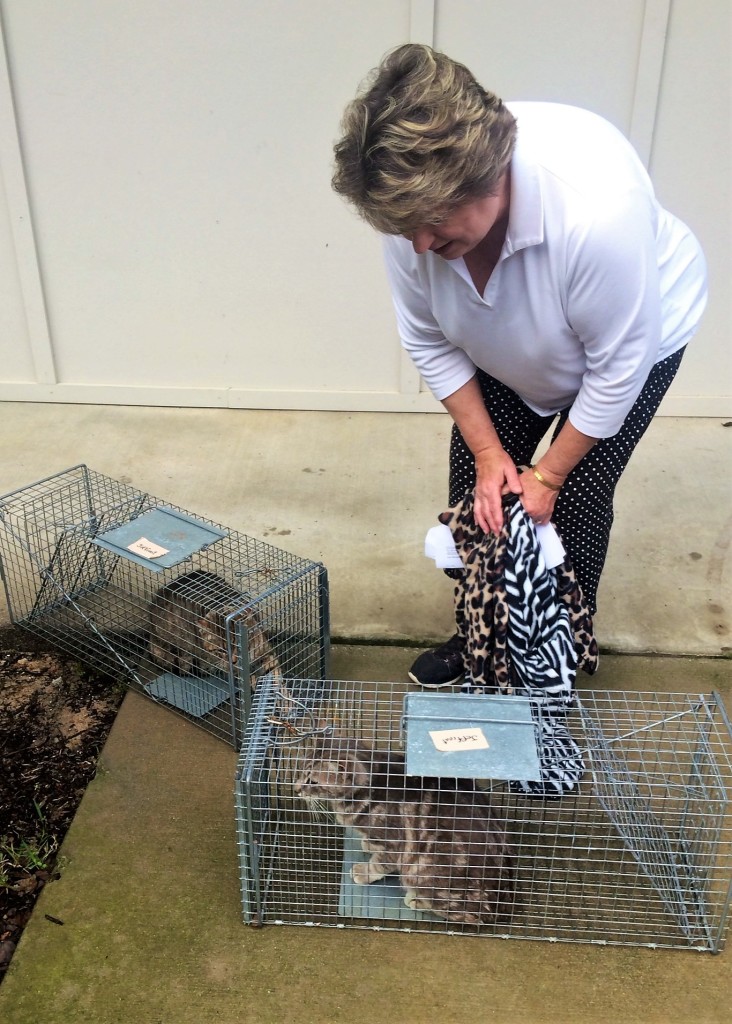
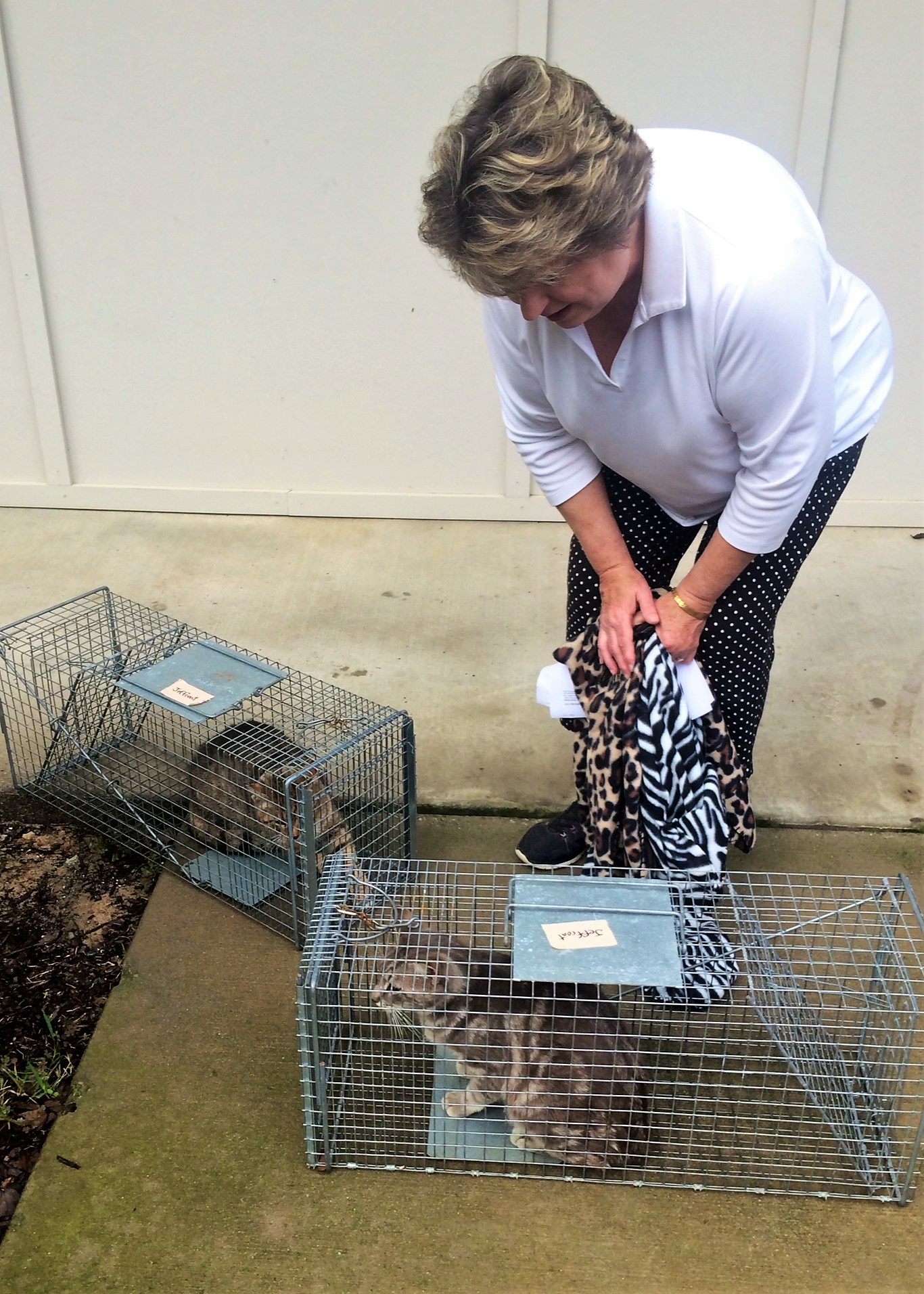
Initially we took four to eight cats in to get spay/neutered each week by appointments with veterinarians and the Aiken County Animal Shelter, where two are allowed with no appointment. The goal was to get this done prior to spring mating time. We would trap on Monday and Wednesday from 3 p.m. to dusk (so we didn’t trap night wildlife), using several teaspoons of canned food in the trap. We checked the traps every 15 minutes because the trapped cats are terrified until the trap is covered with a beach towel. We then moved the trapped cats to an enclosed building for the night.  If two were caught, they would go to the veterinarian appointment in the morning; and if there were more, they would go to the Aiken County Animal Shelter between 8-9 a.m. The vets did early surgery with same day return while the County had pick-up the next morning. The County Shelter offers their TNR spay/neutering on Tuesdays and Thursdays.
Connie Jeffcoat of Wagener picks up two community cats she had spayed at the County Animal Shelter.
We captured most of the cats in 30 days, but then we had to get more creative to trap the smarter cats. We photographed them for easy identification and watched their afternoon habits for better trap placement. We also upgraded the food to sardines (heated slightly) and camouflaged the traps. It worked, and now that all the cats are fixed, we can relax and just enjoy watching the barn and deck colonies. With no more additions to the group, there’s no fighting, yowling and spraying. We are so happy!  Both colonies guard their territory, so no new cats are moving in and that means no kittens to take to the shelter. Thank you to FOTAS and congratulations for getting the State Angel Award for non-profit organizations. Thanks also to all the volunteers, donors, the Aiken County Animal Shelter and Veterinary Services. Everyone we met during this adventure was very kind and helpful. Whether you are feeding one community cat or many more, it is important to stop the population problem. Please help FOTAS meet their goal: no more homeless animals. Working together, we can do this! If you live in Aiken County and want to participate in the TNR program, please call the County Shelter, (803) 642-1537.

By Lynn Carty

paw_print_heart_stickers-r368b69be3802466f8feff0ba57adc012_v9w0n_8byvr_512

By the Numbers

May 1-16: The County Shelter received more than 300 stray animals and owner-surrendered pets in just two weeks.


saveapetlogo

Pets of the Week

mia pet of the week (2)

MIA: Mixed breed, female, 2 years old, black & white, 36 pounds – $35

AMANDA PET OF THE WEEK

AMANDA: Domestic Shorthair, female, 1 year old, tan & black Tabby, 7.5 pounds – $10