


Category Archives: Training

Play Groups increase quality of life for Aiken County Shelter dogs

By Joanna D. Samson, FOTAS Vice President

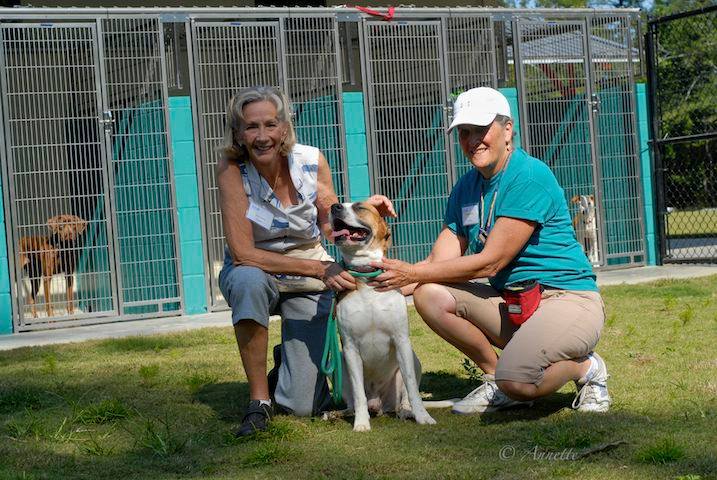
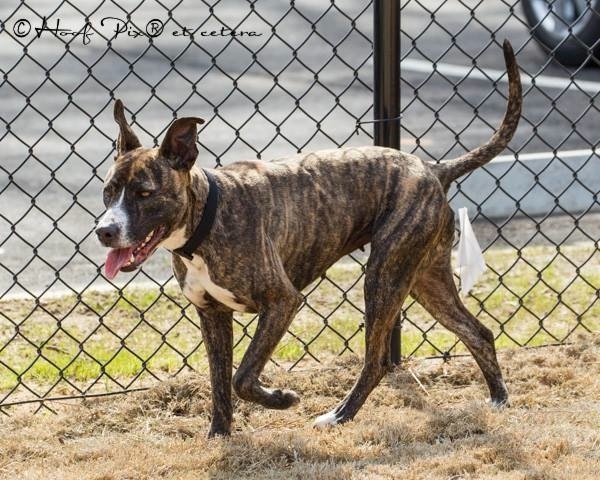
It’s 9:15 in the morning at the Aiken County Animal Shelter, and two dogs are in the play yard: a female, yellow lab cross named Cheyenne and a young, lanky brindle dog named Hawkeye. Cheyenne and Hawkeye were identified the day before as helper dogs for the morning’s play session based on their canine social manners and affability. Two FOTAS volunteers, Caroline Simonson and Darling Rios, are the in-yard handlers in charge of the morning’s play session. In the background, Ali Waszmer, Director of Program Development and Lead Trainer, and Kodi Sadler, Lead Trainer, from Dogs Playing for Life, a non-profit organization that teaches shelters how to create and manage play sessions to improve the quality of life for its canine residents, stand by to guide Caroline and Darling through the process.

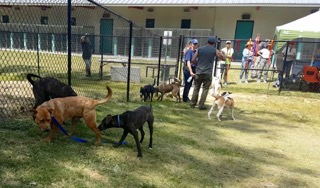
And so it begins. Ali or Kodi refer to their notes from the previous day’s play assessments and begin calling for specific dogs, which are retrieved by a volunteer runner and brought to the gate. Over the next two hours, dogs are moved in and out of the yard or directed to a smaller, adjacent yard depending on their play style and physical condition. At any given time, as many as 15-18 dogs romp, frolic, chase each other around the yard, or watch contentedly from the sidelines.

As the session winds down, Darling, who is now the lead handler in the yard, begins calling for runners to take remaining dogs back to their kennels. By noon, close to 40 dogs–virtually every available dog from the adoption floor and selected dogs from the intake wing–have had an opportunity to play and blow off steam in the yard. An almost eerie silence settles over the shelter as the dogs, happy and relaxed, settle in for well-deserved naps.

“Shelter life is stressful enough for the dogs,” says Ellie Joos, the FOTAS on-site event coordinator who organized the 4-day clinic with Dogs Playing for Life. “They are social animals, yet for a whole host of safety and practical reasons they are kenneled separately, and over time, their energy and frustration levels rise. Play groups provide an effective outlet for the dogs to socialize in a controlled setting. Four to six volunteers can satiate every dog’s physical and emotional needs in one or two short sessions in a way that walking dogs individually around the property just can’t do.” She shakes her head and laughs. “The transformation is nothing short of amazing!”

And here’s the best part: watching a dog in play group gives staff and FOTAS more information about the dog’s behavior, which can potentially broaden that’s dog’s adoption prospects. Plus, meeting a happy, relaxed dog for the first time is a far better experience than meeting a dog that is frantic from lack of rigorous exercise and limited social interaction.

It’s a win-win situation for everyone. How cool is that?

For more information on the extraordinary Dogs Playing for Life program, go to DogsPlayingforLife.org. For more information on, or to participate in, the FOTAS play group training at the County Shelter, contact FOTAS at info@FotasAiken.org.

Their lives are in our hands.
PlayGroups1


photo above:
Kathy Jacobs, FOTAS Program Coordinator, and Kodi Sadler of Dogs Playing for Life manage a play session at the Aiken County Animal Shelter while other volunteers and spectators watch on.
Free Training Session Included with Every ACAS Dog Adoption

By Bob Gordon, FOTAS Communications Director

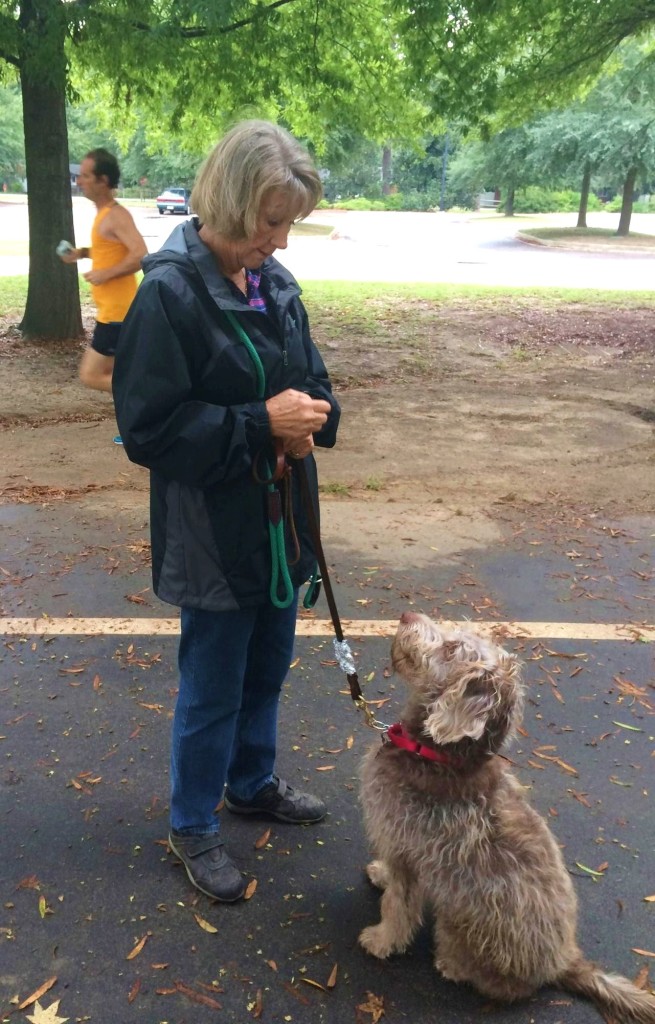
Susi Cohen comes with every dog adoption at the Aiken County Animal Shelter (ACAS). Or, rather, her expertise and guidance does. As the shelter’s expert dog trainer, she provides a free, private session for everyone who gives an ACAS dog or puppy a forever home.

“When dogs leave from the shelter to their new residence, it is a big, happy change but also can cause stress,” Susi explained. “The dogs find themselves in a different environment, and will often rely on their new owners to direct them. That’s when I come into the picture.”

In addition to receiving the training session, adopters are provided with Susi’s contact information so they can call and check in with her if they have questions or need additional training advice.

Susi is the president of the Palmetto Dog Club in Aiken and has worked with and trained animals for more than 30 years. She volunteers at the shelter, helping other volunteers and County staff with basic dog training skills and working one-on-one with dogs that need special attention.
In most cases, the training serves to show the adopters standard disciplinary techniques such as teaching their dog how to: heel and walk well on a leash; stop jumping up on people and furniture; sit on command; or follow proper housebreaking procedures. But sometimes Susi takes on and solves more severe behavioral issues such as a Pit Bull mix that chased and scared an adopter’s horses; a chocolate Lab that liked to chew on his adopter’s car interior; and a Terrier that kept relieving herself in the house immediately after being walked outside.
But even such rare and extreme cases are usually resolved relatively fast. Susi said it all comes down to motivating the dog by using continuous, positive reinforcement and building that bond with your animal.

“The biggest mistake people make is being inconsistent,” Susi said. “They do one thing for a day or two, and then try something different, and then go back to the first approach – and the dog gets confused. The dog has to be able to connect the dots.  The key to training success is constant repetition with positive reward”, she explained.

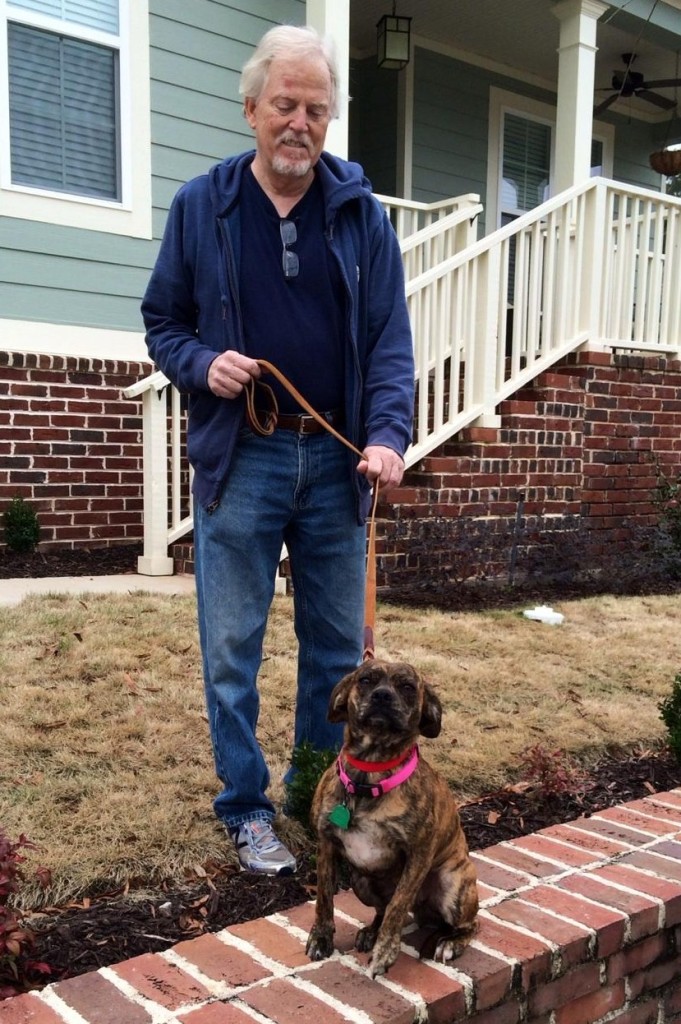
One adopter who recently learned this important lesson is Jim Brownlow of Aiken. He adopted Ruthie, a one-year-old brindle Hound mix, in December and took the free training session with Susi to improve his new dog’s manners.
Ruthie is so friendly, she wants to jump up on people. She also sometimes suddenly stops during her walks because she gets distracted. But Susi showed Jim how to give the appropriate commands for getting Ruthie to follow some simple procedures. Extremely pleased with the session, Jim plans to take more instruction from Susi.
“The training really helped me because I was doing some little things wrong out of habit, and Susi got me on the right track,” he said.
Thanks to such success stories, an increasing amount of people are taking the free training and the shelter’s rate of adoption returns, already low, is dropping.

“When dogs behave well at their new adopted home, it means they become part of the family,” Susi said.

Their lives are in our hands.

Aiken Tech Class Boosts Shelter Staff’s Value and Efficiency

By Bob Gordon, FOTAS Communications Director and Volunteer, 

The Aiken County Animal Shelter’s (ACAS) staff and a small group of FOTAS foster volunteers are hitting the books hard after hours. During three-hour classes held twice a week at the shelter, staff members are reviewing PowerPoint slides, engaging in discussion, observing animal behavior and practicing their new knowledge through hands-on exercises with shelter dogs and cats.

It is all part of a special curriculum designed by Aiken Technical College to increase the shelter staff’s expertise and improve their job skills. Completely funded by FOTAS, the Kennel Technician class is expected to help ACAS employees become even more effective, well-rounded and flexible in their job duties.

Martha Chadwick, manager of the County Shelter, came up with the idea with Dr. Steven F. Simmons, Dean of Business, Computer Technology and Training at ATC, and Dr. Katie Comerford, DVM, is teaching the class. It is the first partnership among ATC, FOTAS and the County.

“When I approached Dr. Simmons about creating a program for Aiken County, he was genuinely interested in tailoring a specific course that would positively impact the homeless animals of Aiken County, as he and his family are also FOTAS volunteers,” Martha said.

The classes began Nov. 3 and will continue until Dec. 17. ATC supplies the instructional books and other reading materials.

The class curriculum has much of the same content as ATC’s vet assistant course but was tweaked and tailored for shelter professionals since issues and needs that come up at an animal shelter are different from those at a veterinary office or hospital.

The County Shelter’s small staff is expected to be more proficient with this new training, able to help each other with their tasks and work more as a team. For example, by learning how to properly and safely hold an animal to draw blood, insert a microchip or examine an injury or ailment, the staff can assist the vet techs if needed. Or by learning the symptoms of common medical conditions in dogs and cats, and being better able to spot signs of canine and feline illnesses, the staff can more readily alert the shelter’s vet, Dr. Lisa Levy, and her assistants to the situation so proper medical care can be administered right away.

Receiving this added education will allow the staff to cross-train for various positions and make it easier for staff members to fill in for their fellow employees if they are forced to be absent due to such unforeseen circumstances such as illness or personal emergency.

“This is a wonderful new partnership with Aiken Technical College,” said FOTAS President Jennifer Miller. “Everyone came together for this project, which will ultimately result in giving the best care possible to the orphaned dogs and cats at the shelter. This is the result of a true team effort, including the community, whose donations made this class possible.”

To learn more about FOTAS and its many activities, go to www.fotasaiken.org.

Their lives are in our hands…


Trainer Helps Prepare Shelter Dogs for their Forever Homes

By Bob Gordon, FOTAS Communications Director and Volunteer

Everyone who adopts a dog or puppy from the Aiken County Animal Shelter receives a voucher for a free dog training session with canine expert Susi Cohen.

Susi is the president of the Palmetto Dog Club in Aiken and has worked with and trained animals for more than 30 years. She volunteers at the shelter twice a week, helping other volunteers and County staff with basic dog training skills and working one-on-one with dogs that need special attention.

We interviewed Susi to learn more about the FOTAS training program at the shelter and why it is so vital to both the dogs and their new owners.

Q. What are the keys to effective dog training and why should I take the time to do it?

A. Training takes patience and consistent repetition with a lot of praise and rewards. It gives the dog good manners, more confidence, and makes him a well-adjusted dog – and a well-adjusted dog is a happy and well-behaved dog.

Q. When I use my free voucher, what training will I receive for my adopted dog?

A. I work with the dog and adopter for about one hour at the shelter. Every owner will have different issues with their dogs. And that’s the beauty of the program – we tailor the training for each individual dog. So if they have a particular issue, we can help them eliminate it.

Q. If I’ve adopted a dog from the County Shelter, can I call you with questions?

A. Absolutely. If you have any issues, I am available to answer your questions and discuss them with you. Every adopter is given my contact information as part of the FOTAS “Ask the Trainer” program. I’m always taking calls. People need to understand that dogs love to be trained. They love to be told to what to do. They love parameters and being praised for behaving well.

Q. How much training do most dogs need?

A. Every dog is different. Some dogs have bad experiences that they have to overcome. Some of these dogs have been mistreated and need to learn to trust again. But the norm is not mistreatment; it’s lack of treatment altogether. They haven’t been given any attention and don’t know when they are acting improperly. Still, despite these challenges, we’ve had great success with adopted dogs.

Q. Can you give us an example?

A. Last season I had Annie, an older German shepherd mix that was insecure and had no confidence whatsoever. We worked closely with Annie and she made a turnaround you wouldn’t believe. She went from a cowering, overly defensive dog to a happy dog that trotted with her tail straight up and exuded confidence. The metamorphosis was incredible.

Q. Has the on-site dog training made a difference at the shelter?

A. Yes, it’s worked well because FOTAS and the volunteers are so dedicated. Like me, they can’t stand seeing good dogs come back after being adopted just because they need some training. The adoption return rate has gone down and I like to think that drop in returns is because the dogs leave with better manners and are more prepared for their new homes.

For more about the FOTAS Dog Training Program and Susi’s contact information, please go to www.fotasaiken.org.


Their lives are in our hands…


Pets of the Week

GRACE — Border Collie and Hound mix, female, 1 year old, 50 lbs.  — $70

CINDER— gray tabby, female, 7 months old, 6 lbs. — $35


By the Numbers

January 2013 – August 2015

FOTAS organized and paid for the spay/neuter surgeries of 699 citizen’s pets and 628 community cats, totaling 1,327 dogs and cats fixed!

Love and be loved: the joy of owning a dog

26 October 2014

LOVE & BE LOVED:  THE JOY OF OWNING A DOG

By Susi Cohen, President of the Palmetto Dog Club and FOTAS Volunteer Trainer

Dogs are unmatched in their devotion, loyalty and interaction to humankind. Anyone who has ever loved a dog can attest to its hundred-fold return. The excitement your dog shows when you come home, the wagging tail at the sound of the leash being taken from its hook, the delight in the tossing of a tennis ball, and the head nestled in your lap are only some of the rewards of having a dog in your life.

Owning a dog is not just a privilege – it’s a responsibility. They depend on us for, at minimum, food and shelter, so taking a dog into your life involves a serious commitment to its wellbeing for the rest of its life.

And for a shelter dog, who has already experienced some level of disruption, loss and perhaps trauma in its life, the stakes are even higher: your commitment and patience may literally mean the difference between a happy, secure life and certain death. You are his second chance.

It’s not like buying a new car. You can’t just trade your dog in when he misbehaves, gets sick or when circumstances in your home environment change.

Plus, if you take the time to teach your new dog how to be a good family member from the very beginning, the payoff is huge.  Not only will you will ease the stress of the transition from shelter to home and limit his potential to make mistakes, you will build a bond that will last a lifetime.

Make time for your dog and create a schedule for play, feeding and sleeping. He will quickly learn what to expect and be content with it. It will also give your life purpose. Remember that while you are at work, out with friends, or running errands, your dog is waiting for you to come home.  You are his whole world.

Training your new companion is most important. He needs to understand who’s in charge and what the rules are.  This gives his life structure and builds confidence and reinforces his bond with you.

Moreover, a trained dog is a happy dog.

Teaching your dog basic commands such as heel, sit, stay, come and down will make your life easier and help you keep him safe.

Expose your dog to different people and settings regularly. Take him to the park, to the pet store, on a walk through town. The more your dog learns of the world, the more comfortable he will be in it.

Obedience classes can be a great experience for you and your dog. It can help address issues with professional assistance. You may discover your dog has a talent for learning and is able to compete in obedience, agility or tracking events. More fun for the both of you, I promise.

Because your dog loves you, he wants to please you. Praise him lavishly for obeying commands and behaving well. Using positive, rather than negative, reinforcement will help your dog enjoy learning. Always be consistent so your dog is not confused.

Finally love and enjoy your dog, he will return that love in spades.

BY THE NUMBERS

FOTAS’ Lenny’s Brigade and FOTAS’ Fix-a-Pet organized the pick-up of 28 dogs and cats this week and funded their spay/neuter surgeries

PETS OF THE WEEK

KANE     Boxer mix — male — 3 yrs old — 51 lbs —- $70

LOTTIE   Domestic short hair — female — 7 wks — 1 1/2 lbs — $35

Forgotten Dogs and Troubled Veterans

By Joanna Dunn Samson, FOTASDirector

It is late afternoon at the Aiken County Animal Shelter. Jerry Lyda, a man with curly graying hair and twinkling blue eyes, stands in front of a rangy, muscular boxer crossed with Lord-knows-what-else named Olivia. He is holding up a piece of hot dog in his closed hand.

Jerry knows something about dogs—he has trained them all his life.

Olivia focuses intently on Jerry (or maybe on the hot dog—I can’t tell.) She prances at his feet.

I hold my breath. Olivia is the Michael Jordon of dogs – capable of jumping to astonishing heights from a standstill. I fear she will spring up on those powerful haunches and snatch the hot dog and a finger or two with it.

“Olivia, sit,” says Jerry in a calm, but firm, tone. She cocks her head, thinks about it, resumes prancing.

Undaunted, he holds the treat a bit higher, takes a step closer and repeats the command.

“Olivia,” he says, sit.”

She cocks her head again; the wheels are turning. Slowly, she begins to lower her rear end to the ground. Is this what you want? her look says.

It is. Jerry showers her with praise (“Good girl, Olivia, good girl!) and rewards her with the coveted bit of hot dog.

He turns to me with a big smile and says, “I LIKE this dog.”

I was delighted. Jerry is a Vietnam veteran and the founder of Veterans K9 Solutions in Augusta, a nonprofit organization that matches shelter dogs with veterans suffering from PTSD.

“Each year,” says Jerry, “300,000-400,000 veterans are diagnosed with PTSD. The military estimates that 22 veterans commit suicide every day – 22!”

He shakes his head. “Our love for dogs and gratitude towards those who served makes our goal simple – give back to those in need by saving two lives at once: a traumatized veteran and a homeless dog.”

I had contacted Jerry about Luci, a young boxer cross who had been surrendered to the shelter by a distraught serviceman being deployed overseas. He cried when he handed Luci over. He was heartbroken; we all were.

So Luci held a special place in our hearts. She was affectionate and quiet, and the idea of placing her as a service dog seemed so right given how and why she had come to the shelter.

Jerry agreed to check her out.

Olivia was a different story. Strong and athletic with boundless energy, I fretted over her fate. Who could possibly be capable of harnessing all that force and spirit?

As it turned out, longtime FOTAS volunteer Ellie Joos was; she saw promise in Olivia. Ellie began basic obedience work with her under the guidance of Nancy Webster, a local trainer.

Olivia surprised me: I was stunned by the difference in her behavior after just 2 weeks of training. She was softer, more relaxed. I asked Jerry to take a look at Olivia, too.

In the end, Jerry accepted both Luci and Olivia into the Veterans K9 Solutions program – an outcome that makes us all, but particularly me and Ellie, ecstatic and proud. Luci has already been placed with her veteran (love at first sight, says Jerry), and Olivia continues her training with Jerry until her veteran has completed the necessary paperwork.

Can there be a more important or noble purpose for a dog?

As for Jerry Lyda, I am humbled by his dedication and vision. The man radiates kindness—it hovers around him like morning mist over a mountain pond.

No wonder dogs love him.

For more information about Veterans K9 Solutions, go to www.veteransk9solutions.org.