

Tag Archives: foster

Pulling for the Pibbles

By Joanna Dunn Samson, FOTAS Vice President


Luci was surrendered to the Aiken County Animal Shelter by her owner, who had been deployed overseas.

Olivia was picked up by Aiken County Animal Control, starving and anxious.

Harley spent the first part of his young life outdoors, starving and dodging abuse from the drug-addicts who claimed to own him.

Dante was found wandering the County roads in search of food. He was malnourished anxious and mistrustful.

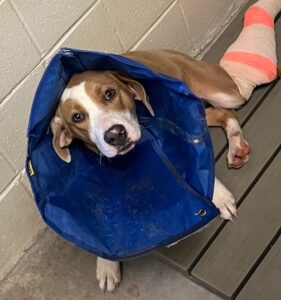
Ginger spent her entire 2 years of life at the end of a chain. She has permanent scars on her neck and head from her chain and is heartworm positive (HW+).

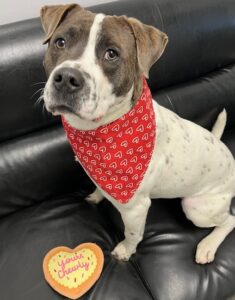
All of these unfortunate animals are what we call “Pibbles” – pitbulls or pitbull mixes. Open admissions shelters across the country are inundated with Pibbles. It’s a real crisis. They are the hardest dogs to place, spend the longest resident time in the shelter, thus straining limited resources and space. Pibbles are euthanized in greater numbers than their less muscular, less energetic and less square-headed brethren.

Yet Pibbles make extraordinary pets and companions. Today, Luci and Olivia are companions to veterans and working on their service dog certifications. Harley has been adopted by a local, loving family. Dante is living the good life on a farm in Maine. Our dear Ginger, a little scruffy and scarred up, found her true love at an off-site adoption event at Stable View and spends her days loving and being loved.

Here is what you need to know about the Pibbles in the County Shelter.

Because it takes so long to find them homes, Shelter staff and FOTAS volunteers have had lots of time to observe and assess these dogs, so we’re confident they have the right temperament to make great pets. Our volunteers work with the Pibbles daily to channel their naturally energetic instincts and make them more adoptable – no small chore since 90% of them have never had basic obedience training or a regular routine of feeding and exercise.

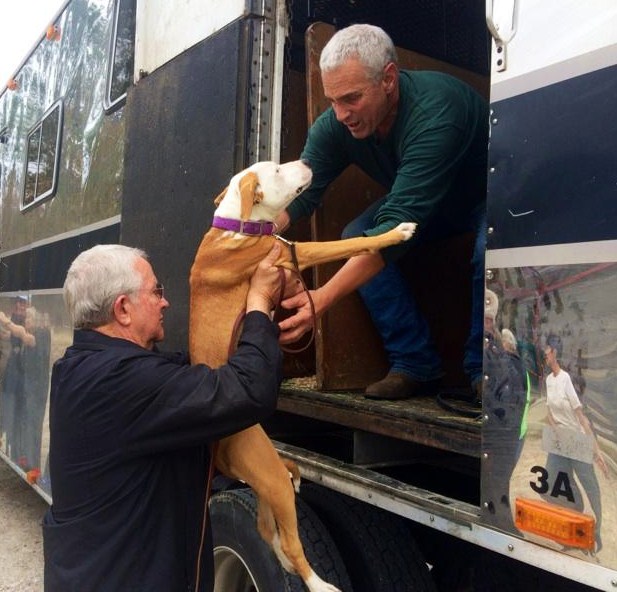
Moreover, we work with our foster families and our no-kill rescue partners to find homes for these dogs when they are not locally adopted. We don’t need to transfer the cute, fluffy dogs that happen to come our way – they find homes in a heartbeat. We choose dogs for transfers that have been on the adoption floor the longest, which are, more often than not, our Pibbles.

For those dogs that aren’t selected for transfer or can’t be transferred out of state because they are HW+, FOTAS reaches out to its rescue partners to find them homes. If they need to be treated for heartworms, FOTAS funds the first six months of treatment (via the established slow-kill method).

It breaks my heart to see so many of these noble, big-hearted animals lined up in the kennels at the Shelter, desperate for someone to give them some attention, a little love, and a home of their own.

Dogs like handsome Bryon, who wags his tail so hard, it bleeds; or Rob Roy, a gentleman pit with the heart of a lamb; or little Tiger, who is wild about children and loves to play and kiss.

Please don’t wait. These dogs have done nothing to deserve their fate. They need our help.

Their lives are in our hands.
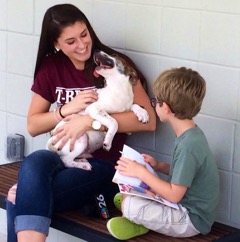
Labor of love, Part 3: You can make a difference

By Joanna D. Samson, FOTAS Vice President

Here’s what I know about you: you have a big heart and you love animals (or you wouldn’t be reading this article). You probably have pets at home – maybe a dog or cat or two or more – and those pets bring you and your family great joy and lots of laughs. You are sickened that almost 5000 abandoned and abused animals pass through the Aiken County Animal Shelter each year, and you wonder: how can this happen in this community you love and call home?

And although you are relieved that a record number of shelter animals were saved last year (almost 3000) thanks to the combined efforts of FOTAS, the County and the community, you are profoundly saddened that another 1900 had to be euthanized, either because they were irreparably damaged emotionally and/or physically by the cruelty or neglect of other humans or because we just couldn’t find them homes fast enough.

You want to do something that matters, but what?

Here are some ideas to think about.

  • You can volunteer at the shelter, where you can work with the animals or help at the desk. You can commit to any amount of time that makes sense in your life – there is no amount too small. You can maybe set aside Tuesday afternoon? Great. Only have an hour on Thursday morning? Also great. The FOTAS volunteer program is structured on blocks of time committed by people like you – just tell us what you would like to do and how much time you can reliably commit. We’ll make it happen.
  • You can foster dogs for a short period of time that have been approved for transfer to a sister no-kill agency in other parts of the country, which allows the dogs to decompress from the stress of shelter life beforehand and creates much needed space on the adoption floor for a dogpat with evie tues dec 29th from intake. Or, you can foster mama dogs and/or their puppies until they are old enough to be transferred or adopted. All you need is a safe, protected place in your home or your garage or barn to house the animals. FOTAS even pays for food and medical supplies, if necessary.
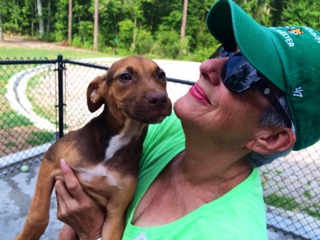
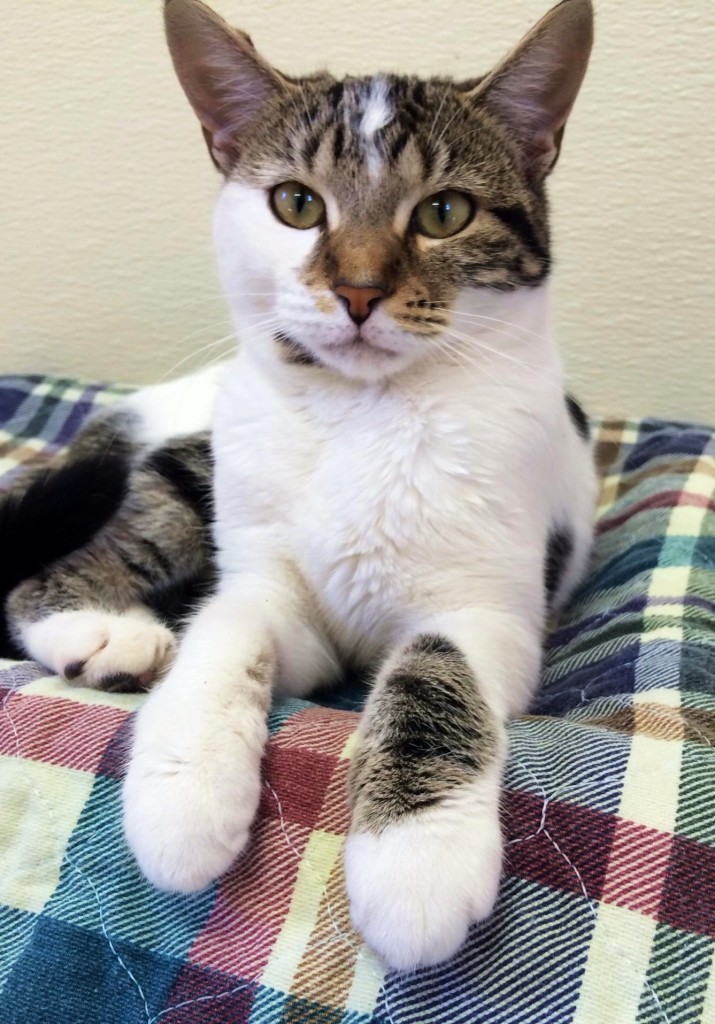
  • You can adopt your next pet from the County Shelter. That’s huge. Unlike other private no-kill shelters, the County Shelter does not have the luxury, space or resources to hold their animals for a long time: it is an open admissions shelter, required by law to take all animals. At the no-kill shelter, the animals can stay until someone comes to adopt them. At the County shelter, the animals are  at risk unless they can be transferred or adopted out quickly.
  • Or you can donate to FOTAS. We will use that money to improve the quality of life for the animals at the shelter, pay the costs associated with transfer, or attack the problem at its source through the FOTAS Fix-a-Pet program or its Lenny’s Brigade for community cats.

Contact us today at volunteer@aiken.org or at (803) 514-4313. Your help makes the difference between life and death for these unfortunate animals.

God Bless and Happy New Year.

Strictly a labor of love, part 2: Volunteering at the shelter

By Joanna Dunn Samson, Vice President of FOTAS

Caroline Simonson and Sandra Proctor walk dogs at the Aiken County Animal Shelter four times a week, as does Ellie Joos, who works with the shelter’s energetic “pibbles” and organizes FOTAS on-site programs. Karen DeCamp walks dogs every Tuesday. Jerri Wesner and Rita Tregnor walk dogs every Saturday morning. Peggy Babineau does it all: walks dogs, mans the desk and fosters dogs pending transfer. Pat Gilbert, Richard Proctor, Bill Joos, Agnes Bye, Kari and Holly Heiens, Jerri Smith, Wally and Susie Huiett, Ellen Fox, Lanni Brancato, Judy Thompson and Nanci Santos all commit their time to make certain the dogs on the adoption floor experience a little human love and attention at least once a day.

Then there are the devoted folks who man the shelter’s front desk, greet visitors and provide much needed assistance to hard-working and over-worked shelter staff: Kate Bailey, Cathy Palma, Linda Taylor, Neil Welks, Pat Hundertmark, Joyce Egge, Pat Ludwig, Paul Tallent, Bob Purdy, Melanie Oldham, Pricilla Denehy, Richard and Linda Leitner, Belinda Ebert, and Joan Locke. The day-to-day shelter work would not get done without their steadfast commitment.

These are only a few of the many FOTAS volunteers at the shelter that made it possible to save approximately 2950 animals this year: that’s more than 164% increase from 2011 and 10 times more animals saved than in the pre-FOTAS years. These volunteers are responsible and accountable. The volunteers perform duties at the shelter that are performed in private organizations by paid staff: on-site programs, off-site adoptions, fundraisers, special events, public relations, community outreach for spay/neuter programs, animal socialization, and managing the crucial foster and transfer programs, to name a few. The volunteers are the heart and soul of FOTAS.

Why do these volunteers commit themselves day after day, week after week, to a public open admissions shelter where the number of homeless animals exceeds the number that can be adopted locally or transferred to no-kill shelter partners in other parts of the country? Where public resources are strained? Where euthanasia is a profoundly sad fact of life until the day that all animals are fixed and intake numbers come down?

Our volunteers know they make a real and measurable difference in the lives of, and the outcomes for, the County’s homeless animals. It would be easy to get discouraged, but they don’t. They take the long view: they focus on the animals we save, and hands down, FOTAS and the shelter save more animals than any other organization in the County.

But above all, our FOTAS volunteers are caring, generous people who express extraordinary acts of kindness, and scientists now know what the great spiritual masters have known for centuries: that acts of kindness promote happiness and a sense of well-being.

Exercise your kindness muscles this year. Save lives and boost your happiness quotient in the process. Join FOTAS to fight the good fight until every adoptable animal finds a home. Contact us at 803-514-4313 or at volunteer@angelhartlinedesigns.com.

God bless and Happy New Year.

Their lives are in our hands.

Strictly a labor of love

By Joanna Dunn Samson, FOTAS Vice President

Volunteering at an open admissions shelter is strictly a labor of love, particularly in a place like Aiken County where intake runs consistently between 4500 – 5000 animals every year. No one with a heart can witness the endless procession of abandoned cats and dogs without being profoundly affected.

Most of these animals have never been to a veterinarian. They have never been inoculated from preventable killer diseases like distemper, rabies or parvo. Most have spent their life outdoors, in many cases with no shelter from the elements, and in worst cases tethered to a chain their entire life. They are crawling with fleas and often riddled with parasitic worms, particularly heartworms, which are deadly left untreated. The majority are malnourished and underweight, their ribs protruding through a lifeless coat and skin rubbed raw from scratching at fleas or mange mites.

Virtually all of them are unsprayed or unneutered, left to breed indiscriminately. Females with health issues produce more sickly, unwanted puppies – many of which die from lack of basic care, or worse, from being tossed out of a moving car like a crumpled paper bag.

You think I am exaggerating? Sadly, I am not. By the time most of these animals make it to the shelter, they are sick and scared and anxious and justifiably wary of humans. Many are irreparably damaged – physically, emotionally or both – by neglect and abuse. In those cases, the best thing we can do is to end their misery by humane euthanasia.

As for the rest of them, Shelter staff and volunteers do what they can with the limited resources and time available. The animals are bathed, inoculated and treated for fleas and worms. They are sheltered from the elements and fed twice a day. When they are moved from intake to the adoption floor as limited space becomes available, they are fussed over by staff and volunteers. The dogs are walked and taught basic obedience skills to make them more adoptable. Without question, the care is basic and institutional – there are far too many animals to give them the same level of attention they would get in a responsible home – but in most cases, it’s the best care they’ve ever had.

This year we expect to save +/- 2950 animals. It’s not perfect, but compare that with the days before FOTAS and the new Shelter when annual intake reached a high as 6000+ animals and only 300 were saved. Thanks to the commitment of the County and FOTAS, that’s thousands of more animals saved in the past 5-6 years.

As for the other roughly 1900 animals that won’t make it out of the shelter this year – it’s tragically unfair and outrage is the proper response, but direct your outrage appropriately: at the people who won’t spay and neuter their animals, who allow their animals to breed indiscriminately, who never provided their animals with proper medical care, and who would just as soon dump their sick, unwanted animals on the taxpayers to clean up their mess rather than do the right thing.

In the meantime, do something positive to help the County and FOTAS save more animals. Volunteer your time. Foster. Donate money and supplies. And please, please adopt from the County Shelter and bless those animals with a life of love free from hunger and fear.

Without you, they are lost. Their lives are in our hands.

Merry Christmas and God Bless.

Celebrating My Community Brigade

03 August 2014

Celebrating My Community Brigade

By Edie Hubler, FOTAS Director

Charmed by the Aiken community after a short visit here in 2005, I returned several months later to purchase a lot in Cedar Creek for my future move.  The lure of this area brought me sooner that I had expected and in 2007 Aiken became my home.  Goodbye Maryland, miss you, but I love it here.

Like many residents of Aiken, I became involved in volunteering with various organizations, but in 2011 I found a calling to get involved with FOTAS.  I helped with fundraising and chaired two highly successful events for FOTAS.   My involvement was just to be assistance to the organization, but in 2013 I joined the FOTAS Board.  Having had many pets prior to this, I thought my pet ownership days were over as I travel a lot and am also very busy here in Aiken.  Guess what — I adopted two County Shelter animals, Meg (a terrier mix, the poster “child” for several FOTAS Woofstocks) and Zeus (a shih tzu).  These two abandoned animals caught my heart, and here we are.

Many of my neighbors also support FOTAS.  Some are devoted dog socializers and go to the Shelter four days a week (one became FOTAS’ very first volunteer in 2009.)  Others help in many many other ways.  It occurred to me recently just how involved the Cedar Creek community is supporting FOTAS and volunteering at the County Shelter itself.

There are about 1200 residents in Cedar Creek (in a little over 600 homes.)  Many are retired and many still work (both full and part-time.)  Like Aiken itself, this is a very involved and giving community.  Recently I reviewed the FOTAS supporter list and was surprised that over 100 of them are Cedar Creek residents.  Not only do they go to the Shelter to walk the dogs and socialize the cats, they staff the front desk, do administrative and database tasks, chair and volunteer at special events (both on-site and off-site), participate in the short-term foster program, take photographs of the animals, help with publicity, donate towels and toys for the animals, generously donate money that helps FOTAS supplement the limited resources of the County Shelter, make peanut butter/green bean treats for the dogs, as well as issue spay/neuter vouchers for those in need.   Some residents have had parties where they asked the attendees to bring donations for FOTAS instead of hostess gifts.  The Cedar Creek Ladies Club, a group of about 100 residents, has donated large amounts of money to FOTAS — we have honored them with a bench in their name at the new Shelter which we purchased from some of the funds they have donated.

You know, I wish I knew the number of County Shelter animals that the residents of this fine community have adopted. This is a large number I’m sure — I often see them walking their dogs when I am walking mine, and enjoy their stories about how Shelter pets have enriched their lives, become their best friends and make the best pets around!

So, I am celebrating what a great community I live in and what a great community “brigade” my Cedar Creek neighbors are.  Thank you for all you do and have done for FOTAS and the County Shelter.

If you have a soft spot in your heart for our abandoned furry friends, please consider becoming a volunteer and supporter of FOTAS.  We are especially in need of dog walkers right now.  These beautiful souls can’t wait for human contact and for a daily much-needed outside break from their Shelter kennels.

Here’s a great idea!  Maybe you could rally your own neighbors and create a community brigade as well to help FOTAS and the Aiken County Animal Shelter.  This work is rewarding and you’ll make some new friends also.

Contact us at 803-514-4313 or info@FOTASAiken.org

And last, but most important — please adopt a wonderful animal from the County Shelter.  Remember, their lives are in our hands.

ANDREW      American Bulldog mix … 2 1/2 yrs old … 50 lbs … $35

HENDERSON    Domestic short hair …. 2 1/2 yrs old … 14 lbs … $17

Adopting a Healthy Heartworm Positive Dog: A Talk With the Doctor


By Joanna Dunn Samson

You’ve decided it’s time to adopt a dog. You pack up the kids and head over to the new Aiken County Animal Shelter to check out some prospects.

A volunteer introduces you to Duke, a 35-pound, black and tan border collie/shepherd cross. Duke is frisky, alert and well-behaved. He loves attention. He loves his bath. He walks quietly on a leash.

Duke’s perfect, you think, but there’s one thing that worries you.

Duke is heartworm positive (HWP).

You need not worry. Duke is a healthy dog with Stage 1 heartworm infection, which can be treated with proper care. As a result, pursuant to a new County/FOTAS initiative, Duke is eligible for adoption and FOTAS will pay for the first six months of treatment when he is adopted.

I asked Dr. Charlie Timmerman, a well-respected veterinarian in Aiken County for over 30 years and a FOTAS Board member, about heartworms and the new County/FOTAS initiative.

CT: Heartworms, which are prevalent in South Carolina, are parasites that live in the heart and lungs. Left untreated, the worms can increase in numbers and fill the heart chambers, interfering with the heart’s ability to pump blood to the body and ultimately causing congestive heart failure.

JDS: How is the disease transmitted?

CT: By mosquitos that have fed on an infected dog; the mosquito then transmits the microfilaria, or the larva, to the next dog it bites.

JDS: Does a dog bitten by an infected mosquito get sick right away?

CT: No, it takes the microfilaria 6-7 months to become an adult and move into the heart. The time for a dog to develop heartworm disease varies with every dog, and not every dog will develop heartworm disease!!! That’s why early diagnosis and treatment is so important.

JDS: How can you tell if a dog is infected?

CT: Through a blood test that checks for the presence of adult worms. If it’s positive, then you do a second test to determine if there is microfilaria in the blood stream. Some dogs only have adult worms and no microfilaria.

A dog that tests positive for infection, who is otherwise healthy and shows no clinical signs of disease, could be in the very early stages of infection. They are as healthy as any of the other adoptable dogs at the County shelter.

JDS: How do you treat early-stage heartworm infection?

CT: We endorse the “slow-kill” method of treatment, which is more affordable and easier for the dog than the “fast-kill” method.

First we administer antibiotics, which weakens the adult worms and makes them easier to kill. Then the dogs are put on Heartguard, a monthly preventative, which keeps them from getting more heartworms and “slowly kills” the worms and any microfilaria.

JDS: If someone adopts a healthy HWP dog from the County, does FOTAS help pay for the treatment?

CT: Yes.  FOTAS issues a voucher for the doxycycline and six months of Heartguard, which is accepted by six participating veterinarians in the County.

It’s a great deal, because every dog in South Carolina should be on monthly heartworm prevention anyway, so it’s one less expense for the owner.

This is all good news. Like Duke, there are many loving, healthy dogs at the County Shelter that just happen to test positive for heartworms.

Thru August 9th, if you adopt a HWP dog, the adoption fee is reduced to $35 and you get the first 6 months of Heartguard free.

That’s a win-win for everyone.

So come on, why don’t you take Duke home today?

Here are the Shelter’s  received, saved and euthanasia stats for the month of June 2014.

DOGS                   CATS                        TOTAL

Received                                                      300                        268                          568

Re-Homed (adopted/transferred)                   65                          80 (best ever)        215

Euthanized                                                     43                        292                          435


DUKE — Male, shepherd/collie mix — 1.5 years old —  $35


Rosa – Female, calico — 4 yrs old — 7.5 lbs — $17