

Category Archives: FOTAS

Now is the time to adopt a feline: $10 special on black and tuxedo cats

By Bob Gordon, FOTAS Director of Communications

If you are thinking about adding a cat or kitten to your home, now is the time to do it. Not only is the shelter filled to the brim with felines, but the adoption fee for all spay/neutered black and tuxedo (black and white) cats this month is just $10. That includes all vaccinations, spay/neuter surgery and microchip!

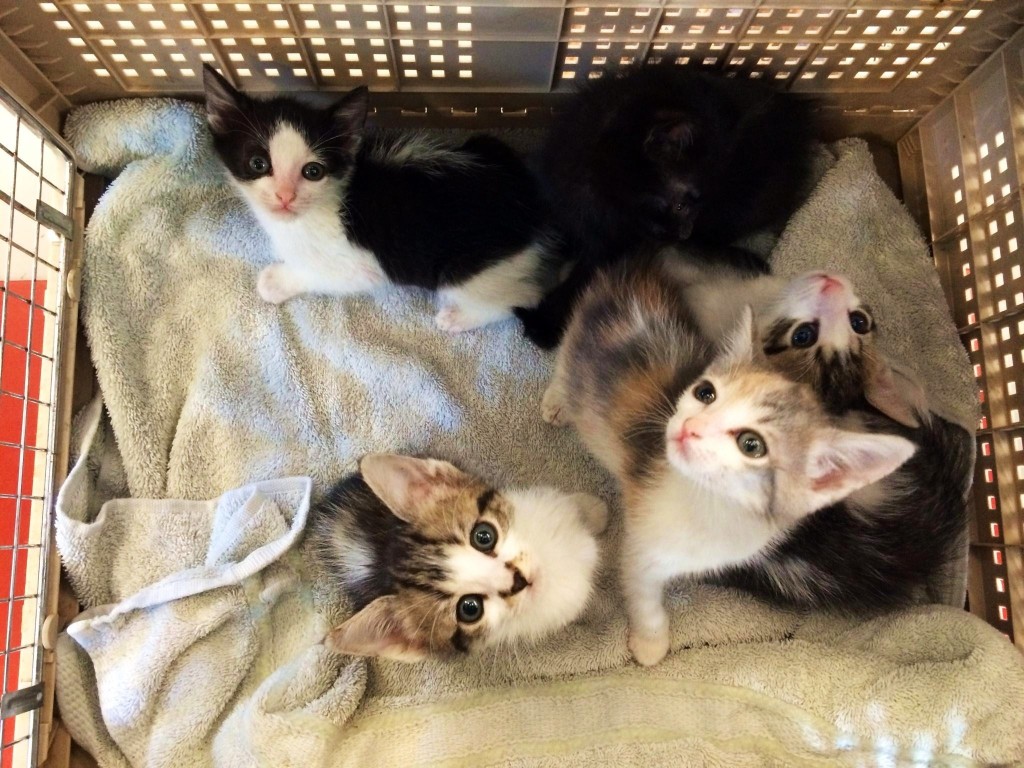
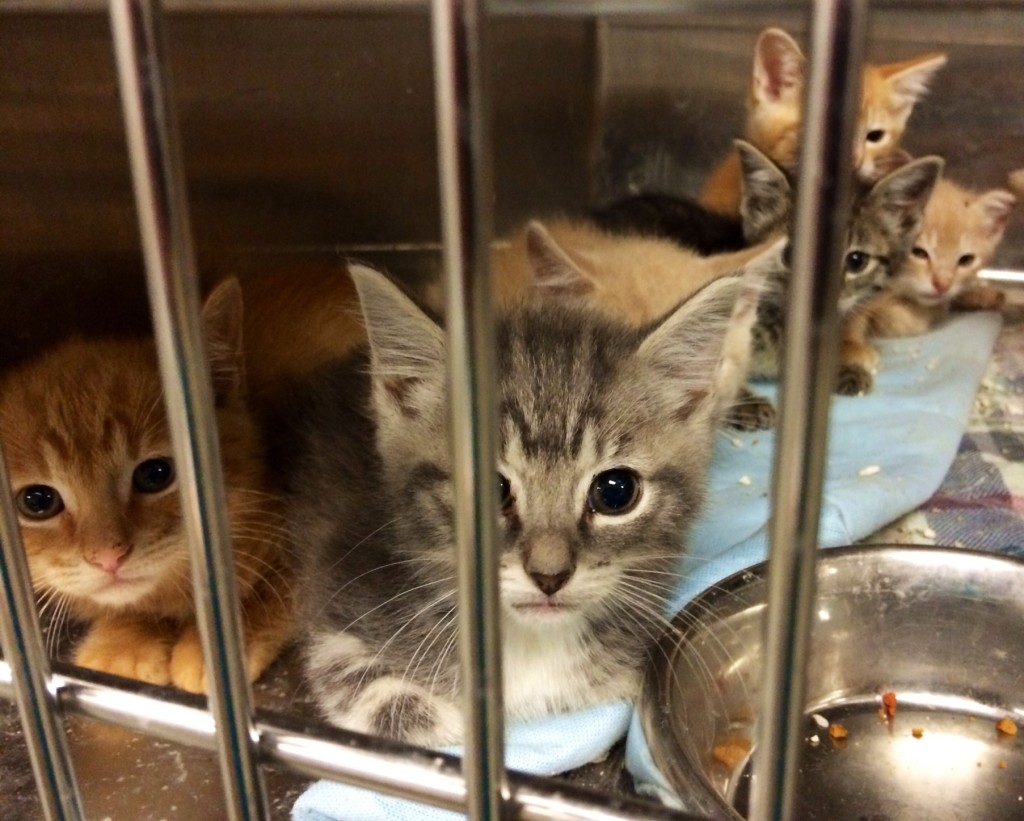
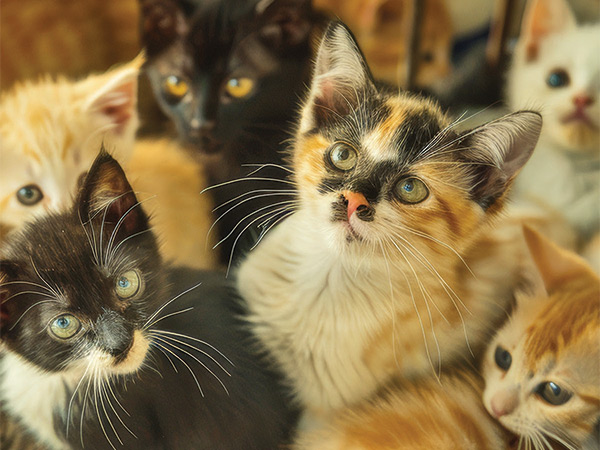
Twenty-one kittens, many of which are black or tuxedos, are playing or napping in the lobby of the Aiken County Animal Shelter (ACAS), waiting to be adopted and taken to their forever homes. Just outside, in the cat adoption facility, are 19 adult cats also hoping to be adopted. We also have eight shelter cats at the PetSmart store in Aiken that need homes, plus many more housed at the intake section of the shelter, eager to get their chance on the adoption floor.

You might be wondering, “Why are the black and tuxedo cats singled out for this month’s $10 special adoption fee?” Well, there are two reasons we focused on them. First, we currently have a lot of cats and kittens sporting these coat colors; and second, black cats are often overlooked by adopters. In fact, black felines are only half as likely to be adopted as cats of other colors.

Apparently, despite the fact that we are living in the 21st century, this sad statistic exists because people still associate black cats with bad luck. This myth dates back to the Middle Ages when black cats were associated with witchcraft.  In truth, many cultures associate black felines with virtue and nobility. Black cats were worshipped in ancient Egypt and are considered lucky in Japan, England, Scotland, Italy and France.

Need more evidence that black cats are awesome and far from harbingers of ill luck? Come to the Shelter at 333 Wire Road and visit these regal animals to see for yourself.

Here are just some of the black and tuxedo cats and kittens (most babes are about 2 months old) available for adoption:

Granger: male, short hair, black kitten – loves to be held, purr monster
Iago: male, short hair, black cat – large, 8 years old, velvet fur, regal
Danny & Ernie: brothers, short hair, black kittens – tiny, always wrestling
Burt & Carol: siblings, long hair, black kittens – cuddly fur balls, purring machines
Nin: female, short hair, black cat – petite, 3 years old, gorgeous face
Adelaide: female, long hair, black kitten – white undercoat, sweet and cuddly

Ricky and Turner: brothers, classic tuxedo kittens – rambunctious, climbers
Sweet Pea: female, coat has more white than black – tiny, 2 years old, loves people

As noted, the shelter is at capacity and more strays and homeless animals are coming in all the time. If you are looking for a cat (or dog), there is one looking for you at the County Shelter. Please go there today and meet your new furry, loving companion and give them a good home.

Their lives are in our hands…
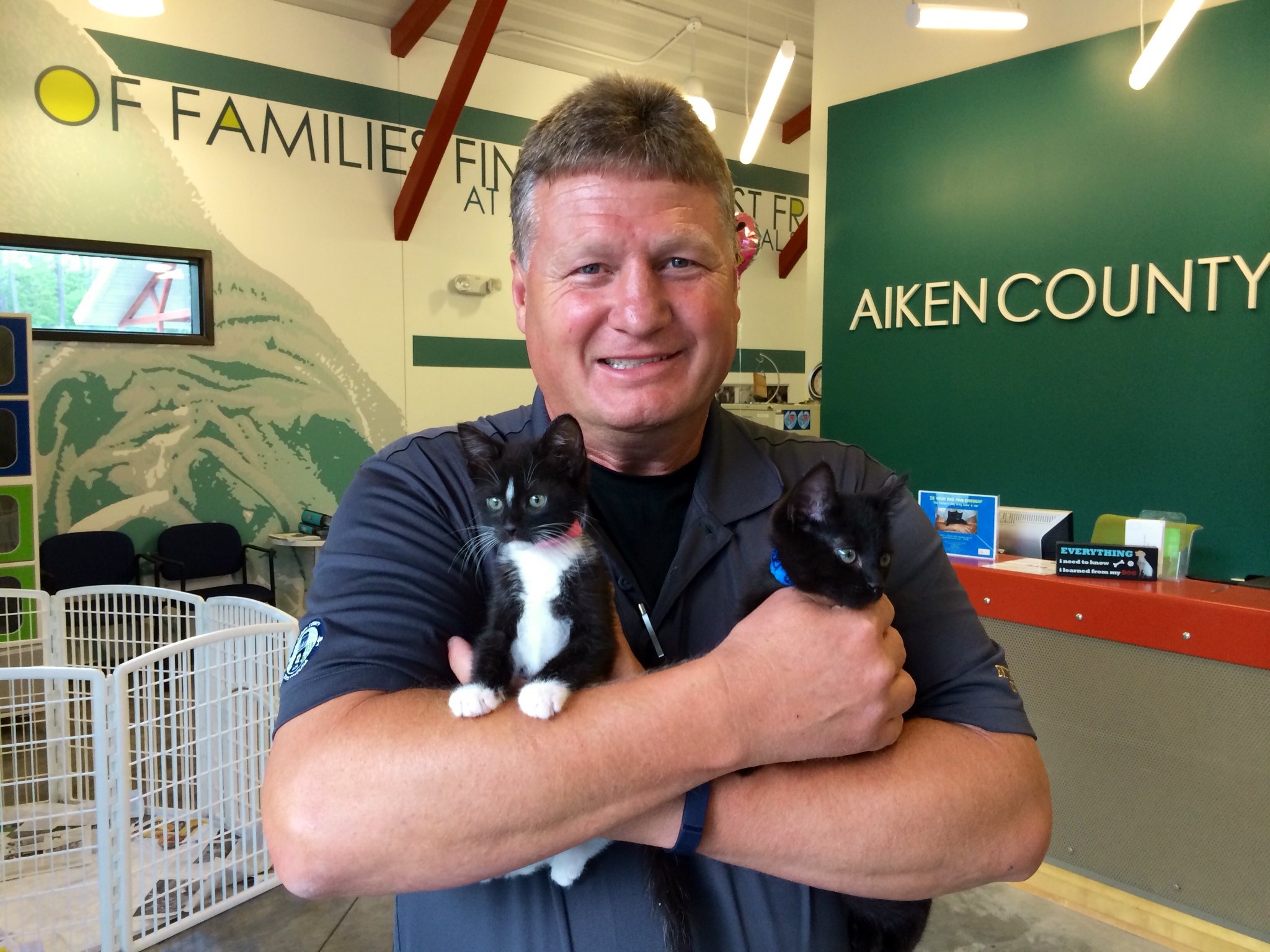
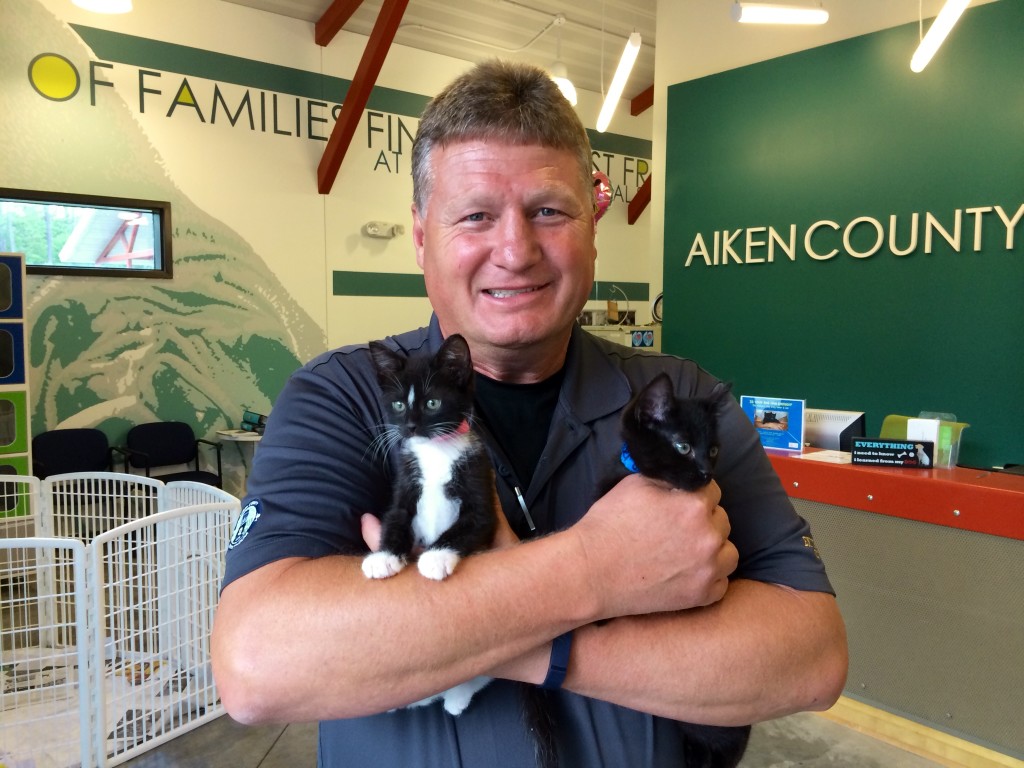
Bobby Arthurs, Aiken County Animal Shelter manager, holds Ricky and Turner


Two hours a week – you can make a difference at the County Shelter

I hate this time of year. While the rest of Aiken settles into the steamy, sleepy tempo of summer, FOTAS volunteers and County staff shift into hyper-drive at the Aiken County Animal Shelter to care for the inevitable onslaught of puppies, kittens and owner-surrender animals that crowd the intake wing and stress county resources to alarming levels.

Every summer, the County Shelter is filled to capacity, and this summer promises to be no exception. The Cat Adoption House is packed. Every dog kennel is occupied. Yet day after day, more homeless dogs and cats are picked up or surrendered to the shelter.

“As I walked through the aisles last Saturday,” says Jennifer Miller, President of FOTAS, “every single dog looked up at me with longing and hope – desperate for some human love and attention, desperate to be out of the stressful kennel environment, desperate for a home of their own. It breaks my heart because it never ends.”

And although we at FOTAS work like crazy – through print, television and social media, through our daily efforts to make the animals more adoptable, through our transfer programs – to find these animal homes, we can’t keep up. Even though last week was a record week for adoptions and transfers, 58 to be exact, the Shelter took in even more animals. The crisis continues, week after week, month after month throughout the summer and into the fall.

And here’s the thing: at the very time intake is so high, our volunteer ranks are thin because of vacation schedules and family commitments. That means that even though our cherished core volunteers and fosters are working non-stop, there are just not enough to give all of those dogs and cats the care and attention they need and deserve.

We need more people! I know you love animals or you probably wouldn’t be reading this article. So, help us out – join Team FOTAS. Volunteer at the Shelter, one or two hours a week, that’s all we ask.

One or two hours a week: you can walk and love up the dogs, play with the puppies, cuddle with the cats in the Cat Adoption House, help the handlers with dog playgroup sessions, greet visitors and potential adopters in the air conditioned comfort of the Shelter’s cheerful front lobby – there are so many options.

Just one or two hours, that’s it.

Please do not walk away from those unfortunate animals longing for love and attention. They ended up at the Shelter through no fault of their own, but it is our responsibility, as a community, to care for them.

Call the FOTAS Hotline 803-514-4313, go to www.fotasaiken.org , or email info@angelhartlinedesigns.com to help volunteer, foster, or donate.

Their lives are in our hands.


Ivy and Janson are waiting for someone to take them for a walk.

County Shelter animals give comfort and aid to U.S. Veterans

By Bob Gordon, FOTAS Communications Director

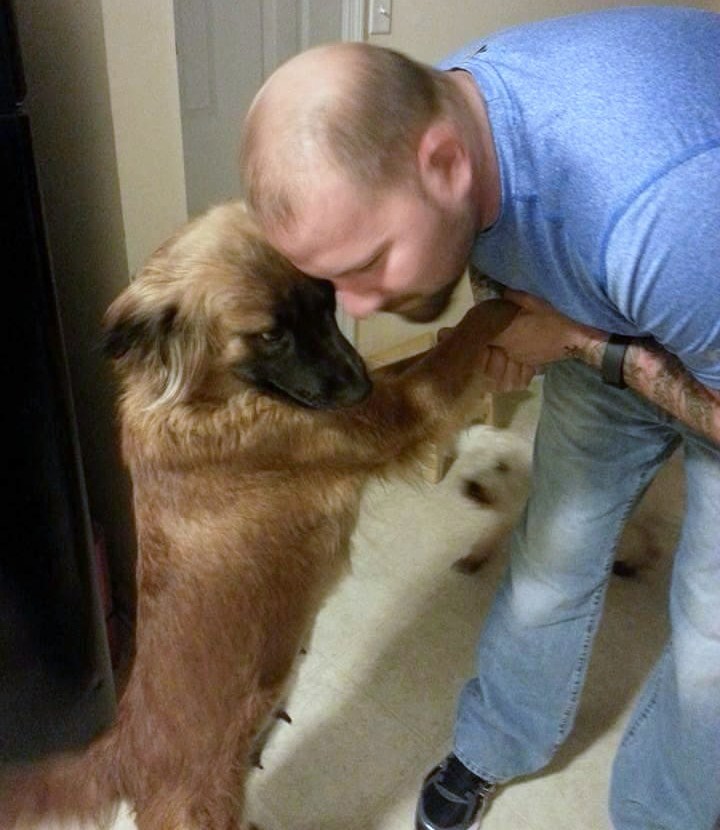
“There is a special bond that dogs and humans share,” says William Collins, a local U.S. veteran who served overseas.  “A dog can make a huge difference in a person’s life.”

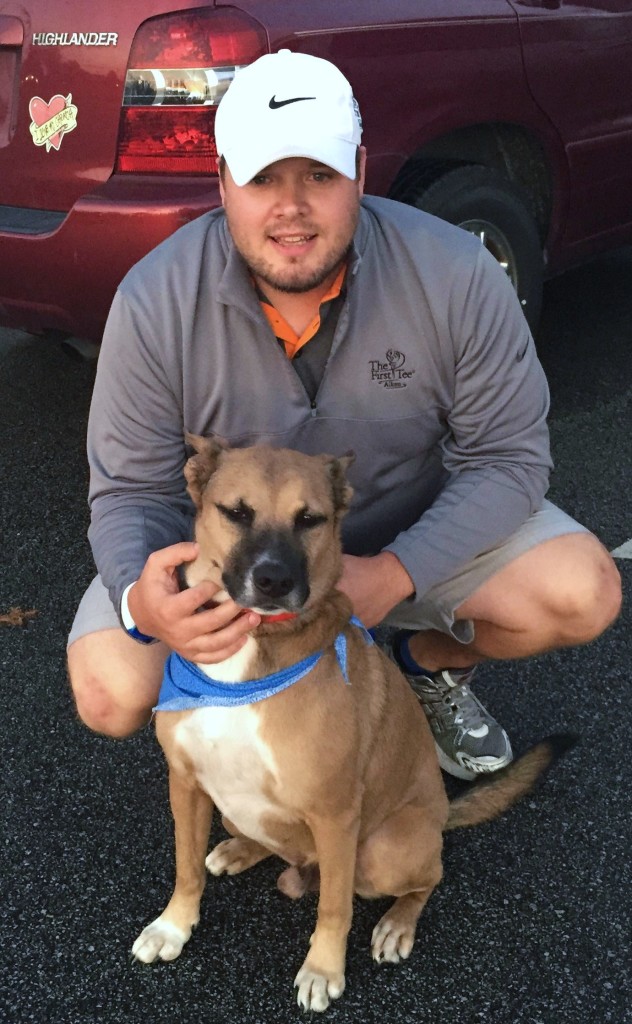
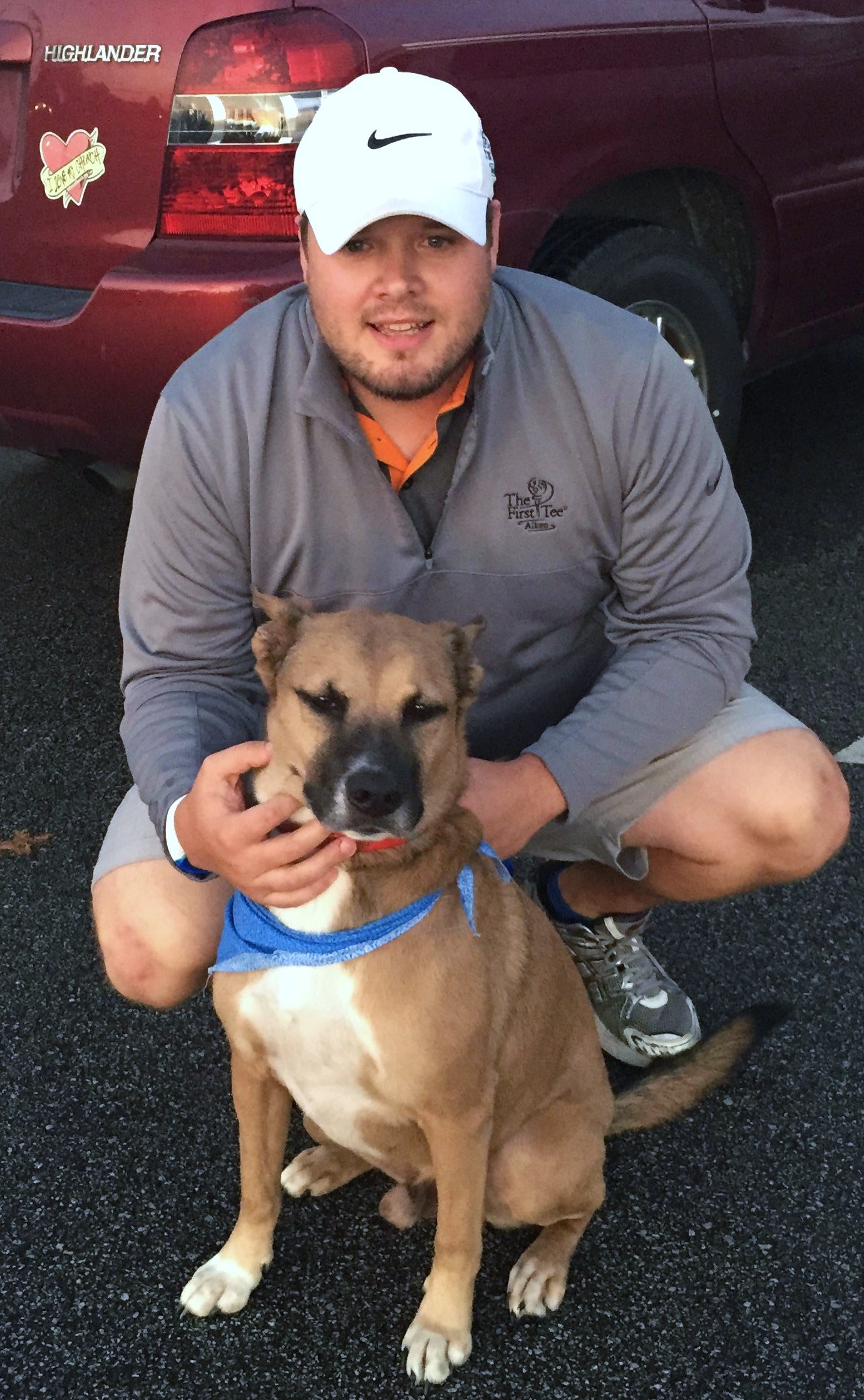
The dog that changed William’s life is a four-year-old, shepherd mix named Buddy that he adopted from the Aiken County Animal Shelter (ACAS). The calm canine goes everywhere with William and helps him to cope with the long-term, after effects of war.

“Buddy has changed my life for the better,” William says.  “He has allowed me to live a healthier, more functional and fuller life.  Buddy is a safe place for me and I depend on him to help me with some of the difficulties and challenges I face on a daily basis.”

Because it recognizes that servicemen and women can benefit from the companionship of a shelter cat or dog, FOTAS has decided to make its half-price adoption discount for U.S. veterans and active U.S. military personnel a year round program. FOTAS sponsors half the adoption fee, so dogs are $35 and cats just $17.50. The discount was launched on Veteran’s Day of last year and due to the positive response, FOTAS decided to make it a permanent offer.

It is a small way for us to thank the men and women who serve our country.

FOTAS also helps find service dogs for veterans suffering from Post-Traumatic Stress Disorder (PTSD) and other health issues that can result from military service. Working with dog training specialists like Veterans K9 Solutions Inc. in Augusta, FOTAS has provided service dogs to about 15 veterans over the past few years.

“These people [veterans] are my heroes, and any help they can get from FOTAS and the shelter is very much appreciated” says Jerry Lyda, co-owner and founder of Veterans K9 Solutions in Augusta. Jerry is a veteran himself and started his nonprofit training organization after he saw his buddies come back from Vietnam with Post-Traumatic Stress Disorder (PTSD) and other war-related ailments. He focused on training canines from shelters to assist veterans “because it saves two lives – the person and the dog.”

Luckily, most veterans don’t suffer from PTSD or other war-related illnesses. They just come to the Shelter to add a furry companion to their home. But for those that do, the dogs can be a godsend.

Joe Shaia, another local war veteran, adopted Laila, a two-year-old, Shepherd/Retriever mix, from the County Shelter two months ago. Joe was stationed in Afghanistan and came back with severe PTSD. But since training and spending time with Laila, he’s finding it easier to cope with his illness. Joe has difficulty being in areas with a lot of people, but Laila acts as a buffer and always has his back.

“She means a lot to me,” Joe says. “She helps me get out in the public and out of my safe zone and gives me something positive to focus on.”

For more information about the U.S. Military Services/Veteran Half-Price Adoption Program at the ACAS, please go to www.fotasaiken.

Their lives are in our hands.

William Collins with his service dog Buddy

Laila goes everywhere with Veteran Joe Shaia


The County Shelter is full and needs your help!

By Bob Gordon, FOTAS Communications Director

It’s a rainy Tuesday morning and although the Shelter opened its doors less than an hour ago, the staff has already taken in two litters of homeless kittens. A Siamese mix is weaning three of the kittens and a Calico is cuddled with six babies, two of them breathing heavily and needing medical attention.

“I didn’t know what to do,” says the elderly Aiken woman who brought in the Siamese mom and her brood. “I’d love to keep them but I already have four cats and two dogs at the house.”

An hour later, a woman and her young son bring in two Spaniel mix dogs that they say wandered onto their farm. Still later, an elderly man arrives with a chubby, brown Tabby in a wire cage. Then, just before noon, another man surrenders six kittens. He says they were born under his porch but the momma cat was hit by a car and killed.

This seemingly endless parade of homeless animals is not unusual these days. The Shelter is at full capacity and the combination of warmer weather and longer daylight hours means more animals are breeding. Springtime also signals the arrival of “kitten season”, a peak time of feline births that will continue through September.

But while the extremely high intake of animals makes for challenging times at the Shelter, there are many ways you can help, including:

  • Take advantage of our May half-price special and adopt a pet. This month, all cats and dogs that have already been spay/neutered are just half-price at the shelter. The adoption fee for cats (normally $35) is just $17.50 and for dogs (normally $75) is only $35!
  • Volunteer at the shelter. We need all sorts of help, especially dog walkers and people to show the animals to visitors. We have cats and kittens that need cuddling and care; dogs that need to be walked, washed and shown to visitors; and puppies that need to be socialized and loved. Come to 333 Wire Road and fill out an application.
  • Foster shelter animals at your home. To get homeless animals prepared for adoption and open up space on the adoption floor, we are seeking fosters to temporarily take in animals. Come to the shelter and fill out an application, and we’ll get you started on this rewarding journey.
  • Get your dogs and cats on heartworm preventative treatment ASAP. Way too many dogs that are picked up or surrendered at the shelter test positive for heartworms. Please get your pets on a year-round preventative right away. Heartworms is a mosquito-borne condition and the buzzing blood suckers are already out and about. Consult your veterinarian for which preventative best suits your pet.

And, of course, be sure to spay/neuter your pets. This is where the overpopulation problem starts. Typically, dogs and cats are mature and efficient breeding machines at just four months of age. Both FOTAS and the County offer financial assistance to qualified pet owners for this surgery – including a voucher program, FOTAS Fix-a-Pet and a TNR (trap, neuter, release) plan. Getting your pet fixed should be a top priority. In fact, it is your duty as a good citizen of Aiken County.

Their lives are in our hands.

For more information, please go to www.fotasaiken. You can also call (803) 514-4313 or send an email to volunteer@angelhartlinedesigns.com.

Kitten Fosters Needed to Handle Flood of Felines

By Bob Gordon, FOTAS Communications Director

Kitten season is here.

During the period from spring to early fall, an explosion of newborn kittens occurs across the country, and Aiken County is no exception. Currently, an average of two to three kittens a day are being dropped off at the Aiken County Animal Shelter (ACAS) and that rate is only going to increase in coming months.

Kittens are cute, fluffy and impossible not to love. But they also are some of the most vulnerable and at-risk animals in our shelter because they require so much time and special attention. This is especially true if their mother is no longer around to wean them.

That’s why the ACAS and FOTAS are urgently seeking volunteers to foster these baby felines.

The shelter needs people to take home and care for kittens until they are old enough to be adopted. This includes spending time with the tiny babes to help socialize and prepare them for their ultimate forever home. Although it can be a lot of work, fostering is also a rewarding experience. These volunteers are saving lives and helping kittens find families.

“To hold these tiny creatures in your hands and experience them responding to kindness having had little to no human contact is amazing,” said Cindy Paulson, one of the shelter’s kitten foster volunteers. “And looking down at them with their little alien-like ‘ET’ eyes so full of trust and wonder makes me feel like in the scheme of life, with all its craziness, I am doing just a little something to make a difference.”

FOTAS and the shelter not only provide fosters with food and other supplies; they are always available to provide guidance and support.

“FOTAS is there right by my side helping me, and they are sincerely as involved with each little kitten as I am,” Cindy said. “I am not alone in this and they make me feel confident with how to properly care for the kittens.”

Becoming a kitten foster is simple. Just come to the shelter at 333 Wire Road in Aiken and fill out a foster application. After your form is received, you will be contacted for a site evaluation, just to assure that the animal will be in a safe environment. Once the site evaluation is completed and you are approved, FOTAS will get you started.

“The reasons to foster kittens are many,” said Muf Fuller, another kitten foster mom. “They make you smile when you are greeted in the morning with multitudes of mini mews; laugh when they tumble and pounce on each other; and sigh when they nestle with each other as they sleep. But the most rewarding part is when you receive notice that a family has decided to adopt one or more of these little bundles of energy and joy.”

For more information about fostering kittens and other shelter animals, please call (803) 514-4313 or send an email to volunteer@angelhartlinedesigns.com.

Their lives are in our hands.

Ox-a big black dog with a big soft heart

By Joanna D. Samson, FOTAS Vice President

His name is Ox, well, because he is big as an ox. He has a big, sleek muscular body; a great big ol’ head; and a big twinkle in his big golden eyes. When he’s happy (which is just about all the time) he has a big goofy smile with a big goofy tongue that hangs out of the side of his mouth.

Our buddy Ox does everything in a big way. He waits patiently (okay, maybe “patiently” is stretching it a teeny bit) for his walk and his time in the play yard, where he tears around in a fit of joy, romping with his friends, checking in with the handler in the yard for a quick scratch behind the ears, chasing his best pal Russell at a speed that defies his 60 pounds of muscle, stopping for a little splash in the pool, and doing his canine duty to greet newcomers to the yard with a sniff, a lick and a mad wiggle that says “No worries here, friend, just lots and lots of fun!”

You see, Ox has a big presence and an even bigger personality – he exudes good will from every pore. Yet Ox, like so many of his brethren at the Aiken County Animal Shelter, has been betrayed by the human race. Ox was dumped by his owner in a rural area east of Aiken. He spent his days roaming the streets and scrounging for food. Whenever a car passed, Ox would perk up and run to the road, tail wagging frantically, like he was thinking “Maybe it’s my human! I knew they’d come back for me.”

But of course, they didn’t. A kind local family took him in, had him fixed through FOTAS Fix-a-Pet, and tried to find him a home. They were unable to do so, and eventually they surrendered Ox to the County Shelter with a heavy heart.

An examination by the Shelter veterinarian, Dr. Lisa Levy, revealed that Ox is heartworm positive. But he was sweet and willing and otherwise healthy, so FOTAS paid for his heartworm treatment. He was moved to the adoption floor the same week that FOTAS and the Shelter implemented canine play groups in the yard as a way to socialize the dogs, allow them to blow off some steam and relieve the stress of confinement.

Ox’s transformation in play group has been nothing short of amazing. In two short weeks, he has gone from a dog climbing out of his skin with desperate, pent-up energy to a happy, affectionate dog who plays all morning with robust abandonment and then trots calmly back to his kennel for a nap.

Ox needs a home. This 2 year-old bundle of love with the big personality and the big smile has an even bigger heart. He needs someone to love and someplace to play. He’s great with kids and other dogs.

Please don’t wait – claim our big boy for your own. Maybe you can be that person in the car Ox has been waiting for so long.

His life is in our hands.

1


IMG_4442


Above:  Ox, Ellie Joos, the FOTAS On-Site Events Coordinator, and Emily Heath take a break in the play yard.

FOTAS volunteers make a difference for the County’s homeless animals

By Joanna D. Samson, FOTAS Vice-President

On any given day at the Aiken County Animal Shelter, FOTAS volunteers greet visitors, answer the phone, assist the County Adoption Coordinators, and coordinate on-site programs such as the Dog Ears Reading Program, birthday parties, yard sales or special events such as the Woofstock Dog, Cat & Music Festival (to be held in the fall of this year.)

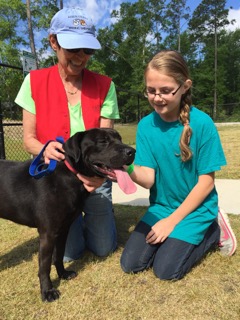
FOTAS volunteers also work with the animals every day. Some cuddle and visit with the cats and kittens. Some walk the dogs on the trails around the property, often stopping by the lobby to hang out and hobnob with other volunteers and visitors. Some walk the dogs that have just had surgery. Some wash and groom dogs, while others play with the puppies in the segregated puppy pen.

In the newest program at the Shelter, FOTAS volunteers create and manage play groups in the yard consisting of multiple dogs on the adoption floor, giving them a much needed opportunity to socialize with their own kind and blow off some steam.

Volunteers are the lifeblood of FOTAS – through their and the County’s efforts over the past 7 years, thousands of animals have been saved and the euthanasia rate at the Shelter has dropped from 95% to 30%, an extraordinary accomplishment by any measure.

Is it perfect? No.

Can it be better? Yes, but until everyone in the county spays and neuters their cats, and the shockingly high intake numbers at the shelter come down, we need more people like you to commit time and resources to the 4,700 abandoned, homeless, abused and neglected animals that pass through the Shelter doors every year. We need such dedication from the community just to sustain this level of progress, much less build on it.

The Shelter and FOTAS particularly need more help in the summer months, when intake at the Shelter skyrockets and our volunteers take much needed time off to vacation with their family or beat the heat.

If you’ve ever thought about volunteering to help animals, now is the time. Perhaps you and one of your older children could volunteer together. Pick a time that works for you during operating hours at the Shelter, and we’ll make it work.

Tell us what interests you. Dog care and handling? Cats? Working at the front desk with other volunteers to greet the public? Short-term or long-term fostering? Fostering is a great way for your family to care for a dog or puppies without the commitment of owning a pet. There are so many possibilities, and the work you do with and for the animals makes an enormous difference in the lives of these unfortunate souls.

Don’t wait – call the FOTAS Hotline at (803) 514-4313, or email us at info@angelhartlinedesigns.com.

Their lives are in our hands.


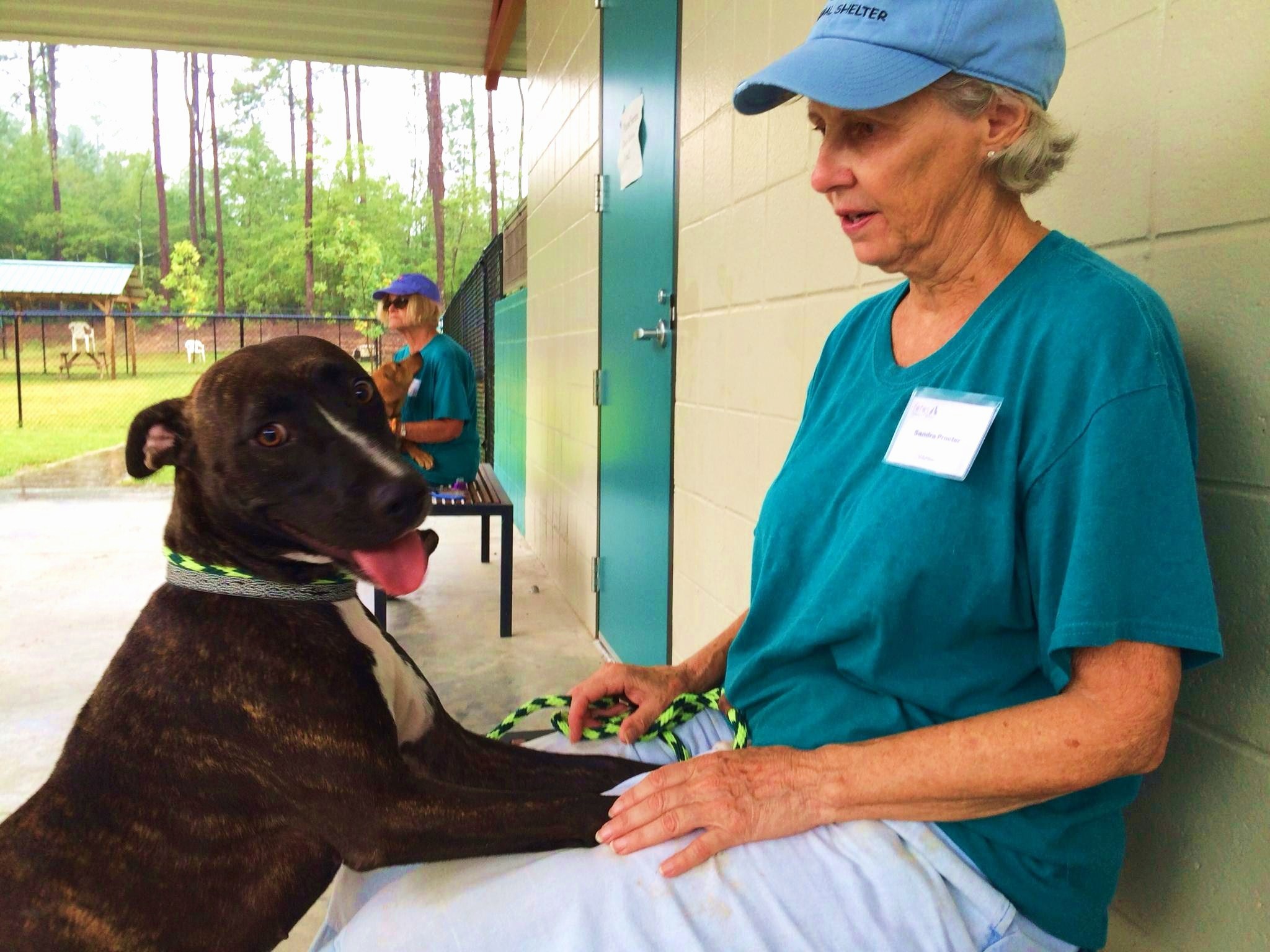
Judy with Sandra July 24 2015 ref

Above:  FOTAS Volunteer Sandra Procter comforts Judy, a sweet shelter dog.

10404387_775575675905680_2097047779266901543_n


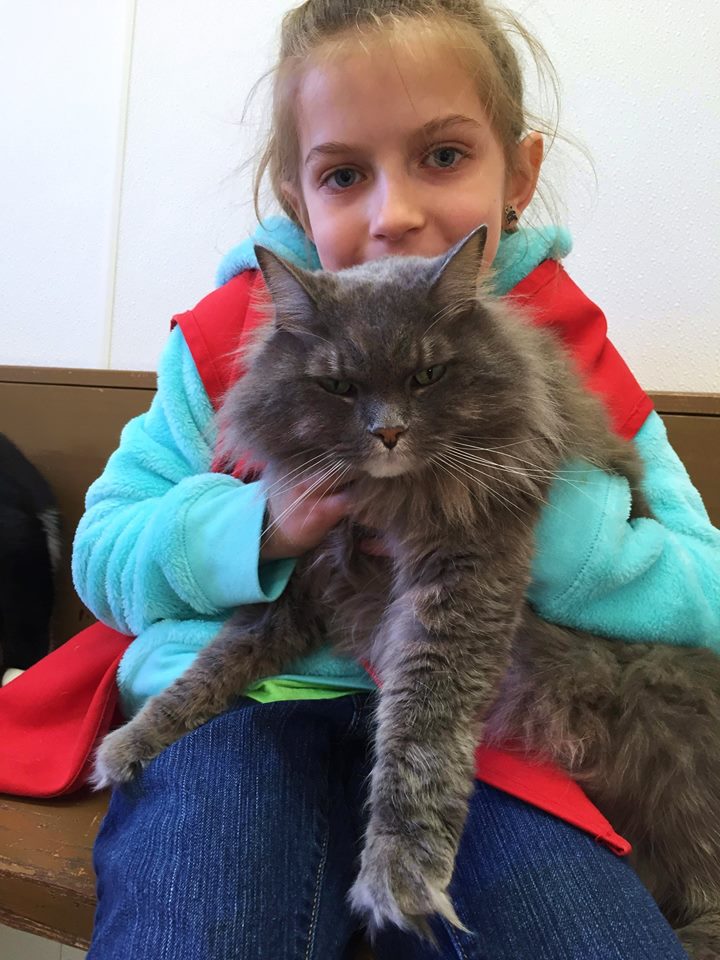
Above:  Young FOTAS Volunteer Holly Heiens with Munchkin the cat.

Play Groups increase quality of life for Aiken County Shelter dogs

By Joanna D. Samson, FOTAS Vice President

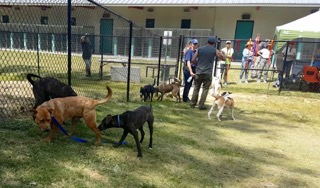
It’s 9:15 in the morning at the Aiken County Animal Shelter, and two dogs are in the play yard: a female, yellow lab cross named Cheyenne and a young, lanky brindle dog named Hawkeye. Cheyenne and Hawkeye were identified the day before as helper dogs for the morning’s play session based on their canine social manners and affability. Two FOTAS volunteers, Caroline Simonson and Darling Rios, are the in-yard handlers in charge of the morning’s play session. In the background, Ali Waszmer, Director of Program Development and Lead Trainer, and Kodi Sadler, Lead Trainer, from Dogs Playing for Life, a non-profit organization that teaches shelters how to create and manage play sessions to improve the quality of life for its canine residents, stand by to guide Caroline and Darling through the process.

And so it begins. Ali or Kodi refer to their notes from the previous day’s play assessments and begin calling for specific dogs, which are retrieved by a volunteer runner and brought to the gate. Over the next two hours, dogs are moved in and out of the yard or directed to a smaller, adjacent yard depending on their play style and physical condition. At any given time, as many as 15-18 dogs romp, frolic, chase each other around the yard, or watch contentedly from the sidelines.

As the session winds down, Darling, who is now the lead handler in the yard, begins calling for runners to take remaining dogs back to their kennels. By noon, close to 40 dogs–virtually every available dog from the adoption floor and selected dogs from the intake wing–have had an opportunity to play and blow off steam in the yard. An almost eerie silence settles over the shelter as the dogs, happy and relaxed, settle in for well-deserved naps.

“Shelter life is stressful enough for the dogs,” says Ellie Joos, the FOTAS on-site event coordinator who organized the 4-day clinic with Dogs Playing for Life. “They are social animals, yet for a whole host of safety and practical reasons they are kenneled separately, and over time, their energy and frustration levels rise. Play groups provide an effective outlet for the dogs to socialize in a controlled setting. Four to six volunteers can satiate every dog’s physical and emotional needs in one or two short sessions in a way that walking dogs individually around the property just can’t do.” She shakes her head and laughs. “The transformation is nothing short of amazing!”

And here’s the best part: watching a dog in play group gives staff and FOTAS more information about the dog’s behavior, which can potentially broaden that’s dog’s adoption prospects. Plus, meeting a happy, relaxed dog for the first time is a far better experience than meeting a dog that is frantic from lack of rigorous exercise and limited social interaction.

It’s a win-win situation for everyone. How cool is that?

For more information on the extraordinary Dogs Playing for Life program, go to DogsPlayingforLife.org. For more information on, or to participate in, the FOTAS play group training at the County Shelter, contact FOTAS at info@FotasAiken.org.

Their lives are in our hands.

PlayGroups1


photo above:
Kathy Jacobs, FOTAS Program Coordinator, and Kodi Sadler of Dogs Playing for Life manage a play session at the Aiken County Animal Shelter while other volunteers and spectators watch on.

Trap/Neuter/Return: Best Solution for Fixing Community Cat Issues

By Bob Gordon, FOTAS Director of Communications With spring kitten season already upon us, now is a good time to become better aware of the County’s Trap/Neuter/Return (TNR) feral or community cat program. Two months ago, the Aiken County Council County passed a return to field resolution that made TNR a best management practice. TNR is considered to be the most humane and effective way of controlling feral cat population growth. Using this method, all the feral cats in a colony are trapped, neutered/spayed and then returned to their territory, where they continue to thrive on their own or sometimes caretakers provide them with food and shelter. Young kittens that can still be socialized, as well as friendly adults, are placed in foster care and eventually adopted out to good homes.
“Euthanizing all community feral cats does not reduce the cat population and instead just creates a vacuum effect in which more cats come into the colony and take the place of those felines that are gone,” said Aiken County Animal Shelter (ACAS) Manager Bobby Arthurs. “So, now the county is following the steps of hundreds of other communities that have reduced their homeless cat population through TNR.”
TNR is offered by clinics and veterinarians throughout the state and country. Bobby said the ACAS veterinary staff only has the capacity to do a strictly limited amount of surgeries per day, so if you plan to bring in a feral cat to be spayed/neutered, please call ahead to make an appointment. Statistics show that an unaltered male cat and an unaltered female cat and their offspring are capable of producing 781,250 kittens in a seven-year period. But this overpopulation can be avoided by trapping and immediately neutering and vaccinating community cats against rabies. Once fixed, the free-roaming community cats can be humanely returned to the field instead of being euthanized at the shelter. FOTAS, through its fund raising efforts and Fix-a-Pet Program, has paid for 803 community cats’ spay/neuter surgeries. It has also provided traps for people to catch community cats through its Fix-a-Pet Program (originally named Lenny’s Brigade). Kathy Bissell, who led the pilot program in 2012, says that when you remove the cats’ reproduction drive and females no longer have the stress from pregnancy, they do well living in a cat colony.
“The nuisance behavior often associated with feral cats is dramatically reduced through TNR, including aggressive behavior, the yowling and fighting that comes with mating activity and the odor of unneutered males spraying to mark their territory,” she said. The mantra of TNR advocates is, ‘No litters, no odors and no noise.’”
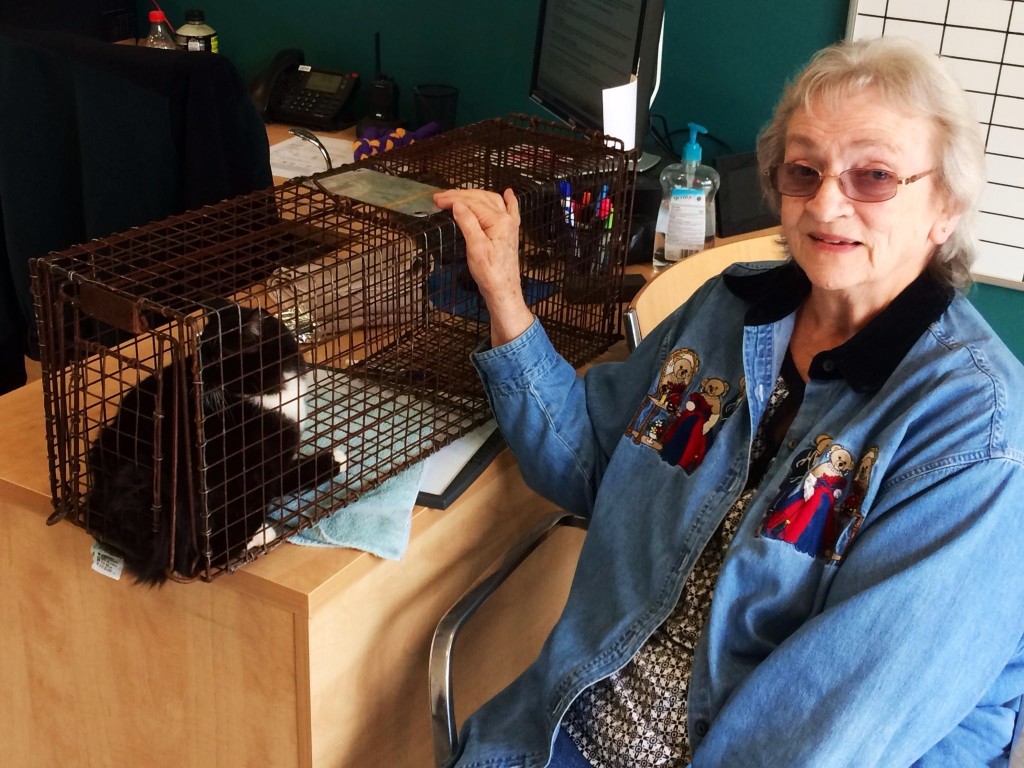
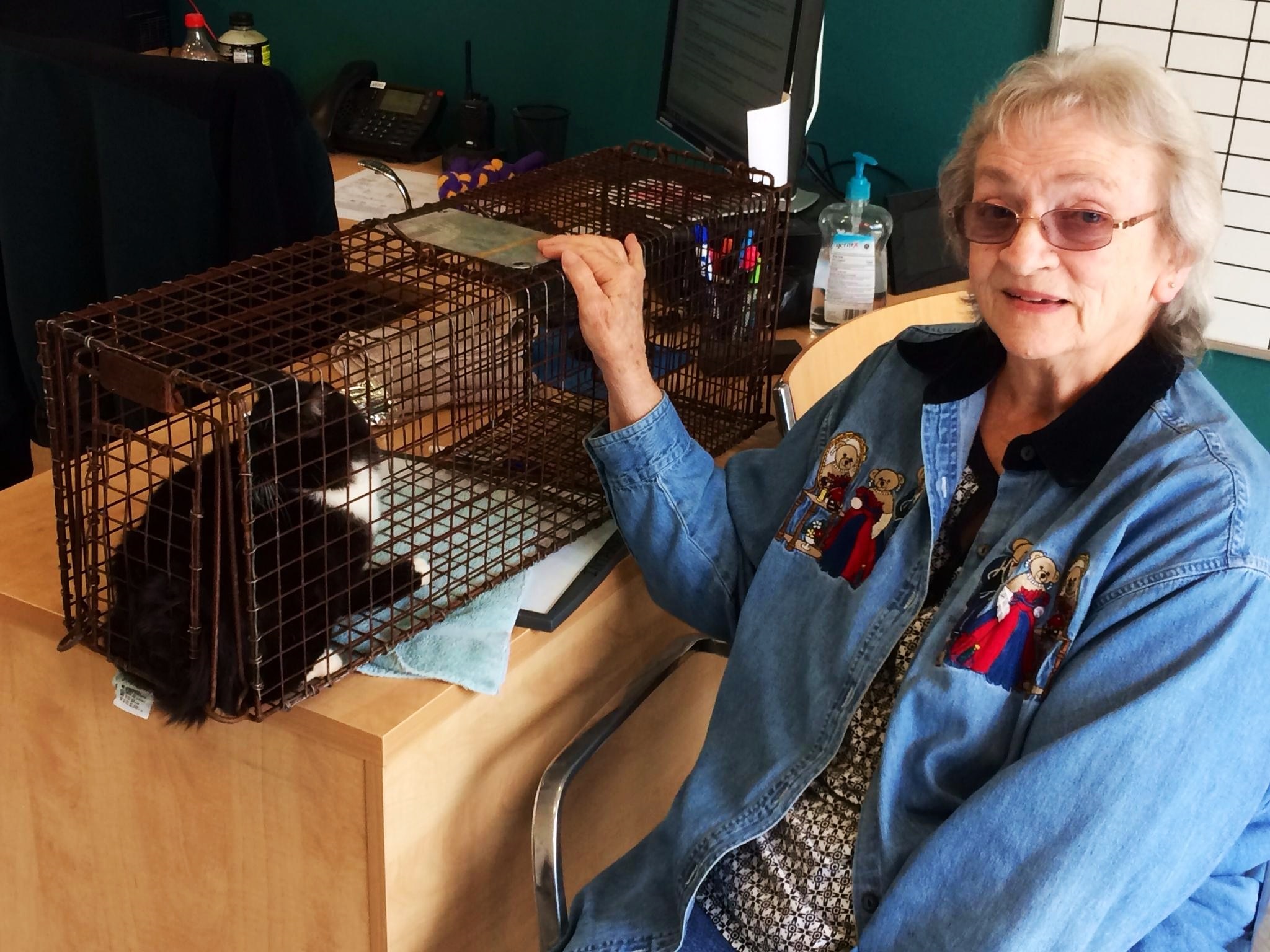
Other advantages of TNR: It immediately stabilizes the size of the cat colonies by eliminating new litters. It lessens the number of felines flowing into local shelters, which results in lower euthanasia rates and increased adoptions of cats already in the shelters. The returned, fixed cats prevent unneutered cats from moving in and starting a new cycle of overpopulation. The fixed feral cats continue to provide natural rodent control. TNR is the most effective and humane way to reduce the numbers of unwanted cats in the community and received at the shelter. Last year 1,286 cats had to be euthanized at the shelter and by doing TNR — and working together — we can reduce that number. Their lives are in our hands…   Ellen Parker brings a community cat to ACAS           Above photo: Ellen Parker of Aiken brings a community cat to the shelter to be neutered. Later, she will return the fixed cat to its colony. If you are bringing in a feral cat to be spayed/neutered, please call ahead because the ACAS veterinary staff can only do a strictly limited amount of such surgeries per day.

Warm weather increases the dire need for fosters

By Joanna D. Samson, Vice President, FOTAS

Spring has come to Aiken early this year. The days are getting longer, the azaleas are out, and everywhere you look, the landscape is awash in vibrant shades of green and splashes of color. It’s the season of rebirth, and most folks embrace the change of season after the cold, wet days of winter.

So why are we at FOTAS and the County Animal Shelter holding our collective breath when the rest of the community is in such a good mood?

Because we know that in short order the Shelter will be inundated with abandoned dogs and cats, homeless puppies and kittens, and an increasing number of strays, and we do not have enough foster families to help us handle this inevitable seasonal rise in intake.

We need foster homes—people who have the time and facilities to take care of dogs and/or puppies on a short-term or long-term basis until we can find them homes locally, or failing that, with a transfer partner in other parts of the country.

It doesn’t take much to be a foster. All you need is a secure, comfortable place for your shelter guest to sleep and play, the time to care for them, and dog-friendly pets (if you already have a pet). FOTAS and the Shelter will provide everything else if need be: food, crates, medicine, and assistance.

And you can choose to foster for only a few days or up to a few weeks. You would not be obligated to foster every time we ask. We are grateful for whatever time you can give us.

Most of our foster families take care of dogs that are scheduled for transfer to sister rescue agencies within the week. Placing them with a foster family allows these animals to decompress from the stress of the shelter environment before the journey to their new homes. Your Shelter guest, who is healthy and inoculated, does not have to sleep in your house if there is a secure, protected place outside of your home, like in a barn or a garage.

And here’s the thing: these animals are already spoken for, so there is no pressure on you to keep them. Indeed, it is just the opposite. We need you to let them go. It’s the same as, say, taking care of a friend’s pet for a couple of days.

We also need fosters who are willing to care for either mama dogs and their puppies, mama cats and their kittens or just puppies and kittens that have been abandoned to the Shelter. These little guys need to get out of the Shelter until their immune systems and inoculations are complete. Equally important, just like human babies, these helpless puppies need love and attention–lots of it. Typically, these commitments can be, depending on the age of the puppies, anyplace from 3 to 8 weeks.

Finally, we need fosters who are willing to take on the occasional special needs dog for 30 days or longer depending on the circumstances.

If you’ve ever thought about fostering, now is the time. Please call the FOTAS Hotline at 803-514-4313, or email us at info@angelhartlinedesigns.com.

Their lives are in our hands.


The photo above is of Girl Conger Wolcott, whose family has fostered hundreds of puppies over the years, cuddling with one of her puppy fosters.