


Category Archives: Spay/Neuter

The Animals Just Keep Coming into the County Shelter

“A record number of animals surrendered to the Aiken County Animal Shelter this month.”

We see this headline way too much. The story goes on and on. The shelter staff works tirelessly at warp speed to feed, care for, provide medical attention, and everything else necessary to keep the conveyor belt of overcrowding moving.

The army of FOTAS volunteers show up for duty every day to walk, socialize, and show some love to all of the animals to make certain that their adopters will get the best pet they have ever owned.

Other FOTAS volunteers open up their homes to foster dogs and cats for short terms to acclimate the traumatized animals to a household environment. This generosity of these fosters frees up space so that another dog or cat can be released from the holding section of the shelter and moved into the adoption kennels.
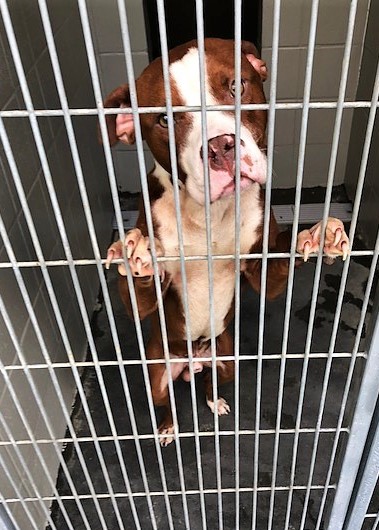
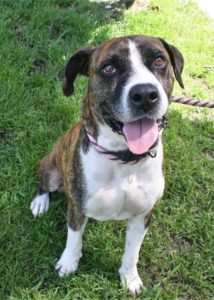
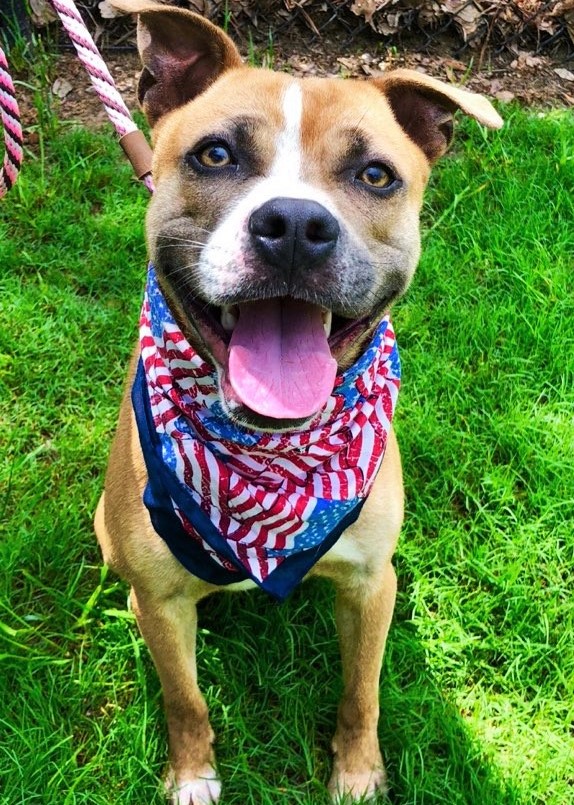
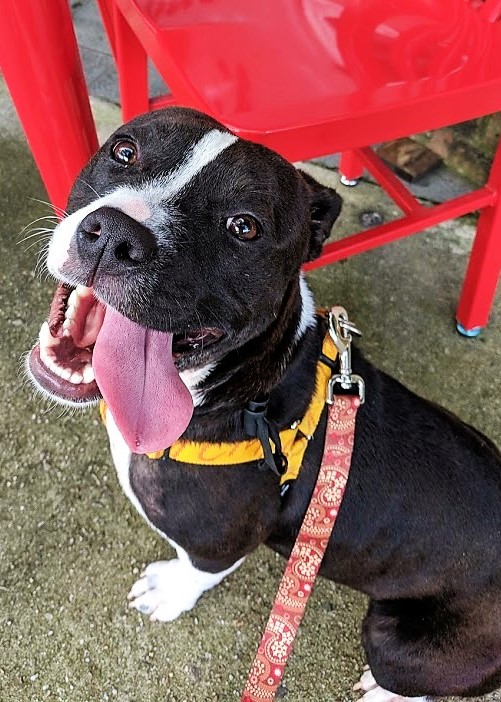
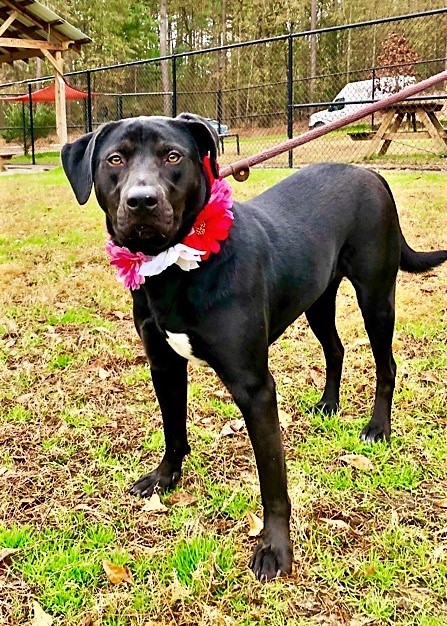
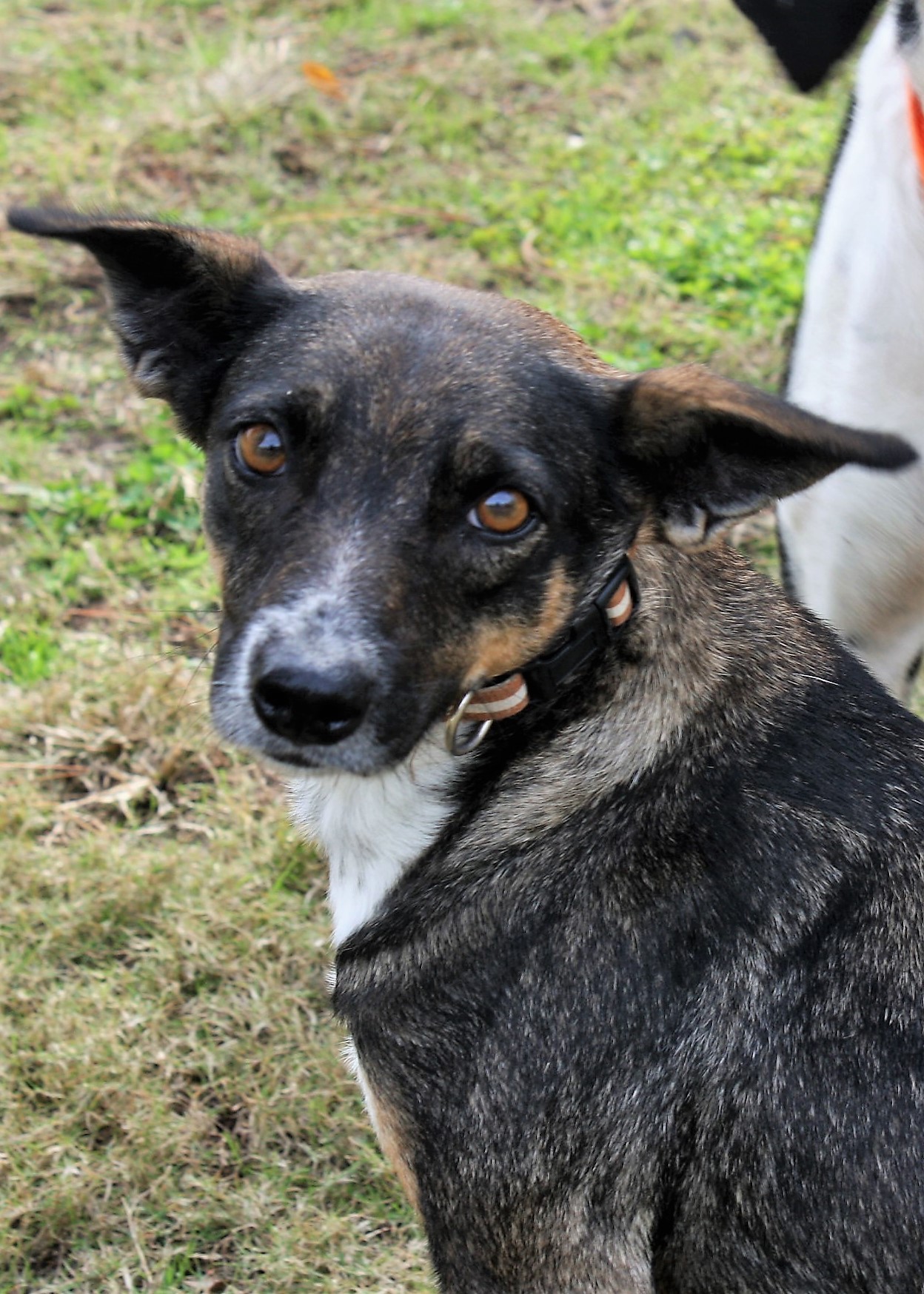
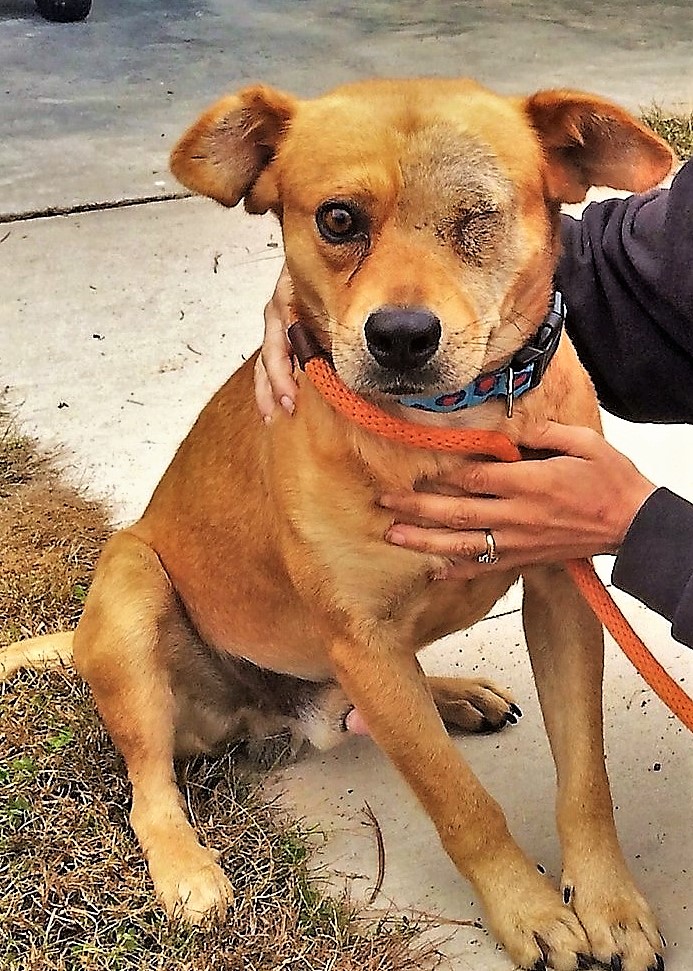
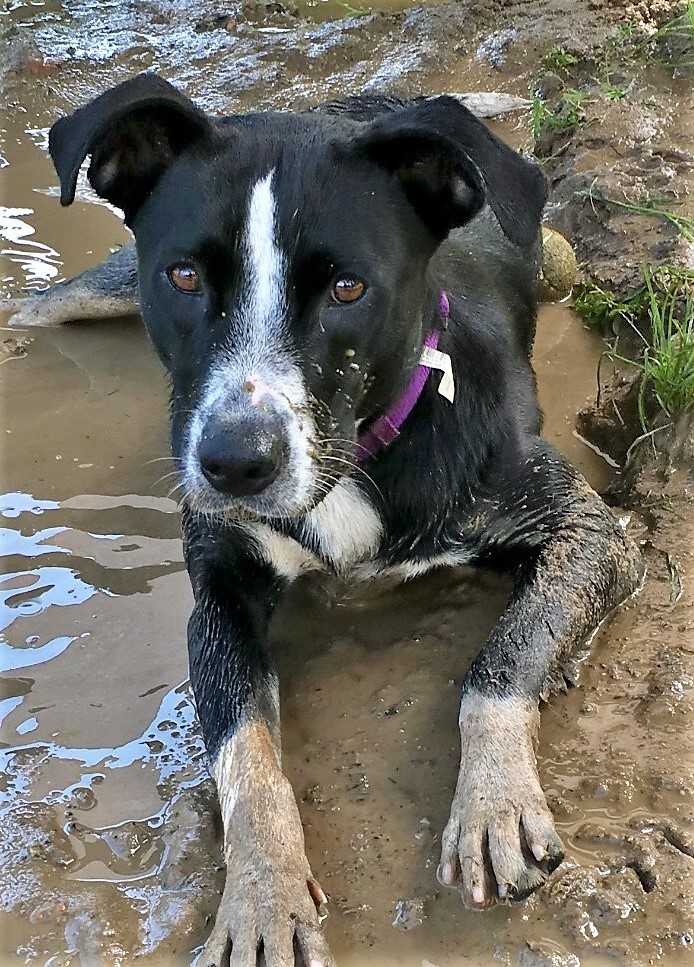
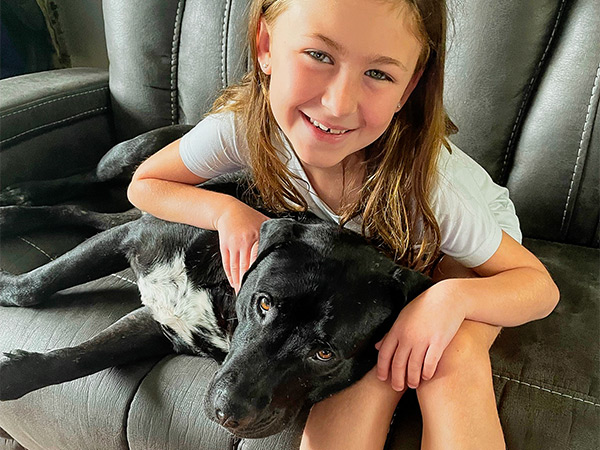
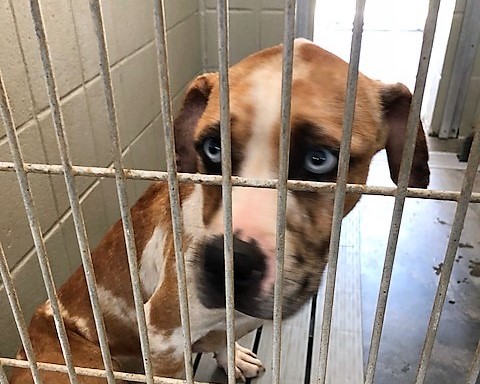
One of the many surrendered dogs at the County Shelter waits for a chance to be adopted.

Still other members of the FOTAS army spend endless hours coordinating the transfer of large numbers of animals to shelter partners hundreds of miles away that actually have a shortage of adoptable pets. This exhausting and expensive program is a necessary evil when the shelter receives over 4,900 animals per year.

The pressure of so many new cats and dogs filling the shelter builds every month like a balloon about to burst. The goal of not having to euthanize an adoptable pet has been met but that goal is challenged every day as the numbers continue to rise.

Why does this cycle never end?

Perhaps the public is getting the wrong message. The new, much-needed shelter that opened in 2014 has been heralded (as it should be) as a larger, healthier, and more practical facility that is better able to care for the animals of Aiken County. That does not mean that you can just surrender your pet and not worry because the shelter will find that animal a home.

Sure, there are legitimate reasons someone would have to surrender their pet to a public shelter, but sadly, the vast majority are surrendered just because the care of the animal is no longer convenient.
Adopting a pet is a life-long responsibility for the person or family who adopts one. That means food, shelter, medical care for the pet for the rest of its life. Pets are living, breathing animals with feelings. They are not clothes that you buy in a store and can return if you don’t like them or they don’t fit.

This has to end. What does it mean to be a more responsible pet owner?

• Your pet should be spay/neutered to help prevent overpopulation. There’s no good reason not to (most owners are not in the breeding business). Fixing your pet not only reduces unwanted litters dumped at the shelter, it also improves its health and reduces behavioral problems.

• Spend time with your pet. Teach it basic obedience skills so it can be a better family member—one who is part of the family and who, in return, will want to please you and love you unconditionally.

Their lives are in our hands.

— By Jennifer Miller, President, FOTAS

 

By the Numbers
In October, the Aiken County Animal Shelter received 512 strays and surrendered pets!


Pets of the Week
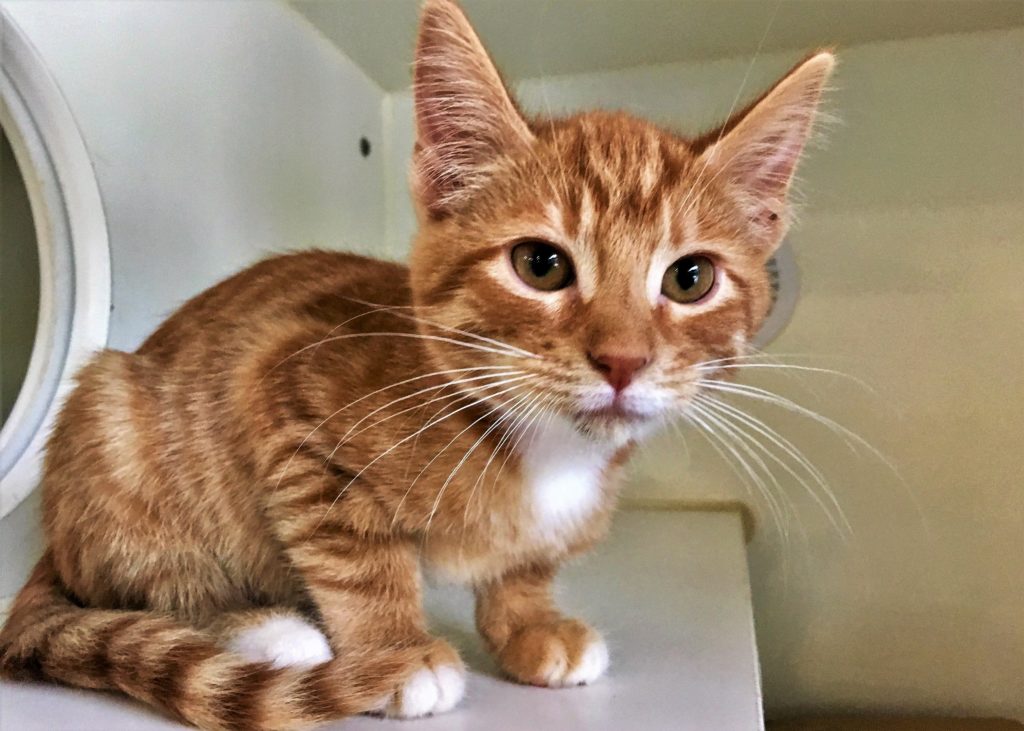
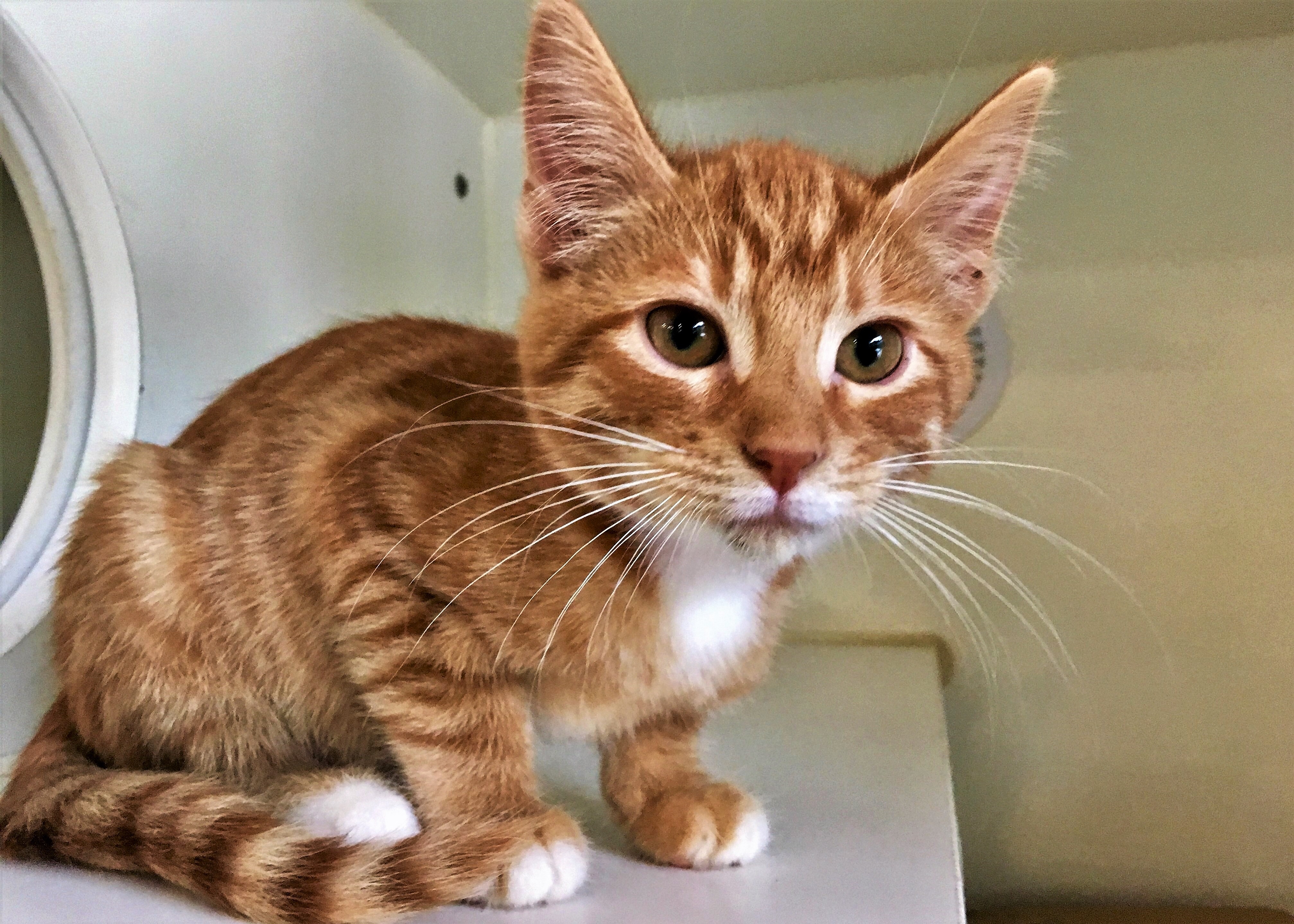
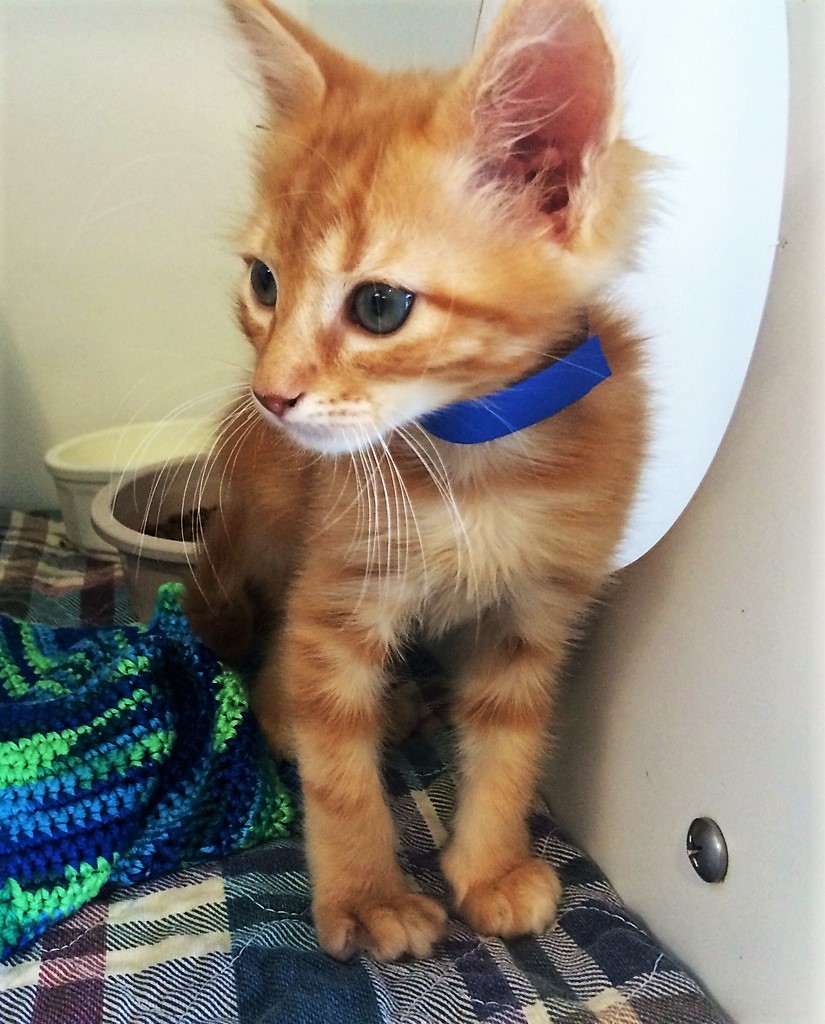
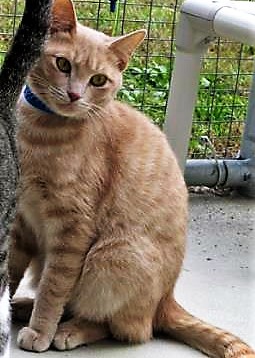
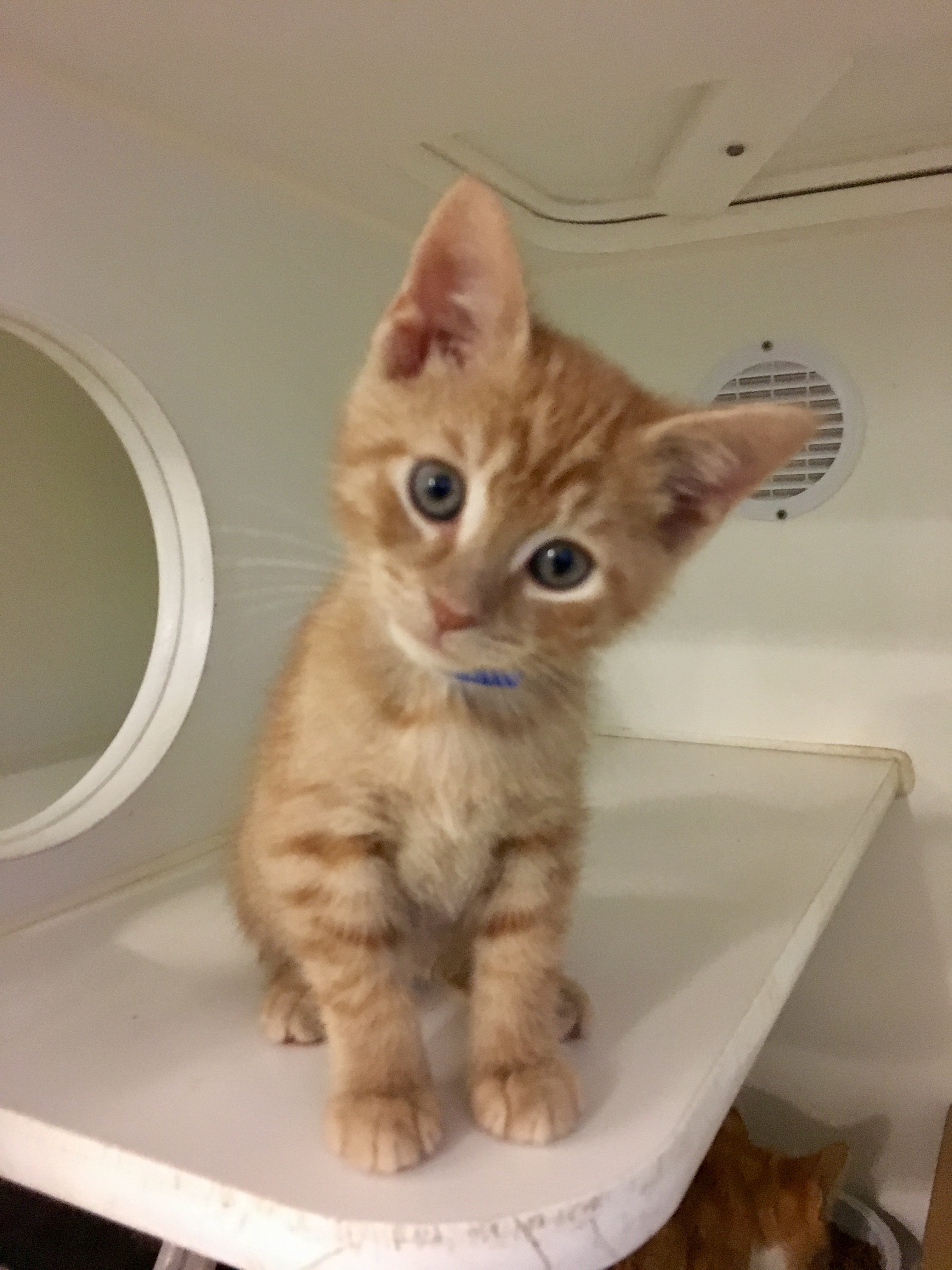
ALVIN: Domestic Shorthair kitten, male, orange Tabby, 2 months old, 2 pounds – $10
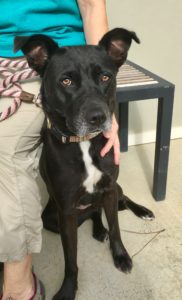
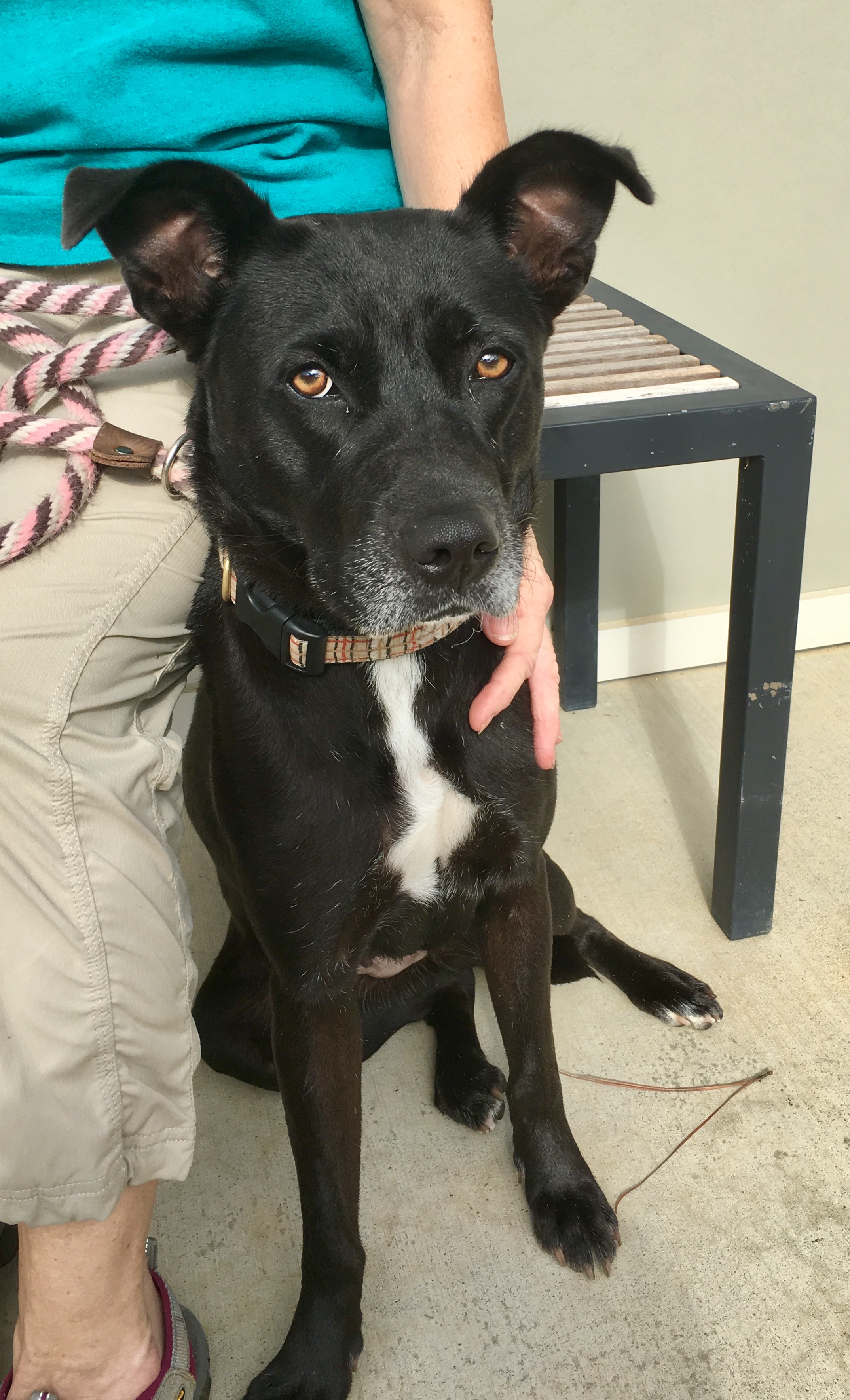
SADIE: Mixed breed, female, black with white, 5 years old, 38 pounds – $35


Please, Please, Spay or Neuter Your Pet!

Last month, 512 animals were taken in to the Aiken County Animal Shelter. More than 500 strays and surrendered pets in October!

It never happens this time of year. We can’t explain it. To tell you the truth, it blows our minds and keeps us up at night. But there it is: after a summer of unexpectedly horrible intake numbers (like that day at the end of July when 44 animals were surrendered in four hours!), fall is shaping up to be just as bad.

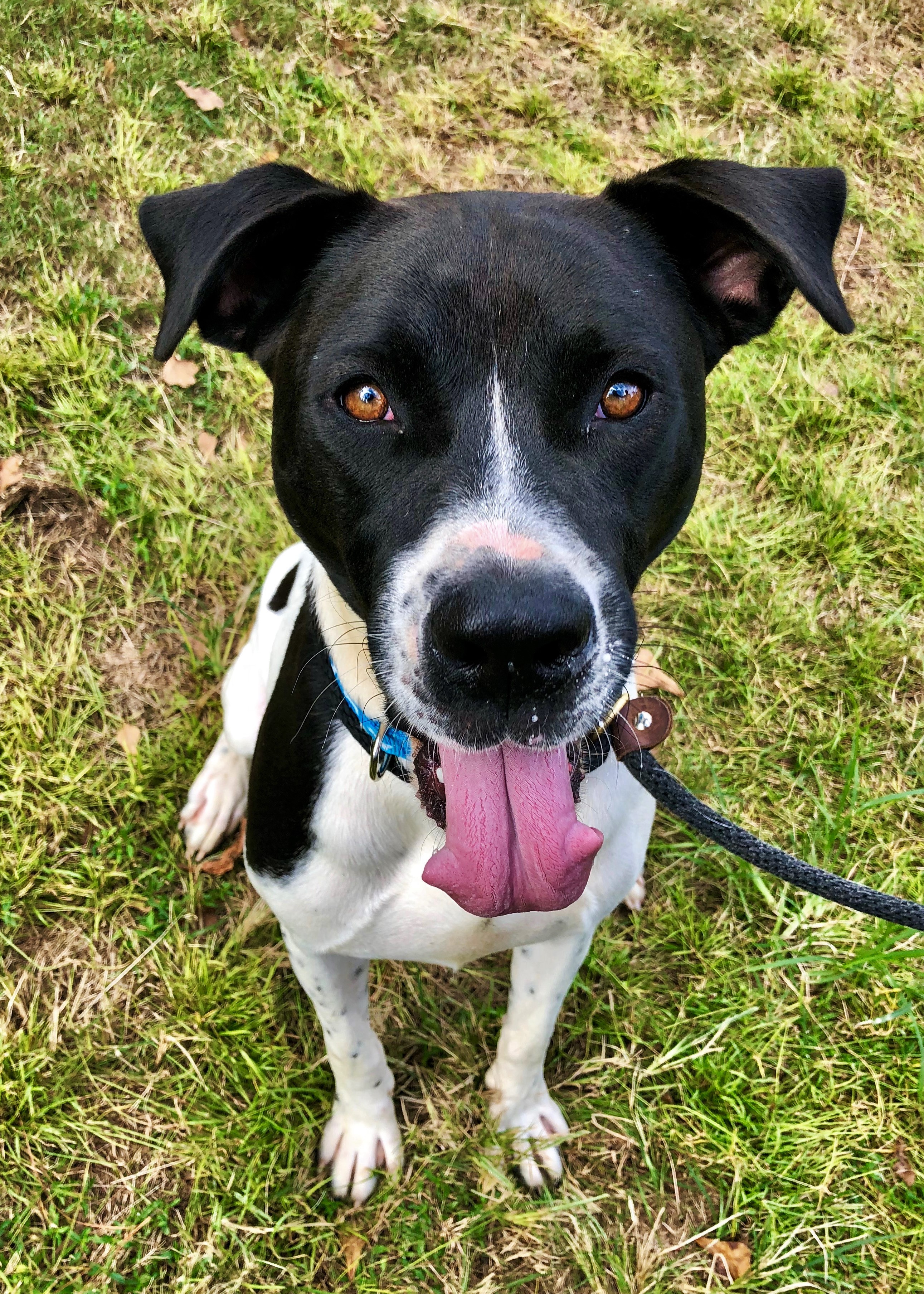
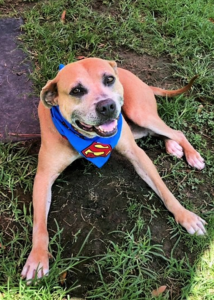
Snoopy is athletic and handsome. Just one of more than 500 animals that arrived at the Shelter as a stray or surrendered pet.

Most of these animals did nothing wrong. They were victims of owners who brought them into this world and then washed their hands of them, leaving the rest of us to pay for their neglect.

There is only one way to reduce the shockingly high number of homeless and abandoned animals: every pet in Aiken County must be spayed or neutered. It’s good for the animals and good for the community. Here’s why.

Your pet will live longer. Spayed and neutered animals have significantly less health problems than their unfixed counterparts. By the way, it is not true that pets get fat and lazy as a result of spaying and neutering—only a bad diet and lack of exercise will do that.

Spayed and neutered animals are less likely to roam. That means they are less likely to catch diseases from other animals, get lost, fight with other dogs, or get hit by a car (85% of dogs hit by cars are unaltered).

Spaying your female before she is 6 months old means you can avoid the messy, noisy heat cycles that typically occur twice a year. It also means you can avoid the messy, noisy, smelly crowd of male dogs or cats hanging out in your yard while your pet is in heat.

Neutering your dog decreases potentially aggressive behavior to other animals and people. Particularly children, who are by far the most frequent victims of dog bites.

Your cat or dog will be a better pet. Fixing your pet eliminates unpleasant spraying and marking in your yard, on your rug, on your furniture.

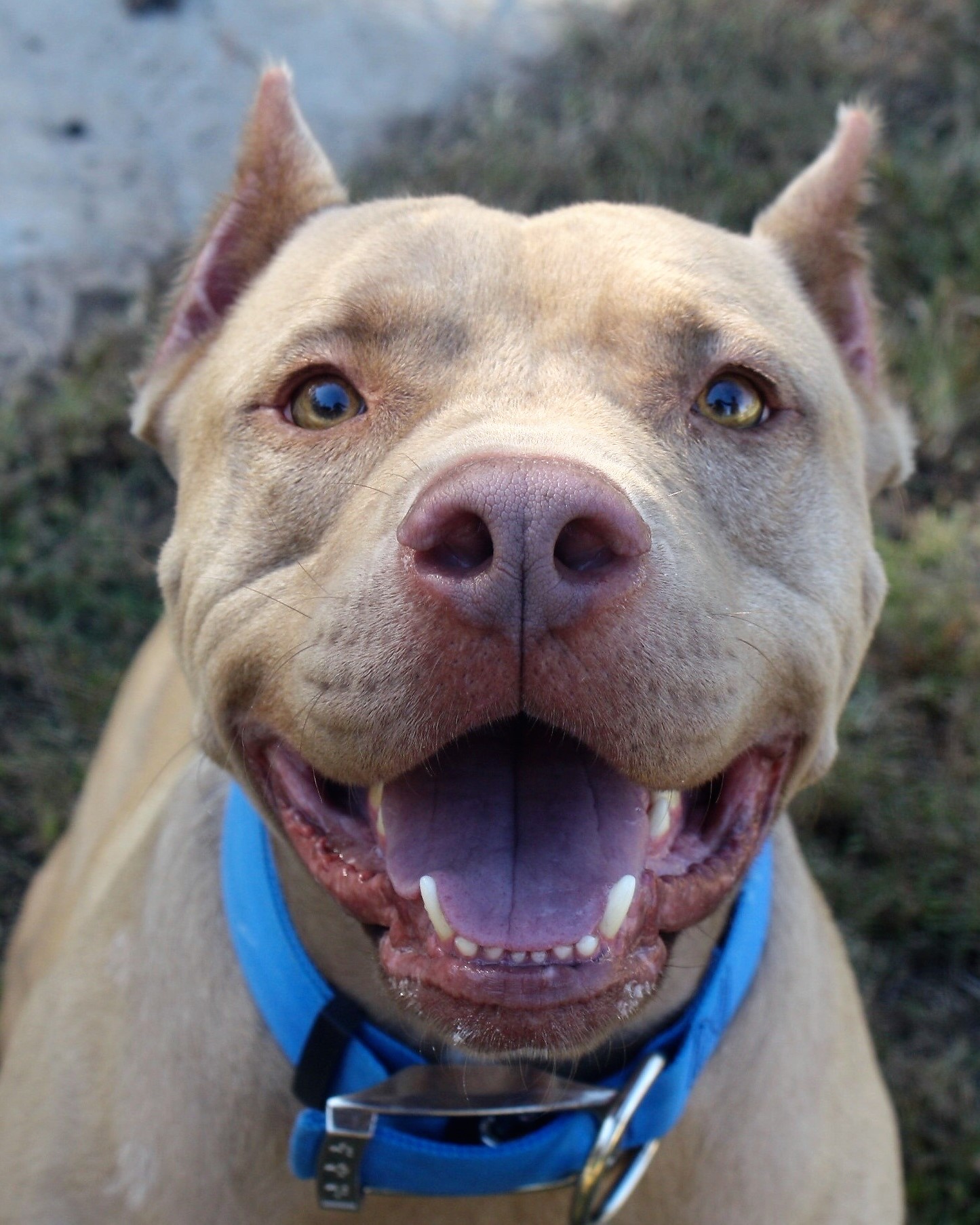
Bueller is such a sweet Pibble. He gets along with people, loves kids and likes other dogs. He’s just not a fan of cats.

Fixing your dog will not make him less protective. Dogs are naturally protective by nature, particularly if you love and feed them.

Fixing your pet is cheaper for the community as a whole. Public shelters are funded by taxpayer dollars. If everyone fixes their pets, the number of homeless and abandoned animals at the shelter will be dramatically reduced, as will the amount of public funds needed to care for those animals.

Moreover, the cost to spay or neuter your pet has never been more affordable. Aiken County has a voucher program, supplemented by FOTAS, to provide low-cost spay/neuter services to residents who need financial assistance. The vouchers are distributed at the County Shelter at 333 Wire Road.

Eddie is a 3-month-old orange Tabby who loves to be held.

Make arrangements to spay or neuter your animal today. Convince your neighbors, friends and family to spay and neuter their pets, too.

There are so many loving, deserving animals in the Shelter that need a home. Why bring even more animals into the world to be dumped in the shelter, or worse, on the side of the road?

Their lives are in our hands.


— by Joanna D. Samson, Vice-President, FOTAS

Why You Should Spay or Neuter Your Pet

On Wednesday, July 31, 44 animals were surrendered to the Aiken County Animal Shelter between 12:00 p.m. and 4:00 p.m., the shelter’s posted intake hours. Forty-four animals in four hours on one day! Do the math, that’s an average of 11 animals per hour for four hours!

Shocking. Distressing. Heartbreaking!

The vast majority of these animals did nothing wrong. They were victims of owners who brought them into this world and then washed their hands of them, leaving the rest of us to pay for their neglect.

It’s been a horrible summer for animal intake at the shelter. The number of animals coming into the shelter May through July (that is, 1,618) was double the amount of intake for January through March (827).

Discouraging. Mind-blowing. Sad.

The only way to reduce the shockingly high number of homeless and abandoned animals is for every Aiken County pet owner to spay and neuter their pets. Fixing your pet is good for them, for you, and for the community. Here’s why:

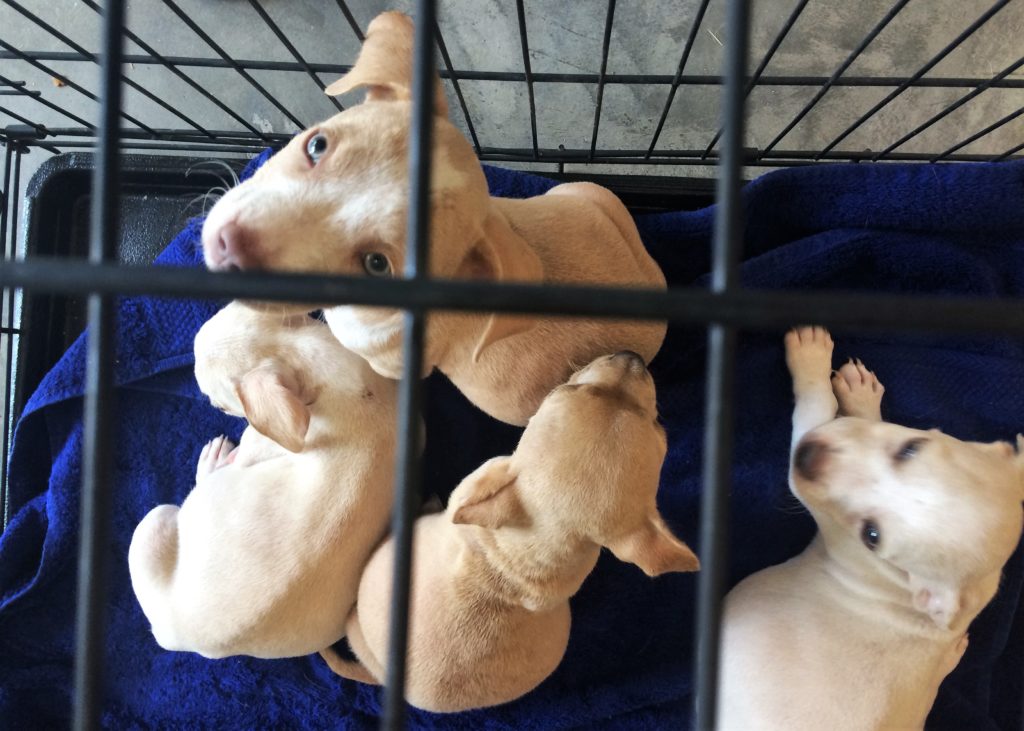
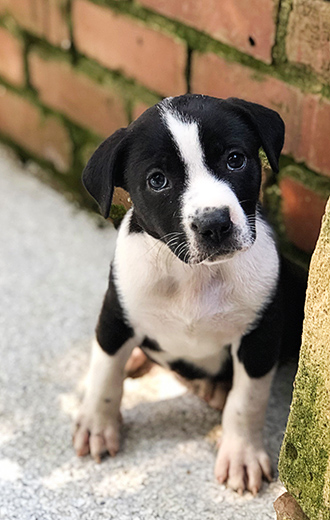
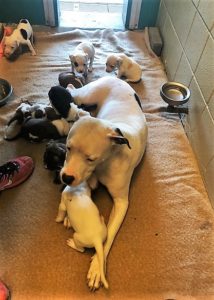
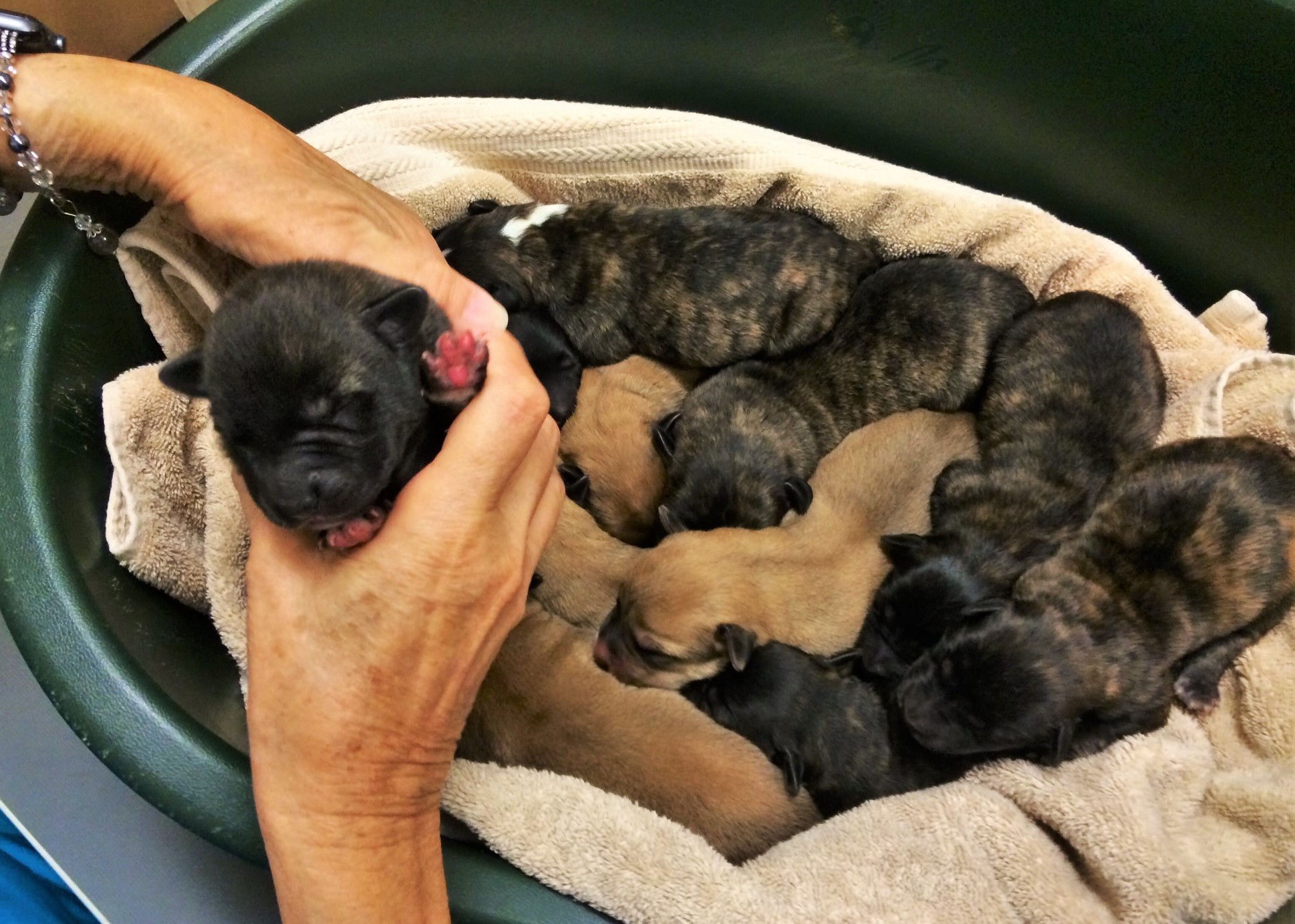
Spaying and neutering is affordable through the Aiken County voucher program. Fixing animals prevents huge litters of unwanted puppies like this one.

Your pet will live longer. Spayed and neutered animals have significantly less health problems than their unfixed counterparts. By the way, it is not true that pets get fat and lazy as a result of spaying and neutering—only a bad diet and lack of exercise will do that.

Spayed and neutered animals are less likely to roam. That means they are less likely to catch diseases from other animals, get lost, fight with other dogs, or get hit by a car (85% of dogs hit by cars are unaltered).

No more dogs in messy heat. Spaying your female before she is 6 months old means you can avoid the messy, noisy heat cycles that typically occur twice a year. It also means you can avoid the messy, noisy, smelly crowd of male dogs or cats hanging out in your yard while your pet is in heat.

Fixed animals are less aggressive. Neutering your dog decreases potentially aggressive behavior to other animals and people. Particularly children, who are by far the most frequent victims of dog bites.

Your cat or dog will be a better pet. Fixing your pet eliminates unpleasant spraying and marking in your yard, on your rug, on your furniture.

Fixing your dog will not make him less protective. Dogs are naturally protective by nature, particularly if you love and feed them.

The number of animals coming into the shelter May through July (1,618) was double the amount of intake for January through March (827).

Fixing your pet is cheaper for the community as a whole. Public shelters are funded by taxpayer dollars. If everyone fixes their pets, the number of homeless and abandoned animals at the shelter will be dramatically reduced, as will the amount of public funds needed to care for those animals.

Moreover, the cost to spay or neuter your pet has never been more affordable. Aiken County has a voucher program, supplemented by FOTAS, to provide low-cost spay/neuter services to residents who need financial assistance. The vouchers are distributed at the County Shelter at 333 Wire Road. Make arrangements to spay or neuter your animal today. Convince your neighbors, friends and family to spay and neuter their pets, too.

There are so many loving, deserving animals in the Shelter that need a home – why bring more animals into a world where their safety and care is so uncertain?

Their lives are in our hands.

— By Joanna D. Samson, Vice-President, FOTAS


By the Numbers
In just the first week of August, the Aiken County Shelter received 130 strays and surrendered pets.


Pets of the Week

DUNCAN: Boxer mix, male, 4-1/2 years old, brindle & white, 61 pounds – $35


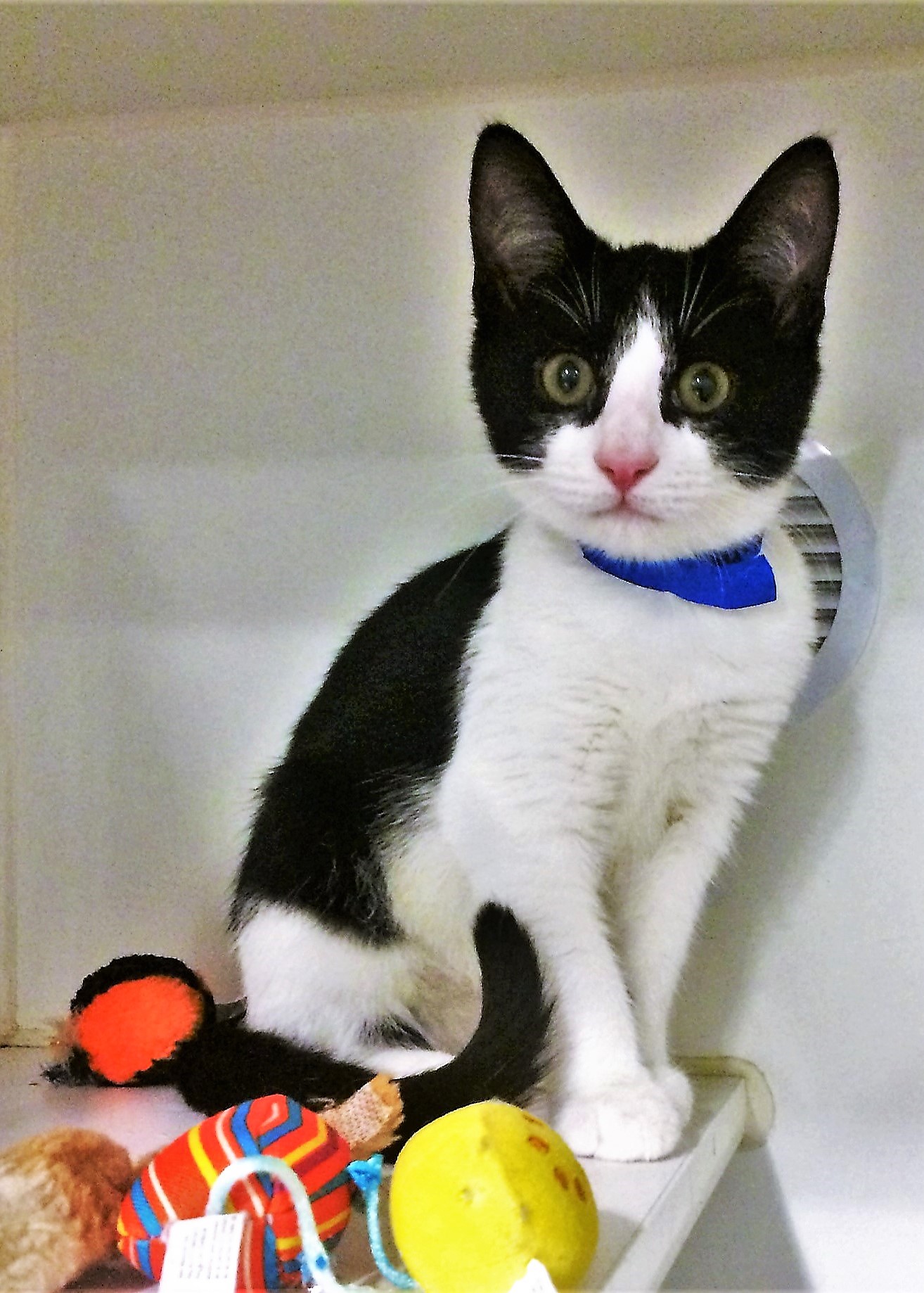
FRANKIE: Domestic Shorthair, male, 2 months old, black & white, 2 pounds – $10
Dog Days of Summer: County Shelter Population Doubles!

I used to love summer and particularly the 4th of July with all of its patriotic fervor, but now I dread it—not because I am less patriotic, but because I see so many pets whose lives are shattered through no fault of their own.

More puppies and kittens are coming into the shelter than going out through adoptions.

The fireworks terrify many dogs, who then bolt from their homes in a panic. Some get hit by cars; others get lost and are picked up as strays and brought to the Aiken County Animal Shelter.

People go on vacation and surrender their pets to the shelter rather than finding someone to care for them. Hundreds of unwanted mothers and puppies and kittens have been turned into the shelter.

It is heartbreaking to see these innocent pets in the shelter. They did nothing wrong. One day they have a home; the next, they are in a strange noisy place with hundreds of other dogs, abandoned by their own family.

The shelter is over-crowded, kennels doubled-up. In January, the shelter received 237 unwanted dogs and cats. In June, the shelter received 545 unwanted animals—almost a 100% increase! Each one of those 545 animals has a face, a heart and a soul.

There are not enough volunteers to work with so many animals, and because it is so brutally hot, it’s difficult for the existing volunteers to give the dogs the attention they need in such a stressful environment. We desperately need more volunteers to help us walk and socialize the dogs.

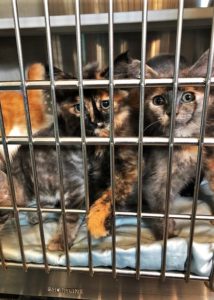
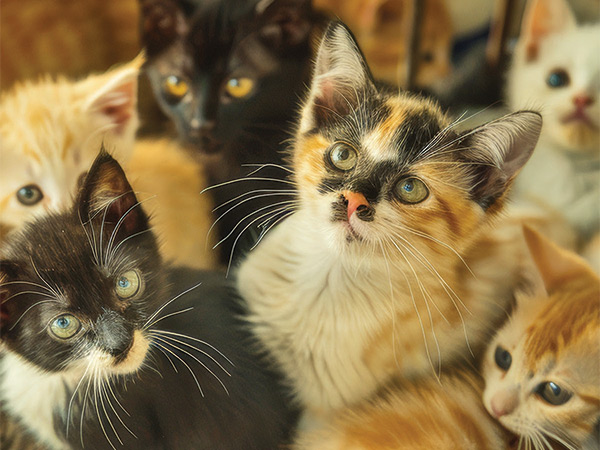
The Shelter has lots of homeless kittens this month!

FOTAS has ramped up its transfer program, sending animals to no-kill partner shelters as many as two to four times per week. This program is critical to relieve overcrowding in the shelter, but we need more foster homes.

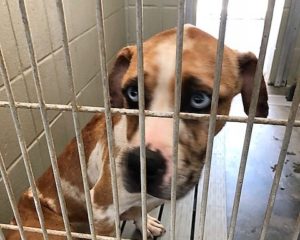
Intake kennels at the Shelter are full, with some dogs doubled up.

Here’s how it works: an animal assigned for transport is taken out of the shelter and placed in a foster home for five to seven days prior to the transfer to acclimate the animals to a home environment. When an animal is placed in a foster home before transfer, it opens up a space on the adoption floor for an animal in the intake section, so fostering saves two lives—the animal fostered and the animal moved to the adoption floor.

FOTAS supplies foster families with pet food and crates and any other necessary supplies. There is nothing more rewarding than fostering a pet for a few days, knowing that your time and care help a shelter pet adjust to family life and get them adopted faster.

This is a difficult time. FOTAS and the shelter need your support now more than ever; every little bit helps.

Donate. Volunteer. Foster. Please.

Together we will continue to make a difference to the many animals who depend on us to save their lives. Email FOTAS at info@aiken.org or call the FOTAS hotline: 803-514-4313.

Their lives our in our hands.

— By Jennifer Miller, President of FOTAS

By the Numbers

July Summer Adoption Special: dogs and puppies $35, cats and kittens just $10.

July 1 – 15: The Aiken County Animal Shelter received 223 strays and surrendered pets.


Pets of the Week

MASON: Boxer mix, male, 4 years old, light brown, 57 pounds– $0 to good home (adoption fee is sponsored)
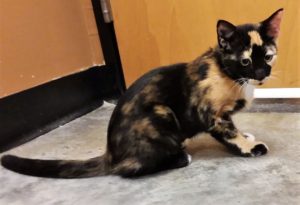
PATCHES: Domestic Shorthair, female, 3 months old, Calico, 2.7 pounds – $10 (available at Aiken PetSmart Store on Whiskey Road)


Intake Numbers Already Skyrocketing! Please Spay/Neuter Your Pets

Yikes! It’s that time of year again. While the rest of the world dons shorts and sunblock, cranks up the grill for a family cookout, and settles into the sleepy rhythm of long summer days, intake at the Aiken County Animal Shelter is soaring—yes, soaring! Last month, the shelter took in 545 additional animals.

puppies on intake may 2018 (3)Think about it … 545 animals. Do the math—that’s more than 17 animals coming into the shelter every single day. And as good as we are at hustling and finding our animals homes locally or in sister shelters up north, we can’t re-home 17 animals every day. We just can’t; the number is too big. Quite frankly, it feels like sweeping back the ocean with a broom, especially during the summer months.

Petunia arrived at the shelter injured and scared. But after being fostered, she's strong and confident enough to be adopted.
Petunia arrived at the shelter injured and scared. But after being fostered, she’s strong and confident enough to be adopted.

Why does this happen?

There really is only one cause: irresponsible pet owners. People who won’t spay and neuter their animals and abandon their unwanted litters of puppies and kittens year after year, and people who surrender their pets to the shelter when they go on vacation rather than make proper arrangements for their care.

In either case, those pet owners make the rest of us pay for their failure to do the right thing because the shelter is funded through your tax dollars. It’s inexcusable. There is financial assistance available for folks who can’t afford the cost of fixing their pet. Also, surely with a little thought and planning, an owner could find someone—a family member, friend, neighbor—who would be willing to care for their pets while they vacation. Seriously.

How can you help?

Right now, we need someone to care for a single puppy or a single kitten for another week until they can get their final shots and be put up for adoption. Because they are babies with no litter-mates, these little fluff-muffins needs some extra TLC.

Second, will someone please, please adopt our newest miracle girl, the beautiful Petunia? Animal control picked up Petunia from the side of the road. She had been hit by a car and was so badly injured, her lung was protruding from her ribs. She was rushed back to the shelter, where Dr. Levy performed her surgical magic. Then she was sent to foster-care to recover. Now, Petunia is a ready to go home. This is one happy, happy girl. She will make someone a fabulous pet.

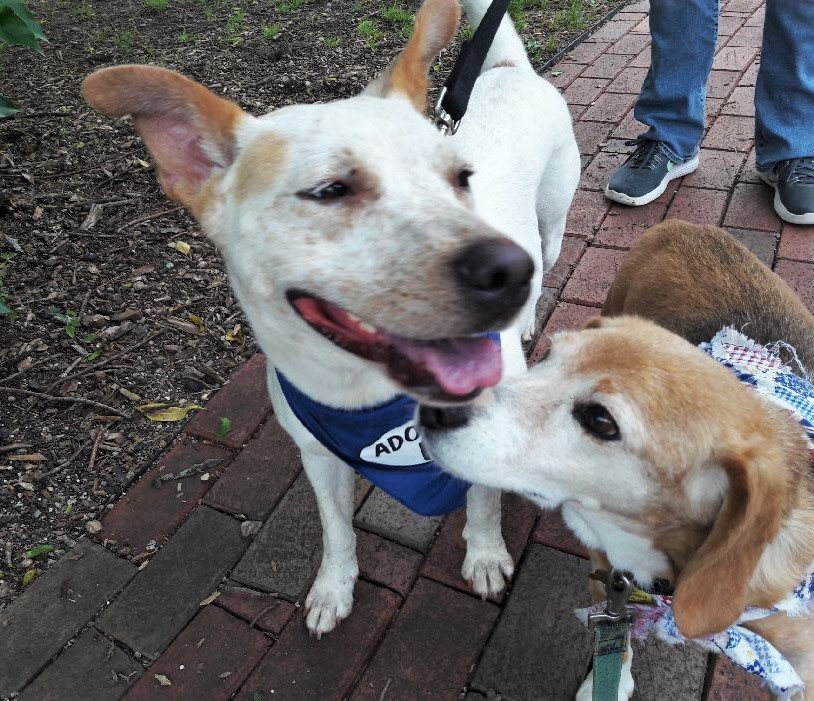
Petunia goes on a walk with adopted dog, Benny the Beagle.

There are other ways you can help, and we really do need your help.

Volunteer, make a tax-free donation to the cause at www.fotasaiken.org, or become a foster family. Want an even shorter-term bit of canine-love? Take one of our great dogs out for the day or the weekend—they love and appreciate a little time away from the busy shelter.

Finally, please, please, please spay or neuter your animals, and talk your friends and family and your neighbors into spaying and neutering theirs. If you or they cannot afford the cost, you may be eligible for County or FOTAS financial assistance.

Call us at (803) 514-4313 or email us at info@fotasaiken.com and see how you can get involved.

Their lives are in our hands.

 — By Joanna Dunn Samson, FOTAS Vice President


paw_print_heart_stickers-r368b69be3802466f8feff0ba57adc012_v9w0n_8byvr_512By the Numbers

In the month of May, the Aiken County Animal Shelter received 545 stray animals and surrendered pets.


saveapetlogo

Pets of the Week


MAVERICK

MAVERICK POTW JUNE 3 2018Mixed breed, male, 5 years old, tan & white, 46 pounds – $35


THOR

THOR POTW JUNE 3RD 2018Domestic Shorthair, male, 2 months old, Orange Tabby, 1.3 pounds – $10


Free TNR Program Saved Community Cats and Made Life Better

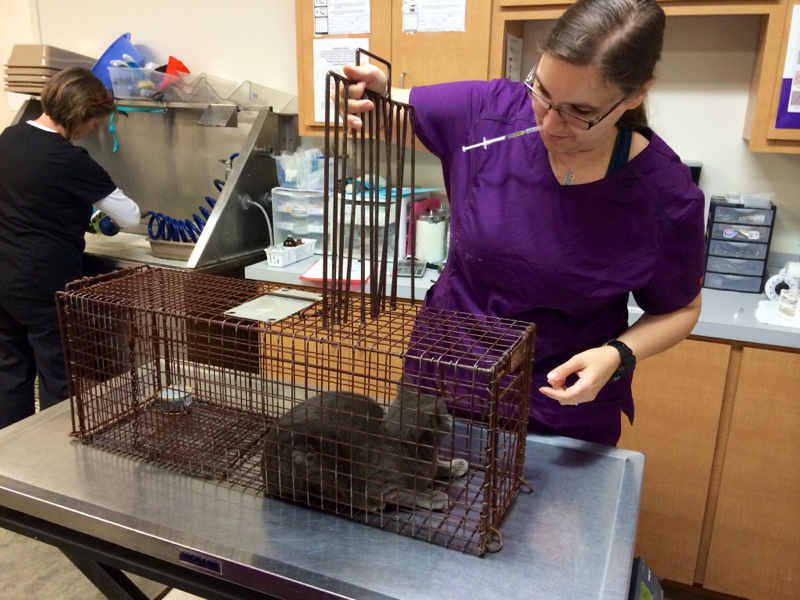
It started when a good neighbor needed to move. He left his feral cat colony, so my husband began feeding them. But years later, we found ourselves with more than 30 cats in two colonies. We knew we had to do something soon! Last fall, a viral infection or inbreeding caused uncountable and horrible kitten deaths. We reached out to FOTAS for help and they informed us of the County’s Trap-Neuter-Return (TNR) program.  It’s a free program supplemented by FOTAS that benefits homeless felines and the community. You can trap feral or community cats, get them fixed and their ear tipped (the universal sign of a sterilized cat), and then return them to their outdoor home. We borrowed four humane traps from FOTAS and friends, then got a purchase order number to start the TNR program with the veterinarians on FOTAS’s list.
The TNR program allows community cats to remain outside but keeps their population down.
The TNR program allows community cats to remain outside but reduces their population via spay/neutering.
Initially we took four to eight cats in to get spay/neutered each week by appointments with veterinarians and the Aiken County Animal Shelter, where two are allowed with no appointment. The goal was to get this done prior to spring mating time. We would trap on Monday and Wednesday from 3 p.m. to dusk (so we didn’t trap night wildlife), using several teaspoons of canned food in the trap. We checked the traps every 15 minutes because the trapped cats are terrified until the trap is covered with a beach towel. We then moved the trapped cats to an enclosed building for the night.  If two were caught, they would go to the veterinarian appointment in the morning; and if there were more, they would go to the Aiken County Animal Shelter between 8-9 a.m. The vets did early surgery with same day return while the County had pick-up the next morning. The County Shelter offers their TNR spay/neutering on Tuesdays and Thursdays.
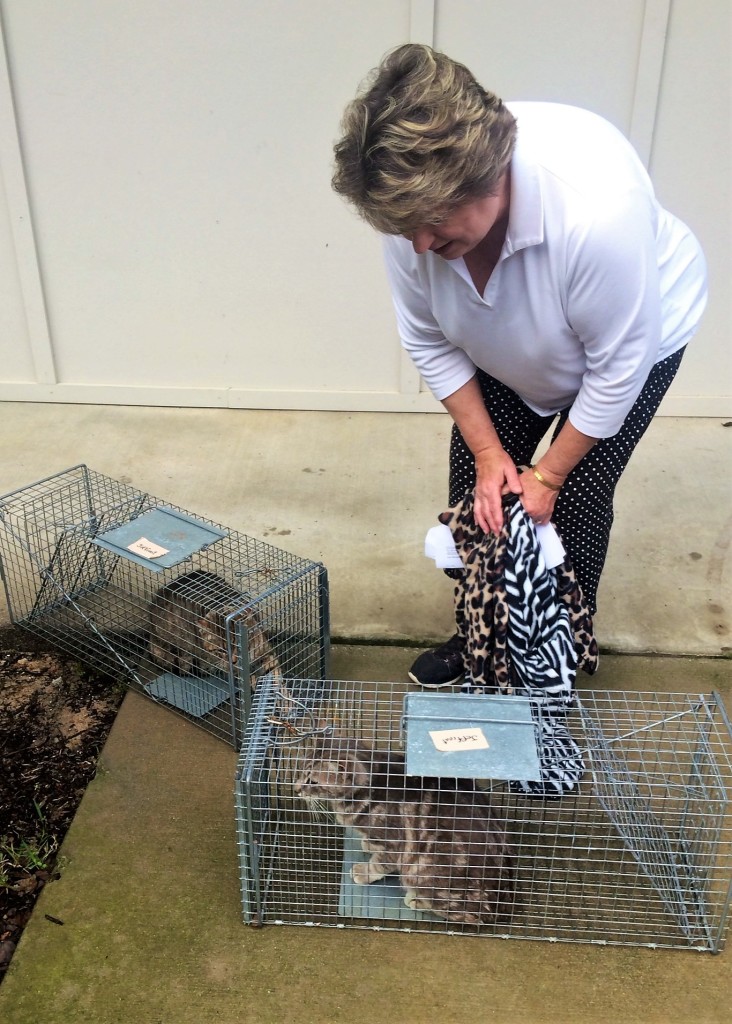
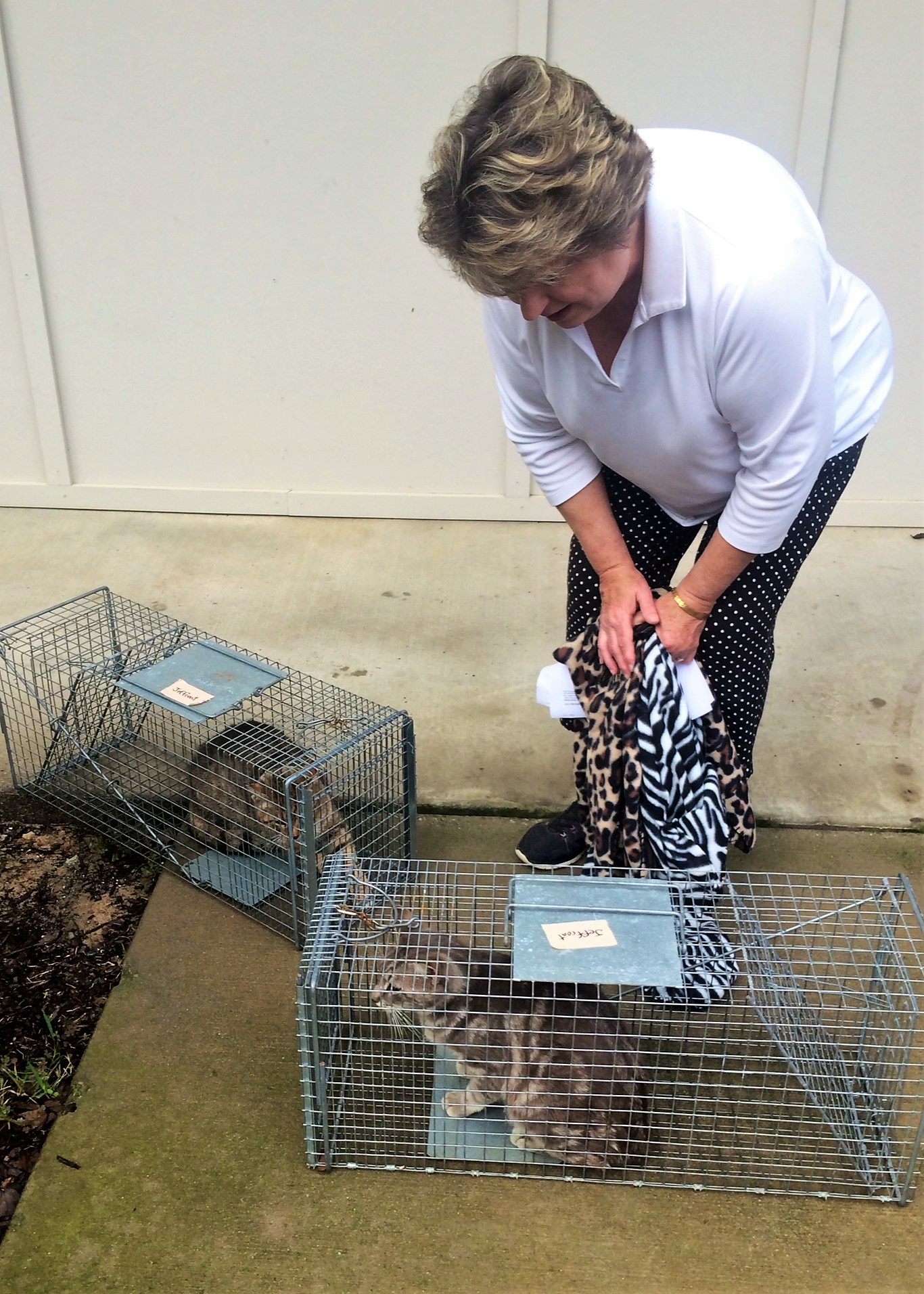
Connie Jeffcoat of Wagener picks up two community cats she had spayed at the County Animal Shelter.
We captured most of the cats in 30 days, but then we had to get more creative to trap the smarter cats. We photographed them for easy identification and watched their afternoon habits for better trap placement. We also upgraded the food to sardines (heated slightly) and camouflaged the traps. It worked, and now that all the cats are fixed, we can relax and just enjoy watching the barn and deck colonies. With no more additions to the group, there’s no fighting, yowling and spraying. We are so happy!  Both colonies guard their territory, so no new cats are moving in and that means no kittens to take to the shelter. Thank you to FOTAS and congratulations for getting the State Angel Award for non-profit organizations. Thanks also to all the volunteers, donors, the Aiken County Animal Shelter and Veterinary Services. Everyone we met during this adventure was very kind and helpful. Whether you are feeding one community cat or many more, it is important to stop the population problem. Please help FOTAS meet their goal: no more homeless animals. Working together, we can do this! If you live in Aiken County and want to participate in the TNR program, please call the County Shelter, (803) 642-1537.

By Lynn Carty

paw_print_heart_stickers-r368b69be3802466f8feff0ba57adc012_v9w0n_8byvr_512

By the Numbers

May 1-16: The County Shelter received more than 300 stray animals and owner-surrendered pets in just two weeks.


saveapetlogo

Pets of the Week

mia pet of the week (2)

MIA: Mixed breed, female, 2 years old, black & white, 36 pounds – $35

AMANDA PET OF THE WEEK

AMANDA: Domestic Shorthair, female, 1 year old, tan & black Tabby, 7.5 pounds – $10

Resolving to do better by our animals

It’s that time again—the end of one year and the promise of a new one. Most of us (myself included) resolve to be better—to exercise more, lose weight, spend less time on our cell phones—and although our resolve is genuine, our willpower and attention span are, shall we say, less than perfect.

My own New Year’s resolutions fail because they are “self” centered, involving changes to my own behavior. When my resolve wavers, so what? Do those extra five pounds matter to anyone but me?

My theory is this: resolutions to take action for the greater good—to help make a life a bit better, happier, easier—are easier to keep and harder to abandon.

There are so many worthy ways to spend your time, but if you happen to love animals the way we do at FOTAS, then we can resolve, collectively, to do better by the thousands of homeless animals in Aiken County.

Let’s resolve to spay or neuter our animals … all of them.

If our own animals are fixed, then let’s lobby our friends, relatives, and neighbors to fix their animals.

Imagine … a spring and summer at the Aiken County Animal Shelter when staff and volunteers are not inundated with, literally, hundreds of unwanted puppies and kittens.

Imagine the Shelter with empty kennels because no new unwanted babies were born to fill them up.

Imagine a world where every home has a pet, and every animal has a home.

It is possible to do; it’s been done in many other communities. Why do you think our sister rescue agencies in other parts of the country have the space to take our unwanted animals? Because everyone fixes their pet as a matter of course.

It’s the right thing to do.

Let’s resolve to volunteer our time at the Shelter.

There are so many ways to help—greeting visitors, walking and socializing dogs, loving-up the cats, fostering animals approved for transfer or providing a safe, healthy home for mamas and their babies, working off-site adoptions, social media, and fundraisers.

The list is endless. Tell FOTAS what you want to do, and we’ll find a place for you. Volunteering at the Shelter is a great way to spend your free time and make friends, and at the end of the day, you will have made a difference in the life of some unfortunate animal.

Let’s resolve to vaccinate our animals and make certain they are protected from fleas, ticks and worst of all, heartworms. Too many animals suffer needlessly, particularly when treatment options are so affordable.

Let’s resolve to adopt all of our pets from the Shelter.

The Shelter takes in over 4600 animals every year—they all need homes. Other rescue agencies can close their doors when they are full, but the County shelter cannot; it is obligated by law to take all comers.

FOTAS and Shelter staff go the extra mile with attention, exercise, training and medical care to make every adoptable animal happy and more sociable, because we know those animals will be better pets and family members when they go home with you.

No other rescue organization in the County saves more lives than FOTAS … none.

These are resolutions worth keeping. Let’s do them together.

Their lives are in our hands.

By Joanna D. Samson, FOTAS Vice President


Some Recent Happy Adoptions at the Aiken County Animal Shelter

 JESSICA STORY OF GRANITEVILLE ADOPTED GOLDIE DEC 23    RUDOLPH THE PUPPY WAS ADOPTED BY THE DOWLING FAMILY, AIKEN    BEAGLE MIX MARLIN WAS ADOPTED BY THE WILLIAMS FAMILY , AIKEN ON DEC 23

By the Numbers
54 Adoptions between December 18 and December 23! Thank you.

Missed our Christmas adoption specials? No worries! 
January Adoption special – dogs/puppies $35, cats/kittens $10

Pets of the Week

LACEY POTW DEC 31
LACEY: Retriever mix, female, 2 years old, black, 63 pounds – $35

CLARENCE POTW DEC 31

CLARENCE: Domestic shorthair kitten, male, 3 months old, black & white, 3 pounds – $10

FOTAS: Christmas spirit, gratitude and saving animals

Every Sunday, the ‘Aiken Standard’ allows us this space to tell you about the Aiken County Animal Shelter, FOTAS and the plight of the 5000 homeless animals consigned to the Shelter every year, and we are deeply appreciative for that opportunity. Over the years, we have used this column to tell you about initiatives designed to save the lives of more animals and to report on our progress. We have written about the special people who have made a difference in the lives of the Shelter animals, and we have showcased particular dogs or cats who had captured our hearts and needed a little extra “ink” to find them that perfect home.

This Christmas Eve, however, we are not going to use this space to report or convince or to ask you for help; instead, we are simply going to thank you … all of you:

Chairman Gary Bunker and the County Council, County Administrator Clay Killian, and Assistant County Administrators Ashley Jacobs and Brian Sanders for being responsive and responsible public partners;

Councilwoman Kathy Rawls, believed in our mission from the very start and helped us build the successful public/private partnership between the County and FOTAS;

Paige Bayne, Director of Aiken County Code Enforcement, and our beloved Bobby Arthurs, Chief Animal Control Officer and Shelter Manager, who directly oversee and manage the Shelter operations with thoughtful and dedicated attention to the welfare of the animals;

The County Shelter staff—the intake administrators, adoption coordinators, vet assistants, kennel techs and custodians—who make certain that all of those animals are properly documented and cared for with compassion and efficiency;

Dr. Lisa Levy, the Shelter Vet, whose medical prowess and big heart has saved the lives of hundreds of animals who arrive at the Shelter abused, mangled and injured, giving them a second chance;

The FOTAS volunteers, who work on bookkeeping, social media, and special fundraising events; who work with FOTAS Fix-a-Pet and curbing the population of community cats; who organize and work on special fundraising and on-site events; who foster mamma dogs and cats and all their progeny, who care for animals designated for transfer; who shuffle animals to off-site adoption events; who greet the public and man the front desk, walk the dogs, love up the cats, work with play groups, and show animals to potential adopters—the dramatic and steady increase in the Shelter’s live release rate since 2009 (84% so far this year) is directly related to their efforts; and

Last but not least, you, the Aiken community, who have supported our efforts with enthusiasm and generosity, adopted your pets from the thousands of deserving animals who end up in the Shelter, and who are working to end the excessive population of homeless animals by spaying and neutering your animals—you have designated the Shelter as your community shelter, and we could not be prouder.

The Board of Directors of FOTAS—Jennifer Miller, Mary Lou Welch, Edythe Hubler, Frank Townsend, Dr. Charlie Timmerman, Caroline Simonson, Ellie Joos, Ellen Priest, Grant and Heather Wiseman, Shanna Ryberg Pearsons, Jeri Barrett, Allison Tyler, myself, and FOTAS Program Director Kathy Jacobs, wish you and your family Merry Christmas and a happy and healthy New Year.

Their lives are in our hands.

By Joanna D. Samson, FOTAS Vice President

By the Numbers

December specials – dogs/puppies $35, cats/kittens $10

January through November: FOTAS and the Aiken County Animal Shelter saved 3,706 dogs and cats.

Please adopt and help us save 4,000 by the end of 2017!

Pets of the Week

MARIELLE: Shepherd mix, female, 3 years old, black w/white, 31 pounds –$0 (adoption sponsored by FOTAS donor)

MARIELLE POTW DEC 24 2017

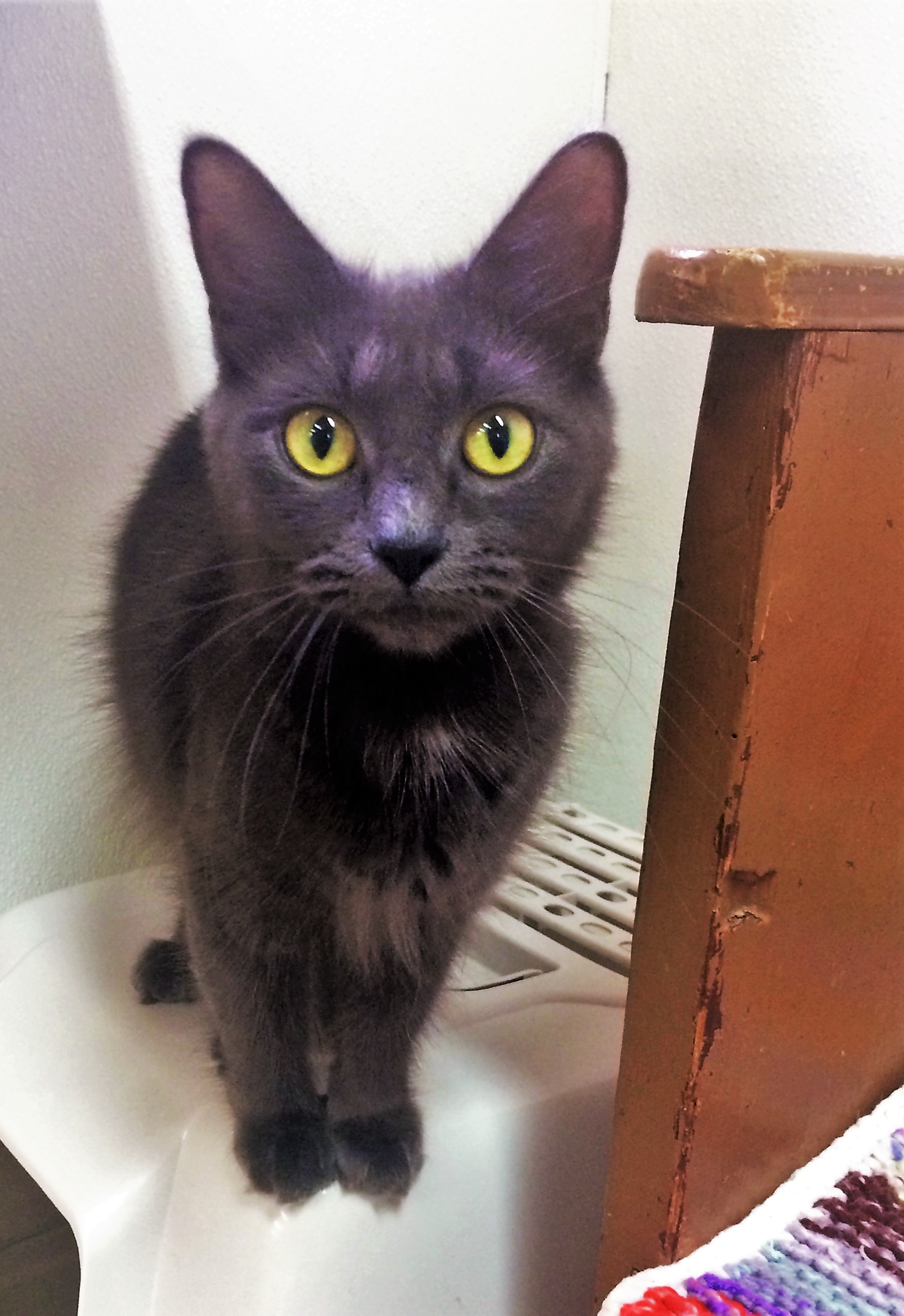
MILA: Domestic medium-hair cat, female, 1 year old, gray, 6 pounds – $0 (adoption sponsored by FOTAS donor)

MILA POTW DEC 24 2017


Feral kittens and the Good Samaritan

By Joanna Dunn Samson, FOTAS Vice President

One morning, you come downstairs to the kitchen, turn on the coffee maker, and open the back door to check the weather. Then you hear it: faint, pitiful mewing sounds coming from the crawl space under the porch. You grab a flashlight and go out to investigate. What you find breaks your heart: six tiny feral kittens, eyes still closed, mewing for what? Food? Mama? Warmth?

What do you do?

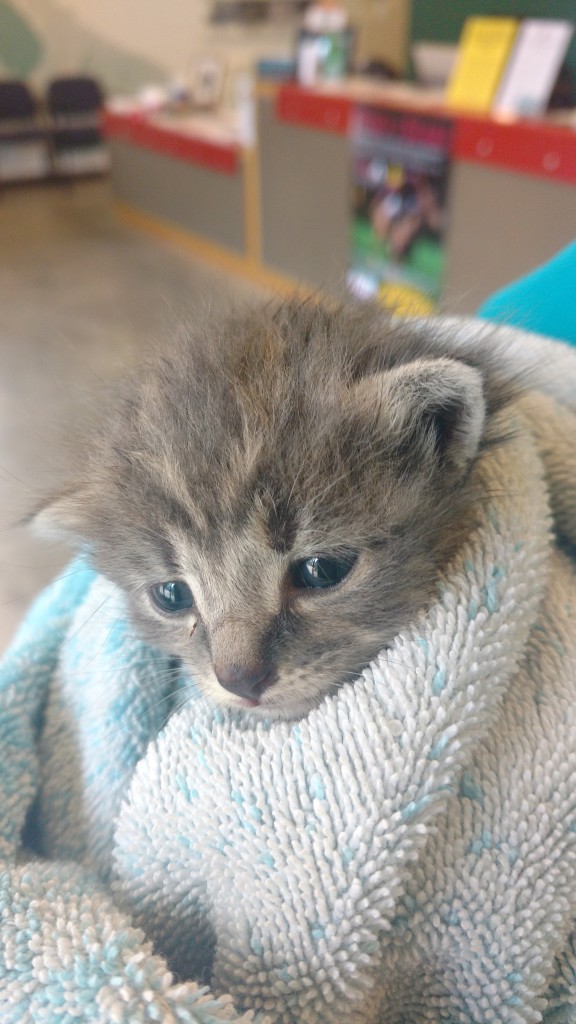
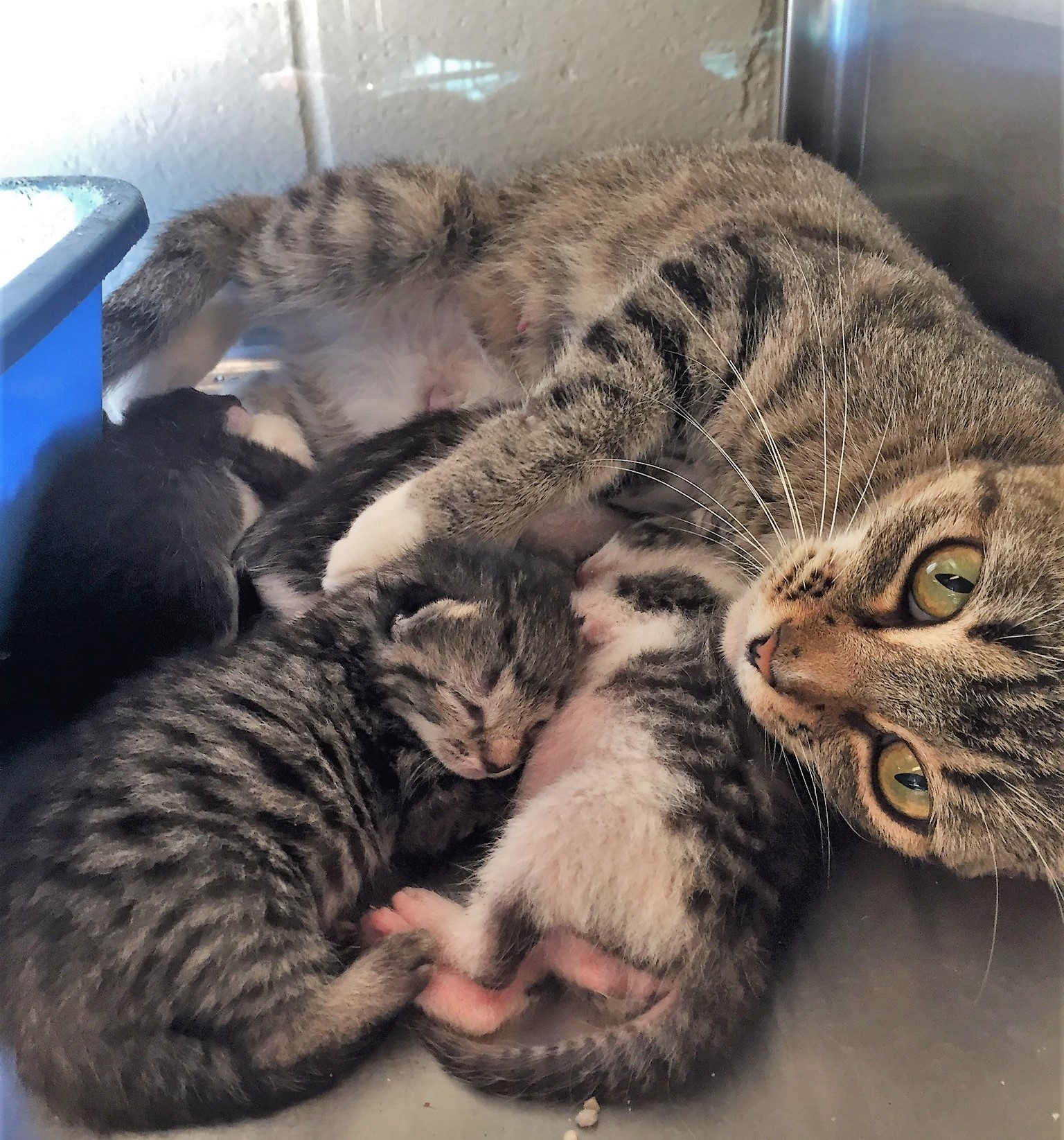
mother cat and kittenThe Good Samaritan in you wants to spring into action and rescue the little snuggle nuggets, but is that the wisest course?

“It isn’t, at least not right away,” says Hillary Clark-Kulis, the Adoption Coordinator for the Aiken County Animal Shelter. “Odds are mama has gone out to feed herself and will be returning soon to care for her babies, and it is always better for little kittens to be cared for by their mama. She can properly clean and feed them around the clock. We advise waiting and watching for mama to return. Patience is the better part of valor in these cases.”

Raising little kittens is tricky business. They need to be fed every two hours around the clock. They cannot eliminate waste on their own, so cleaning and massaging in just the right places is required to allow them to process their food. Mama’s milk also provides crucial antibodies. When the kittens are weaned to hard food, mama teaches them how to be little cats, how to fend for themselves, how to hunt.

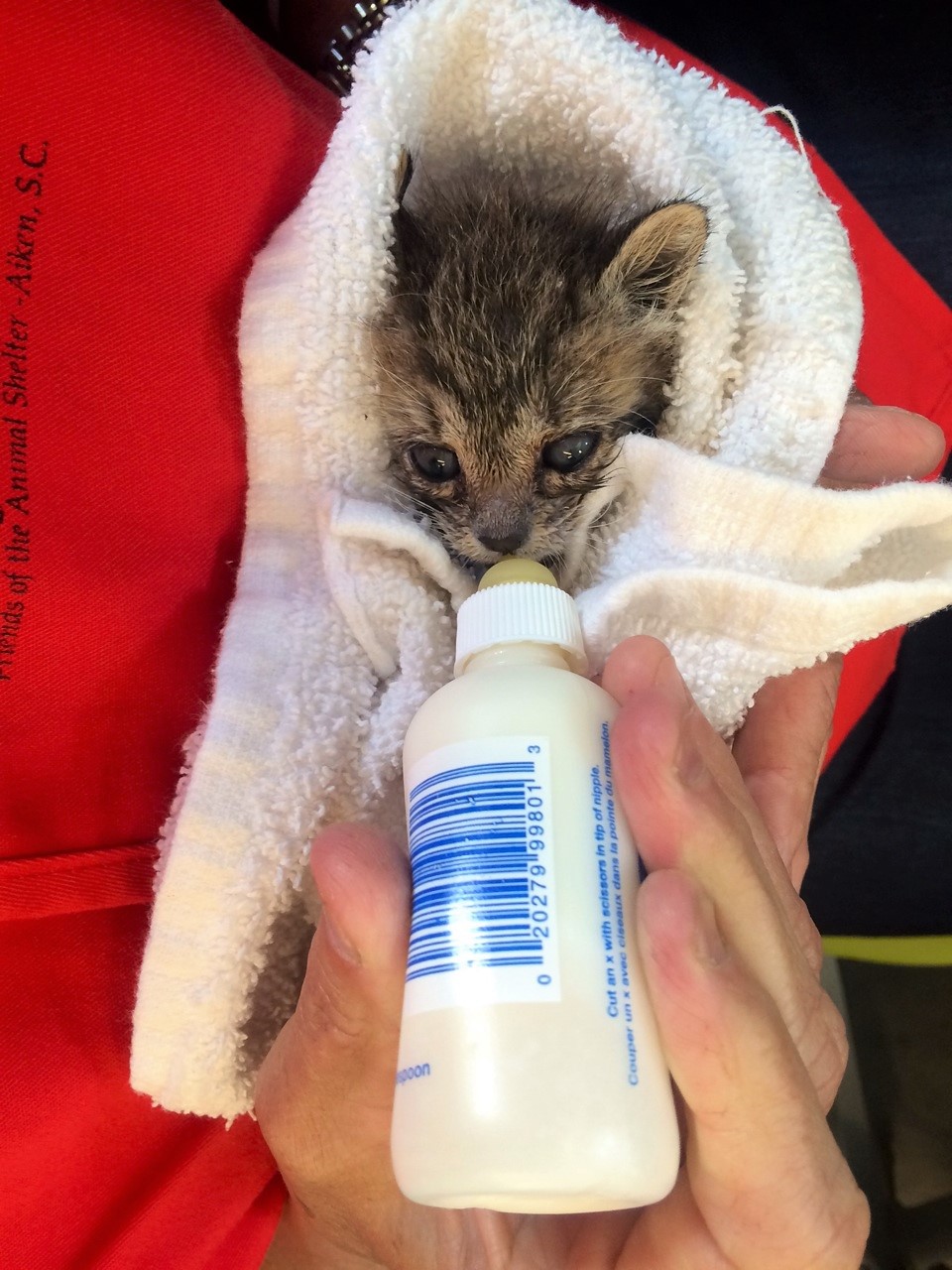
kitten bottle feederAssuming mama comes home, the best thing you can do is support mama until the kittens are weaned. Provide her healthy cat food and clean water, maybe a box with soft towels for a warm dry place to nest.

Feral cats are often fearful of humans, so speak softly, move slowly, try to befriend her, get her accustomed to friendly human contact. FOTAS can provide you with the appropriate supplies if needed.

After about five weeks, call the Shelter and make an appointment to bring mama in to get vaccinated, spayed and returned to field (no cost to you), and the kittens to be vetted and put up for adoption (unless the kittens are too feral, in which case, they too can be vaccinated, spayed and returned to field.)

Let’s rewind: what if you watch the little kittens all day and mama doesn’t return, then what do you do?

Now it’s time to collect the little kittens and bring them to the Shelter. Dr. Levy will assess their health, then FOTAS volunteers will foster the kittens at home. That means two weeks of bottle feeding every two hours, watching their temperature, keeping them clean until their eyes open and they can eat on their own. Once they pass that critical stage, the little snuggle muffins can be socialized until they are big enough to be adopted.
“Taking proper care of new-born kittens requires skill and patience, but there are experienced FOTAS volunteers we call upon for help,” says Kathy Jacobs, FOTAS Program Director. “We couldn’t do it without them, and we always need more volunteers!”

Call the FOTAS hotline at (803) 514-4313 or the County Shelter at (803) 642-1537, when your Good Samaritan is called into service.

Their lives are in our hands.

By the Numbers
Jan. to Sept. 2017: FOTAS Fix-A-Pet and the Aiken County Animal Shelter spayed/neutered 864 community/feral cats that were returned to field.

Pets of the Week

REMINGTON: Retriever mix, male, 2 years old, light brown and white, 46 pounds – $35

ERIK: Domestic shorthair cat, male, 1-1/2 years old, light orange Tabby, 10 pounds – $10 (available at Aiken PetSmart)

Hurricanes and crowded shelters

By Joanna D. Samson, Vice President of FOTAS

The destruction wreaked by Hurricanes Harvey and Irma over the past weeks is almost unimaginable: hundreds of thousands of homes severely damaged or destroyed, tens of thousands of people in temporary shelters. As of the day I write this, there are still 6.5 million people in Florida and Georgia facing 80- to 90-degree temperatures without power.

While the impacts on people are catastrophic, the impacts on animals are equally heart-breaking. Some human shelters made arrangements for household pets, but thousands of people were forced to flee their homes without their pets. Owner surrenders at animal shelters skyrocketed as the storms crawled ashore. As heartbreaking as it is to imagine turning a beloved companion over to a shelter, it was a far better choice than abandoning them to the elements.

In anticipation of the storms, many of the animal shelters in the affected southern states made a desperate effort to transfer their animals to shelters in other parts of the country so they could make room for the inevitable deluge of abandoned and surrendered animals. Here in Aiken, for example, the SPCA Albrecht Center for Animal Welfare took in an additional 28 dogs.

The effort and resources needed to conduct rescue operations and to handle that many additional animals are enormous: hundreds of dedicated volunteers, substantial amounts of food, thousands of extra crates, and medical supplies. Many private vehicles were pressed into service to haul the animals to safety. Already overworked shelter staff worked overtime to accommodate the influx of extra animals. It’s exhausting, time-consuming and stressful work.

Although superstorms like Katrina, Harvey and Irma seem to be increasing as the earth’s temperatures rise, at least the hurricane season is limited to three months out of the year, and thankfully not every year produces a storm of these magnitudes. However, at large public shelters in the southern climes like the Aiken County Animal Shelter, intake skyrockets during the spring and summer months every year, creating the same strain on resources, funds and manpower as an extraordinary weather event.

This summer has been no exception. From May 1st to August 31st, the County Shelter took in 1,920 animals. Over a period of sixteen days in May, the Shelter took in 376 animals, that’s 23 a day. In a single week in August, the Shelter took in 186 animals, that’s 31 animals a day. Those are hurricane-like intake numbers at the Shelter without the hurricane.

The County Shelter is a public facility, obligated by law to take all animals, even when full. Staff and FOTAS volunteers shift into overdrive to accommodate these numbers. It’s an exhausting, time-consuming and stressful time. Superstorms may wreak havoc every couple of years, but super summer intake at the County Shelter happens every year, and it will continue to do so until every County pet is fixed.

The dedication and generosity of the animal rescue communities and their citizens during these recent tragedies has been remarkable. Thank God, because there’s nothing more heart-wrenching than bewildered, scared, suffering animals left homeless through no fault of their own.

We know. We see it week-in and week-out, day-in and day-out, every month during the spring, summer and early fall months. Your County Shelter needs your help all the time—not just for the occasional emergency.

Please, volunteer, donate, adopt. Their lives are in our hands.

By the Numbers
May- August:

1,920 dogs and cats were received at the Aiken County Animal Shelter.

September Adoption Special:

Cat and kittens are $10, dogs and puppies $35

Pets of the Week

LINZY: Terrier mix, female, 3 years old, black & white, 47 pounds – $35
x LINZY: Terrier mix, female, 3 years old, black & white, 47 pounds – $35

AGATHA: Domestic Shorthair kitten, female, 3 months old, black & gray Tabby, 3.4 pounds – $10