

Tag Archives: Dr. Lisa Levy

A Tale of the Crooked Little Puppy

Animal Control brought in a puppy one morning and said there was something wrong with his front legs. I was in surgery so could not look at him immediately but thought to myself, “Maybe he has some hair loss, maybe a cut or, at worst, a broken leg.”

When I was ready to examine him, I wasn’t prepared for what I saw. His front legs were so deformed, I was surprised he could walk. His bones were somewhat curved, but worse were the ligaments in his joints, particularly the wrist. It looked like the top bone was pointing in one direction and the bottom one in another.
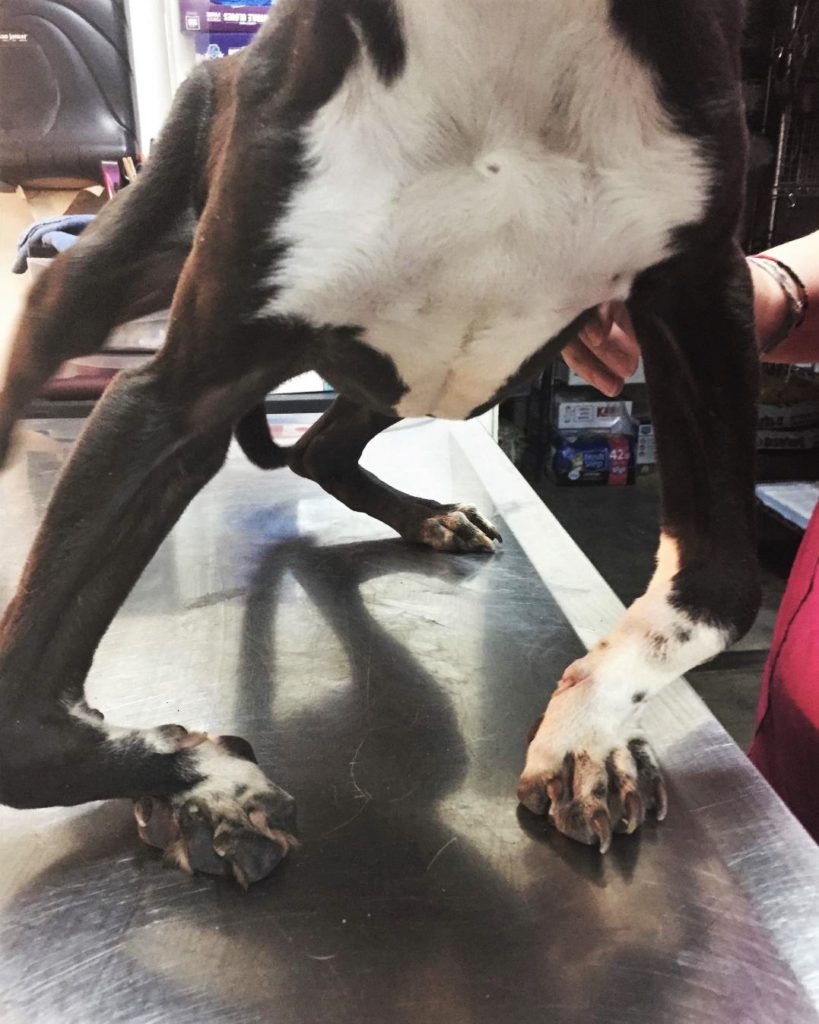
When puppy Ricky arrived at the County Animal Shelter, his legs were so twisted, Dr. Levy was surprised he could walk at all.

The puppy had rickets, which is due to a nutritional deficiency of calcium from lack of proper care. I had never seen such a bad case of front limb deformity, and most of what I had seen were in puppies younger and smaller than he was. I really wasn’t sure we could fix him.

We started him on calcium supplements and splinted both his front legs. When he walked, the splints made a “clicking” sound like someone walking in high heels. He stole everyone’s heart and we named him Ricky.

I wanted to put Ricky into foster care because his recovery might take weeks or even months, and the exercise he could get outside the shelter would benefit him. But I was hesitant as I know foster families get attached and I couldn’t be sure of a positive outcome. Foster extraordinaire Jeri Wesner stepped up and promised me she would understand if he didn’t improve but wanted to give him the best life she could until we knew his final outcome. Ricky proved to be a handful, chewing up his splints and going full throttle all the time.
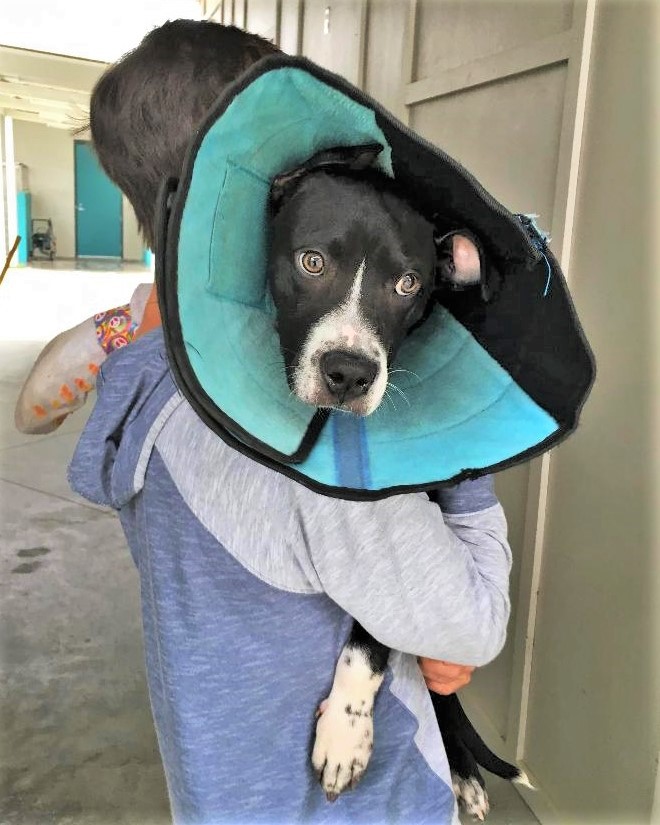
Foster Jeri Wesner brings Ricky in for an appointment with ACAS Veterinarian Dr. Levy

I consulted with Dr. Bogner at Aiken Pet Fitness & Rehabilitation, and she recommended splints on for a few weeks and then leaving them off a few days at a time to strengthen Ricky’s ligaments. After a few weeks, his left front leg looked pretty straight, so we left the splint off. A week later, we removed the second splint but the right leg was still very crooked. We left if off for the weekend, and when he came back Monday, the right leg was straight and he was running normally. It was nothing short of amazing!

Ricky continued to improve and quickly found a forever home. Special thanks to Jeri and all of our fosters whose help is invaluable in the recovery of these special cases.


— By Dr. Lisa Levy, ACAS Veterinarian
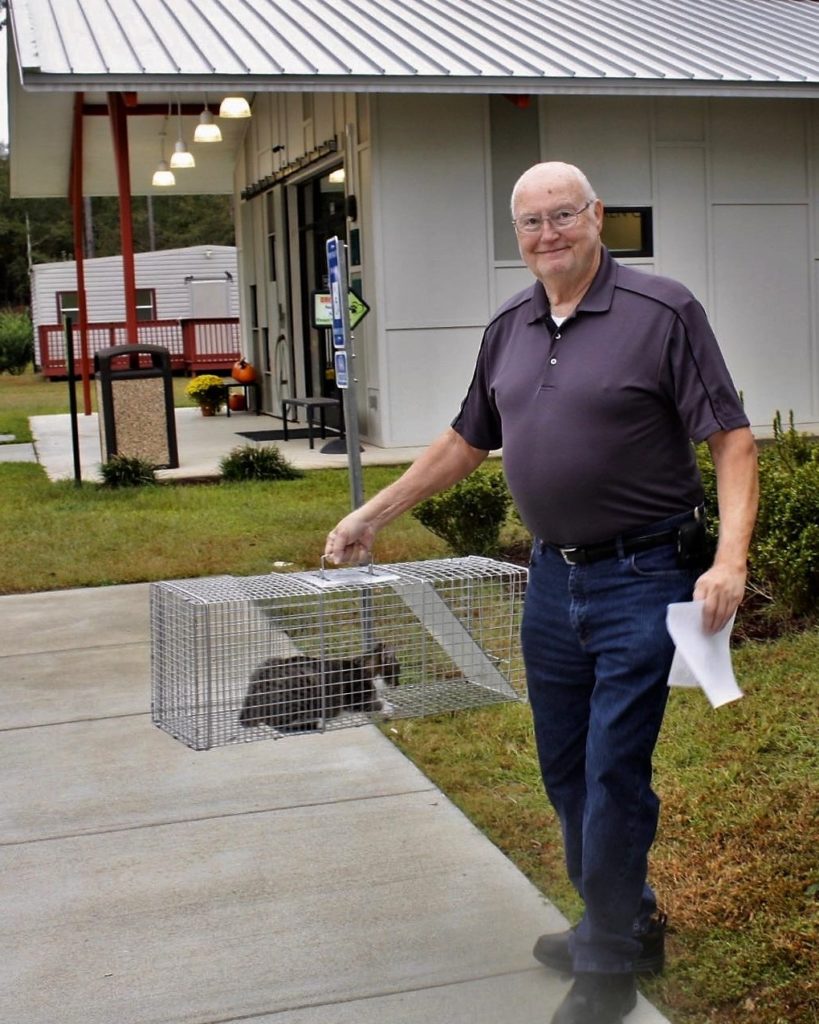
The County Shelter’s Community Cat Program Works!

In 2016, Aiken County passed a resolution to implement a return-to-field program at the Aiken County Animal Shelter. Community cat diversion programs (or TNR — trap/neuter/return-to-field) like the county’s program have been hugely successful all over the country. TNR programs are a humane way to reduce overpopulation of homeless cats in the community and public animal shelters like the county shelter. Here’s how it works: citizens trap a feral cat living in their neighborhood (FOTAS provides the traps, if necessary) and bring the cat to the shelter or to a veterinarian designated by the shelter. The cat is neutered and vaccinated at no cost to the citizen, who later returns the cat to the
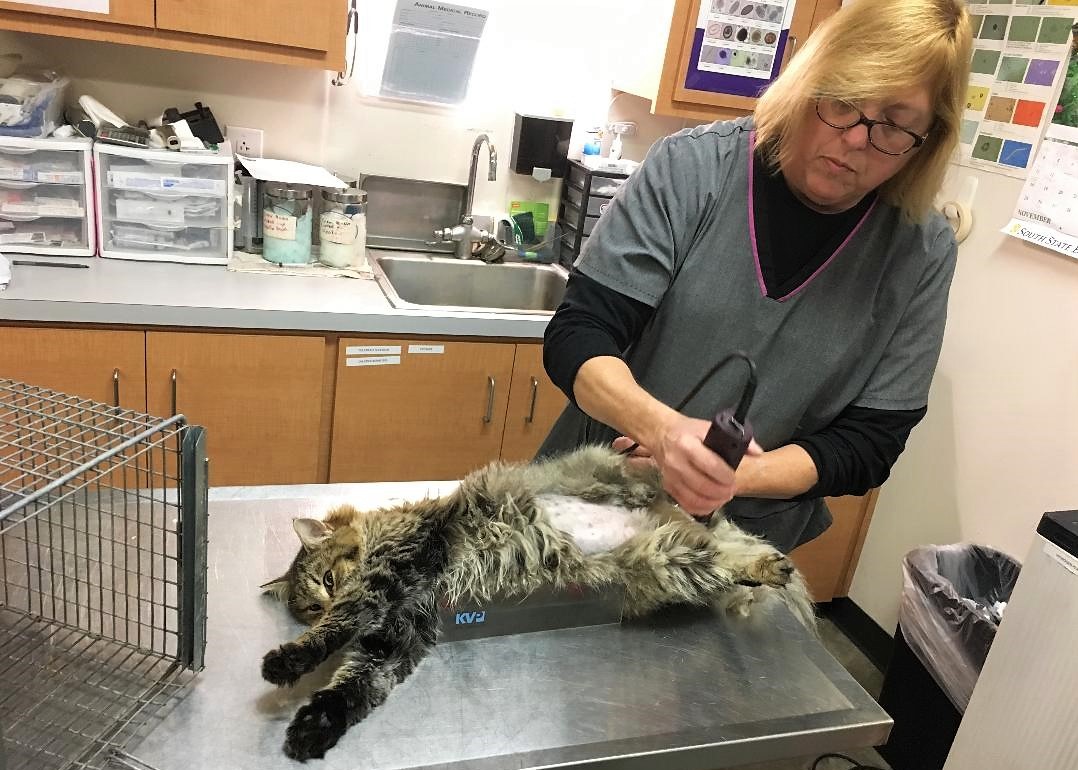
Vet Assistant Lyn Irilli prepares a TNR cat for surgery.
neighborhood. Thus, with help from the local community, the overpopulation of feral cats is reduced. It’s a win-win situation. Why does it work? Because cat colonies that have been sterilized and cannot reproduce do not grow, and since outdoor cats do not live more than two to three years, the cat colonies eventually disappear. The majority of cats received at the county shelter are outdoor cats, so the TNR program reduces the shelter’s intake of cats and reduces the feline euthanasia rate.
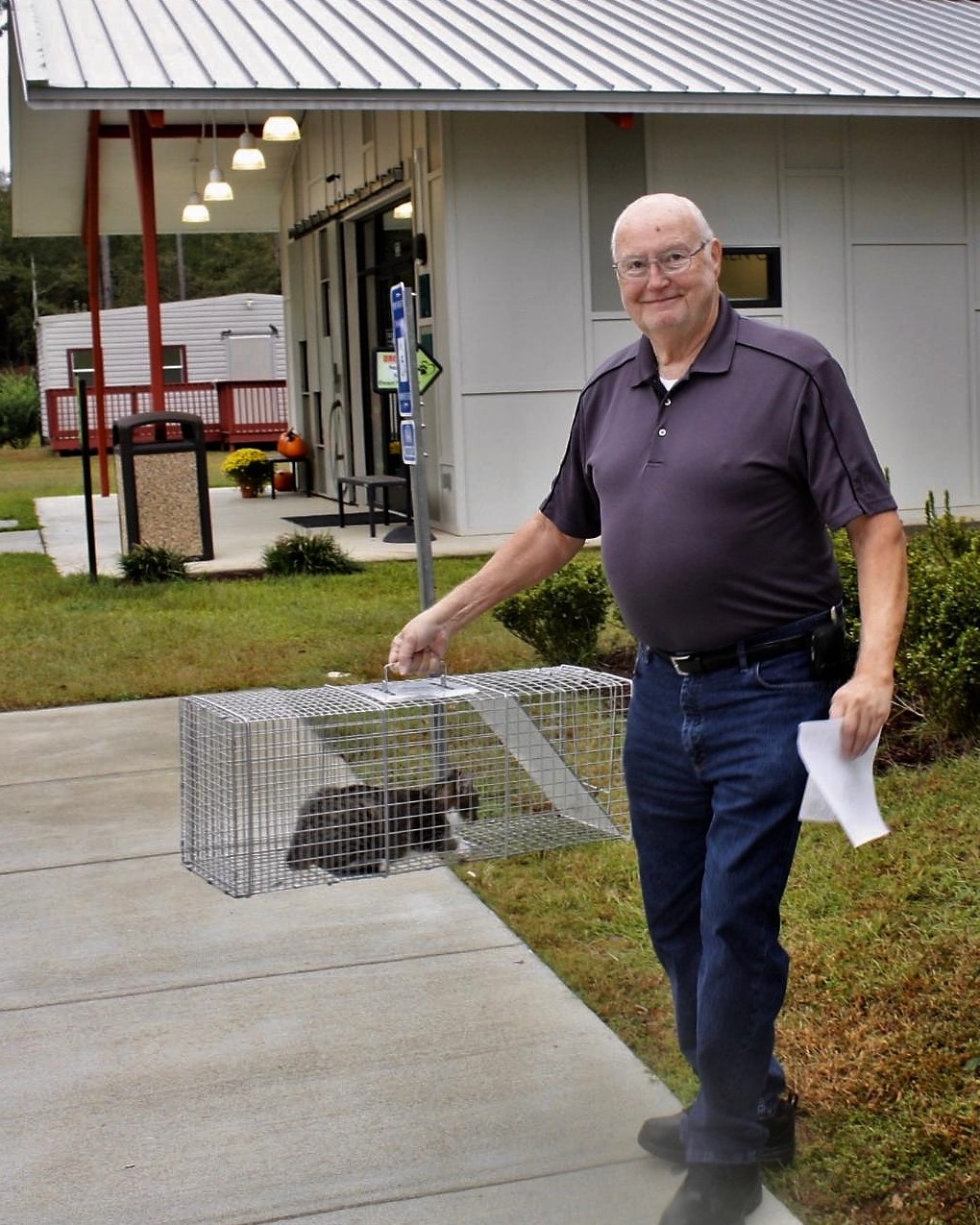
Raymond Hastings takes care of a community cat that has just been spayed at the County Shelter.
In 2016, the year in which the county’s TNR program was approved, the shelter had to euthanize 75% of the cats. One year later, in 2017, the shelter’s euthanasia rate for cats had dropped by two-thirds to 21%. And so far in the first nine months of this year, only 6% of the cats at the shelter had to be euthanized. The county’s TNR program is working! Thousands of cats have been saved in fewer than three years; FOTAS works with the shelter to provide free TNR services to Aiken County residents. In addition, FOTAS has purchased scores of traps to lend to citizens who wish to trap and neuter their community cats and return them to their original colonies. There are so many people who have contributed to the success of the TNR program: • The Aiken County Council and Administration for their continued support for the County’s TNR program. • The shelter staff, Dr. Lisa Levy, and Dr. Mike Wells who work so diligently in-house to alter, vaccinate and ear-tip the thousands of community cats received at the shelter (over 1,100 cats in 2017 alone were saved instead of euthanized). • Our veterinarian partners—Veterinary Services, Aiken Animal Hospital, Aiken Veterinary Clinic, Silver Bluff Animal Hospital—who discount their services to support the TNR program. • Aiken County Animal Control officers who respond to citizen requests for assistance with the feral cats in their neighborhood. • FOTAS volunteers Paula Neuroth and Carl Miller who coordinate and assist in facilitating the TNR program. • Our donors who make it possible for FOTAS to supplement the county’s program and provide additional funding for community TNR cats surgeries. • And of course, our community who cares enough to support this humane and highly effective program. There is still so much to do. The shelter is currently receiving hundreds of homeless kittens. But working together, we can wipe out the county’s feral cat overpopulation and unnecessary euthanasia of cats. For more information, please call the shelter 803-642 1537. Their lives are in our hands.

— By Jennifer Miller, President of FOTAS


By the Numbers From Nov. 1 to Nov. 28, the County Shelter received 344 strays and surrendered pets.


Pets of the Week

PLUTO Retriever mix, male, 3 years old, gray & white, 77 pounds – $35


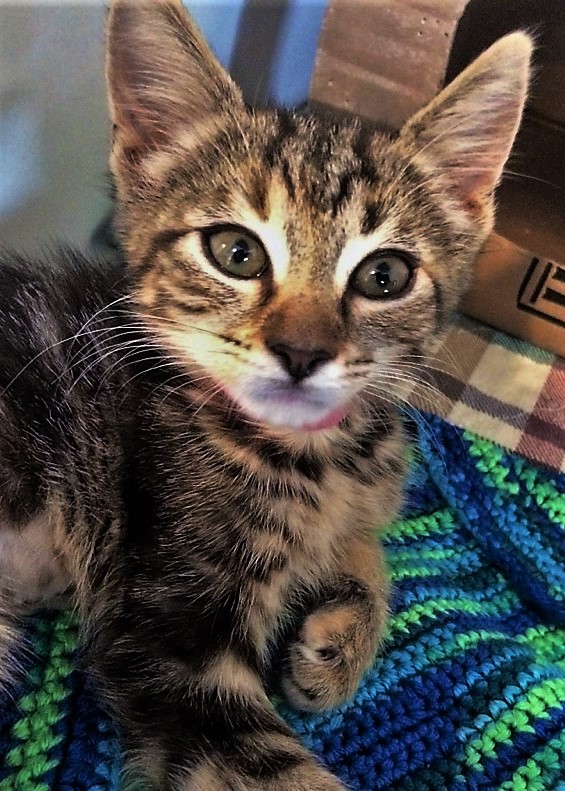
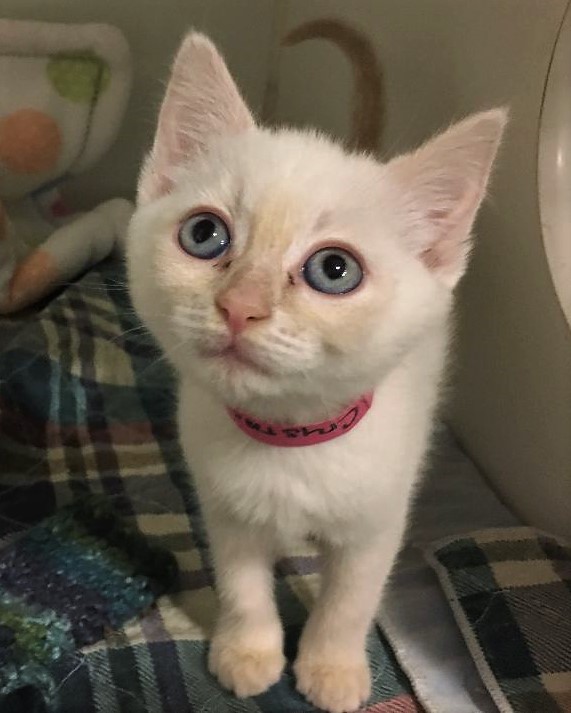
CRYSTAL Domestic Shorthair Siamese mix, female, 2 months old, white, 2 pounds – $10

Giving Thanks at the Aiken County Animal Shelter

Thanksgiving is a time of reflection for those of us at FOTAS — a time to take stock of our blessings; to consider the remarkable progress we and the County have made in making the world a better place for Aiken County’s homeless, abandoned and abused animals; and in particular, to celebrate the many people who have contributed to our success and made this journey so meaningful.

Thanks to our committed partner, Aiken County, for making it possible to save the lives of thousands of homeless animals in the County.

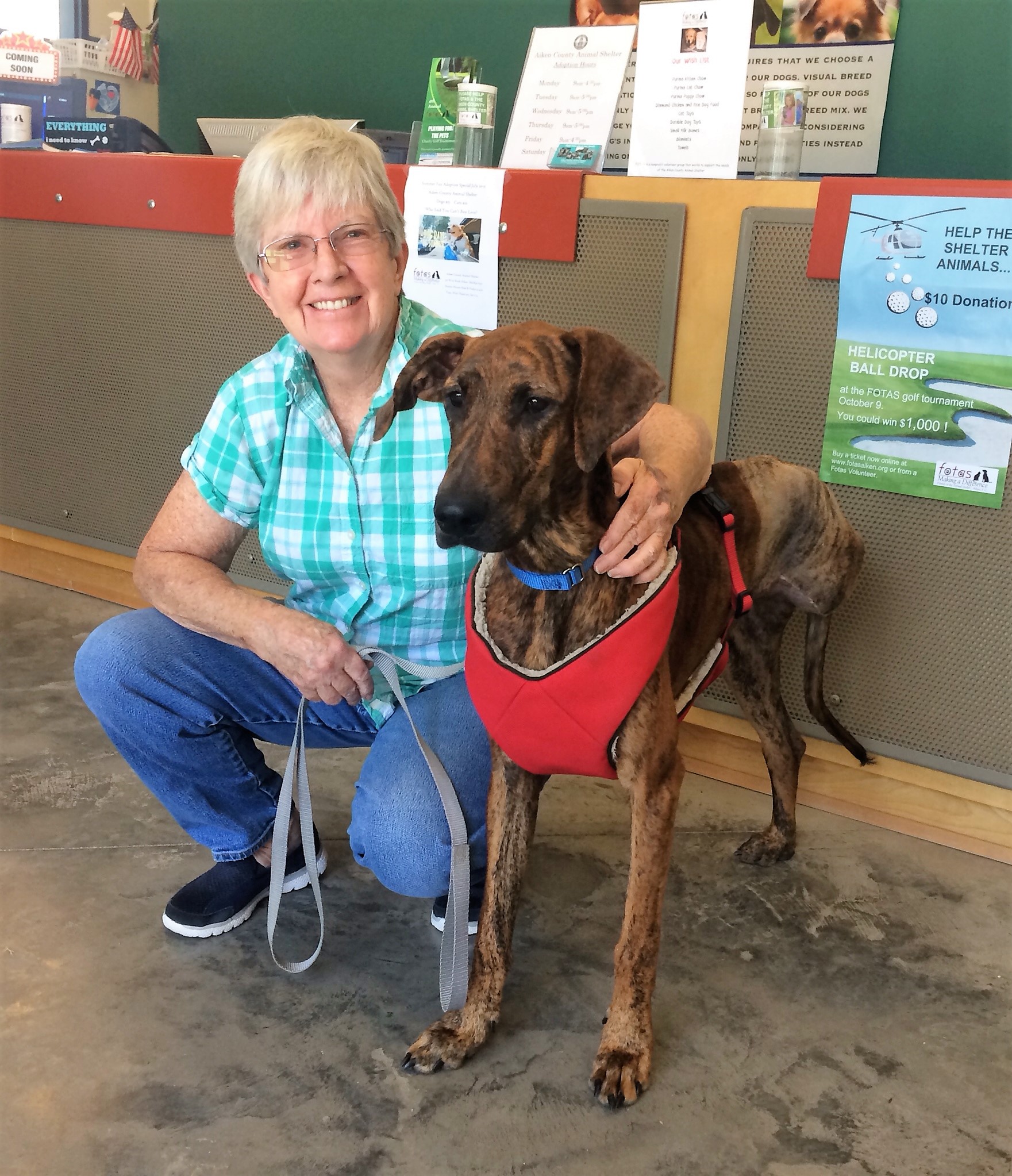
Volunteer Joanne Goble with recently adopted Retriever mix GLENDA

Thanks to Paige Bayne, the County’s Enforcement and Animal Services Director, Bobby Arthurs, the Shelter Manager and Chief Animal Control Officer, Dr. Lisa Levy, the Shelter’s veterinarian, and all the Shelter staff for their dedication to increasing the opportunities for each adoptable animal to find a forever home.

Thanks to the army of volunteers who make the work of FOTAS possible—everything from manning the front desk, walking and training dogs, managing canine play groups, working special events and fundraisers, fostering dogs, organizing transfers, manning off-site adoption events, working on publicity and social media, to financial records and bookkeeping.

Finally, thanks to you, the Aiken Community, for your extraordinary generosity and support. You have made it possible for FOTAS to help the County provide the best possible care for shelter animals and to find them forever homes. As a result of all our collective efforts, FOTAS was one of ten recipients out of thirty-three thousand charities in South Carolina recognized by the secretary of state as an “angel” charity for its effective and efficient service in the community.

That’s a very big deal.

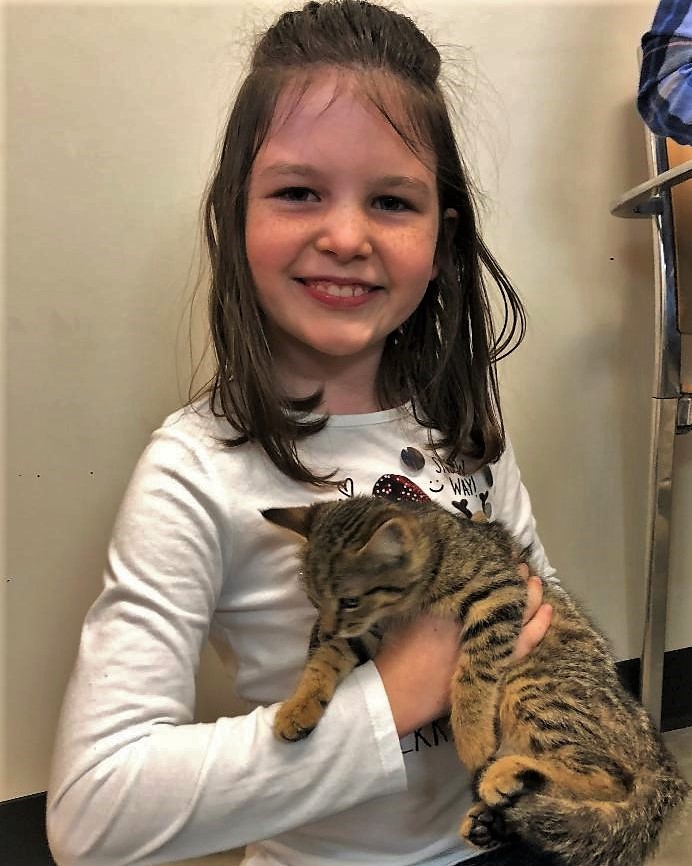
Abby Grant, who won the Adopt a Shelter Pet Coloring Contest in the Aiken Standard, plays with a kitten at the shelter.

But there’s still so much to do. Intake at the shelter has exploded— in the last six weeks over 700 animals were surrendered to the shelter. The strain on the system, our resources, volunteers, and staff is huge, and eventually the system will not be able to keep up. It just can’t.

The answer to reducing these extraordinary intake numbers is to reduce the homeless population by fixing every pet. Adopting a pet into the family requires commitment and responsibility for shelter, food, and medical care for the pet’s entire life.

Sure, sometimes awful things happen to good people and they are forced to do the unthinkable and give up a beloved pet, but surrendering an animal to a public shelter must be the very last resort. We are pleading with folks to network with their friends and family, use social media, do everything they can to rehome their pet into a safe and healthy situation. No matter how good FOTAS and the county shelter are, a pet surrendered to the shelter is at risk because there are just so many animals that can be absorbed into an already pet-saturated community at any given time.

Please join us in our fight to reduce the homeless population of pets through spay/neuter and educating the public about pet responsibility. Thank you, and God bless you and your family during this holiday season.

Their lives are in our hands.

— By Joanna D. Samson, FOTAS Vice President


By the Numbers
In the last six weeks, more than 700 animals have been received by the Shelter as strays or surrendered pets.


Pets of the Week

LINNETTE
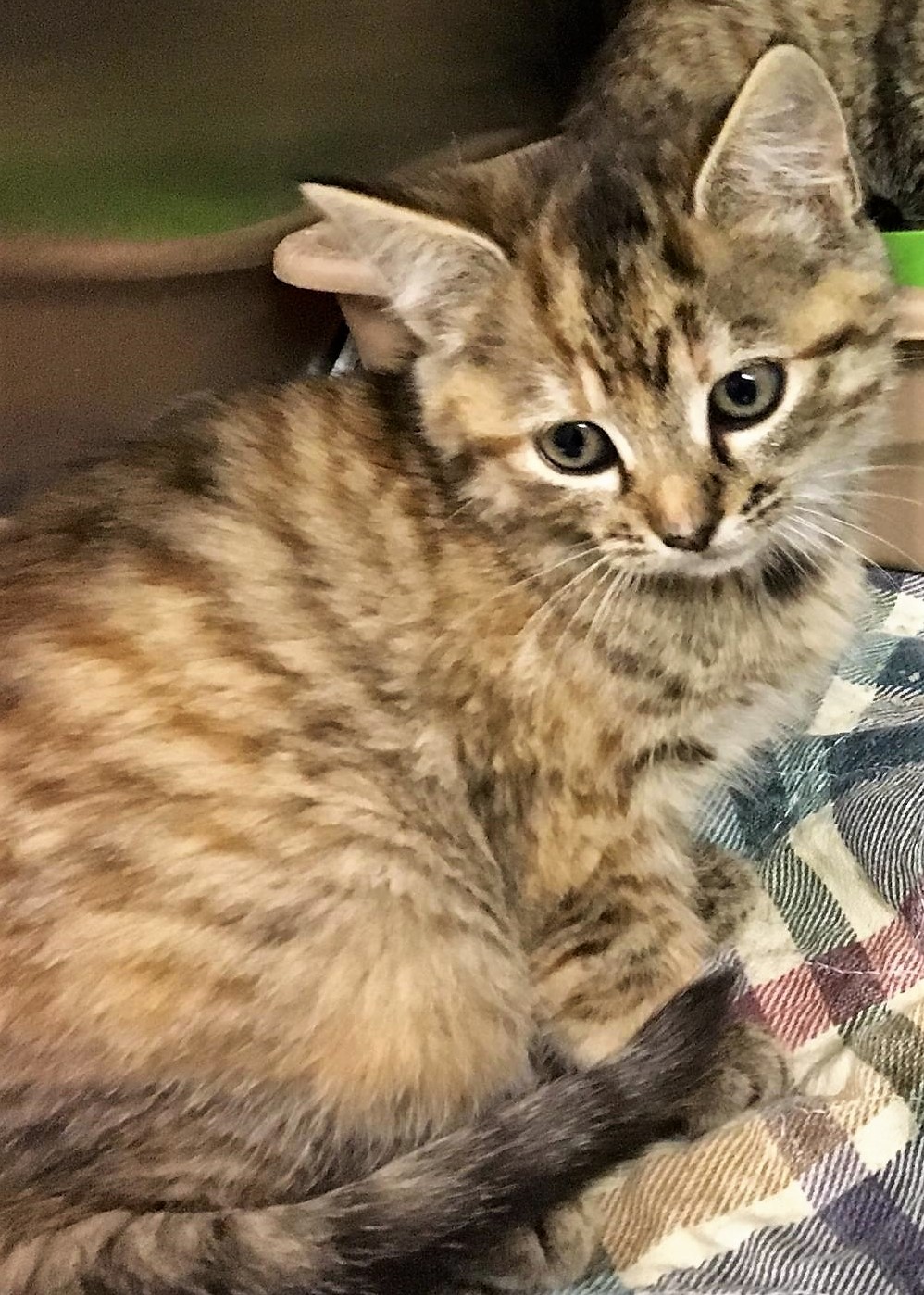
Domestic Shorthair, female, brown Tabby, 2 months old, 1.8 pounds – $10


PUMPKIN
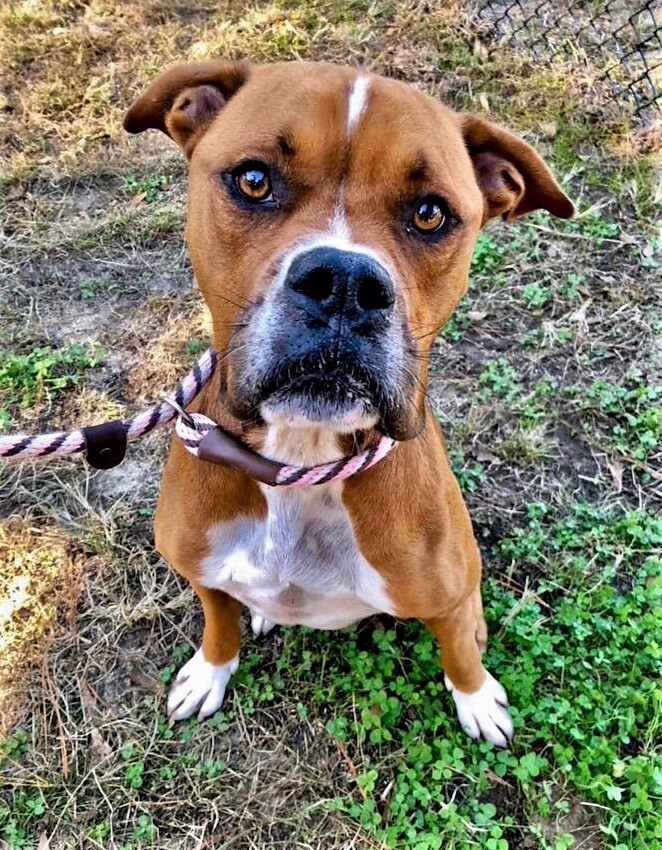
Boxer mix, male, brown & white, 2 years old, 63 pounds – $35

Feline FIV is a Virus, Not a Death Sentence

Each day as I finish my rounds at the shelter, I leave a list of things to be done for our team of veterinary assistants (three of the hardest workers on the planet!) that includes testing our newest cat residents for Feline Leukemia (FeLV) and Feline Immunodeficiency Virus (FIV).  When I come in the next morning, my heart would sink if they told me that anyone tested positive for either disease.  This had always meant euthanasia since these cats were considered unadoptable.  But over the last several years, that opinion has changed.

Becky was the first FIV positive kitten adopted under the Shelter’s new FIV adoption program.

FIV infection is transmitted primarily by bite wounds.  It is not transmitted sexually or through casual contact.  Infected cats may live a completely normal and long life. Or they may at some point succumb to the virus, which attacks the immune system and allows the cat to become vulnerable to other infections such as respiratory, mouth, bladder, skin, and eye infections.  Once the cat develops recurring infections, the disease is inevitably fatal. What allows some cats to live with the virus and develop no symptoms and some cats to become ill is unknown and therefore unpredictable.

Kittens may test positive if born to an FIV positive mother but that is most likely due to transfer of antibodies and most of these kittens will test negative within six months.  True FIV infections in kittens are possible but not common.  Because of this, the Aiken County Animal Shelter has decided to adopt out FIV positive kittens.  We will retest these kittens in six months at no charge.  The adopter must understand that we can in no way guarantee these kittens will test negative, although statistics show that most kittens will become negative.

In the case of adult cats, things are a little trickier.  We have no way to predict the outcome for these cats.  We recently adopted out our first two FIV positive cats, Rowan and Martin.  They were adopted by someone who already has an FIV positive cat, so they posed no threat to spread the virus – an ideal placement.  Any home with no other cats would also be a great option.

Adoptable FIV positive kittens are now available at the County Shelter for just $10 each, including (left to right): Becky, Analeese and Tillie.

We are often asked if this infection is contagious to people or dogs, and the simple answer is no.  But if any member of the family is immunocompromised or on immunosuppressant drugs, to be safe we don’t recommend exposure to these cats.

All FIV positive cats should be kept indoors to prevent the cat from being exposed to other diseases.  They should also be kept inside to prevent the possibility of exposing other neighborhood cats to the infection through “cat fights” as we know cats are fiercely territorial.

I know that we are asking a lot of someone to adopt a cat that may have a shorter than normal life span.  But the way I look at it is that God made the majority of “pet species” with shorter life spans than ours.  So, we will inevitably experience the heartbreak when we lose them after 10-15 years.  These cats develop FIV through no fault of their own, but just by acting in the true nature of a cat.  Does this mean they shouldn’t experience a loving home for the time they do have on this earth? 

We always end this column with the words, “Their lives are in our hands,” and never has this been more true.  If you are selfless enough to consider adopting one of these cats, please let us know so we can contact you the next time we see that dreaded positive result on a test.

— By Dr. Lisa Levy, Aiken County Animal Shelter Veterinarian

Mason Is Mostly a Gentleman, Partly a Rascal and All Love

Hi! I’m Mason, a resident at the Aiken County Animal Shelter. Actually I’ve been here a very long time, and that’s a bad spot to be in, particularly now that summer’s here and the shelter is packed. Last month, 545 animals came in to the shelter. 545! That makes me mad, all those homeless dogs, cats, puppies and kittens.

Jeez, people, can you fix your animals already? This is ridiculous!

Mason playing with his best pal, Chevy.

Sorry, I digress. Like I said, I’ve been here a long time, and although I’ve never in my whole life had two great meals a day, a safe place to sleep, someone like that nice Doc Levy to keep me healthy, and lots of great pals who call me Mason the Magnificent (seriously, I never even had a name before!), I need to find a home—pronto!—so the shelter can take care of all those other deserving animals.

Plus, I admit it. With all the heat and noise and barking, I get a bit cranky from time to time, and maybe it’s my imagination, but I think my volunteer friends look really sad when they look at me. Whoa. That makes me nervous.

So, I decided it was time to take things into my own paws, maybe post my profile and handsome mug on one of those doggie relationship sites, like DogMatch.com or CanineCuddle.com. I recruited my really great chum Kathy Jacobs (the FOTAS Program Director) to help me write just the right words to convince someone to adopt a big, squishy lovebug like me.

Kathy and I sat out on a bench in the shade with a few treats for brain power and kicked around some ideas. I thought something like “Meet Mason the Magnificent—a beast in the

“They call me Mason the Magnificent but you can call me Superdog for short.”

kitchen!” or “Looking for a friend to share meaningful roll in dead squirrel” would be catchy intros, but Kathy kyboshed those ideas right out of the gate.

“Change my password to hamsburger…”

Then I posed for some photos—this way and that, front, back, sideways—to catch my best side, maybe make my head look a little less square. But here’s the thing: I gotta square head, plain and simple. A handsome square head, if I say so myself, but no way I look like some retriever or lab-mix.

Finally, after lots of back and forth, here’s what we came up with:

Hey all you hungry-for-canine love folks, if you’re looking for a two-year old hunk-a-hunk of burning love, I’m your guy.

If you’re the kind of person that likes romantic walks, cuddling on the couch, and a great pal to ride in the car with you, I’m your guy.

 If you’re looking for a pal who’s housebroken, healthy, walks on a leash, and knows basic commands, I’m your guy.

By the way, did I mention that adopting me will cost you NOTHING nada, zip, thanks to the generosity of my great pal, Thomas Baker, who is sponsoring my adoption fee?

Oh, and Kathy says to make sure to tell you I have to get out of the shelter–soon. I hope that doesn’t mean what I think it does.

So please, come to the county shelter and take me home, for FREE, as soon as you can! You won’t be sorry.

My life is in your hands.

— By Joanna D. Samson, FOTAS Vice President


By the Numbers

July Summer Adoption Special: dogs and puppies $35, cats and kittens just $10.
 July 1 – 5: The Aiken County Animal Shelter received 71 strays and surrendered pets.


Pets of the Week

ELAINE: Retriever mix, female, 3 years old, yellow, 52 pounds– $35


EDISON: Domestic Shorthair, male, 3 months old, black & white Tabby, 1.7 pounds – $10


FOTAS: Christmas spirit, gratitude and saving animals

Every Sunday, the ‘Aiken Standard’ allows us this space to tell you about the Aiken County Animal Shelter, FOTAS and the plight of the 5000 homeless animals consigned to the Shelter every year, and we are deeply appreciative for that opportunity. Over the years, we have used this column to tell you about initiatives designed to save the lives of more animals and to report on our progress. We have written about the special people who have made a difference in the lives of the Shelter animals, and we have showcased particular dogs or cats who had captured our hearts and needed a little extra “ink” to find them that perfect home.

This Christmas Eve, however, we are not going to use this space to report or convince or to ask you for help; instead, we are simply going to thank you … all of you:

Chairman Gary Bunker and the County Council, County Administrator Clay Killian, and Assistant County Administrators Ashley Jacobs and Brian Sanders for being responsive and responsible public partners;

Councilwoman Kathy Rawls, believed in our mission from the very start and helped us build the successful public/private partnership between the County and FOTAS;

Paige Bayne, Director of Aiken County Code Enforcement, and our beloved Bobby Arthurs, Chief Animal Control Officer and Shelter Manager, who directly oversee and manage the Shelter operations with thoughtful and dedicated attention to the welfare of the animals;

The County Shelter staff—the intake administrators, adoption coordinators, vet assistants, kennel techs and custodians—who make certain that all of those animals are properly documented and cared for with compassion and efficiency;

Dr. Lisa Levy, the Shelter Vet, whose medical prowess and big heart has saved the lives of hundreds of animals who arrive at the Shelter abused, mangled and injured, giving them a second chance;

The FOTAS volunteers, who work on bookkeeping, social media, and special fundraising events; who work with FOTAS Fix-a-Pet and curbing the population of community cats; who organize and work on special fundraising and on-site events; who foster mamma dogs and cats and all their progeny, who care for animals designated for transfer; who shuffle animals to off-site adoption events; who greet the public and man the front desk, walk the dogs, love up the cats, work with play groups, and show animals to potential adopters—the dramatic and steady increase in the Shelter’s live release rate since 2009 (84% so far this year) is directly related to their efforts; and

Last but not least, you, the Aiken community, who have supported our efforts with enthusiasm and generosity, adopted your pets from the thousands of deserving animals who end up in the Shelter, and who are working to end the excessive population of homeless animals by spaying and neutering your animals—you have designated the Shelter as your community shelter, and we could not be prouder.

The Board of Directors of FOTAS—Jennifer Miller, Mary Lou Welch, Edythe Hubler, Frank Townsend, Dr. Charlie Timmerman, Caroline Simonson, Ellie Joos, Ellen Priest, Grant and Heather Wiseman, Shanna Ryberg Pearsons, Jeri Barrett, Allison Tyler, myself, and FOTAS Program Director Kathy Jacobs, wish you and your family Merry Christmas and a happy and healthy New Year.

Their lives are in our hands.

By Joanna D. Samson, FOTAS Vice President

By the Numbers

December specials – dogs/puppies $35, cats/kittens $10

January through November: FOTAS and the Aiken County Animal Shelter saved 3,706 dogs and cats.

Please adopt and help us save 4,000 by the end of 2017!

Pets of the Week

MARIELLE: Shepherd mix, female, 3 years old, black w/white, 31 pounds –$0 (adoption sponsored by FOTAS donor)

MARIELLE POTW DEC 24 2017

MILA: Domestic medium-hair cat, female, 1 year old, gray, 6 pounds – $0 (adoption sponsored by FOTAS donor)

MILA POTW DEC 24 2017


Surgeries at the County Shelter Give Two Dogs a New Lease on Life

By Dr. Lisa Levy, ACAS Veterinarian
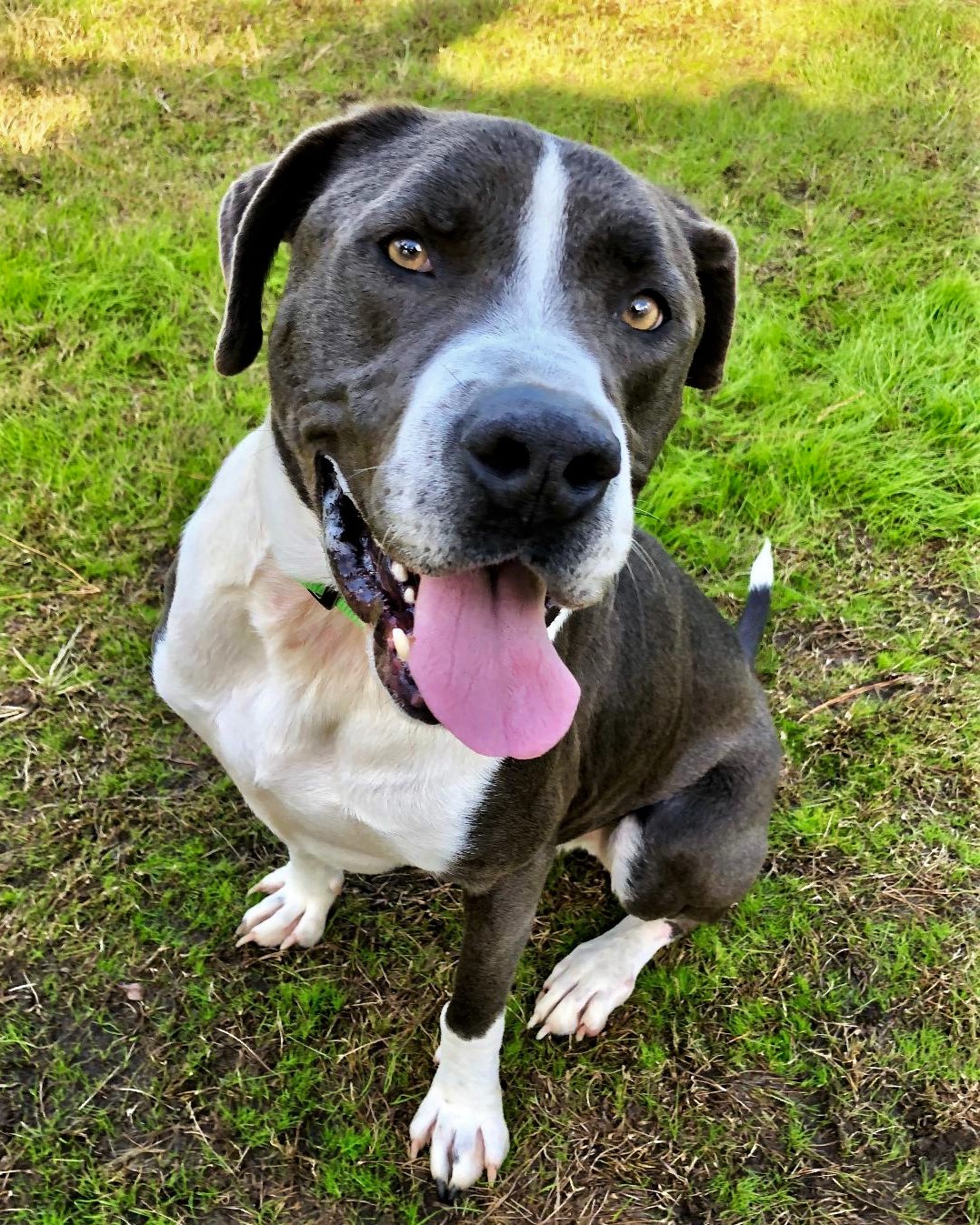
To paraphrase Forrest Gump, working at the shelter is like a box of chocolates. Every morning when I make my rounds, I never know what new problem attached to a wagging tail I’m going to get. A couple of weeks ago, two dogs with severe medical problems needing immediate attention were waiting for me at the Shelter clinic.

A BB was found imbedded in Remington's eye
A BB was found imbedded in Remington’s eye

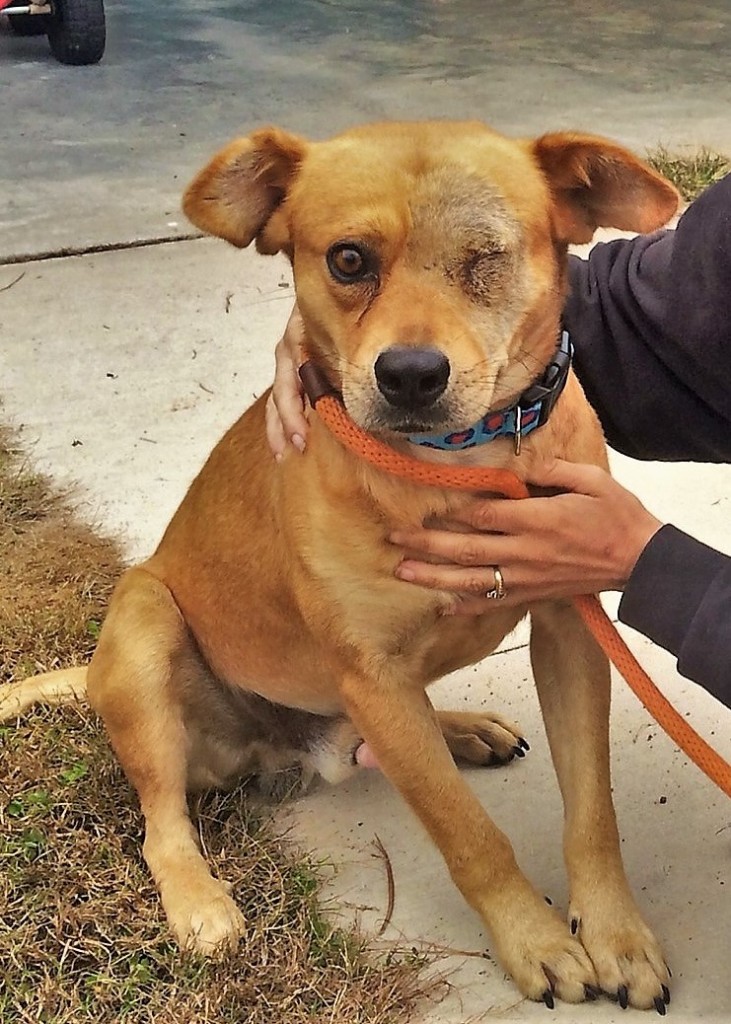
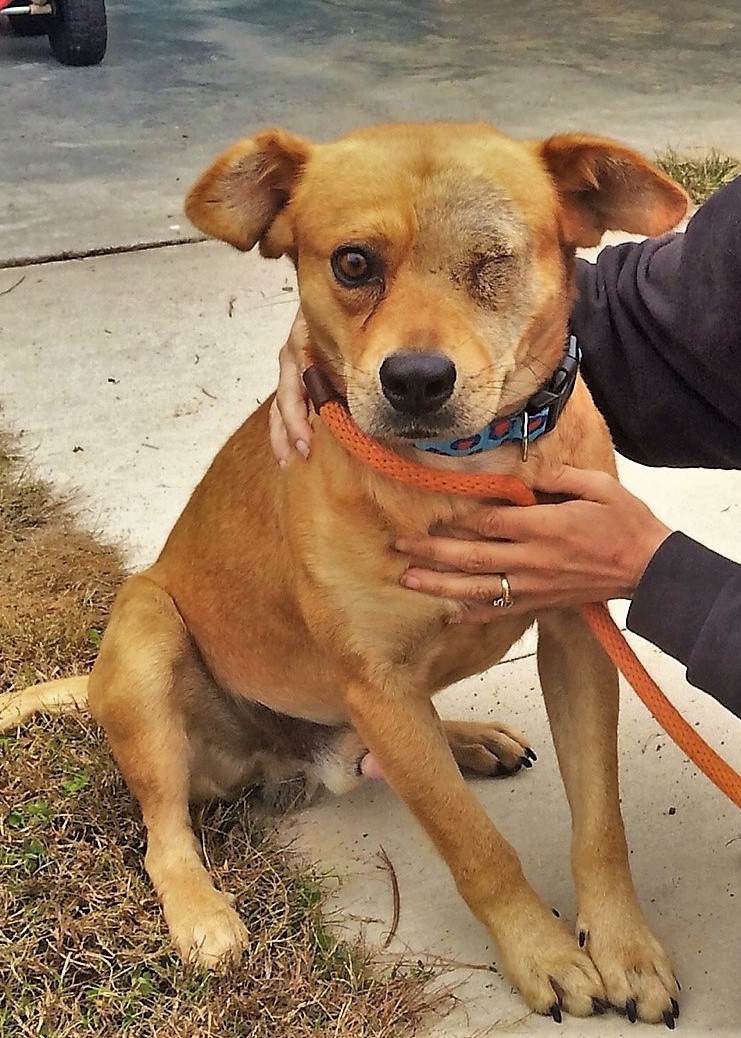
First there was Remington, a beautiful brown retriever-mix with one very expressive eye and one injured eye—the cornea was completely opaque giving it a blue-gray appearance. From the thickness of the scar tissue on the cornea, I knew it was an old injury. Honestly, it made him look “creepy,” and I was worried that would turn off potential adopters and affect his chances of getting a new home.

Since Remington was blind in that eye anyway, I decided to remove it to improve his appearance. I was also concerned about the possibility of glaucoma developing, which can happen with any eye injury.

When we sedated Remington, we noticed several BB’s under his skin which unfortunately is not that uncommon of a finding. What was unusual is that during the surgery I found a BB in his eye socket. He had been shot in the eye! Remington recovered beautifully and is so much happier since the surgery. His sweet temperament masked the fact that he was in pain, but I am glad that we could make him comfortable again.

I still cannot understand how someone could use a dog for target practice, showing total disregard for them as living, feeling creatures. Educating children on humane treatment of animals is critical. That’s why programs like FOTAS’s “Dog Ears Reading Sessions” are invaluable. By encouraging children to read to shelter dogs, it not only helps the child’s confidence in reading skills, but helps them see the dogs as individuals with personalities and feelings. It’s a win all around.

Grace gets a big hug from FOTAS canine coach Darling Rios

My second unique patient that week was Grace. Grace is an elderly, gray Pibble. The Animal Control Officer who brought her in left a note on the intake sheet: “Vet Please Check!” As I approached her kennel, she greeted me enthusiastically and I thought to myself, “What’s the issue?” Until she turned sideways. Then I thought, “Oh my goodness!” There was a large growth hanging off the back of one rear leg. I mean an impressively large growth. It was also very irritated from rubbing on the ground every time she sat down.

When no one claimed Grace, I decided to remove the growth and give her a chance to find a new home. I was concerned about how she would handle anesthesia at her age, but she through like a champ. We weighed the growth after surgery and it weighed two-and-a-half pounds!

Both Remington and Grace tested positive for heartworms, which is common in the South among dogs who are not properly protected. The good news is that we can medically eliminate the heartworm infection, allowing these canines to lead normal, long lives. Both dogs have started their treatment, which is being paid for by FOTAS.

Remington and Grace are awesome dogs and waiting for adoption with a new lease on life.

By the Numbers
November Adoption Special: cats/kittens $10, dogs/puppies $35

Pets of the Week

DELTA: Mixed breed, male, 4 years old, brown, 63 pounds – $35

HATTIE: Domestic shorthair cat, female, 1-1/2 years old, gray and black Tabby, 5.5 pounds – $10

Medical Equipment Donations Making a Big Difference


By Dr. Lisa Levy, ACAS Veterinarian
The Aiken County Animal Shelter has received some amazing donations in the last few months and I am pinching myself to be sure it is real! FOTAS received an email from Lisa and Ken Kasper asking if we would be interested in a slightly used x-ray machine that they were willing to donate. They had heard about FOTAS from Dr. Kathy Bissell, a local veterinarian who was instrumental in starting FOTAS’ Trap, Neuter, and Release (TNR) program in the county.
A free x-ray machine! Are you kidding me?

In the past, when an animal needed to be x-rayed, it required them to be transported to a local animal hospital. My previous employers, Drs. John and Jennifer Hurd of Silver Bluff Animal Hospital, were gracious enough to allow me to use their x-ray machine whenever the need arose and never charged anything to do so. Despite their amazing generosity, I felt I needed to pick and choose my cases so as not to take advantage of them.

And there was the issue of transportation. I drive a Mustang, so for a cat or small dog it was no problem. But I could not fit a big dog in a crate in my car. Since I am technically not a county employee, I cannot drive a county vehicle, so a shelter employee (most often Randy Bush, our head kennel technician) had to drive the shelter van.

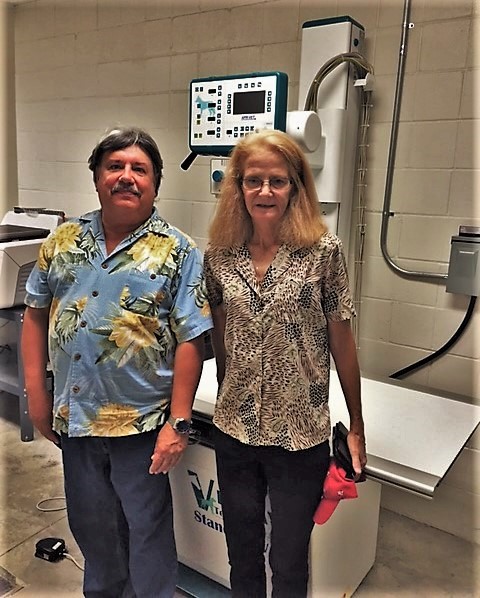
So now, thanks to the Kaspers, the shelter has its own high-quality digital x-ray machine. They donated the machine, the cassettes, the computer, and even the lead gloves and aprons needed to safely take the x-rays. FOTAS volunteers Peter Miller, Bill Joos, and Dr. Mike Wells drove to Lexington to pick up the equipment. After deciding where to locate the equipment, Paige Baine, head of Code Enforcement, and Bobby Arthurs, Shelter Manager, coordinated with county services to upgrade the electrical system. FOTAS paid for the installation, registration with DHEC, and training.

Ken and Lisa Kasper donated a digital x-ray machine to FOTAS.

Last week, on the day of installation, I took my first x-ray! It was of a super sweet husky that had been hit by a car. I could feel that she had a pelvic fracture but I did not know how badly it was broken. The x-ray revealed two breaks, but neither involved the hip joint, so she should heal fine with just rest. She will be going into foster care for several weeks to recover before she is adopted.

Also last month we received a donation of an autoclave, a machine that sterilizes our surgical instruments, from Augusta Urology Surgicenter. This was made possible through a connection with Erica Lowe, a veterinary technician at North Augusta Animal Hospital. We had one autoclave which can sterilize four surgical packs at once. Since we started the TNR program for the feral cat population in the county, the number of packs used in a day has doubled – so this donation could not have come at a better time.

I am so grateful for the Kaspers, Augusta Urology, and FOTAS for contributing to the care and well-being of all the animals that pass through the shelter on their way to forever homes. It truly does take a village!


Pets of the Week

PENELOPE: Shepherd mix, female, 4 years old, red with white, 71 pounds - $35
    PENELOPE: Shepherd mix, female, 4 years old, red with white, 71 pounds – $35

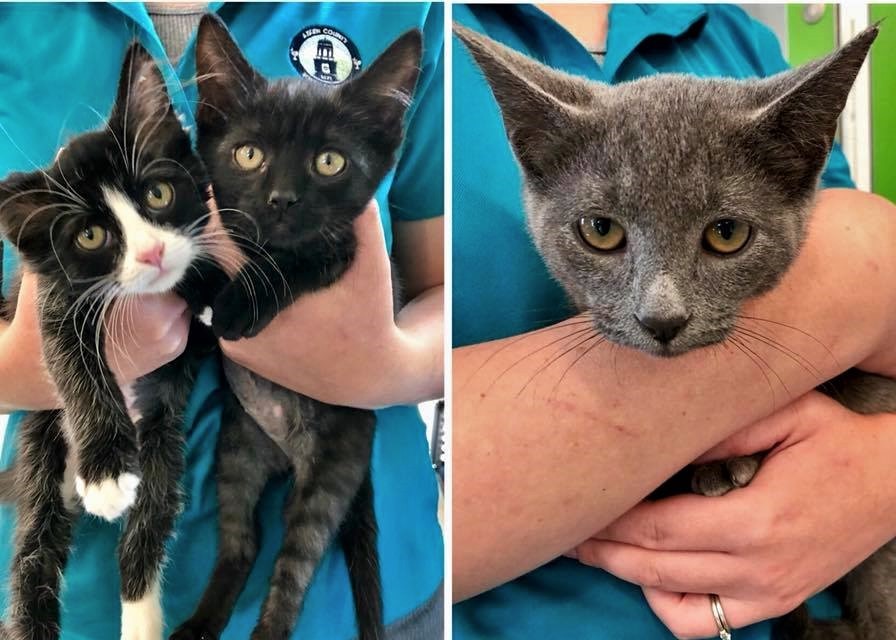
CLIO: Domestic Shorthair kitten, female, 2 months old, gray and black Tabby, 1.8 pounds - $10
CLIO: Domestic Shorthair kitten, female, 2 months old, gray and black Tabby, 1.8 pounds – $10

By the Numbers


September Adoption Special:

Cat and kittens are $10, dogs and puppies are $35

One Less Leg, Just as Much Love

Dr. Lisa Levy, ACAS Veterinarian
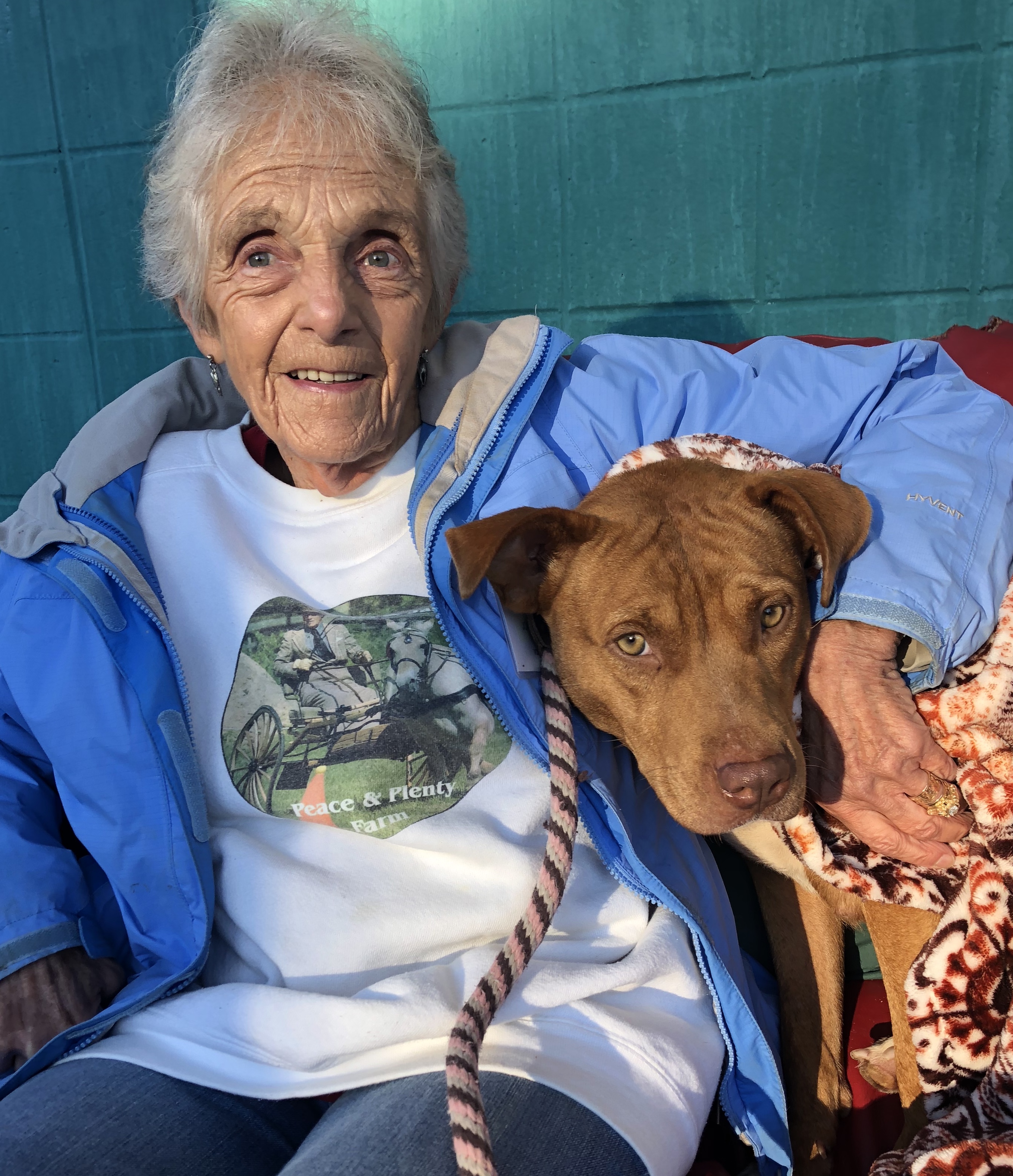
Three years ago, a small, scared, black dog came into the shelter. Her right rear leg was missing below the knee, leaving the end of the broken bone exposed. She also had a deep scar around her neck from a past embedded collar. Normally she would have been euthanized, but something about her touched me. This dog never had a chance to be loved. I decided to surgically amputate the leg for proper healing, and then adopted her myself. I named her Trinity and she is the happiest little dog I have ever owned. She makes me smile every day.
So I obviously have a heart for three-legged dogs, but this month has been exceptionally trying. In the three years I have been the shelter veterinarian, I have amputated nine legs prior to this month, including one from a dog that was adopted by one of our veterinary technicians. But in just this month, I have had five dogs that needed amputation for various reasons.
First was Jerry Lee, a Coonhound who suffered a gunshot wound that shattered his front leg below the shoulder. He healed beautifully and was quickly adopted. Next was Rouge, a Terrier mix. Her front leg was broken in several places and she had sustained some nerve damage. She did well with her surgery, but unfortunately she also has mange. She is being treated for that but it has delayed her adoption for a few weeks.
Tallulah came in with a broken rear leg that resulted in a severe infection in her hock joint. The joint had swollen to grapefruit size. Despite antibiotic treatment, her condition did not improve and her leg had to be amputated. Tallulah was adopted within hours of being placed on the adoption floor.
Chance is a 10-month-old Pit Bull mix. His rear leg was broken just above the knee. X-rays showed the fracture to be several weeks old and it was never properly set. This resulted in what is called a “non-union”. The bone tried to heal but the ends were not close enough to allow them to bridge properly. After his mandatory 5-day hold, his leg will be amputated as he is unable to stand on it.
Finally, upon arrival at the shelter Monday morning I discovered a dog that came in over the weekend looking much like my Trinity. She is a very happy Pit Bull mix but her leg was severed below the knee and the bone was protruding. She was probably hit by a car, or maybe she was caught in a trap. By the time you read this, her leg will be amputated, too. She will be available for adoption after her recovery.
Just a few years ago, all these dogs would have been euthanized. However, since FOTAS has purchased a gas anesthesia machine, we are now able to do longer surgeries safely and can save these dogs (and cats, too). Each of these surgeries can take up to 90 minutes in addition to our normal daily surgery schedule. But with the abuse or neglect these animals have suffered, it only seems fair and right to give them a chance to find a loving home. Just like my Trinity.

Dr. Lisa Levy at home with her three-legged family member, Trinity.

Tallulah is adopted by Deborah Winall of Trenton. The brindle Hound’s back left leg had to be amputated following a severe infection that threatened her life.


BY THE NUMBERS

In August, cats and kittens are just $10, dogs and puppies are half-price ($35).

PETS OF THE WEEK

Tallulah is adopted by Deborah Winall of Trenton. The brindle Hound’s back left leg had to be amputated following a severe infection that threatened her life.
LULU: Terrier mix, female, 5 years old, brown, 32 pounds – $35

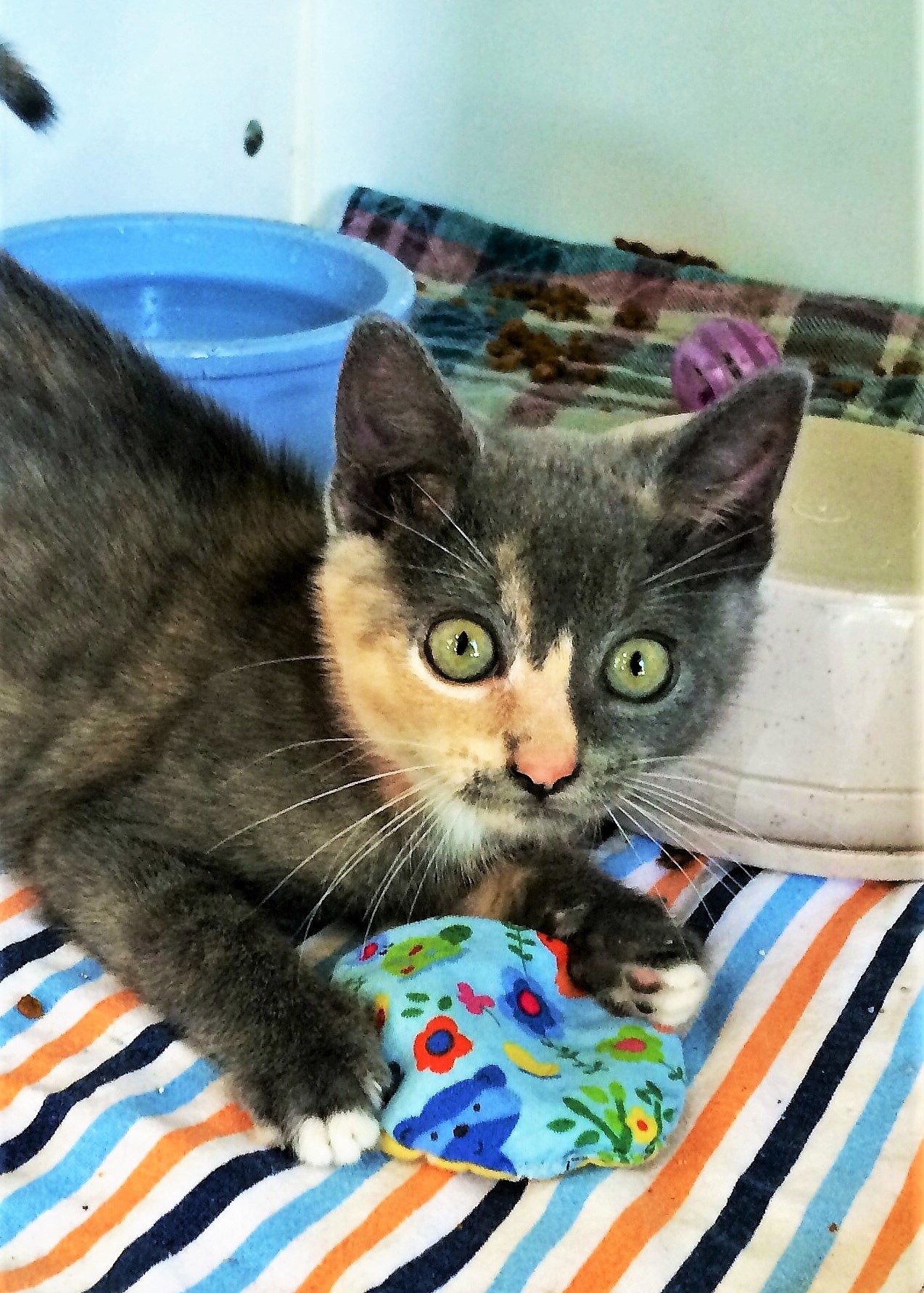
Domestic Shorthair cat, female, 3 months old, muted Tortoise Shell, 1.8 pounds - $10
Domestic Shorthair cat, female, 3 months old, muted Tortoise Shell, 1.8 pounds – $10

Quick action and teamwork saves Shelter dogs during fire

by Bob Gordon, FOTAS Director of Communications

Finally, the skies were quiet again. The severe storm that caused the Shelter’s power to go out several times, had moved on. Stranded adopters who didn’t want to leave with their adopted pets during the torrential rains, headed for their cars. FOTAS volunteers began cleaning the kitten condos while staff finished paperwork. Everyone was a bit relieved that the rush of activity was over and the dangerous storm had left the area. It was 4:20 on Wednesday, less than an hour until closing time.

“Fire!” somebody called out. “We have a fire in adoption!” It was Veterinarian Technician Judith Gulden-Schmitt. Judith had been chatting with Administrative Assistant Liz Kornaus when she glanced over at the adoption wing and saw flames showing through the door of one of kennels. Liz immediately called 911 and Judith alerted her fellow Vet Techs, Betty Milne-Erikson and Lynn Irilli, who grabbed leashes to move the dogs out of the burning adoption wing. At the same time, Kennel Custodians Christin and Summer Foster jumped into action and moved dogs from the smoke-filled adoption pod to the intake wing located on the other side of the building. FOTAS Volunteers Pat Ludwig, Paul Tallent and Lannie Brancato also grabbed leashes and began moving dogs to safety.
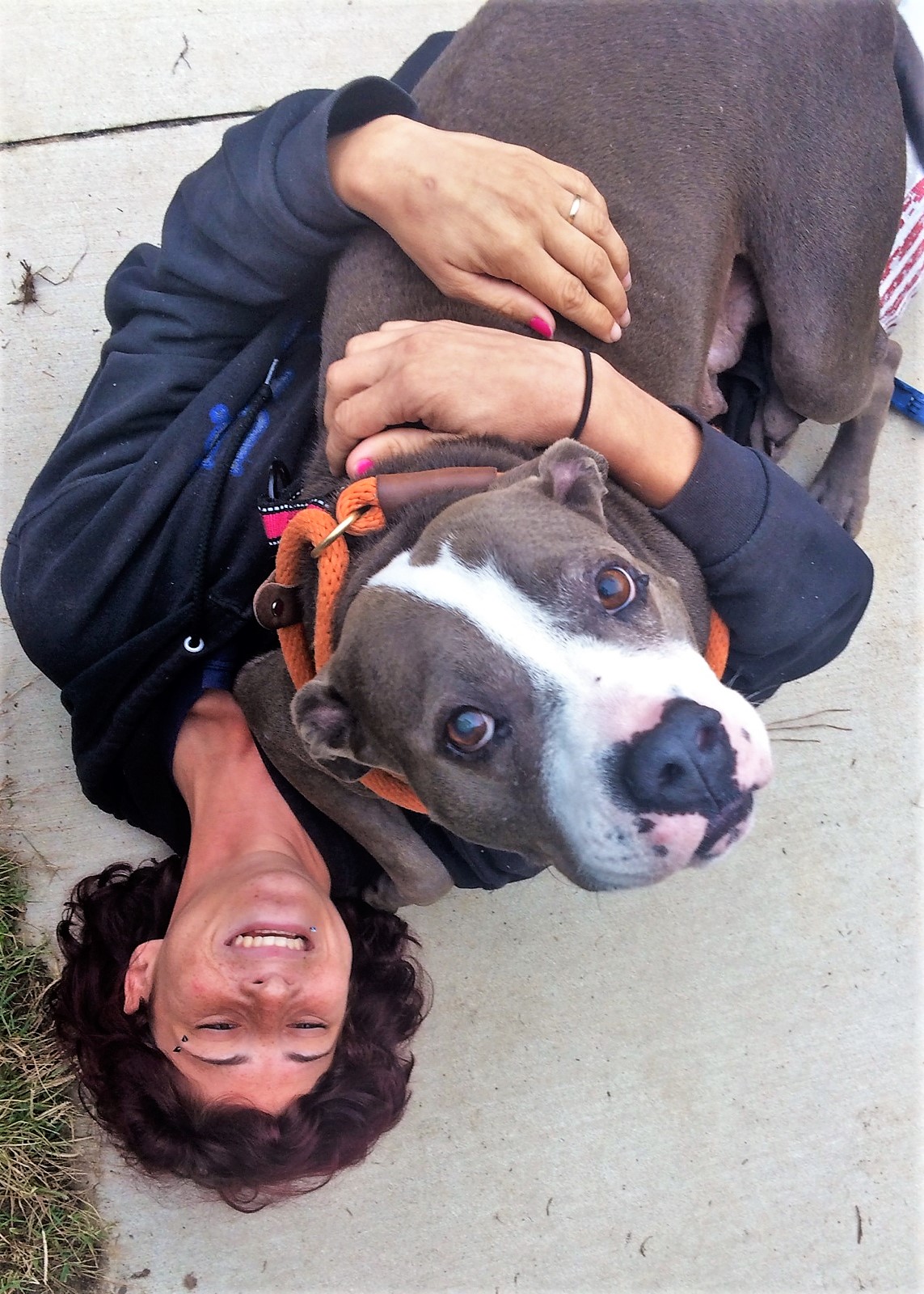
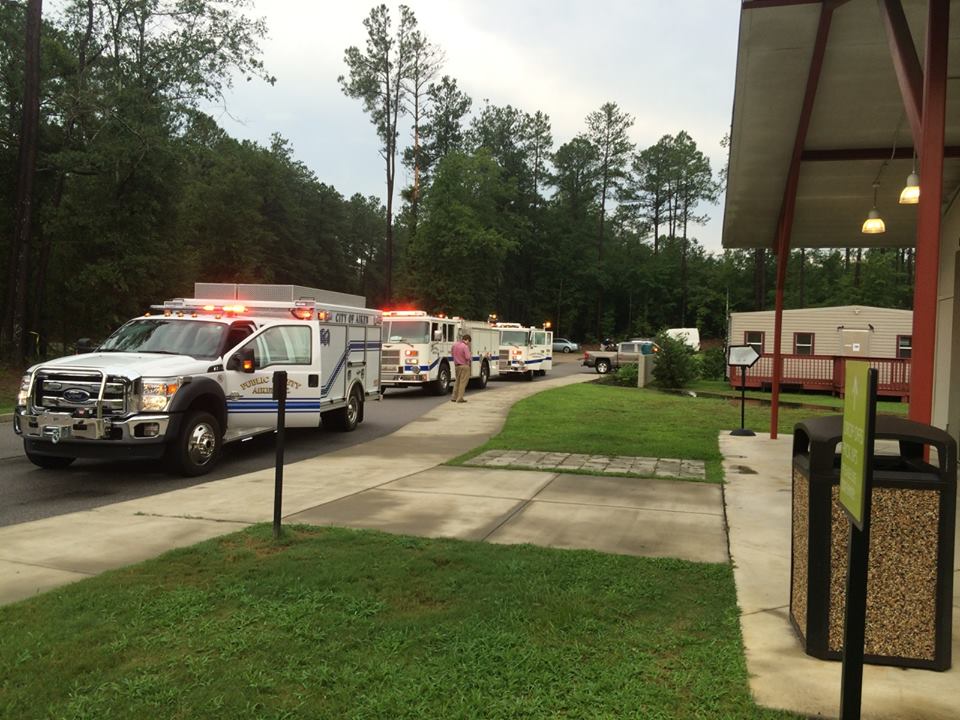
Paul and I moved two of the dogs, Flash and Gracie, to the main building, putting them in the employee break room temporarily. The goal was to get the dogs out before they were harmed by the fire either directly or through smoke inhalation. We rushed back out to evacuate more dogs. One of the dog beds was on fire along with the ceiling tiles but luckily it wasn’t spreading as fast as we feared. Betty helped me leash Phoebe and I leashed Rowdy, then took them into the main building. Behind me was Animal Control Officer James Fisher with another dog. He said we could put all three dogs in his office.
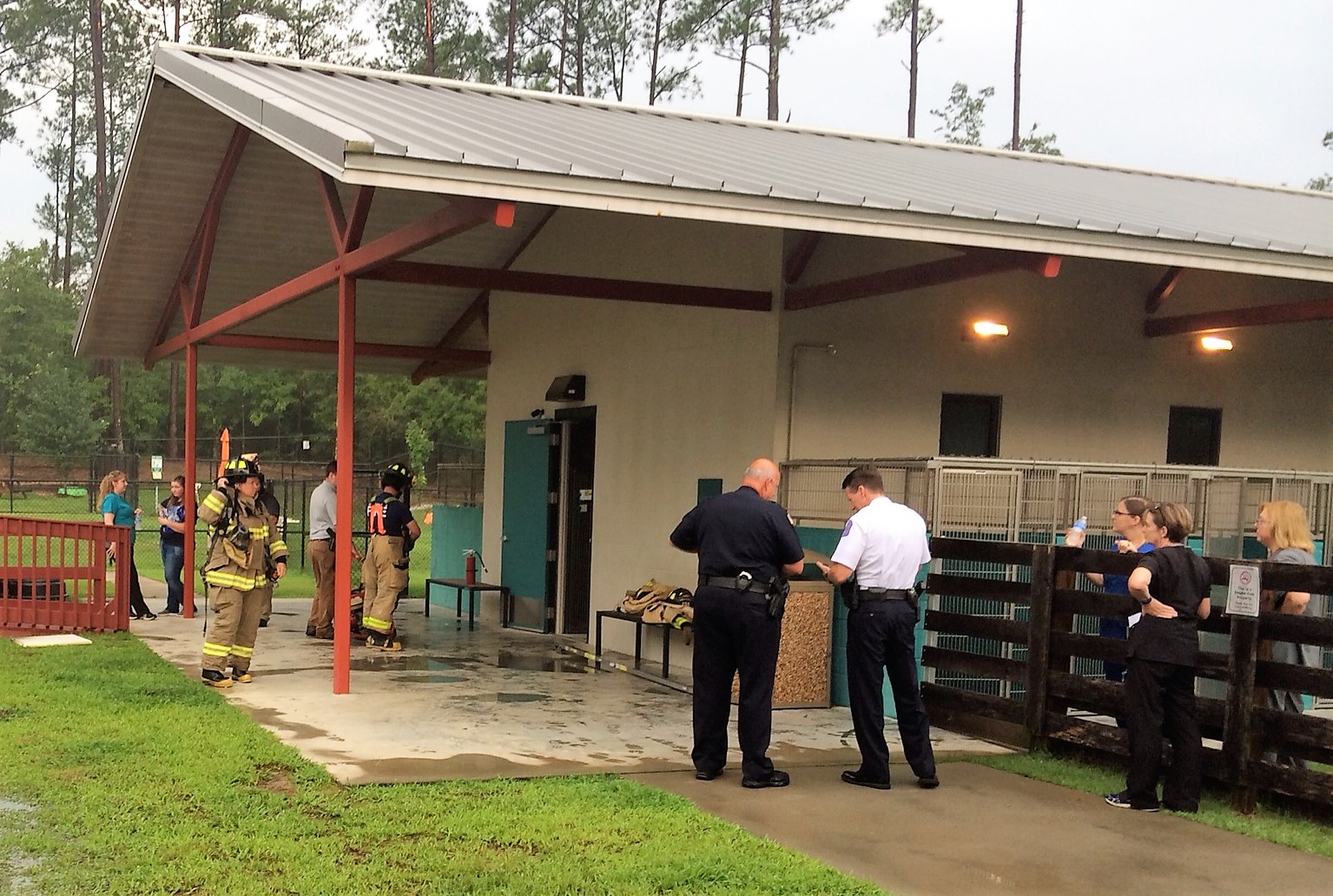
When we got back outside, we could already hear the sirens of the fire and rescue trucks, and all the dogs were out of the adoption wing and safe from harm. Shelter Manager Bobby Arthurs managed to put the fire out with a fire extinguisher as the dogs were evacuated. Director of County Code Enforcement Paige Bayne arrived at the scene right away and provided direction and support. County Administrator Clay Killian, Assistant Administrator Ashley Jacobs, and County Council Chairman Andrew Siders were also on hand. Many other County leaders and community members responded to the emergency, either by coming to the Shelter or calling to see how they could help.

“Everyone’s response time was very quick,” Bobby said. “It was a solid team effort and wonderful to see everyone get the dogs out so fast. Aiken Public Safety got here right away and the County’s Buildings & Grounds folks got our power back on and worked to get the air conditioning up and running again in the adoption wing.”

The Shelter’s Veterinarian, Dr. Lisa Levy, rushed to the scene to examine the dogs. She was joined by Dr. Wells, Dr. Groover and Dr. Timmerman.

Some dogs were doubled up in the kennels of the intake wing since they had to be moved from the adoption wing. The Shelter is in urgent need of dog walkers and foster homes, and any donations would be appreciated! Thankfully, all the dogs are okay.

Their lives are in our hands.

Aiken Public Safety clears the smoke and assesses fire damage in the first pod of the Shelter’s adoption wing.


PETS OF THE WEEK

PHOEBE & ROWDY: Corgi mix & Retriever mix, female & male, 3 and 1 years old, bonded pair needs to be adopted together, $70 for both

POLAR BEAR: Domestic Shorthair cat, male, 3 years old, white, 8 pounds - $10
POLAR BEAR: Domestic Shorthair cat, male, 3 years old, white, 8 pounds – $10